Issue
Ai Weiwei: Under the Car Park
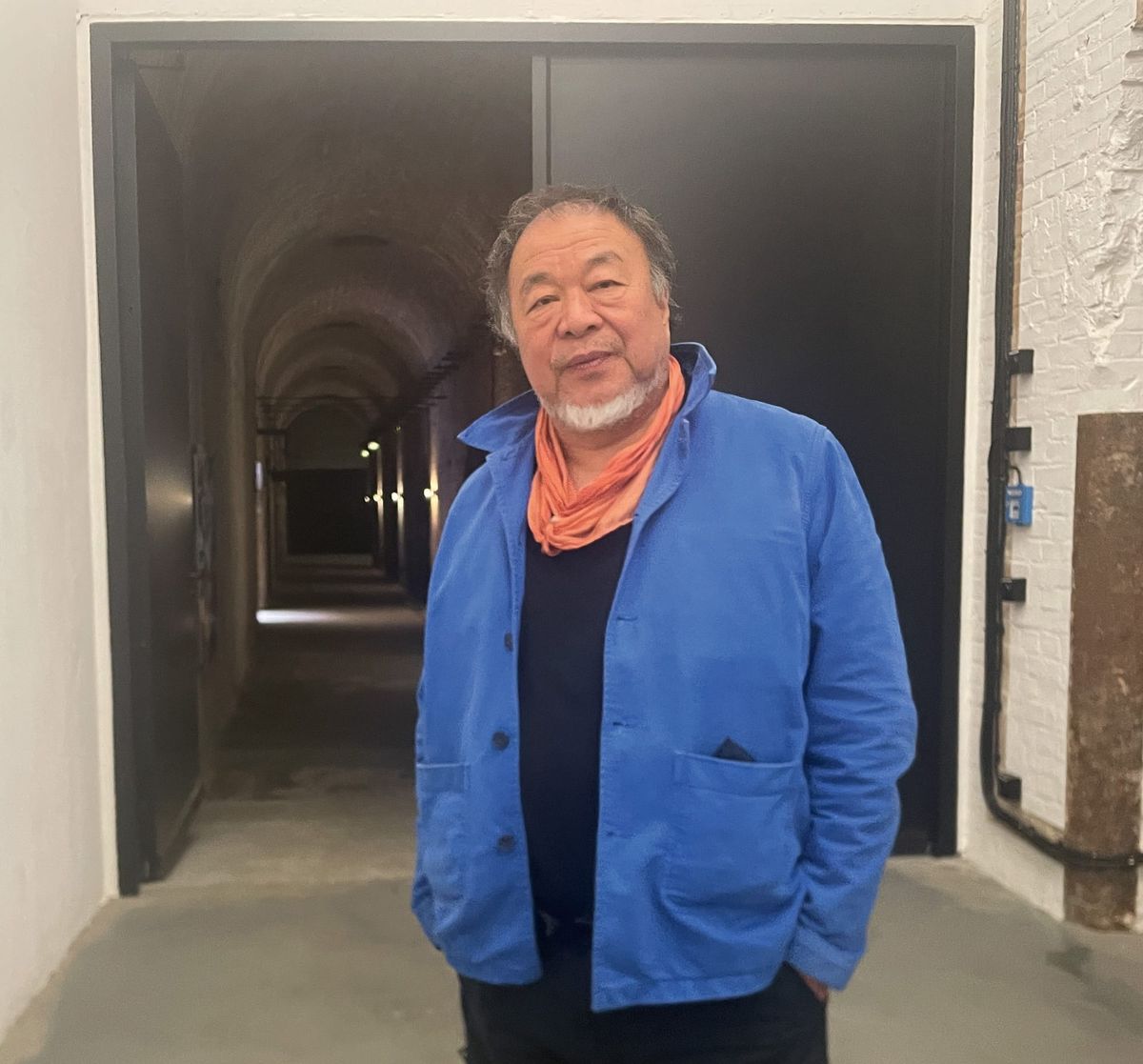
To visit Ai Weiwei’s Berlin studio is to undergo a correction of expectation. One might imagine a converted factory, bright ceiling lighting, a few monumental works in progress, assistants moving with practiced urgency. Ai’s studio has scale—more than 3,000 square meters—but what initially strikes one is not grandeur so much as its functional beauty. Located beneath a car park, it operates like a polished war bunker from which, 10 meters underground, he handles all his projects: films, artworks, museum collaborations, film negotiations, the media requests that follow his visibility. Light enters through a chimney-like structure from above. The studio manager kept reminding me that we were under the car park. It had once been a beer-storage facility—not a brewery, Ai explained, but a place where beer was kept cool, ice lowered through apertures in the summer months. The architecture remains, though its original use has drained away. I had last seen him in Caochangdi, a few years before his Zuo You studio was demolished. Now, in March 2026, I find him here.
Between that abandonment and Ai’s arrival, the space had been vacant since World War II, serving other purposes. Illicit parties and, more recently, raves were held here—dark, crowded, temporary. When Ai took over the venue in 2015, he inherited this legacy without claiming it. The vast rooms now possess a tranquility and an immaculate, almost sanitized feel that belies their earlier incarnations. One senses not the aftermath of convivial gatherings but their complete erasure. Yet the erasure is never really complete. The day before my visit, Ai’s friend, who had helped him find the Berlin studio, hosted a party there. Cleaners were quietly mopping the floors when I arrived, restoring order. Ai was transfixed by their meditative action and by the instrument in their hands. He asked his manager to look into the cleaning utensil. The mop—its design, its function, its presence in the space—had suddenly become interesting. The gesture was immediately recognizable. Ai has long admired Marcel Duchamp: in the early 1980s, after moving to the US, he made tribute works such as Profile of Duchamp, Sunflower Seeds (1983), which features a wire hanger bent to the master of the readymade’s profile, partially filled with spat-out husks. Since then, he has applied Duchampian principles in his own playful way.
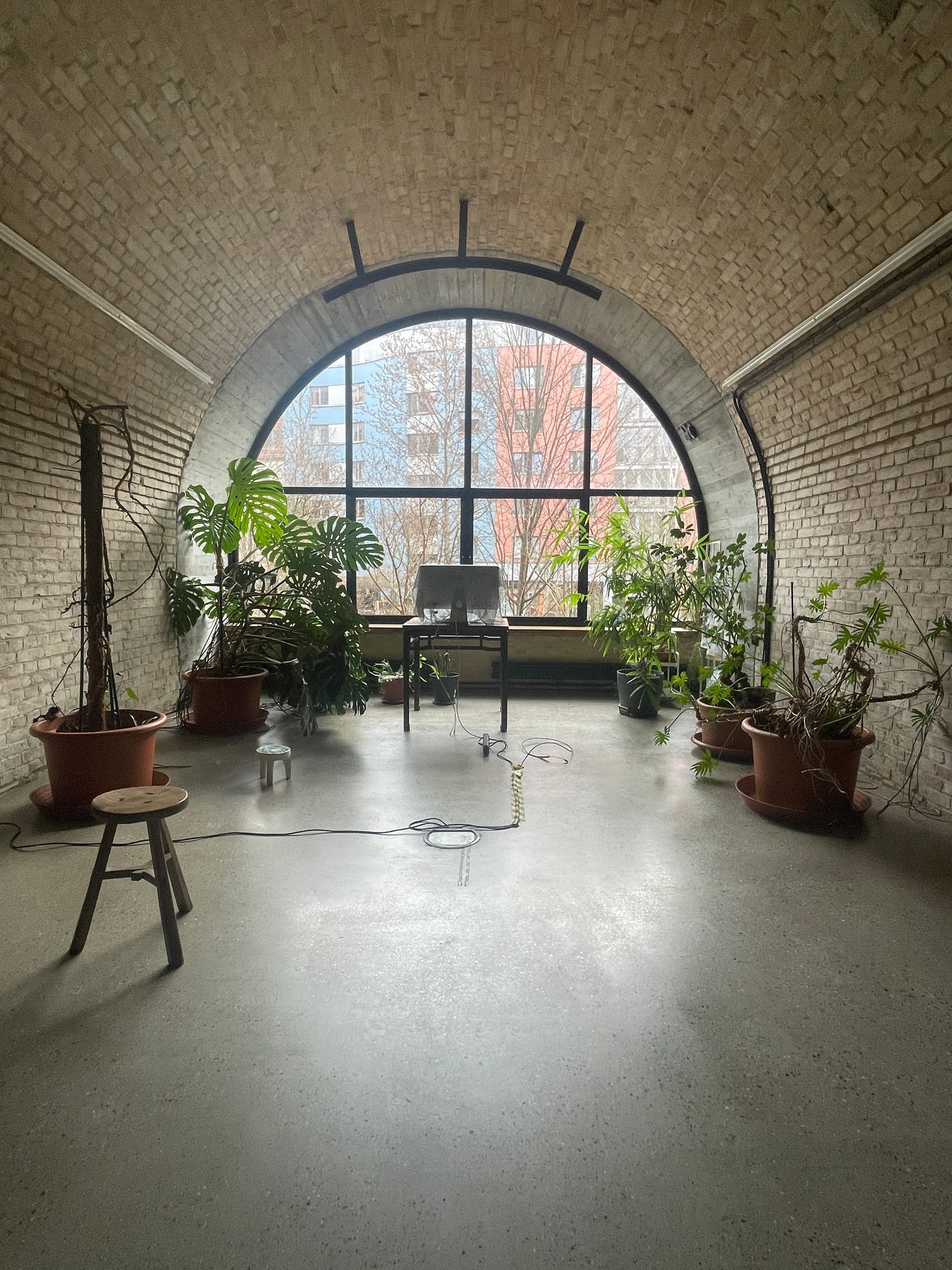
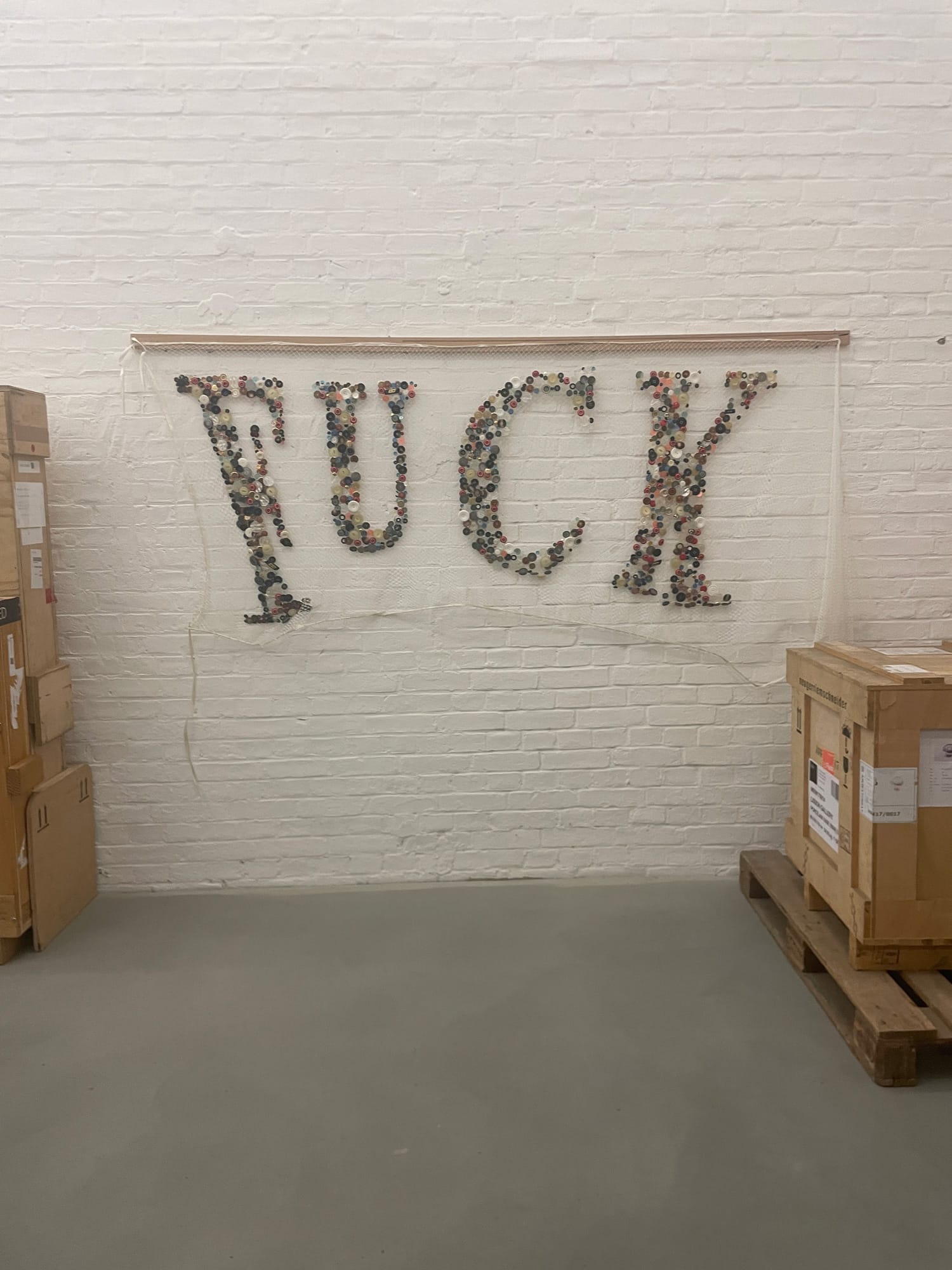
View of one of the few windows in AI WEIWEI’s office (left); and view of a work in progress made of buttons at AI WEIWEI’s Berlin studio (right).
This is Ai’s method: the lateral accumulation of materials that harbor their own cultural histories, transformed not by craft so much as by context and attention. His office is carved out for his sprawling plants rather than the lone Chinese side table with a desktop computer, situated in front of one of the few windows providing light for the studio. Sitting within this cavernous complex like a monastic cell, it is spare, concentrated, removed from the operational hum elsewhere.
What pervades the larger zones is not order, but a developed form of accretion. Endless numbers of crated works move back and forth from exhibitions spanning the globe. A chair bound with skateboards offers declarations. At the time of my visit, quantities of buttons were scattered throughout the studio—30 tons, to be exact—suggesting both abundance and indecision, material waiting for direction. He was still figuring out what to do with them, though some had already found their way into works, including one in which the letters “F U C K” were spelled out with blunt, cheerful clarity. A broom from New York—found, noticed, kept—was a riddle preserved in a glass display case, elevated to art through the simple mechanism of selection and preservation.