Ideas
From Property to Pixels: Shenzhen’s New Topography of Museums
Few cities have remade their cultural identity with the velocity of Shenzhen. Founded as a Special Economic Zone in 1980, the manufacturing hub has evolved into a tech powerhouse of 18 million residents with a median age of 32.5. 1 This youthful, domestic migrant demographic defines the local museum audience. Lacking existing institutional lineages, the city built its cultural topography within a single generation, shaped by municipal land allocation and shifting financial forces.
Shenzhen’s early contemporary art museum sector relied on real-estate patronage, with developers using cultural venues as placemaking assets to lift surrounding property values. Following the 2021–22 property market correction, this leveraged model gave way to a fragmented institutional landscape run by state enterprises, retail developers, and big tech. Over the past decade, roughly 34 art and design spaces launched across Shenzhen. 2 This expansion aligns with the cultural policy targets of China’s “14th Five‑Year Plan,” which position such institutions as a pillar of domestic soft power.
Launched in 2018, Shenzhen’s “Ten Cultural Facilities in the New Era” program anchors this shift by redirecting public financing away from property speculation toward civic institutions. Beneath this construction surge lies a deeper reconfiguration of patronage and governance. The city’s museums fall within four overlapping archetypes, each defined by evolving arrangements of land tenure, state oversight, and private capital. Together they trace a decisive break from property-driven space activations toward purpose-built infrastructure.
The first generation emerged as developer-funded civic amenities, epitomized by the OCT Contemporary Art Terminal (OCAT). Founded in 2005, OCAT set a local precedent by staging rigorous contemporary art exhibitions supported by the property profits of the OCT Group. By late 2022, however, OCAT’s programming shrank sharply following a broader nationwide contraction among institutions dependent on developer largesse and lacking independent endowments.
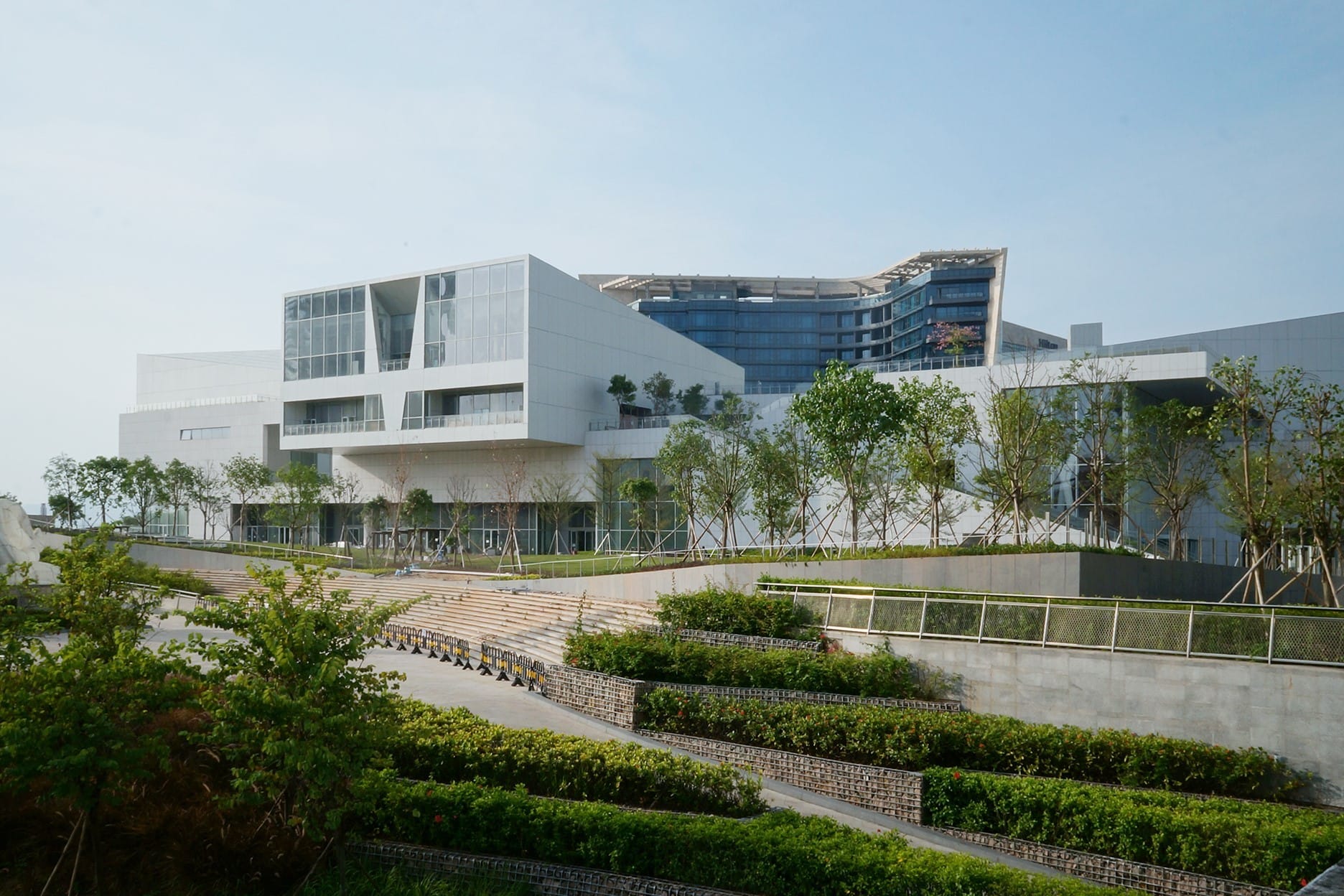
Well before this model faltered, a hybrid operating structure surfaced with the 2017 launch of the Sea World Culture and Arts Center (SWCAC). Sited on state land in Shekou but developed by China Merchants Shekou (CMSK), the center is operated by Design Society, a cultural initiative established by CMSK with London’s Victoria and Albert Museum as its founding partner. The arrangement pioneered a model that paired state-enterprise management with international museum expertise.
As CMSK’s inaugural contemporary art and design institution, the venue saw its governance evolve alongside its growth, transitioning to direct operation under China Merchants Culture Industry in 2020. It has largely pulled off this balancing act, sustaining credible, if pragmatic, contemporary art and design programming via retail partnerships, rentals, and ticketed shows. Periodically, its agenda also aligns with state priorities, including hosting the Shanhua Award traditional Chinese crafts showcase during the 2026 Asia-Pacific Economic Cooperation (APEC) summit. Today, led by director Xijia Zhang, the center navigates the friction between curatorial autonomy, corporate mandates, and political expectations. As Zhang notes, “The real test for a cultural institution is not only surviving on its own ledger but sustaining the capacity to generate authentic cultural value within a commercial framework.” 3
SWCAC has shown that a state enterprise could run a serious cultural institution. This paved the way for a new cohort of state-owned venues marked by a striking step-change in architectural scale. The Shenzhen Bay Culture Square in Houhai opened in late 2025, followed by the Shenzhen International Museum of Art (SIMoA) in May 2026 in Guangming. Both were conceived under compressed timelines at “Shenzhen speed,” juggling large-scale construction with the rapid mobilization of curatorial teams ahead of their launches.
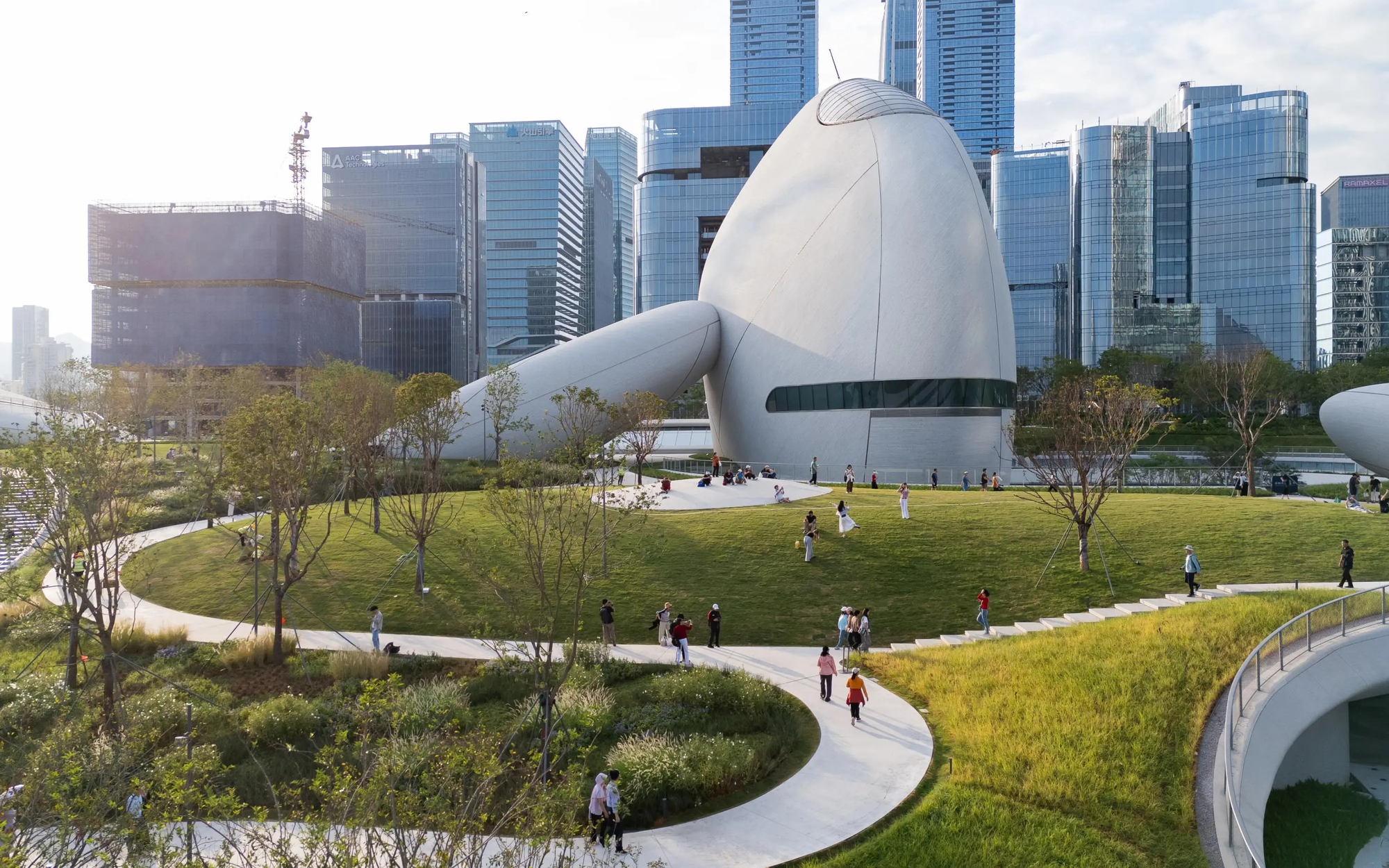
Sited on prime coastal parkland, the Shenzhen Bay Culture Square occupies a prominent civic position. Owned by the city government, the biomorphic complex designed by Ma Yansong’s MAD Architects is operated by China Resources Land under an asset-light management model separating land ownership from programming. Echoing SWCAC’s early strategy, it pairs a marquee building with a curatorial focus on design and architecture. Through multiyear agreements with institutions including Tate Modern and the London Design Museum, the venue taps into collection loans, co-curatorial expertise, and joint educational programs—project-based exchanges rather than the foundational operational consultancy the V&A once provided to SWCAC.
By contrast, SIMoA pulls the city’s institutional weight northward to Guangming Science City. As a district-government-led project built on reserved public land and operated by Poly Culture, the museum anchors a nascent cultural cluster far from Nanshan’s established epicenter. Reflecting this mandate, the museum’s inaugural Shenzhen Art and Technology Biennale aligns its program with Guangming’s state-designated identity as an innovation zone.
While outsourcing management to state-owned contractors insulates these mega-museums from real-estate volatility, operational pressures remain. Institutional KPIs often favor high-turnout, imported blockbusters over labor-intensive local commissions, a tension amplified by hyper-accelerated schedules from construction to opening.
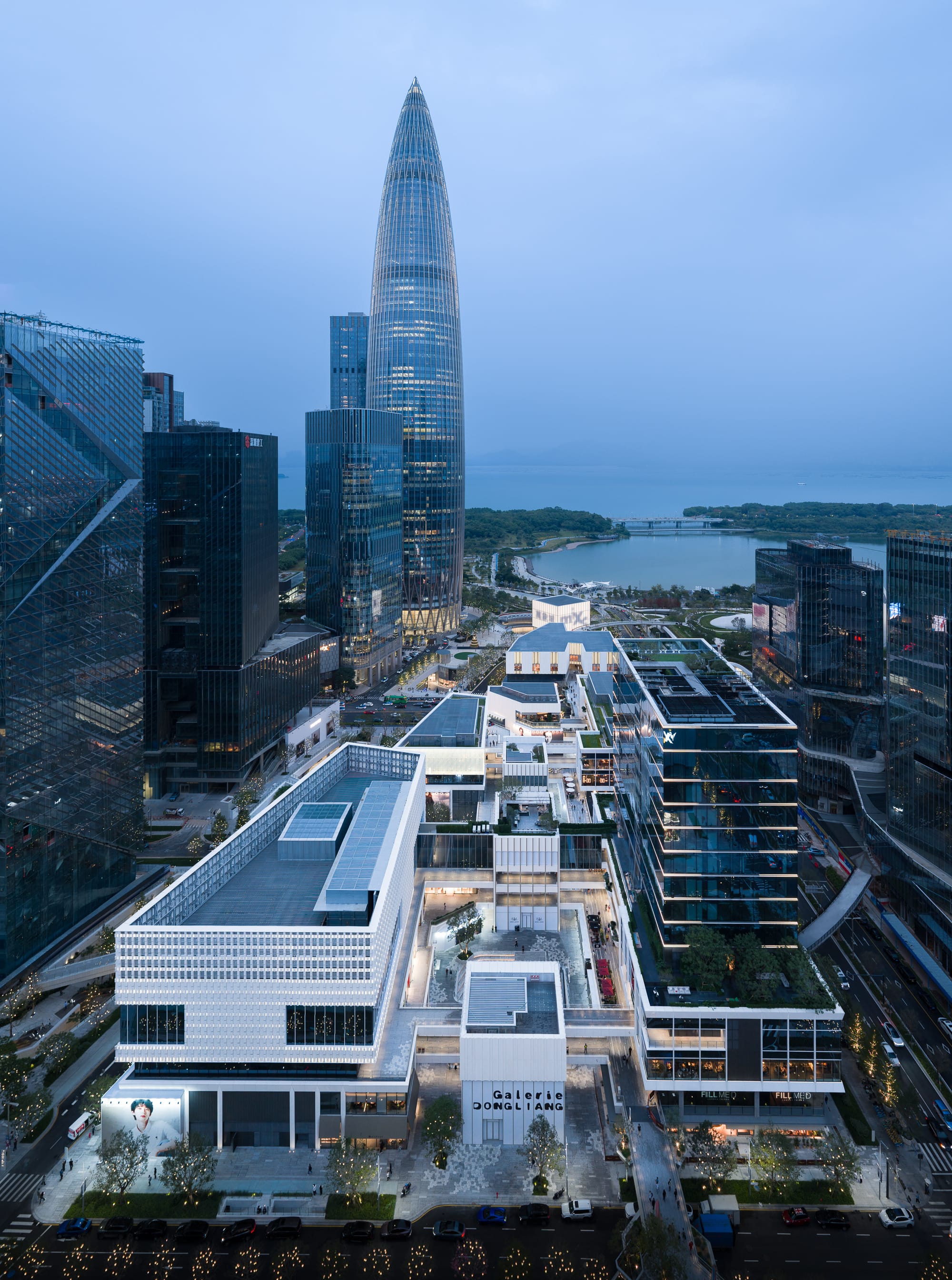
Where the state seeks civic prestige, luxury retail looks for cultural differentiation. Operating as a for-profit cultural enterprise without a permanent collection, Fotografiska Shenzhen positions itself as a hospitality and lifestyle brand rather than a traditional collecting museum. Within the Shenzhen Bay MixC, China Resources supplies the commercial premises while Fotografiska runs the 5,300-square-meter venue, an arrangement that extends the “art-mall” model into a broader, district-level retail strategy.
Driven by real-estate logic, this partnership explores how to “use culture as an engine to reshape the value of commercial property,” as noted by Liu Jie, general manager of Shenzhen Bay MixC. 4 Applying lessons from its earlier Shanghai outpost, Fotografiska replaces the quiet white cube with a multilayered lifestyle destination. By blending photography and new media exhibitions with retail, a VIP lounge, and hospitality, it integrates curatorial prestige into the mall’s floor plan as a point of distinction. Structured to break even rather than generate profits, the space fulfills its retail-anchoring mandate. Having opened only in October 2026, however, its ability to sustain curatorial rigor over time remains untested.
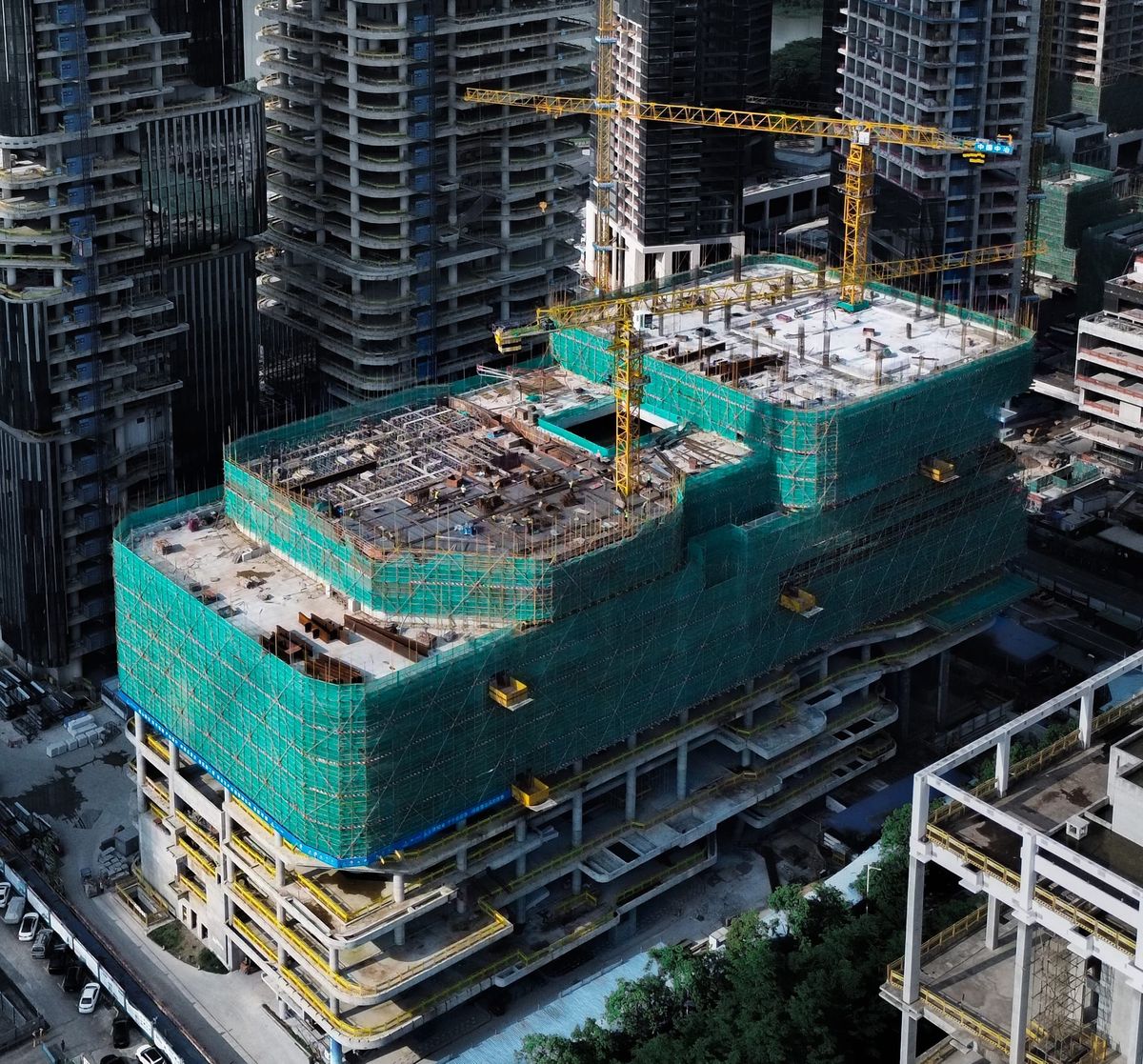
Yet, if luxury retail seeks cultural differentiation for real estate, a distinct realignment occurs as patronage migrates from commercial spaces to virtual networks and hardware ecosystems. This change is embodied in two major projects under construction in Houhai. The Róng Museum, commissioned through Tencent founder Ma Huateng’s private venture Tenova Future, is slated for a 2027 opening within the M80 complex. Across the bay, the JD Museum is scheduled to open in late 2027 inside JD.com’s Scenic-City compound, fulfilling a planning requirement to allocate floor area to cultural use.
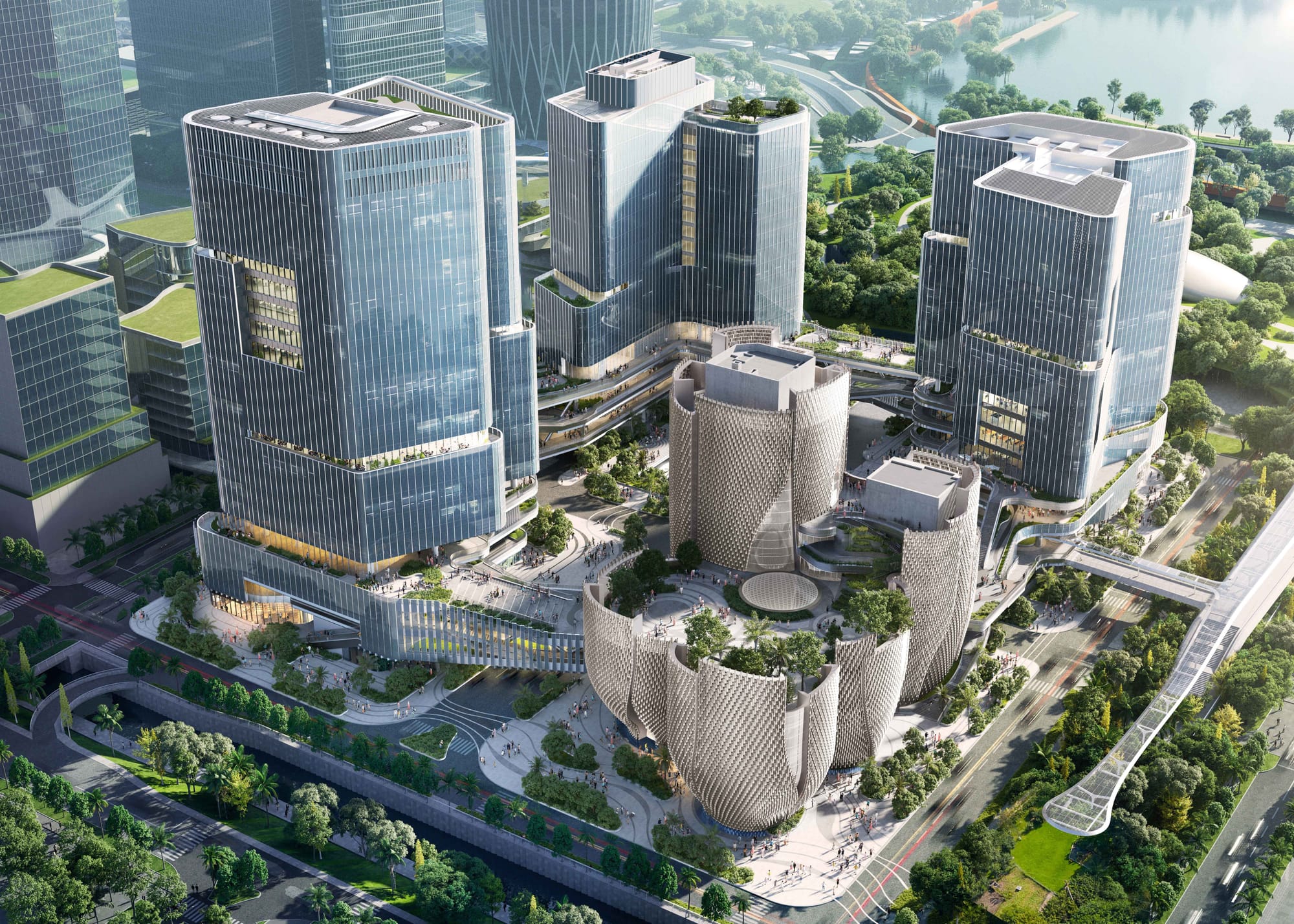
The Róng Museum’s Ole Scheeren-designed building intentionally blurs the boundaries between gallery spaces and the surrounding urban campus. Bringing 14 years of experience from Hong Kong’s M+ and Tai Kwun Contemporary, founding director Pi Li notes the distinct requirements of the city. “Shenzhen is a different city, with a different demographic structure, pace of development, and cultural ecology,” he states. “Rather than replicating the Hong Kong model, our task is to build an institution that is genuinely rooted in Shenzhen while remaining internationally connected.” 5
Pi Li frames the two cities as complementary cultural nodes: Hong Kong offers established institutional expertise and global networks, while Shenzhen provides experimental vitality. Guided by the concept of róng (integration or interconnectedness), the museum rejects overt corporate branding, positioning itself as a learning-centered platform spanning art, architecture, and performance. To cultivate a local audience, Pi Li emphasizes critical inquiry into technology’s impact on humanity over superficial digital spectacles, navigating the distinct tastes of cross-border visitors and local residents, while focusing on long-term commissions rather than rapid collection-building.
Nearby, the JD Museum is also designed by Scheeren, with interiors by Neri&Hu. The institution locates itself at the intersection of hardware-driven material production and creative thought. “There are conversations that can be had here that can’t be had anywhere else. . . . this is the place where materiality meets ideas, whether those ideas are in computer science and programming or the ideas within art and culture,” executive director Robin Peckham explains. 6
Peckham similarly distances the museum’s program from purely interactive digital formats, a position formalized in JD’s “Museum Manifesto”: the galleries “will never become product showcases, but host weirdness that complicates your idea of what technology is and what the lifestyle of the future might be.”
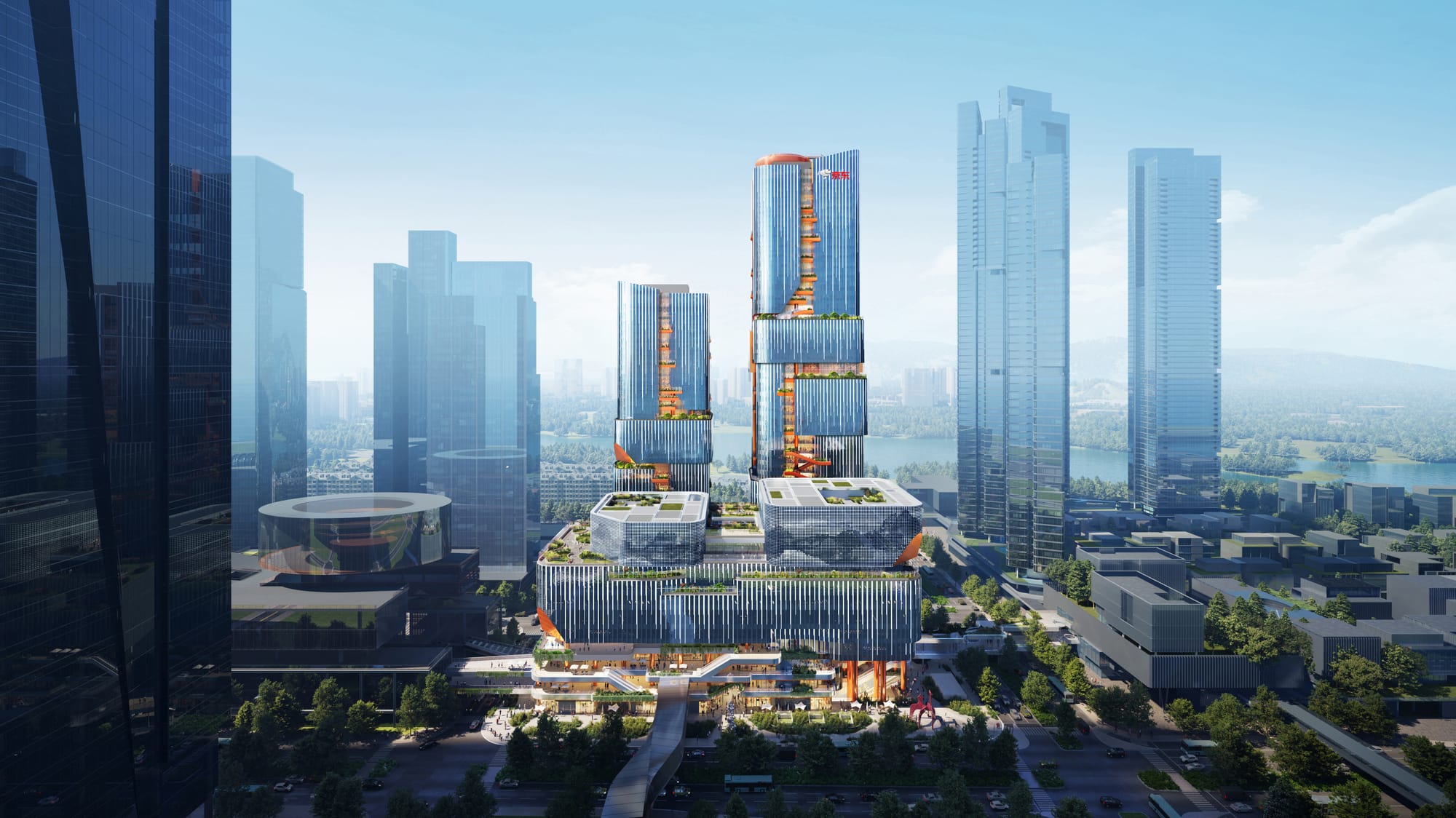
Ahead of its physical launch, the museum initiated “Unboxing JD Museum” to build familiarity with contemporary art and museum practices from the inside out. Reimagining JD’s iconic delivery boxes as mobile “Unboxing Pavilions” alongside workplace exhibitions and workshops, it engages JD’s 900,000-strong workforce and their families. Simultaneously, it collaborates with artists, curators, and architects through pop-up workshops and touring public projects at civic venues, translating professional peer dialogue into accessible programming. The museum’s layout includes the “Sanctuary and Cave Galleries” for immersive, site-specific commissions and performances, complemented by a 178-seat performance hall and learning labs. Though Róng and JD pursue independent curatorial agendas, their teams engage in practical cooperation, including jointly hosting international museum and patron delegations to raise the city’s profile.
As officials and business leaders gathered for the APEC summit in November 2026, SIMoA and Shenzhen Bay Culture Square welcomed these visiting dignitaries, placing this unfolding patronage experiment on the global stage. Beneath the showcase, fundamental operational questions persist. It remains to be seen how independent curators and local practitioners will gain visibility alongside these heavily resourced flagships, and whether these large institutions can sustainably serve Shenzhen’s residents as well as cross-border audiences.
Ultimately, the evolution of Shenzhen’s museum landscape marks a permanent shift away from real-estate patronage toward a complex matrix of state capital and policy mandates, commercial-lifestyle hybrids, and big tech capital. Land-use regulations, targeted operating subsidies, and corporate funding frameworks are shaping the characters of these institutions—who governs them, and where cultural experimentation can occur. Credible institutional standing, after all, is earned by cultivating public trust over time. The defining test for Shenzhen’s museum boom lies ahead: whether its expanding network of state and corporate-backed institutions can create a sustainable ecosystem for local artists, arts professionals, and the general public, rather than simply adding fancy monuments to the city’s skyline.
Patricia Li is a Hong Kong-based art and culture strategist, writer, and editor focusing on contemporary visual culture. Formerly with Art Basel, she has lived and worked across London, Tokyo, and New York. She holds an MA from Central Saint Martins and a BSc from the London School of Economics.
1 Shenzhen demographic data: Shenzhen Statistical Yearbook 2025.
2 34 art‑focused venues count: Shenzhen Municipal Bureau of Culture, Sports and Tourism, June 2026.
3 Sea World Culture and Arts Center: institutional press releases, and interview with Xijia Zhang, Shenzhen, August 2026.
4 Speaker Liu Jie, “Opening‑ceremony remarks for Fotografiska Shenzhen,” live address, Fotografiska Shenzhen opening ceremony, Shenzhen Bay MixC, Shenzhen, September 30, 2026, author’s field notes.
5 Interview with Pi Li, founding director of the Róng Museum of Art, Shenzhen, September 2026.
6 Interview with Robin Peckham, executive director of the JD Museum, Shenzhen, September 2026.