Ideas
Book Review: How Did We Get Here: Reading Vasıf Kortun
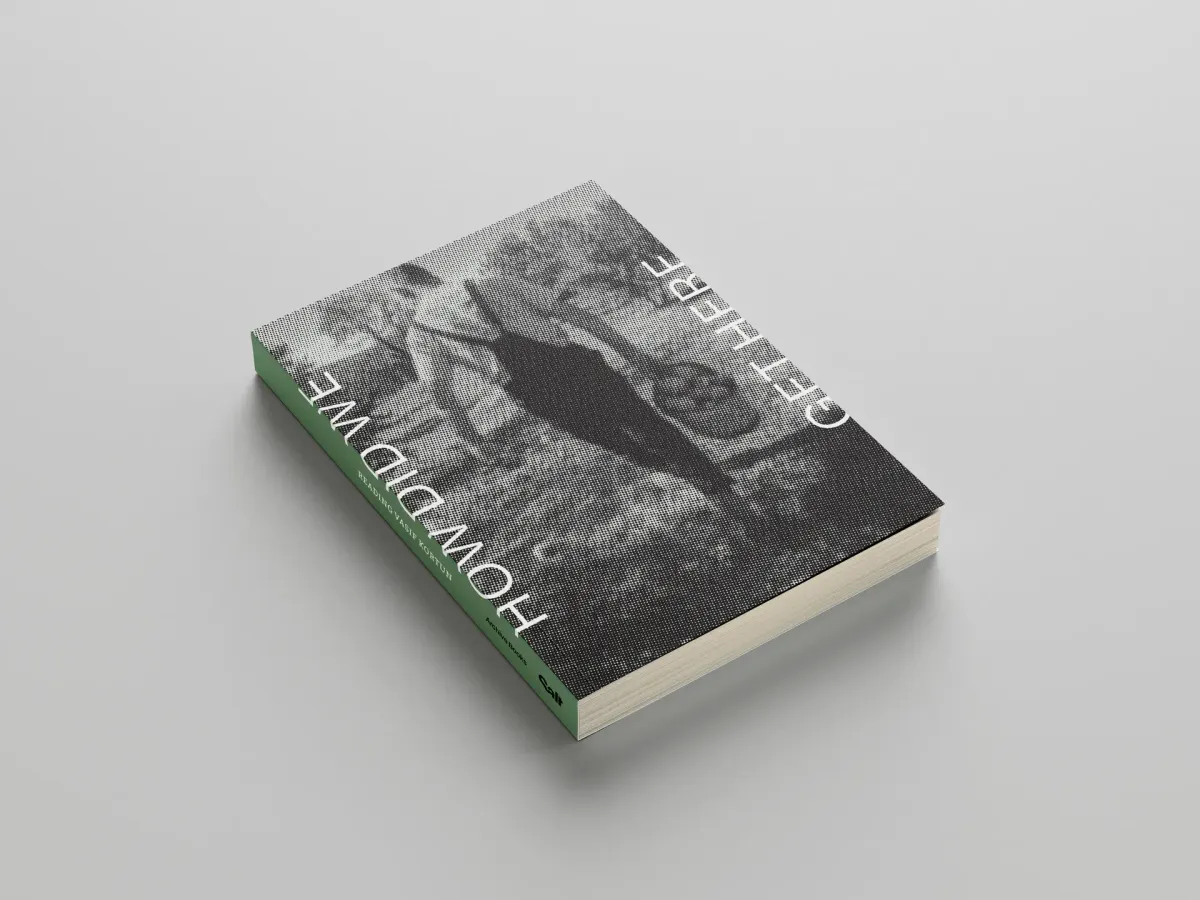
How Did We Get Here: Reading Vasıf Kortun
Edited by Sezin Romi
Published by Salt & Archive Books
Berlin, 2026
The question of the role of institutions is often raised in conversations about the place of art and culture in social and political life—and it surfaces more as the political horizon narrows and violent reality worsens. Disappointment with existing institutions creates the need for new ones, prompting questions about their responsibilities and how they can remain relevant and sustainable amid shifting political and economic circumstances, funding shortages, and mounting political pressure.
The book How Did We Get Here: Reading Vasıf Kortun (2026) is part of that ongoing dialogue. Here, it unfolds through the actual conversation between Vasıf Kortun—curator, writer, teacher, and founder of Platform Garanti, Salt, and several smaller initiatives—and Sezin Romi, senior librarian and archivist at Salt, who has worked with Kortun for the past 20 years.
Their exchange traces Kortun’s professional journey from his student years in late-1970s Turkey to the present, following the evolution of his curatorial career and institutional critique—the ideas that shaped them, their practical application, and the conditions that made them possible. His biography is one of those conditions. His studies in the US, his familiarity with the Western art world, and his insider-outsider standing in both Turkey and the West. To this we can add his personality: if his socioeconomic background opened up opportunities, he knew how to seize them, thanks to a determination and a relentless—some would say overweening—ambition.
Curating the third International Istanbul Biennial in 1992 and the disappointment that followed sent him back to the US, where he became the founding director of the museum at Bard College’s Center for Curatorial Studies in New York (1994–97). His subsequent decision to return to Turkey and build an art institution there, rather than pursue a career abroad, produced first the Istanbul Contemporary Art Project, and then Platform Garanti Contemporary Art Center (2001–10), which transformed into Salt in 2011. Both Platform and Salt grew into influential centers for contemporary art, research, and international exchange.
Reading about Kortun’s curatorial and institutional approach is inspiring. His critique challenges the conventional museum and exhibition model, arguing that cultural institutions should function as open, research-driven ecosystems rather than hierarchical, collection-centered organizations. He advocates for those that privilege long-term inquiry over spectacle, collaboration over competition, and public knowledge over market visibility. Rejecting imported models, he insists that institutions must emerge from their own social and political contexts, stay intellectually independent, and create the conditions for multiple histories, critical debate, and collective knowledge production rather than reinforcing fixed canons or serving as cultural brands.
Indeed, the institutions he founded were pivotal in establishing alternative cultural spaces, setting a model widely adopted since. Yet these ideas were not unique to Kortun’s institutions, nor isolated from global developments. Instead, they reflect a broader shift in institutional practice shaped by international curators within a transnational network in which Kortun was an integral player. This underscores a central tension in the book: for an institution to remain independent and “emerge from a local social and political context,” it must rely on a transnational network of people and resources.
The institutions Kortun founded cannot be separated from their time or from the figure who founded them. Opening an institution in the early 2000s is a completely different proposition from opening one today. Political, economic, and social conditions in Turkey and elsewhere have changed drastically. That European funders were willing to spend money on alternative art institutions in Turkey belonged to the spirit of that moment, and Kortun had the knowledge and connections to secure these funds and forge the collaborations they required. Having chosen to return to Turkey and its local art ecosystem, he nonetheless maintained his international career.
How can an art institution sustain itself when private money is interested primarily in profit? Who are your partners, and what are you offering in return for their support? As public funding erodes, these questions become even more crucial. In Turkey, the kind of institution Kortun envisioned could never have drawn state support, but backing from a private bank made it possible. This specific “match”— private money in the service of a public mission—is uncommon, especially given that the bank refrained from interfering with the institution’s work. Garanti BBVA remains Salt’s main supporter. However, the current relationship with the bank and the level of freedom the institution has retained in the wake of the political crackdown in recent years are not mentioned.
The book’s title, How Did We Get Here, tells the story not only of an individual, a specific art community, or an institution, but of something much wider. The changing conditions in Turkey foreshadowed changes we are now experiencing in other parts of the Western world. The challenges that critical Turkish artists and intellectuals had to engage with, resist, or adapt to are highly relevant to anyone involved in creating institutions to confront the dark future ahead.
Avital Barak is an art curator and cultural scholar based in Lisbon.