Ideas
Book Review: 65,000 Years: A Short History of Australian Art
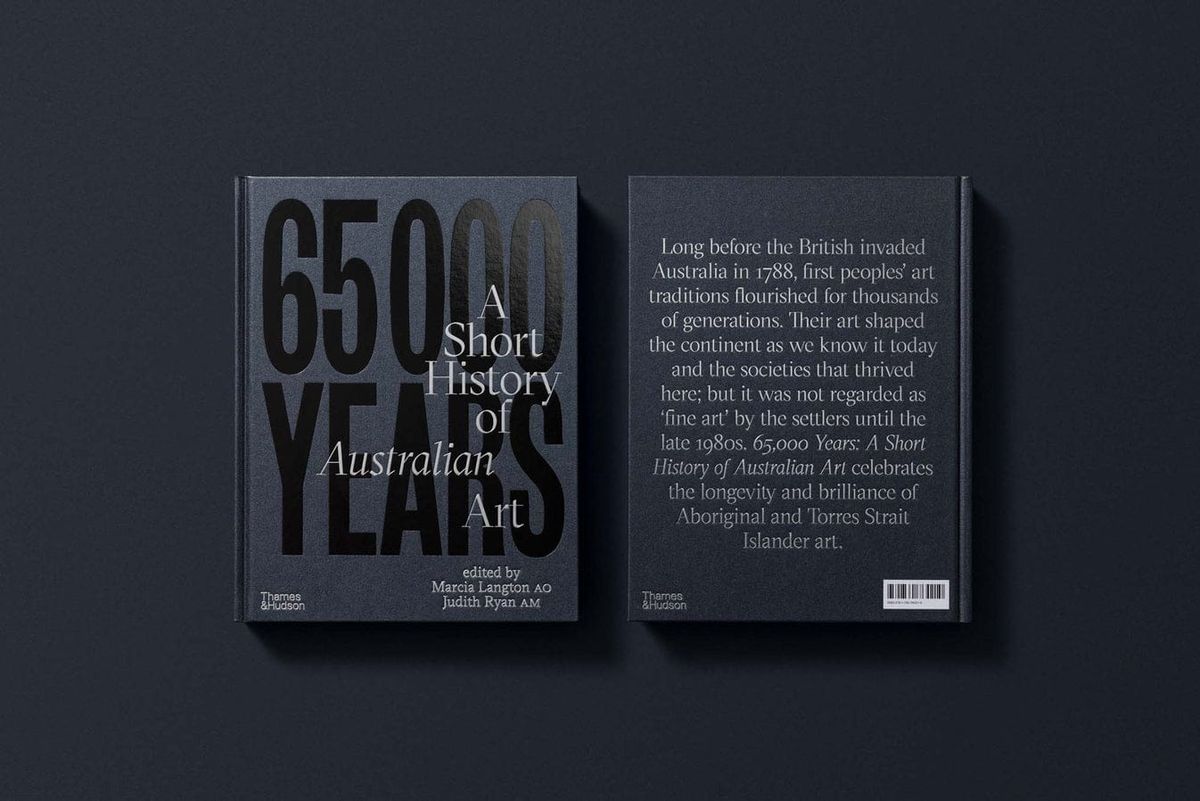
65,000 Years: A Short History of Australian Art
Edited by Marcia Langton and Judith Ryan
Published by Thames & Hudson Australia
Melbourne, 2024
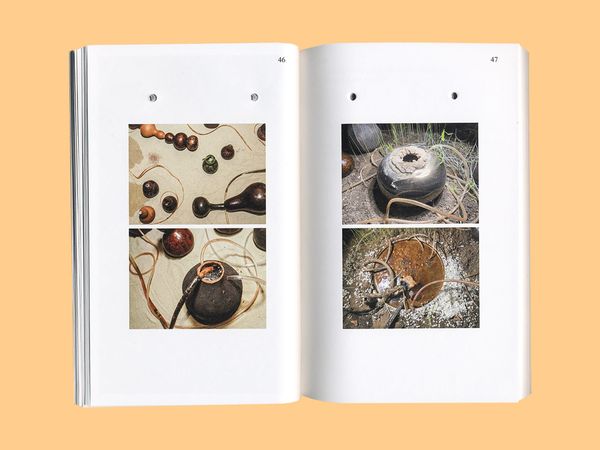
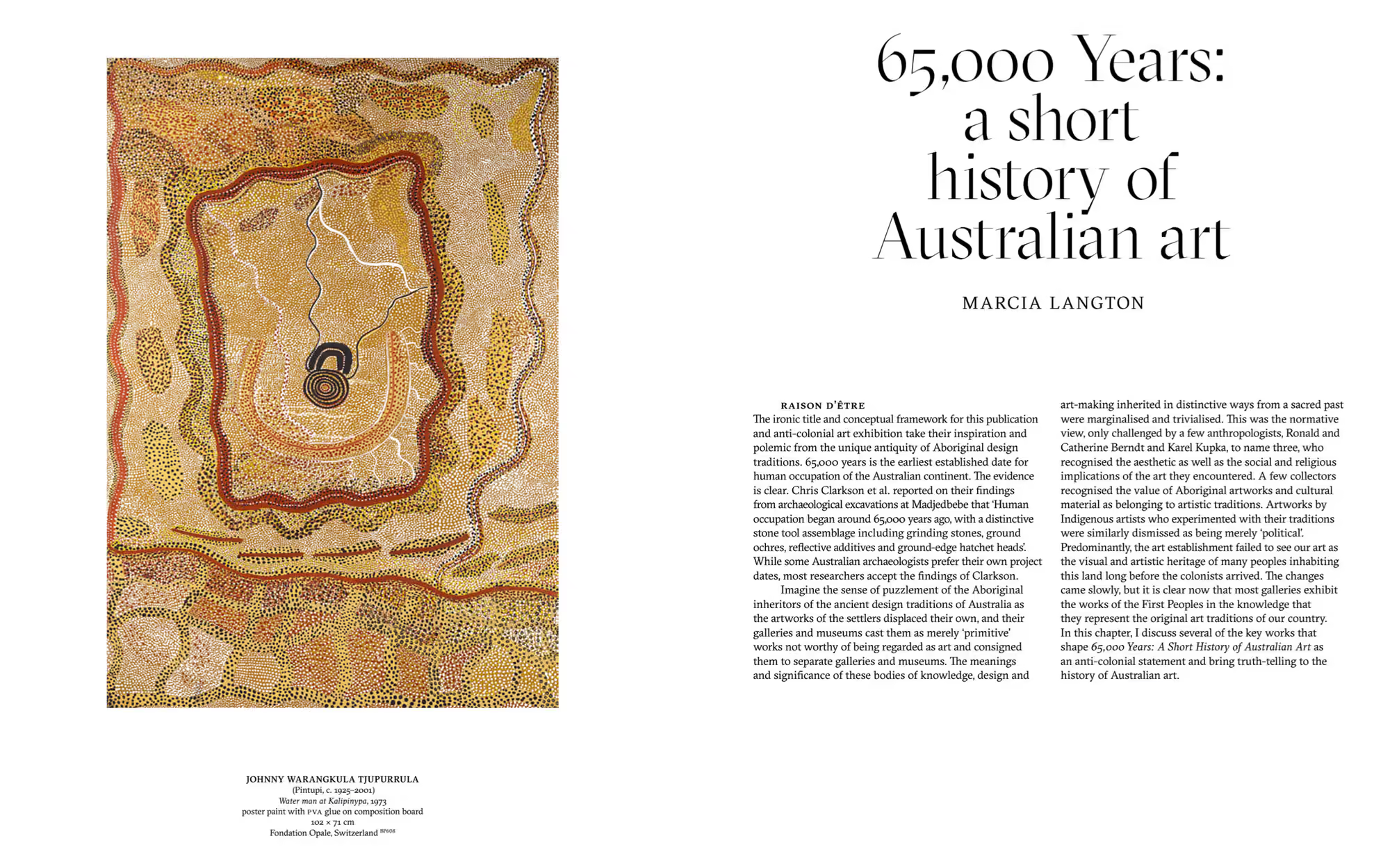
65,000 Years: A Short History of Australian Art announces itself with an oxymoronic title, pairing a vast span of time with a claim of brevity. The contradiction is fitting: it encapsulates the fraught space that Aboriginal art occupies within Australian history, prefacing the complexities of colonialism explored throughout the book. The publication accompanies an exhibition of the same name at the University of Melbourne’s Potter Museum of Art, which ran from May to November 2025. Edited by Marcia Langton and Judith Ryan, the book brings together essays by 25 contributors from Australia’s Indigenous communities and Aboriginal art experts, each authoring a section accompanied by sketches, paintings, artifacts, and other works drawn from the show.
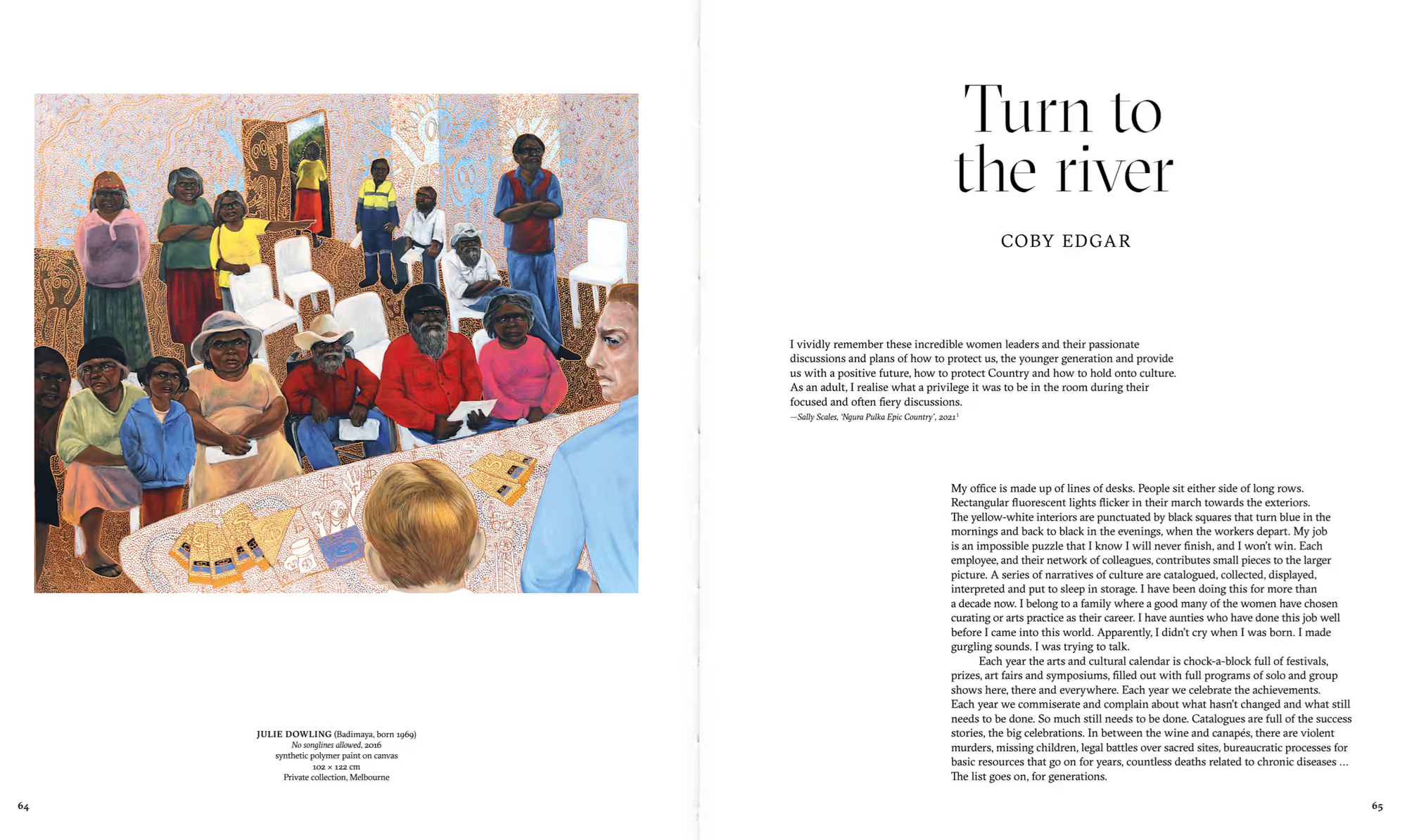
The contributors take varied approaches—some grounding their essays in historical context, others weaving personal experience into readings of specific artworks—but each is engaged in the same task: recovering an untold story. Coby Edgar draws readers immediately into her world as an Aboriginal woman, describing the bleak, clinical office where she navigates the “impossible puzzle” of her curatorial work. Amid the success stories and achievements of Aboriginal artists catalogued in her files, which seem to signal steady progress, Edgar struggles to reconcile this narrative with the unchanged, often-ignored reality of the broader Aboriginal lived experience: “violent murders, missing children, legal battles over sacred sites. . . . The list goes on, for generations.” Ngalakgan writer and educator Tristen Harwood charts the history and cultural meaning of Aboriginal “Country” through an unconventional letter addressed “Dear smudged sunlight,” using this frame to examine artists who render Australia’s landscape.
One subject the book confronts is a long-overlooked history: the inhumane scientific research conducted on Indigenous Australians, in which the University of Melbourne itself played a leading role throughout the 20th century. 65,000 Years does not shy away from this institutional complicity, dedicating an entire section to scientific racism. Rooted in eugenics and a distorted reading of Darwinian evolution, scientific racism held that the physical traits of Aboriginal people signaled genetic inferiority to white people. Researcher Ross L. Jones delves into this dehumanizing history of scientists and institutions flagrantly desecrating ceremonial burial sites and ancestral remains in the name of science, while Jessica Clark, a Palawa curator and researcher, highlights two contemporary works that respond to this prejudice: Brook Andrew’s Vox: beyond Tasmania (2013), a display re-presenting curatorial materials to expose the objectification of Aboriginal bodies; and Judy Watson’s a preponderance of aboriginal blood (2005), a collection of documents printed with paint “blood splatters” that underscore the innate violence in legislation enacted to sustain colonial control over Aboriginal people.
A paradox of memory threads throughout 65,000 Years: the more Aboriginal history is suppressed by Western settler structures into disremembering, the more unforgettable its brutality becomes for those who live its aftermath. Professor Ian McLean probes this disremembering, tracing how Aboriginal history was “interned and assimilated into the Western archive” as a result of European imperialism. Stephen Gilchrist further argues that this is far from accidental—disremembering, he writes, is a “structuring and conditioning process that is embedded into social systems, reductive national identities, and individual psyches.” This widespread, systemic colonialism leaves behind a fragmented Aboriginal people, their Indigenous heritage and culture becoming lost in the “white gaze” while the wounds of that erasure remain burned into the community. In Langton’s introduction, she draws on activist Galarrwuy Yunupiŋu’s essay “Rom Watangu” (2016), in which he describes the intergenerational reverberations of this violence as enduring “like the scar that marked the exit of the bullet from [his] father’s body,” insisting that “they are never forgotten. Such things are remembered.” McLean, quoting Badtjala artist Fiona Foley, echoes this same sense of buried trauma resurfacing unpredictably: “Like an incomplete jigsaw puzzle, some of those missing pieces came back to haunt us out of nowhere many years later.”
Each section of 65,000 Years works to excavate facets of Aboriginal history from beneath a deeply ingrained colonialist lens—one that has consistently denied Aboriginal art status as “real art” in its own right. Aboriginal art has been relegated to an anthropological category and treated as ethnographic artifact rather than an aesthetic achievement, alienated from mainstream art exhibitions, discourse, and criticism. Working to unwind this legacy, curator Grazia Gunn opens her chapter with a refreshingly direct perspective: asked how she arrived at her curatorial approach for an Anindilyakwa bark painting exhibition, she responded: “I was solely driven by such fundamental principles of art as line, color, spacing, balance, texture, and proportion.” By treating Aboriginal art no differently from any other form—affirming, as Langton writes, simply that “This is art”—the decolonization process begins. 65,000 Years insists throughout that the contemporary art world must do the work of rewriting this constrictive colonialist narrative of Aboriginal art—and the book itself leads by example.
Emily Ng is an editorial intern at ArtAsiaPacific.