Ideas
Artist Notes: “The Kitchen Table” by Sin Wai Kin
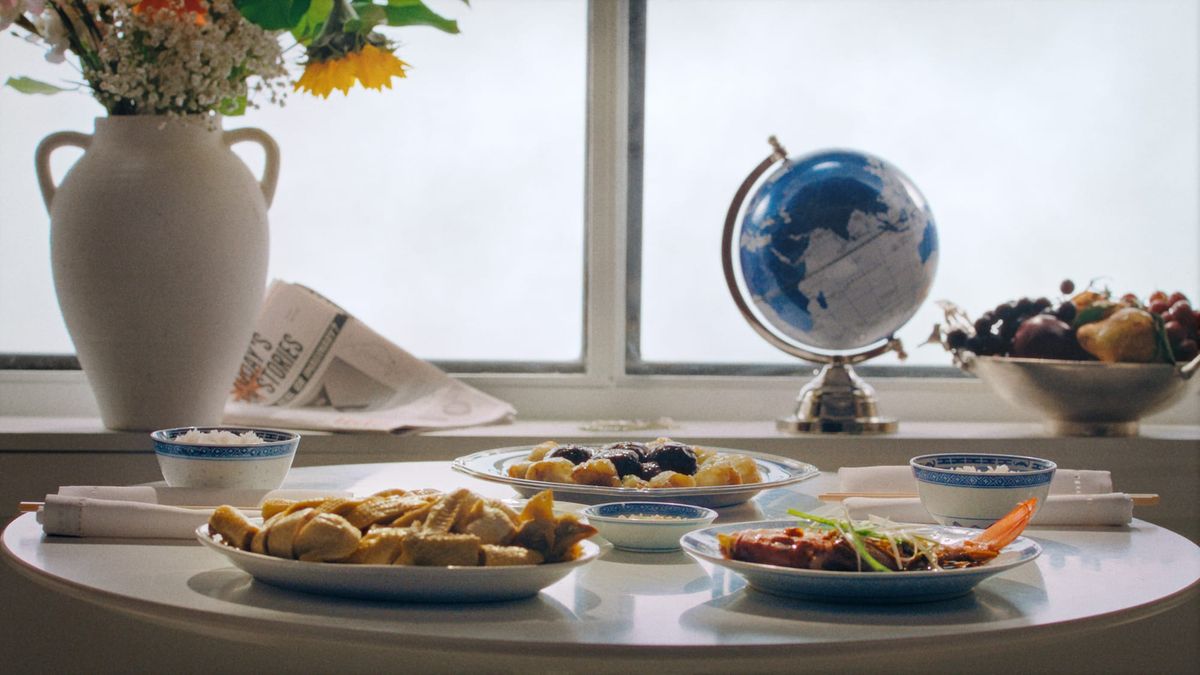
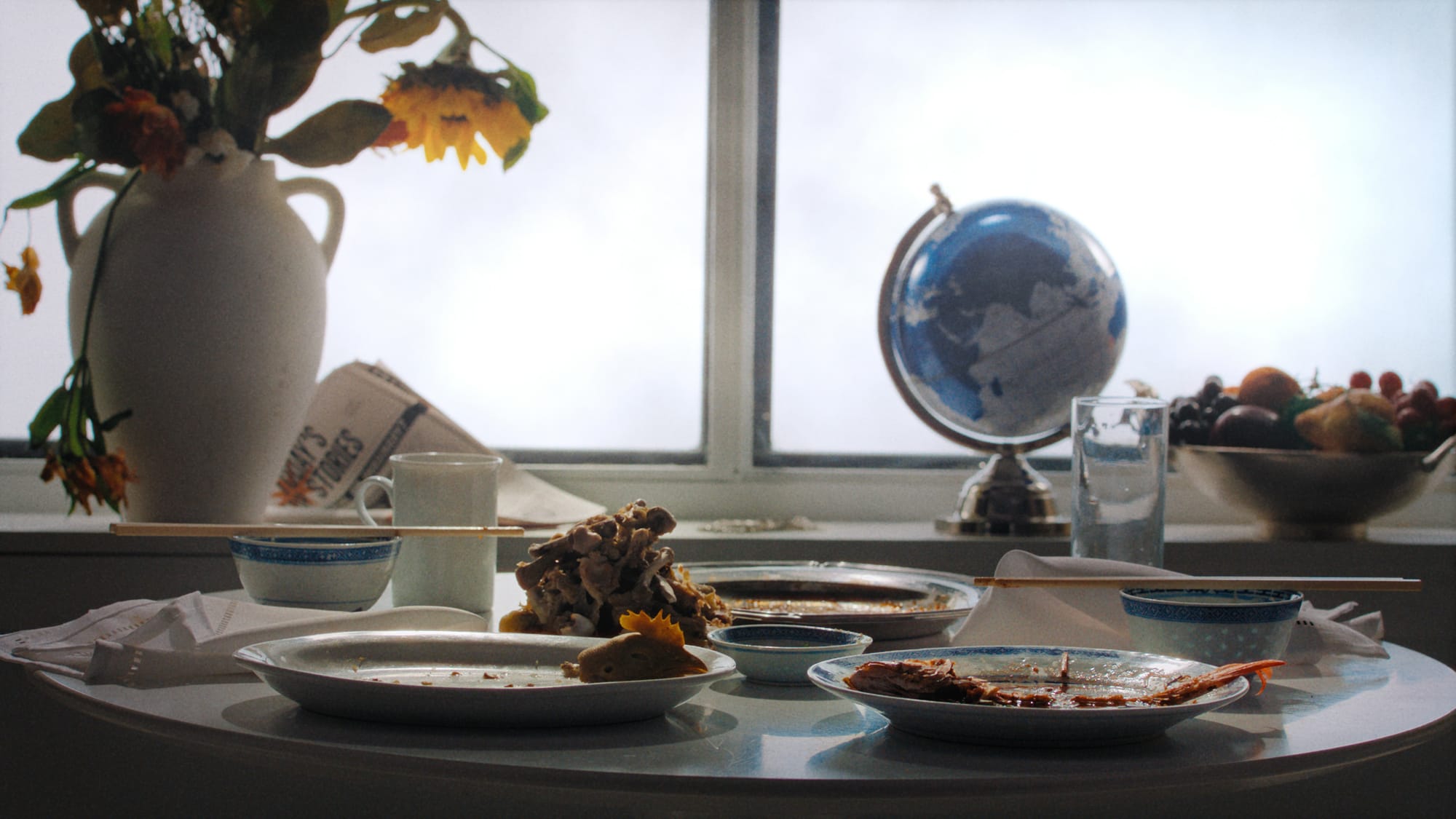
Dinner is ready. I come downstairs, wipe the table, and set it with napkins and chopsticks. Dishes arrive in the middle. A steamed red snapper, braised bak choy and shiitake mushrooms, a white cut chicken with ginger scallion sauce. Three bowls of rice. My mother and father sit across from each other at the table. I sit between them, across from the north-facing window which the table sits against.
Outside the window there is only a white void.
The kitchen table is also white, the walls are also white, the chairs we sit on are also white. All these objects form our context, the support for the food, our bodies, our shelter, our lives that facilitate this family meal. The whiteness fades into the background but it is the reality that we eat in. I am so used to it that I don’t see it, even as it contrasts with the cobalt blue ornamenting the dish that the steamed fish lies in.
My mother and father are oriented toward each other. I am oriented toward the outside, which seems not to exist. We eat in silence for a while.
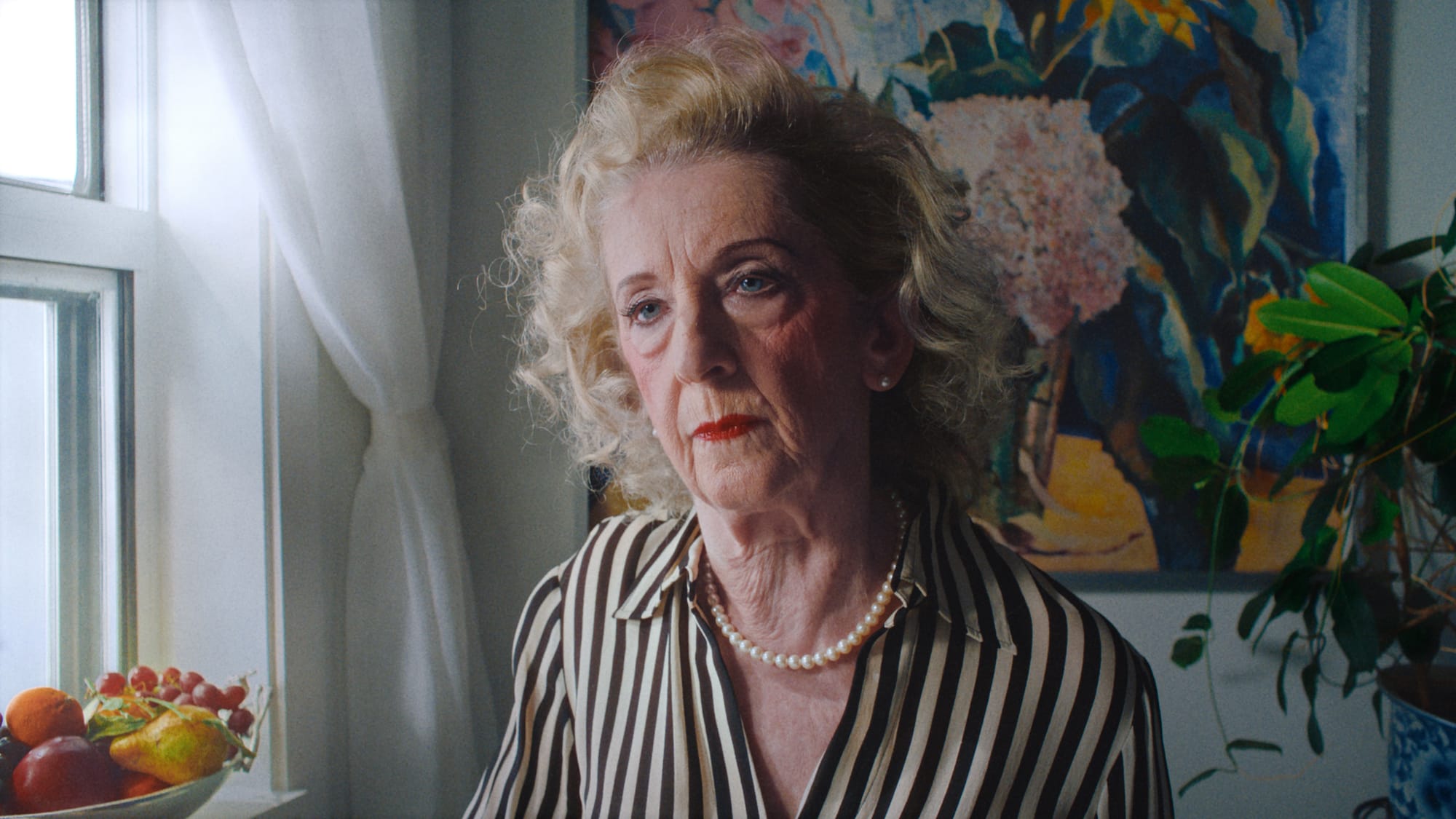
“Dear, I noticed that you did the laundry,” says my mother.
“Yes, I did,” says my father.
“Well, you didn’t separate the whites from the colors,” she says.
“I thought I did,” he says.
“No, you didn’t. You left black clothes in the white wash.”
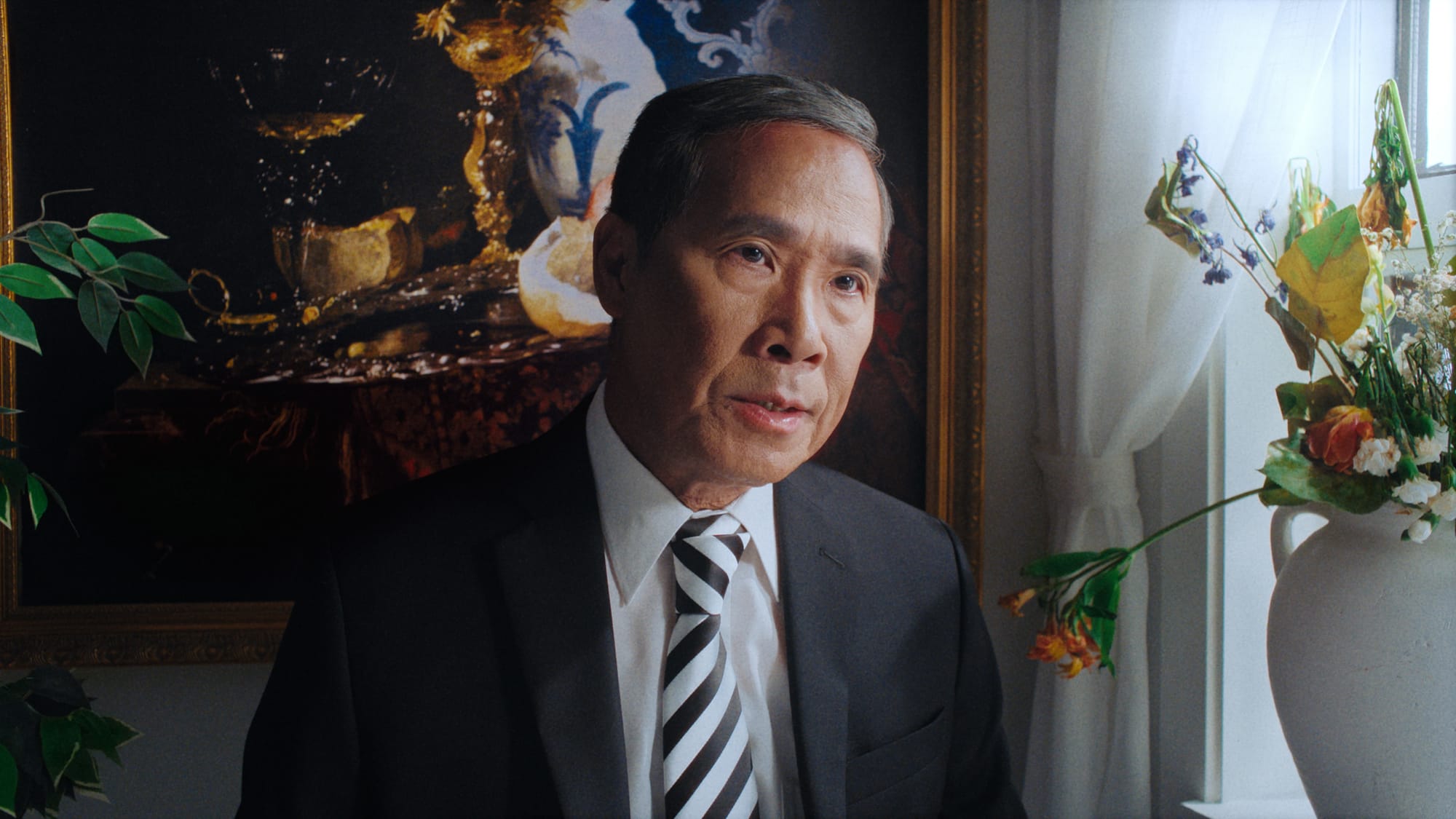
There is an awkward silence in which my father looks out of the window contemplating the fact that he may have ruined a load of whites. He doesn’t seem to notice the featureless white that surrounds us outside.
“That doesn’t sound like something I would do,” he says after a while.
Because of where I sit between them, I can’t see them both at the same time, so I turn my head to look at one and then the other, my head orienting to the east and then the west.
The verb “orient” means to situate yourself in an environment; it comes from the Latin word oriēns, which means both “east” and “rising,” as the sun always rises in the east. As a noun, it came to refer vaguely to countries that are east of the countries classified as the West.
“Well, everything’s different now,” says my mother.
“The whites?” asks my father.
“They’re not white anymore,” replies my mother.
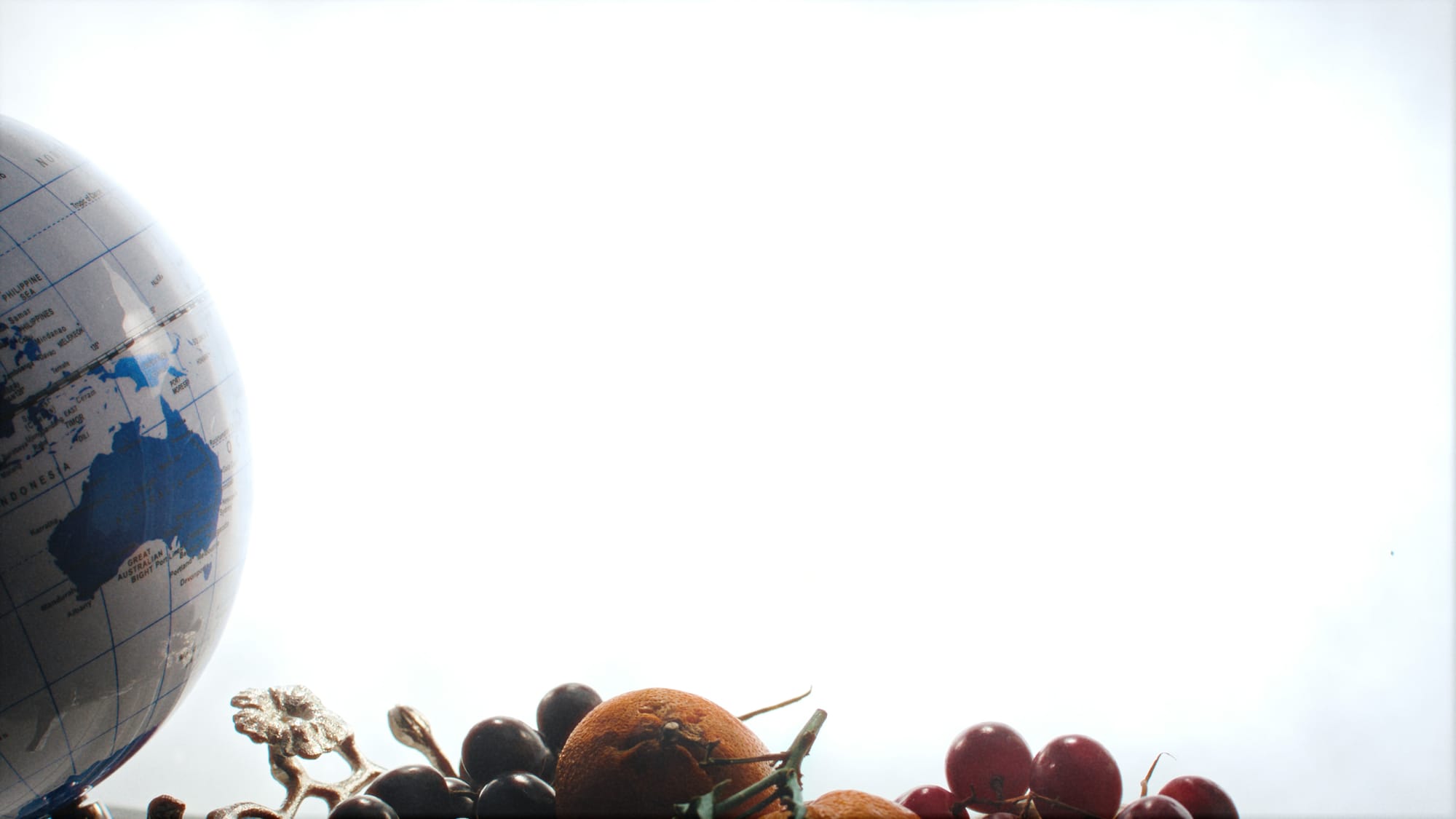
I look out the window contemplating our surreal exterior. The window is clear, but I can’t see anything beyond its threshold. I know there is something real outside, but somehow it’s inaccessible to me. I wonder if my mother and father see the same thing when they look out of the window. I look down at the white table. The eye of the snapper looks back at me, its flesh completely eaten from one side, its spine gleaming with oil. Beside it, there is a small plate filling up with the bones from the fish and chicken. I hear the crunch of bak choy as someone chews. My father turns back toward my mother and says,
“Did you know that white isn’t a real color? It is just the presence of all visible wavelengths at equal intensity, being reflected.”
“Yes, actually,” my mother replies quickly, “and black is just everything being absorbed.”
In the silence that follows, I reach out to the snapper and insert my chopsticks into its eye socket, lifting its eye neatly out, and I put it into my mouth. The texture is slippery and gelatinous, and I roll it around my tongue before spitting out the lens that sits in the middle. It is a small, clear, hard ball that I add to the mounting pile of bones. The light from outside the window shines through it and focuses a small circle of light and shadow onto the plate.
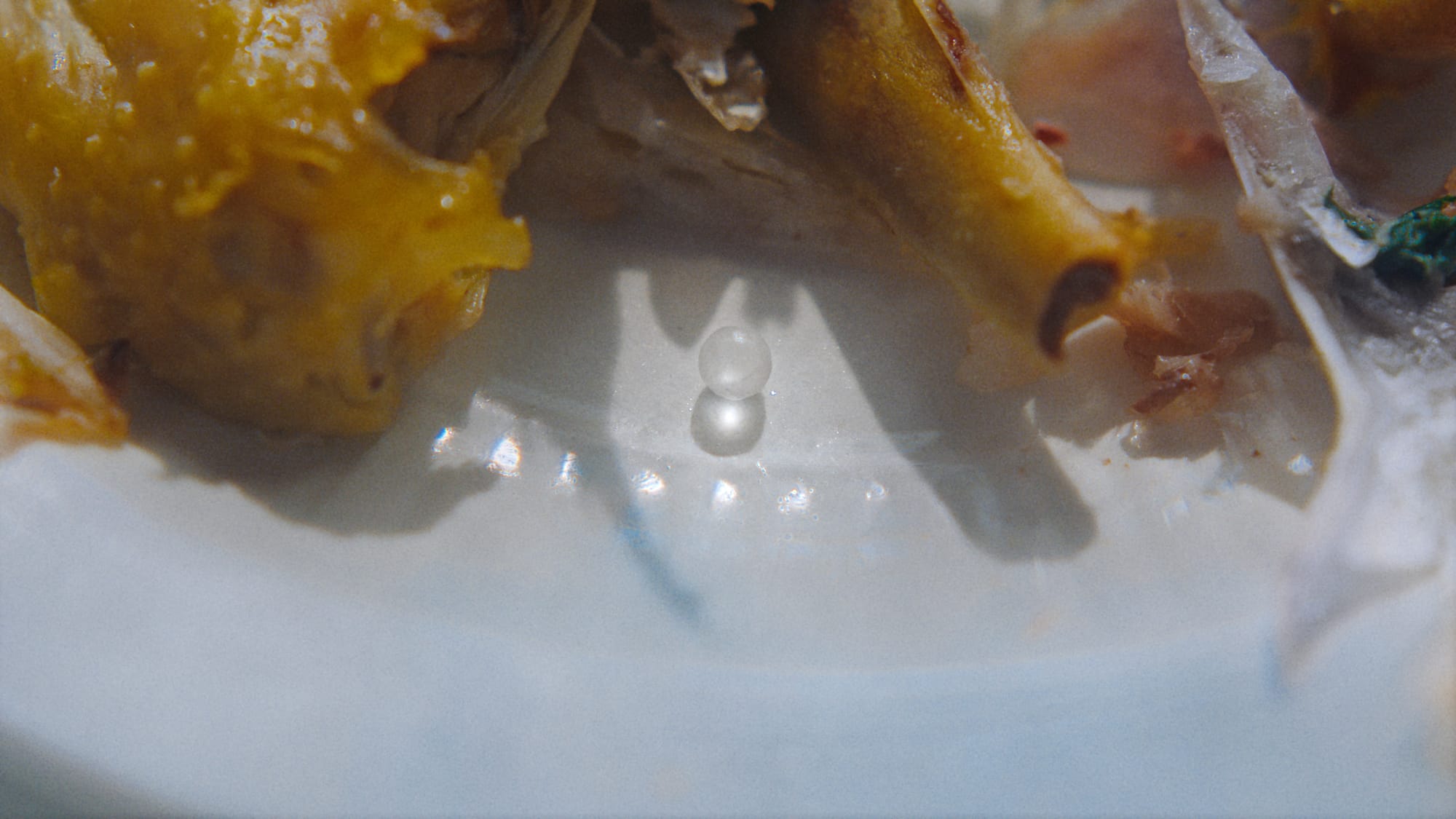
“Well, color doesn’t exist in the world, only in the perception of an observer,” says my father, flipping the fish as he speaks. He then takes a section of flesh from the back of the snapper and adds it to his bowl.
“So when we stop being observers, is everything black or white?” asks my mother. She takes a piece of chicken, dips it in the ginger scallion oil, and eats its meat, before adding its bone to the now overflowing plate of bones.
My father is looking at her in an unfamiliar way. She is looking out of the window, not meeting his gaze. He says,
“I don’t know, dear. I don’t think we need to know.”
My mother is still looking out of the window. Her eyes survey our context in all directions as if looking for something. She also does not seem to notice anything strange about what she sees outside. She turns back to my father.
“Yes, maybe that’s the wrong way to look at it.”
We continue eating.
“The Kitchen Table” is an original piece of fiction written by Sin Wai Kin, commissioned by Cheng-Lan Foundation, on the occasion of the exhibition “Housekeeping” at Cheng-Lan’s Corner in Hong Kong.
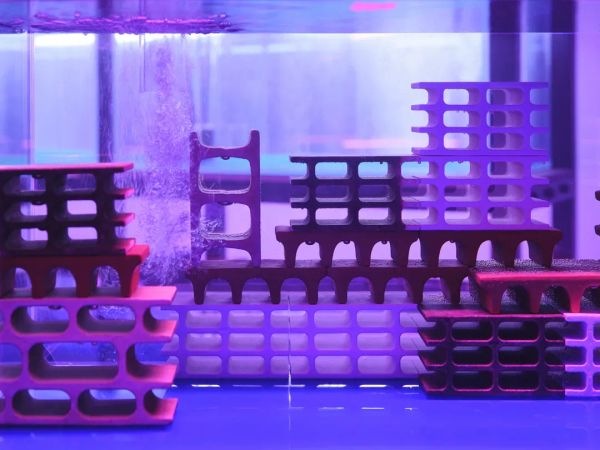
The stills are taken from The Lens (2026) by Sin Wai Kin, commissioned by Frans Hals Museum for the exhibition “Sin Wai Kin: Still Life” (2026). All images courtesy the artist and Blindspot Gallery, Hong Kong.
Sin Wai Kin is a multimedia artist, filmmaker, writer, and performer based in London.
“Housekeeping” runs through November 28 at Cheng-Lan’s Corner, 3 Prince’s Terrace, Central, Hong Kong.