Shows
In Praise of Smallness: “Elsewhen, Elsewhere” at Art Intelligence Global
Elsewhen, Elsewhere
Art Intelligence Global
Hong Kong
Jul 12–Aug 29, 2025
Art Intelligence Global’s (AIG) lofty showroom—better known for towering Gerhard Richters and swaggering Jeff Koons sculptures—was not built for smallness. But “Elsewhen, Elsewhere,” a summer exhibition organized with Tokyo gallery KAYOKOYUKI, championed it, with works that registered enduringly precisely because they scarcely demanded to be seen.
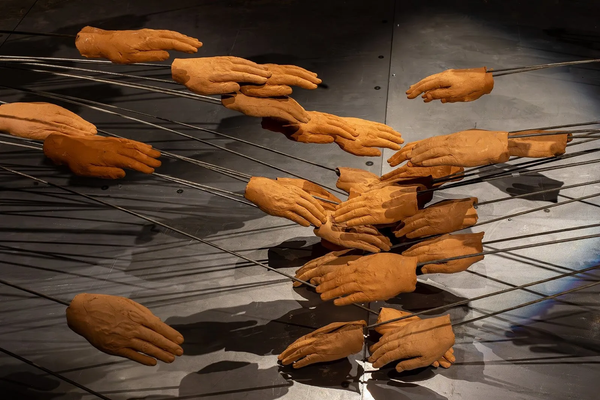
The recalibration of scale began at the entrance. Kenji Ide’s miniature wooden sculptures, slight and spindly, felt like half-built props for a half-written play—forgotten, estranged, yet uncannily familiar. Structure of Encounter (2024) unfolds as a solemn diorama that promises secrets but divulges none. The swaying matchsticks in This Rain Will Continue (2024) lean into an invisible wind, a stray paper scrap hinting at a script abandoned mid-rehearsal. And in Distance of Warmth (2024), a slender armature suspends a minuscule hand frozen mid-motion—neither grasping nor letting go—a fleeting trace of human presence already halfway out of the scene.
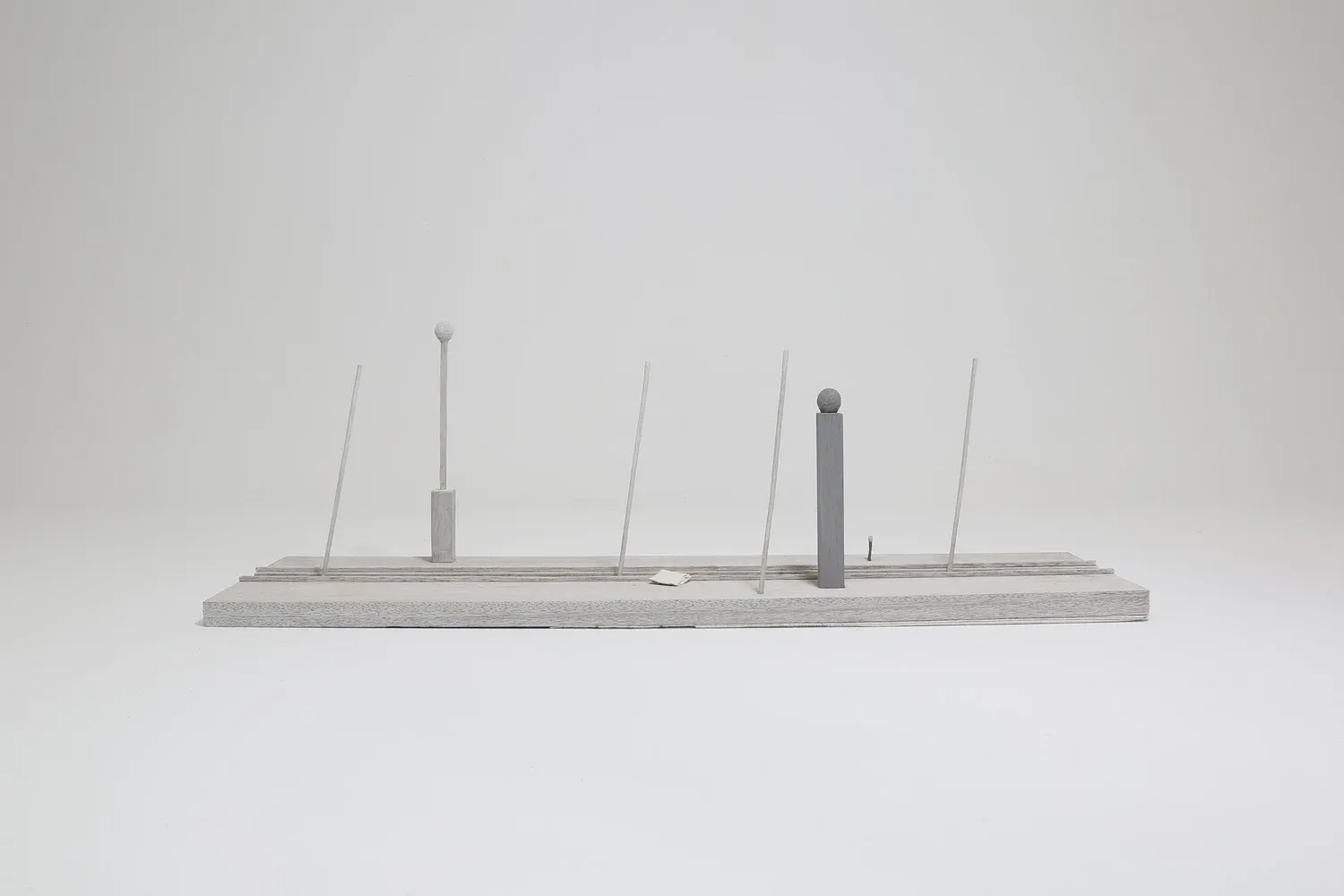
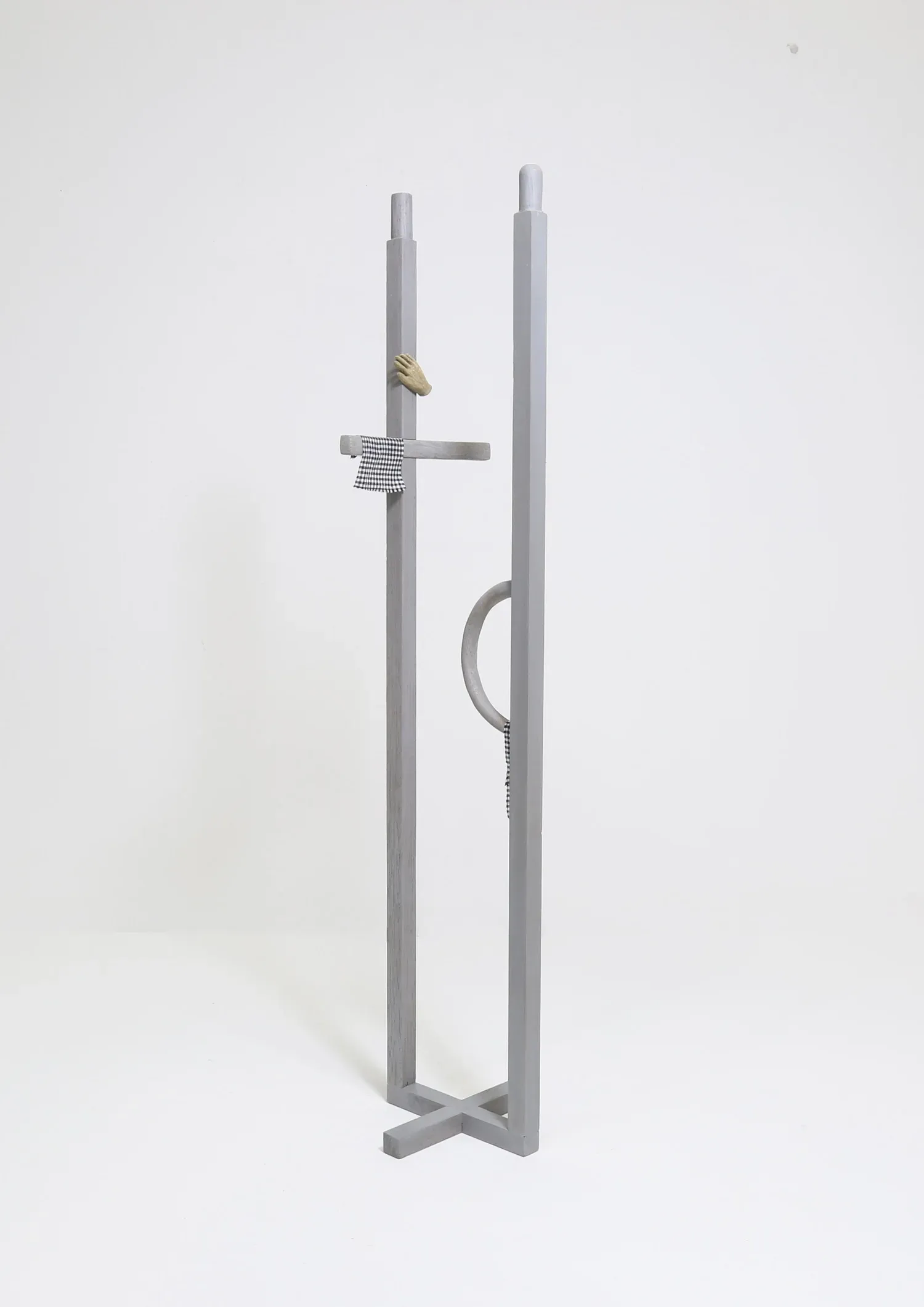
KENJI IDE, This rain will continue, 2024, wood, water color, fabric, paper, acrylic varnish, 53 x 16 x 17 cm (left); and Distance of warmth, 2024, wood, water color, fabric, acrylic varnish, 14 x 12 x 60 cm (right). Courtesy the artist; KAYOKOYUKI, Tokyo; and Art Intelligence Global, Hong Kong.
That offhand (pun intended) register extended to Ayako Ohno’s wall-mounted sculptures, carved from stone yet buoyed by a disarming lightness. Her forms, whimsical and capricious, hover on the edge of recognition—poised just beyond legibility, or perhaps open to several readings at once. Grateful (three) (2023) might be the hood of a pram or the head of a dinosaur, while Plants or flowers (its scent) (2022) conjures a leaf, a scalloped petal, or a whale’s tail. With stone’s obstinacy as her accomplice, Ohno catches ephemeral traces of the everyday and bends them, circling possibilities without ever settling on one.
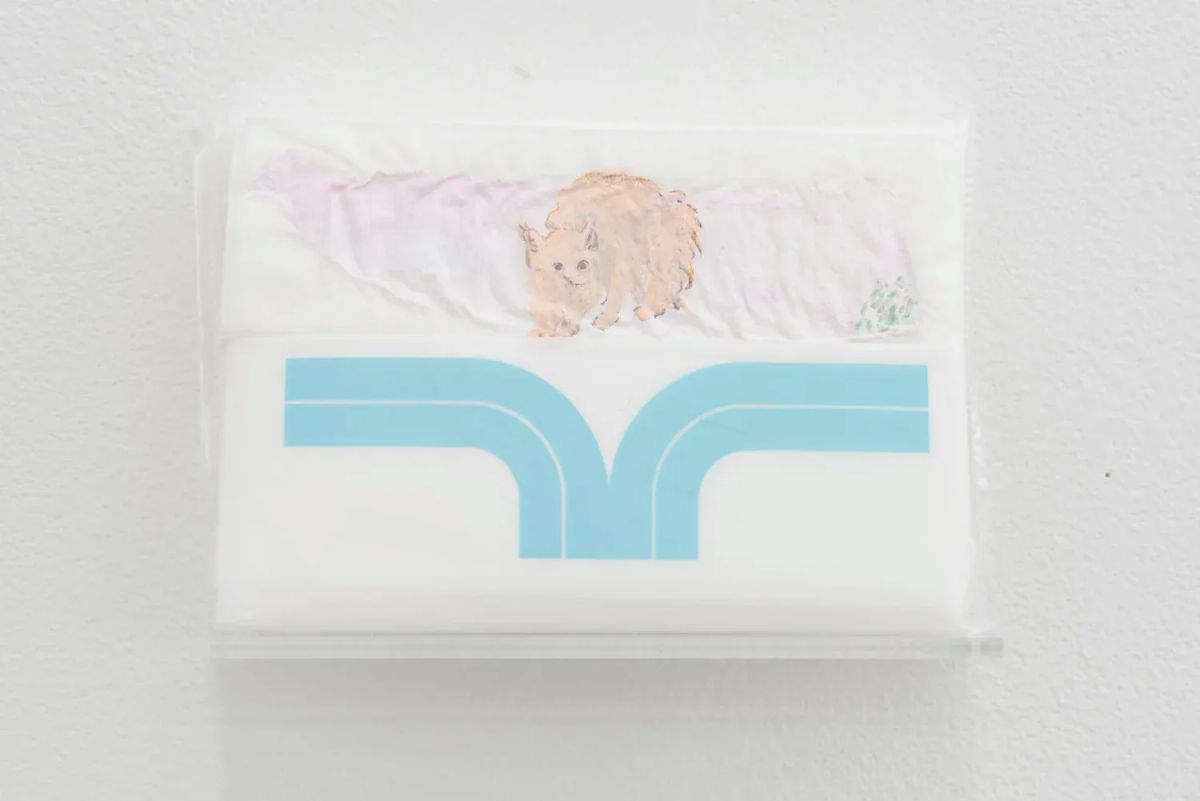
Elsewhere, Emi Otaguro’s suncatcher works (2023) abandon painting’s usual supports: faint images and smudged washes are brushed onto fragile pocket tissues, propped on tiny acrylic ledges. Nearby, two photographic prints from the artist’s Sun bath series (2016) pursue a related precarity, deriving from reliefs carved out of chewing gum and briefly laid on the fur of a stray cat. Here, texture is less thickness than exposure and wear—sun, skin, dust, and time abrading perception to the edge of erasure.
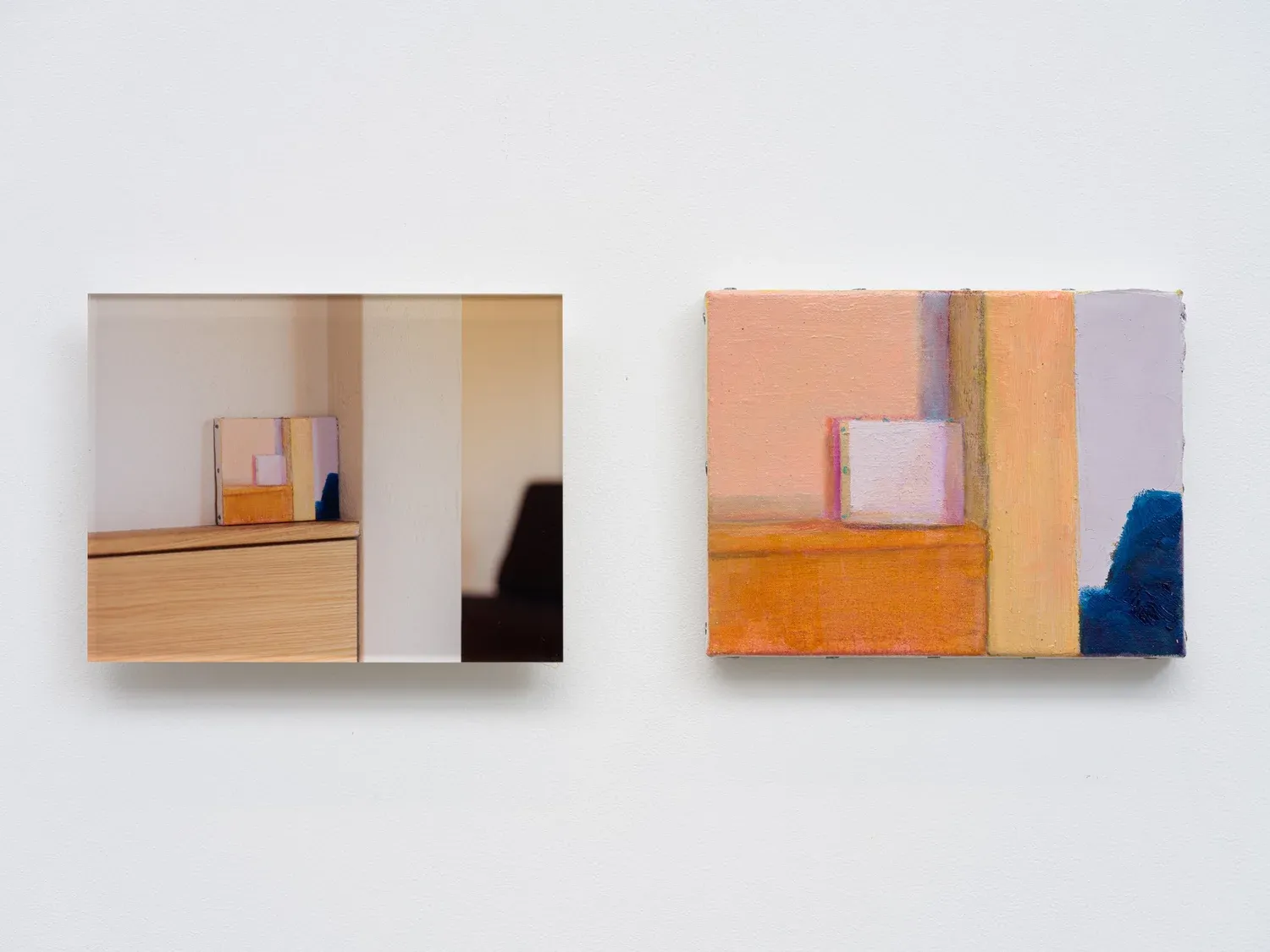
When forced to lean in, one realizes how much the eye routinely forfeits. Yutaka Nozawa’s almost absurdly diminutive interiors are delightful chromatic murmurs, their images within images all the more absorbing for their scale. Yohei Imamura’s dot-based abstractions derive from map coordinates, turning an all-over field into an engulfing record of discrete steps. In Daichi Takagi’s Wanderer (2025), a Caspar David Friedrich-esque lone figure stands beneath a richly marbled sky, which rhymed with the veined expanses of Masanori Tomita’s grounds, where surface quietly indexes time and existence.
Kate Newby sharpened this ethics of smallness into something almost conspiratorial. For We look after each other and Do it when it’s needed (both 2025), AIG associate Ethan Yip, curator of the show, routinely pressed a glazed pebble into visitors’ hands—part of an ongoing series of stones and rocks that ask to be turned over in a palm, or fingered absentmindedly in a pocket. Nearby, Calls us, calls us (2024), a low-slung hang of glazed stoneware, required a slight stoop to cross its threshold, so that an adjustment of posture, as much as touch, completed the encounter.
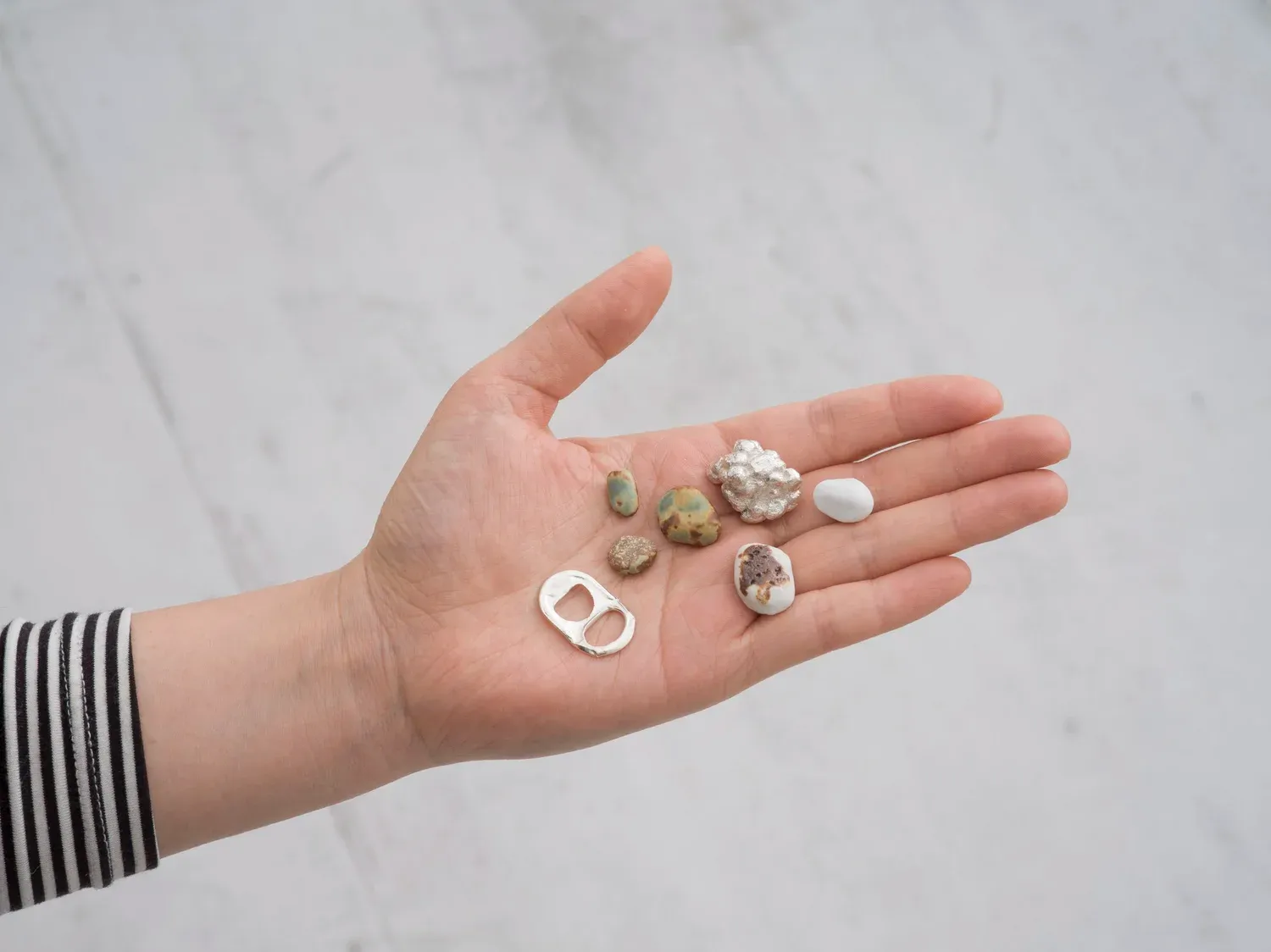
The refreshing thesis of “Elsewhen, Elsewhere” lay in these minor recalibrations. Smallness was less a matter of size than a way of restructuring care and attention: the hand that never decides on its gesture, the painted tissue one caress away from disintegration, the pebble that warms in your trouser pocket until you forget it is there. In a gallery built for spectacle, the exhibition advanced a quieter claim: that the most charged encounters unfold at the level of touch and peripheral vision, where what is most fugitive proves most insistent.
Michele Chan is managing editor at ArtAsiaPacific.