News
China Withdraws from Gwangju Biennale over Taiwan Designation
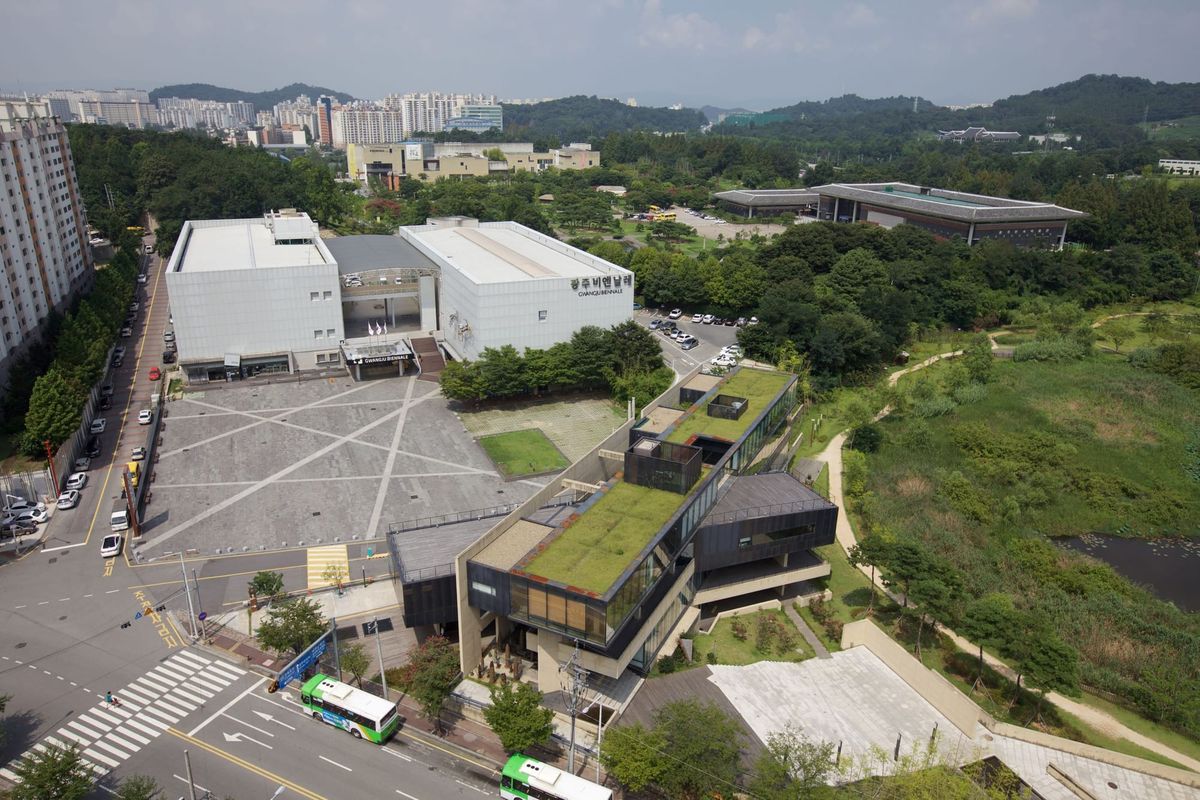
Just two days before the opening of the 16th Gwangju Biennale, the Chinese delegation confirmed its withdrawal from the exhibition, protesting the Gwangju Biennale Foundation’s decision to restore the title “Taiwan Pavilion” for Taiwan’s presentation in the show.
On the morning of September 3, curators representing the China Pavilion held a press conference at the Ha Jung-woong Museum of Art in Gwangju’s Seo-gu district, the venue that was to house their presentation, announcing their exit without taking questions.
The China Pavilion, organized by curators Liu Tian, Wang Yan, and Ruan Yuelai in partnership with the China Academy of Art and Chosun University Museum of Art, was to feature 18 artists under the title “Iron Silk Road.” Curator Ruan told reporters that the team had devoted significant effort to the pavilion but could not accept organizers letting political considerations override artistic ones.
The controversy began in June, when the Gwangju Biennale Foundation began referring to Taiwan’s presentation as “NTMoFA Pavilion”—using the acronym of the National Taiwan Museum of Fine Arts, the organizing institution—instead of “Taiwan Pavilion.” Taiwan’s Ministry of Culture first objected on August 9, followed by a joint statement from the participating artists and curators on August 15 accusing organizers of political censorship. Further statements by the ministry and exhibition team were issued on August 17 and 25 respectively, rebuking the foundation’s claims that the change had occurred due to “administrative difference.” Facing mounting pressure, the foundation reinstated the Taiwan pavilion’s original designation on August 26.
According to a report by The Korea Times, Chinese ambassador to South Korea Dai Bing met with Min Hyung-bae—Gwangju’s mayor and and chair of the Gwangju Biennale Foundation—to convey “regret and concern” over the change, contending that it violates the “One China” principle which South Korea formally adheres to. The Chinese team reportedly halted preparations several days ago.
On August 31, the Gwangju city government released a statement apologizing for the “insufficient communication” regarding the matter. Reaffirming its official support for the “One China” principle, the city government further noted: “We wish to clarify that the name used for the Taiwan Pavilion at this Gwangju Biennale represents an expression left to the participating artists within the realm of art; it does not imply that Jeonnam-Gwangju Integrated Special City or the Gwangju Biennale recognizes Taiwan as a sovereign state.”
On September 2, Gwangju Biennale organizers posted a public apology on social media addressed to all participating artists and institutions, saying it “deeply regrets that differing positions among the parties concerned were not sufficiently reconciled at key stages of the process, allowing the matter to escalate into a public controversy.” It emphasized that the foundation “remains committed to safeguarding artistic autonomy and freedom of expression, which are fundamental values of the Gwangju Biennale” and “will comprehensively review the operational and administrative processes of the Pavilion Project and strengthen its procedures for communication, consultation, and coordination.”
The 16th Gwangju Biennale, titled “You Must Change Your Life” and curated by Singaporean artist-filmmaker Ho Tzu Nyen, is scheduled to open on September 5.