People
The Body is Where Critique Lives: Interview with the Curators of “Human Being Human”

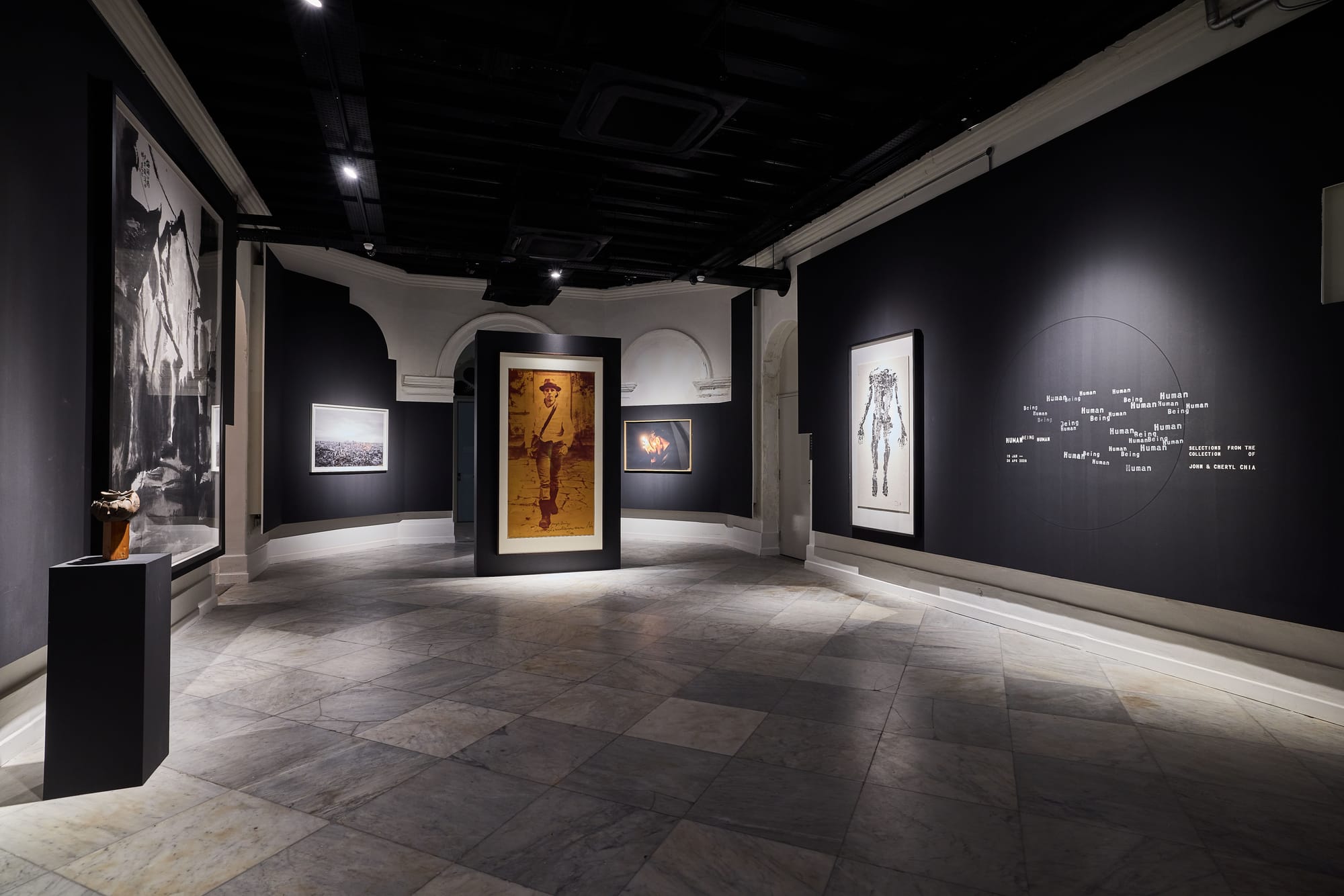
“Human Being Human: Selections from the Collection of John and Cheryl Chia,” presented at The Private Museum in conjunction with Singapore Art Week 2026, activates a collection assembled over 25 years to foreground works that attend to the human body—and to bodily experience as the most immediate and exposed register of existence.
Curated by Tamares Goh and Aaron Teo, the exhibition organizes John and Cheryl Chias’ holdings into four conceptual chapters—“Stateless,” “State,” “Statehood,” and “Rebirth”—which map out shifting states of displacement, attachment, formation, and renewal through which humans continually rework who they are and who they might yet become.
ArtAsiaPacific spoke with Tamares and Aaron ahead of the exhibition’s opening.
AAP: How did this curatorial project with the Chias’ collection come about?
Aaron: John, Cheryl, and I have often discussed the possibility of collaborating on an exhibition. About three years ago, this idea began to take shape as a group show titled “Chronic Compulsions: Selections from the Art Addicts Anonymous,” featuring 15 private collections from Singapore. That project centered on a circle of collectors—of which John is a founding member—and ultimately paved the way for this more focused presentation of John and Cheryl’s private collection.
Tamares: The curatorial project began in 2019 with a casual conversation, when John and Cheryl were already considering another exhibition of their collection. They invited me to see their works in their home and clinic, and we held early discussions and drafted possible directions. But then COVID-19 put everything on hold. The idea never quite left, however, and as the collection grew over the next five years, it felt natural to return to it. Through The Private Museum, and with Aaron’s guidance and the museum team’s support, we were finally able to look at the collection as a whole and develop a more robust framework for the exhibition.

Which aspects of their collection were you most drawn to, and how did the threads that ultimately became generative for your curatorial narrative emerge?
Tamares: It began with the artworks, not the theme; the framework only emerged later. What struck me first was John and Cheryl’s generosity—not only in opening up the collection, but in asking difficult, urgent questions. John is outspoken, always probing the state of the world and art’s place in it, and both he and Cheryl bring a genuine curiosity and deep empathy for how people live and what they are searching for.
Aaron: A recurring thread in our conversations was the theme of human suffering. As doctors, John and Cheryl often spoke about the inherent “hardness” of life—navigating failure, witnessing growth, and observing how people find the resilience to carry on. They reflected on the idea that while there is no perfect answer or resolution to suffering, the pursuit of its understanding is fundamental to our existence.
During one of our recorded sessions, John described suffering as inseparable from being alive. The title “Human Being Human” is a play on the phrase “human being”; it explores how art makes visible the thoughts, forms, and energies through which the human condition is continually expressed and worked out.
The exhibition foregrounds the human body as a tangible site of lived experience. What led to this emphasis on humanness and corporeality?
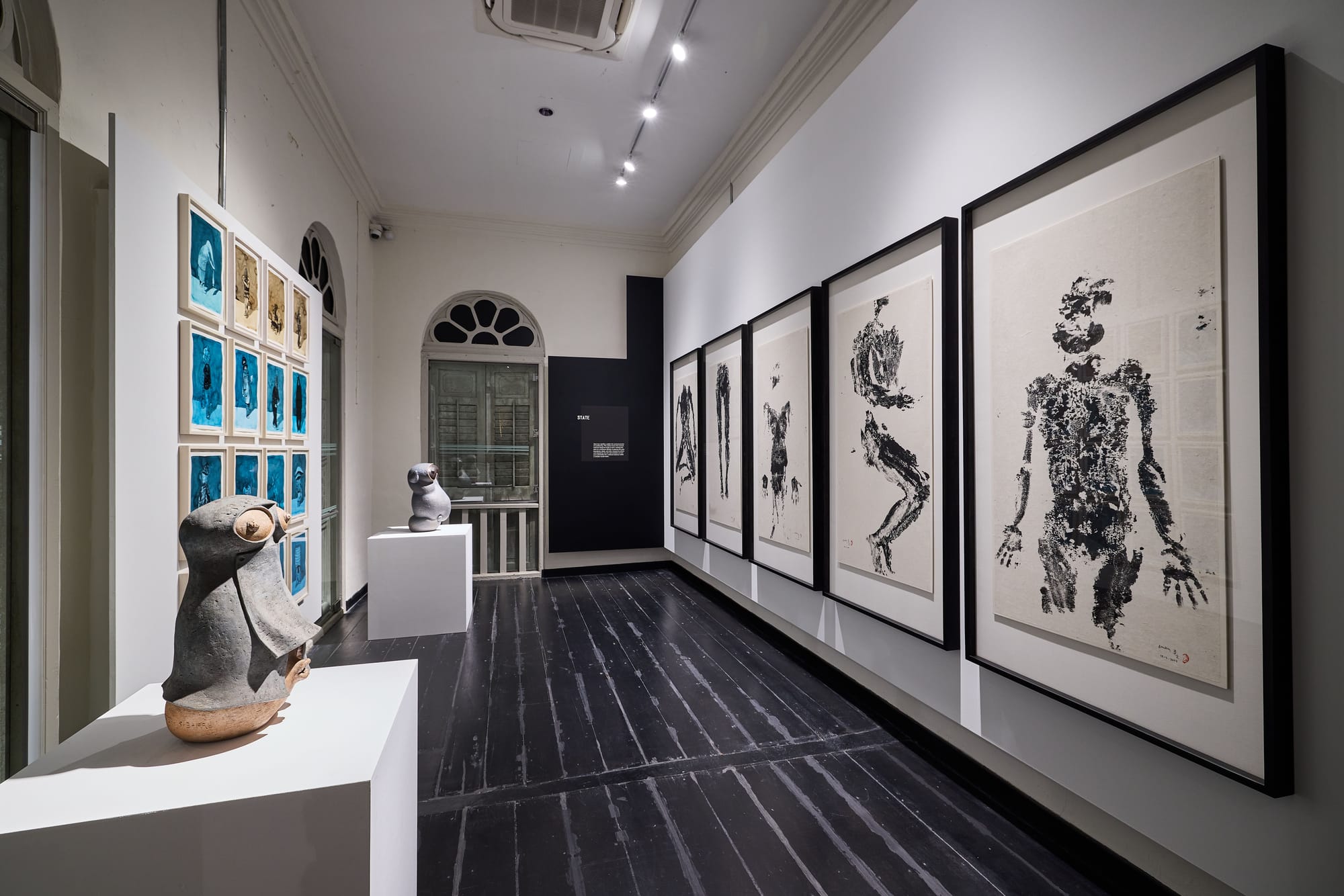
Tamares: Initially, I was interested in identity and the human in relation to the state, but as we workshopped the exhibition with Aaron and the museum team, that starting point opened into a broader framework. The body emerged as central because there is nothing more truthful than an artist inking their own body on paper. The body is the most direct site of expression—for psychological tension and questions of identity. The body is where critique lives.
Aaron: From there, Tamares developed a framework organized into four chapters: “Stateless,” “State,” “Statehood,” and “Rebirth.” These threads bind the exhibition together, reflecting the cyclical nature of the human condition—an ongoing process of displacement, existence, and the inevitable journey toward renewal.
Could you walk us through these four conceptual themes?
Tamares: We organized the exhibition into broad chapters, but there is deliberate overlap between them, because lived experience never fits neatly into categories.
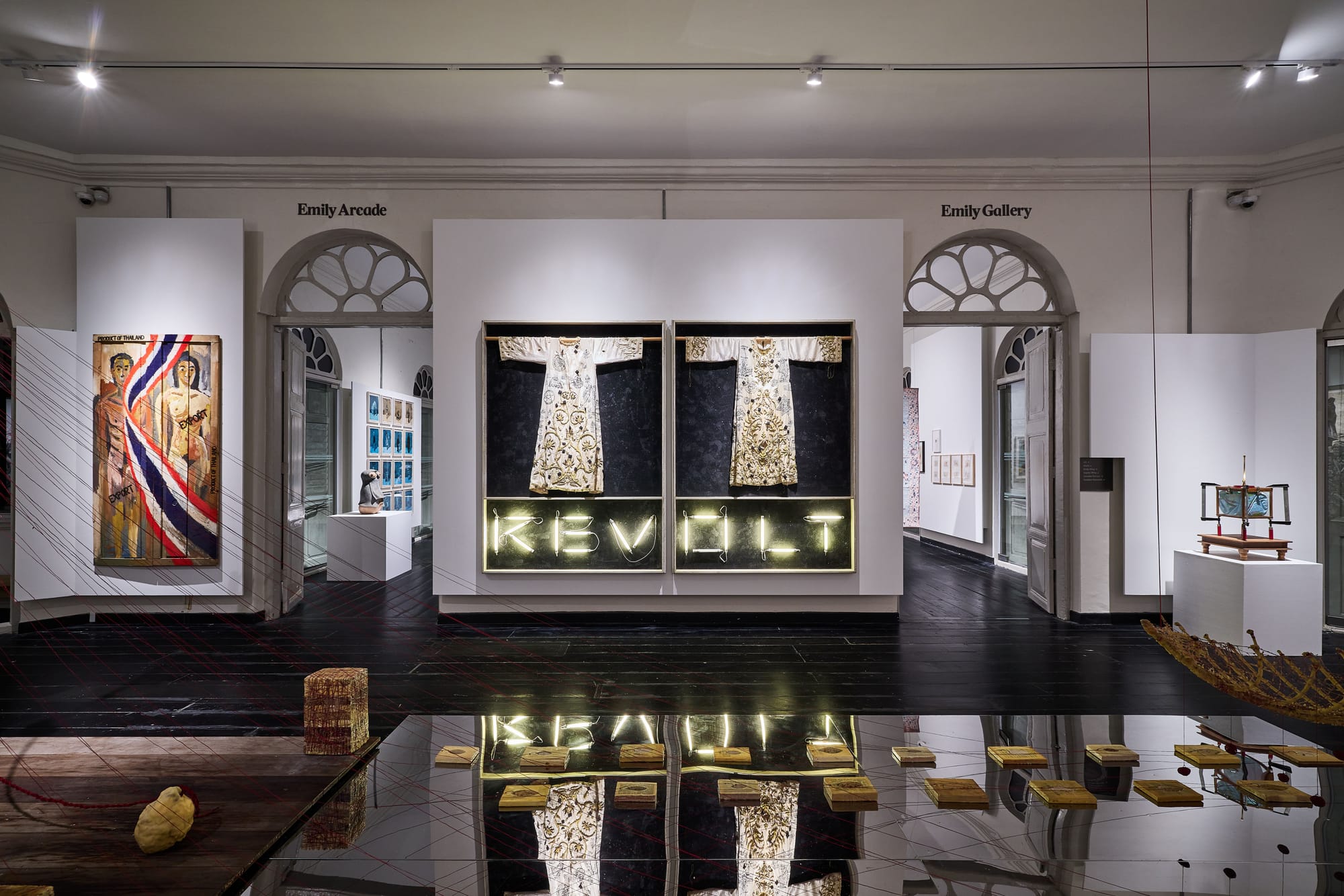
Before we get into the four chapters, we begin with the arrival hall, which is a kind of hypothesis space anchored by Joseph Beuys’s We Are the Revolution (1972). It’s a postwar image of a human confronting darkness yet still embodying strength and hope. John encouraged its inclusion despite initial hesitation about whether it was too Western-centric, and we decided it captures the human spirit beautifully.
From there we move into “Stateless,” which starts with Eadweard Muybridge’s contact prints of a child with polio, whose crawling body registers both physical limitation and motion. This chapter explores form as fluid and organic, before cultivation shapes us—whether genetically, nationally, or developmentally.
“State” then marks the onset of conditioning—the moment when external categories, roles, and labels begin to form. We show cinematic observations of life by photographers like Alecia Neo and Sherman Ong—intimate observers capturing private moments.
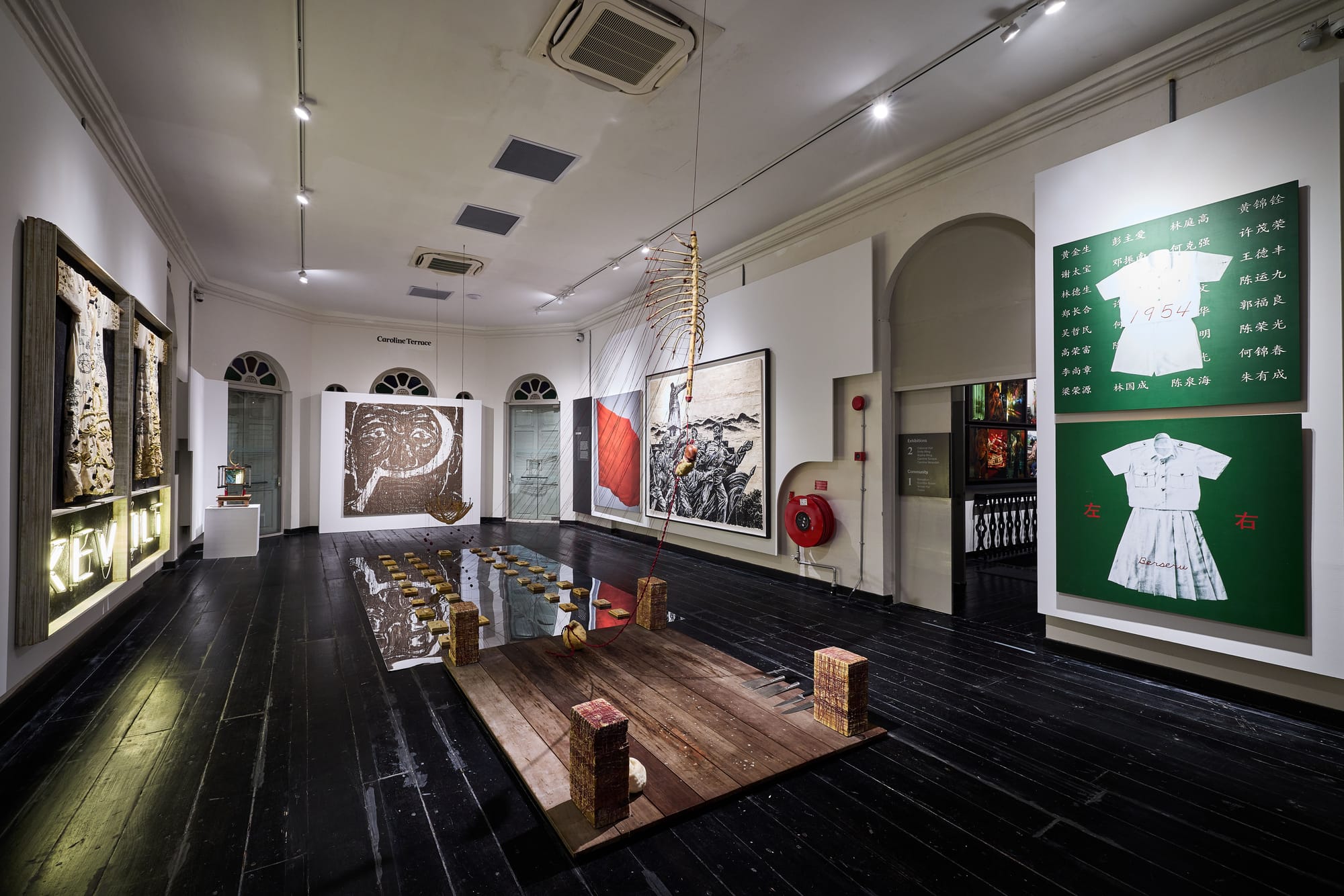
In “Statehood,” which looks at how institutions, nations, and collective ideologies shape and sometimes overwhelm the self, we have Vasan Sitthiket’s works that probe submerged knowledge and national narratives, bringing in motifs like ships, books, flags, and familial imagery that ask where and how we belong.
Finally, “Rebirth” turns to the question of how one might shed parts of a constructed self in order to begin again. Tang Da Wu’s Kill all artists, with its performance residue of paper trousers stained in Singapore soil, is brutal but immediate. It’s a metaphor for shedding, unlearning, and grounding oneself differently as a way to imagine new forms of being.
Is there a special significance in exploring this framework in Singapore’s context?
Aaron: When I first discussed the project with the museum’s board of directors, concerns naturally arose regarding censorship and advisory ratings. However, I refocused the conversation on the exhibition’s true intent: it isn’t geopolitical, but rather grounded in philosophy, existential inquiry, and psychology. It explores myths, origins, and the human condition—areas that align closely with John and Cheryl’s own interests. Rather than serving as a direct political critique, the show operates on a more existential register.
Tamares: The questions of body, identity, and transformation are universal, even though they are articulated here through works from Singapore and across Southeast Asia. The exhibition is ultimately asking fundamental questions about what it means to be human.
Several works carry a medical or scientific undertone, reflecting the Chias’ professional backgrounds. What kind of responses do you hope to elicit?
Aaron: Their backgrounds inevitably shape what they’re drawn to—Muybridge’s systematic studies of the body, for instance, resonate with a clinical way of looking. But the exhibition ultimately invites all visitors to think about the human condition: suffering, resilience, identity, and renewal. The hope is that these works register as reflections on shared experiences, not specialist knowledge.
Tamares: Many pieces use elemental materials—fire, soil, ink—in ways that trigger bodily or physical reactions. We hope viewers not only grasp the ideas at stake but also feel the weight and texture of these materials. The encounter should be as visceral as it is cerebral.
What works became anchor pieces from the outset?
Tamares: The Muybridge prints were the first lodestar; that image of a child with polio fundamentally shaped the title “Human Being Human,” crystallizing the exhibition’s concern with vulnerability, motion, and how a life is seen.
Aaron: Joseph Beuys’s figure was another anchor, standing in for postwar resilience and hope, while Lee Wen’s body-printed works grounded the exhibition’s focus on the body as both expression and critique. These works captured the essence of what we had discussed in our curatorial workshops.
Which works were later additions, and did they shift the curatorial arc?
Aaron: From the roughly 20 Muybridge prints John and Cheryl own, we selected nine of them. Other works entered as the narrative was refined, but the basic framework held; the exhibition adjusted in detail, not direction.
Tamares: The later additions reinforced rather than shifted the direction. As the collection expanded and we revisited earlier conversations, new works aligned naturally with the themes already in motion.
The exhibition brings a private collection into public space. How are you balancing the collectors’ subjective affinities with your curatorial thesis?
Aaron: We spoke many times—through informal conversations, recorded sessions, and workshops—and both John and Cheryl’s words are woven into the exhibition itself. This collaborative process ensures their voice and passion directly shape the show, while the curatorial framework gives that energy a clear, rigorous structure.
Tamares: Their interests—medical, philosophical, or aesthetic—became the material we worked with. Rather than imposing a thesis, we listened and let their collection articulate its own concerns, then used curation to amplify and organize what was already there. The more practical decisions—how to hang the works, how to pace the rooms—grew out of that same respect for both the collection and the visitor’s journey.
Has your view of what a private collection can do—socially, intellectually, or affectively—changed?
Tamares: Private collections are often quite isolated, and bringing this collection into public dialogue reveals its intellectual and emotional depth. Its force is amplified in a public space—it ceases to be just a set of cherished objects and becomes a proposition about what it means to be human.
Aaron: I think of private collectors as custodians of knowledge and feeling. This exhibition shows how a thoughtfully curated private collection can engage broader audiences with serious philosophical and existential questions. It elevates the role of collecting itself—not as acquisition but as lifelong practice of stewardship that extends far beyond personal interest.
“Human Being Human: Selections from the Collection of John and Cheryl Chia” opens on January 19 as part of Singapore Art Week 2026.