Shows
Pure Intention, Muddy Ground: Singapore Biennale 2025
Singapore Biennale: pure intention
Singapore
Oct 31–Mar 29, 2026
Singapore believes in plans—preferably precise, long-term, and measured by KPIs. The eighth edition of the Singapore Biennale opened with the provocation “pure intention.” But purity hits friction fast and intentions rarely survive contact with reality; the ground is always muddier than the blueprint and far more alive. Despite the biennale’s tidy curatorial binaries—“design versus drift,” “control versus chance,” “progress versus afterlife”—it revealed that once intention touches the ground, it is never pure but always negotiated, pulled into the messiness of people, places, and the systems that bind them.
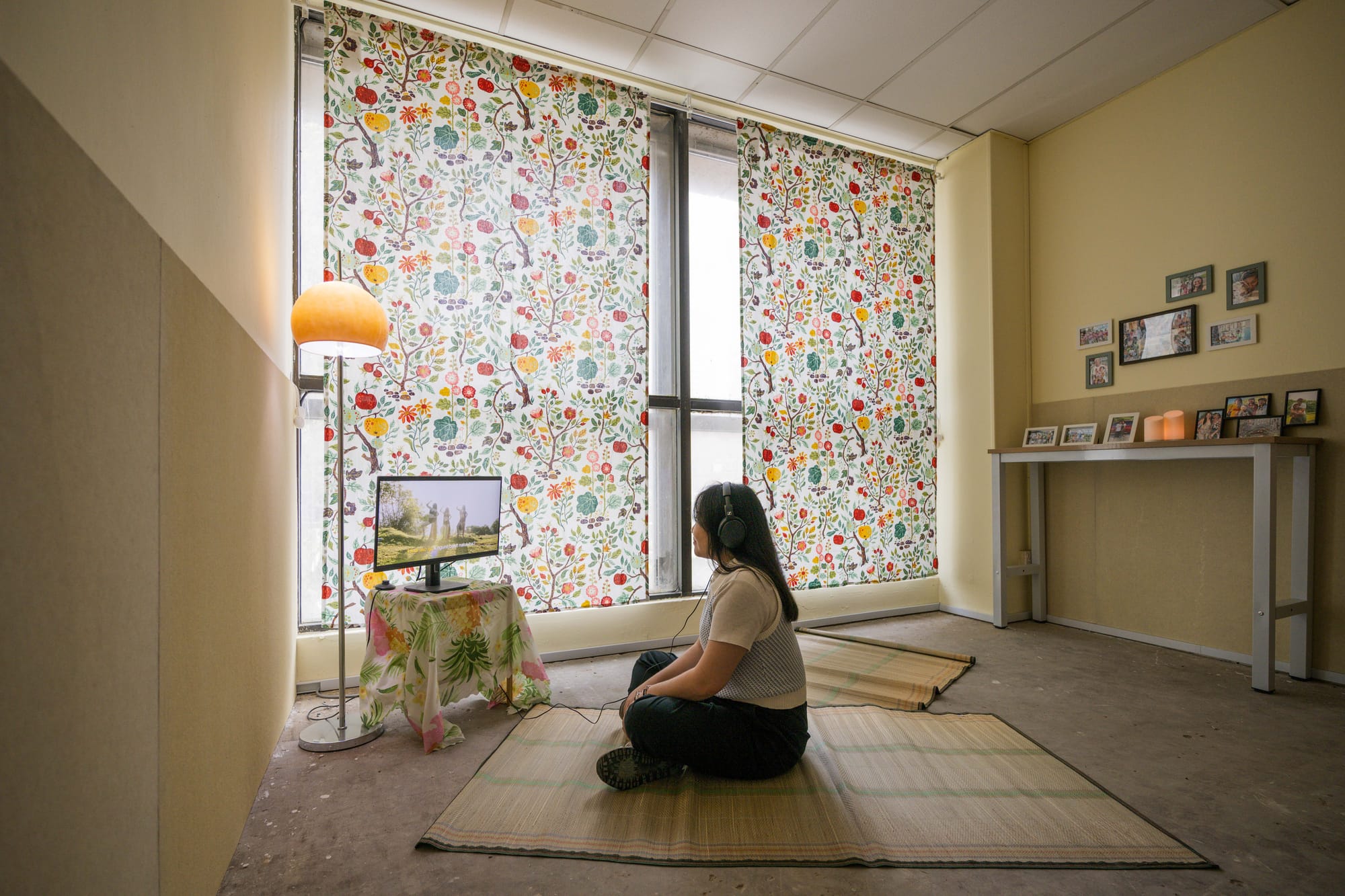
That’s where the artworks began: enmeshed in malls, housing estates, historic landmarks, and green corridors. Take Lucky Plaza on Orchard Road—Singapore’s busiest shopping strip—which transforms each Sunday from a maze of remittance counters and beauty parlors into a vibrant commons for Philippine domestic workers. In one unit, Eisa Jocson conjured a karaoke living room replete with couches, floral curtains, and photographs—a portable home featuring music videos co-created with members of H.O.M.E. (Humanitarian Organization for Migration Economics). Also showcasing works by The Filipino Superwoman Band, the installation celebrated kinship while confronting the realities of migrant domestic labor. At Peninsula Plaza, Gala Porras-Kim’s pink picnic sheets—printed with poems by Burmese migrant writers and sold through grocery shops—were activated when spread out during Sunday gatherings, turning rest into fragile rituals of expression and belonging.
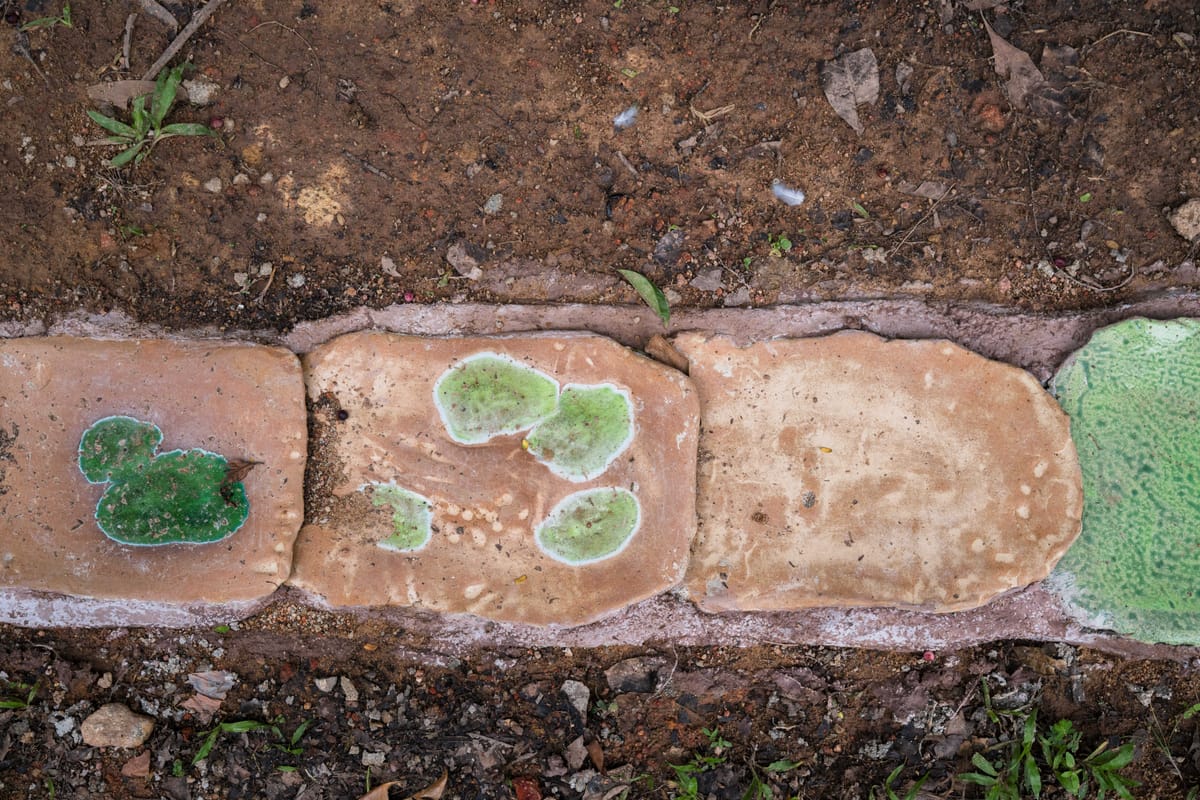
In Tanglin Halt, an aging estate on the brink of redevelopment, Joo Choon Lin turned a former dispensary into a sculptural and performance installation of reconfigurable “film objects.” Wedged between hawker stalls and kopitiams (coffee shops) where residents, especially the elderly, gather daily, her work echoed the ingenuity with which communities continually refashion themselves amid shifting environments. Further along the Rail Corridor, a colonial-era railway rewilded into a public green, Kate Newby’s multicolored ceramic drain tiles reminded us that what endures is not form, but care accumulating over time between bodies and terrain.
It was here, embedded in daily rhythms, that the biennale found its pulse: art encountered where life actually unfolds. Across more than 100 works in five neighborhoods, it mapped the hidden infrastructures that keep Singapore moving. In a year marking Singapore’s 60th anniversary of independence, framed by clean, state-driven narratives of national progress, the biennale turned our gaze away from achievement to ask what progress demands, and who bears the cost.
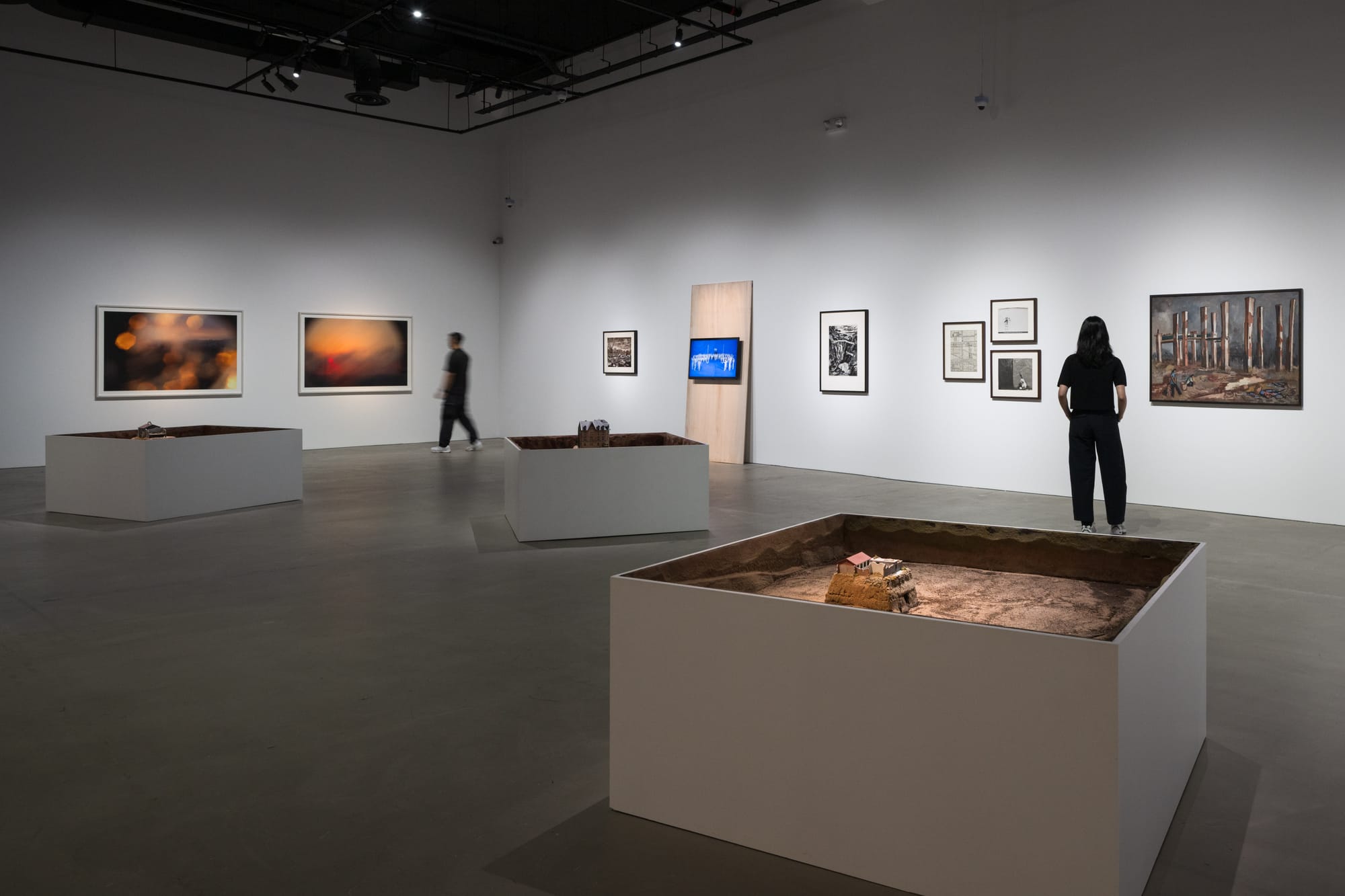
It is a question worth revisiting, even if not a new one. At Singapore Art Museum (SAM) in Tanjong Pagar Distripark, Lim Mu Hue’s 1960s–’70s woodcuts depict the quarries and ports that reshaped Singapore’s early years, while Tristan Duke’s ice-lens photographs of wildfire-scarred America expose the environmental precarity tethered to ambition elsewhere. One looks to progress; the other to its fragility.
Hyphen—, one of several curatorial contributors invited to broaden the biennale’s perspectives, examined how nationhood is built through omission. In their diorama of the 1963 Irian handover, suited officials appear as protagonists of history, while women, workers, and Papuans who made and witnessed the moment are pushed out of sight. Nearby, Titarubi’s gilded nutmeg condenses the sweep of colonial greed into one gleaming, violent seed. At Fort Canning Centre, Cian Dayrit’s embroidered cartographies lay bare how land and power entwine across Southeast Asia, charting nation-building’s invisible hands and uneven gains.
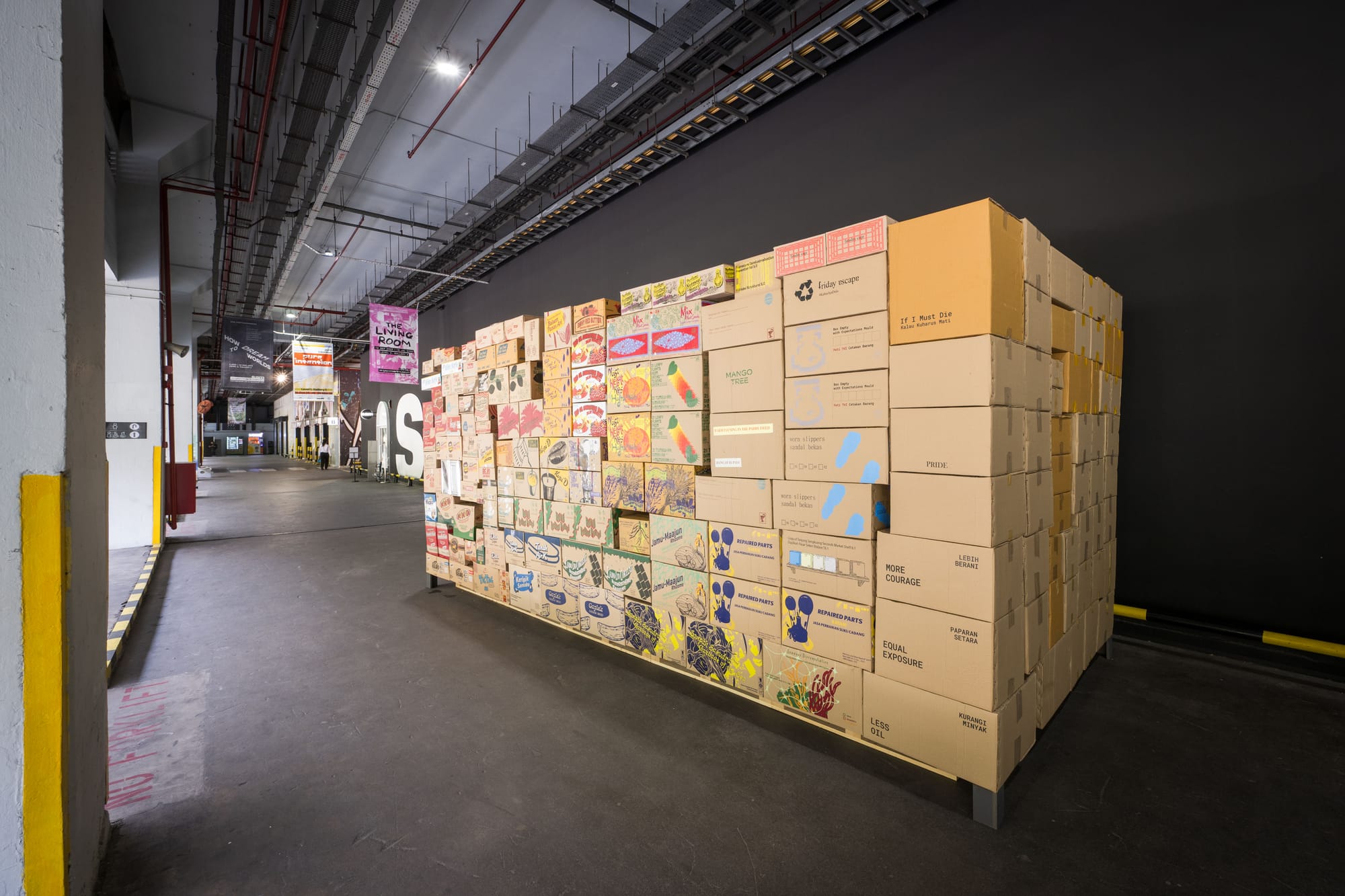
Outside SAM, CAMP’s Metabolic Container (2025) reanimated a shipping container as a living logistics system. Four hundred boxes from Batam, ranging from sambals and crackers to speculative goods, occupied both its interior and exterior. Reimagining the container as a metabolic space where goods circulate, mutate, and momentarily pause before moving on, CAMP brought to the surface what is usually hidden: the labor and maritime choreography that sustain Singapore’s comfort.
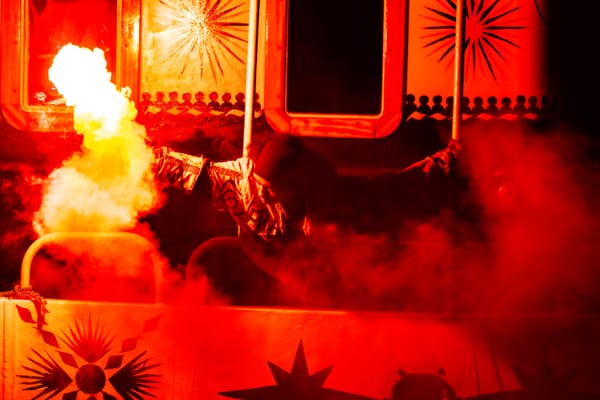
Amid global conflict, the biennale rejected the idea that war ends when weapons fall silent. Towering over the Ng Teng Fong Roof Garden at National Gallery Singapore, Tuan Andrew Nguyen’s Temple (2025) suspended bells, gongs, and chimes cast from defused bombs beneath emergency-orange arches—evoking the caves where the artist’s grandmother once sought refuge during the American war in Vietnam. Visitors were invited to ring them, transforming remnants of violence into instruments of care. Tuned to 432 hertz—a frequency believed to promote healing—the bells recast echoes of harm into a collective call for renewal.
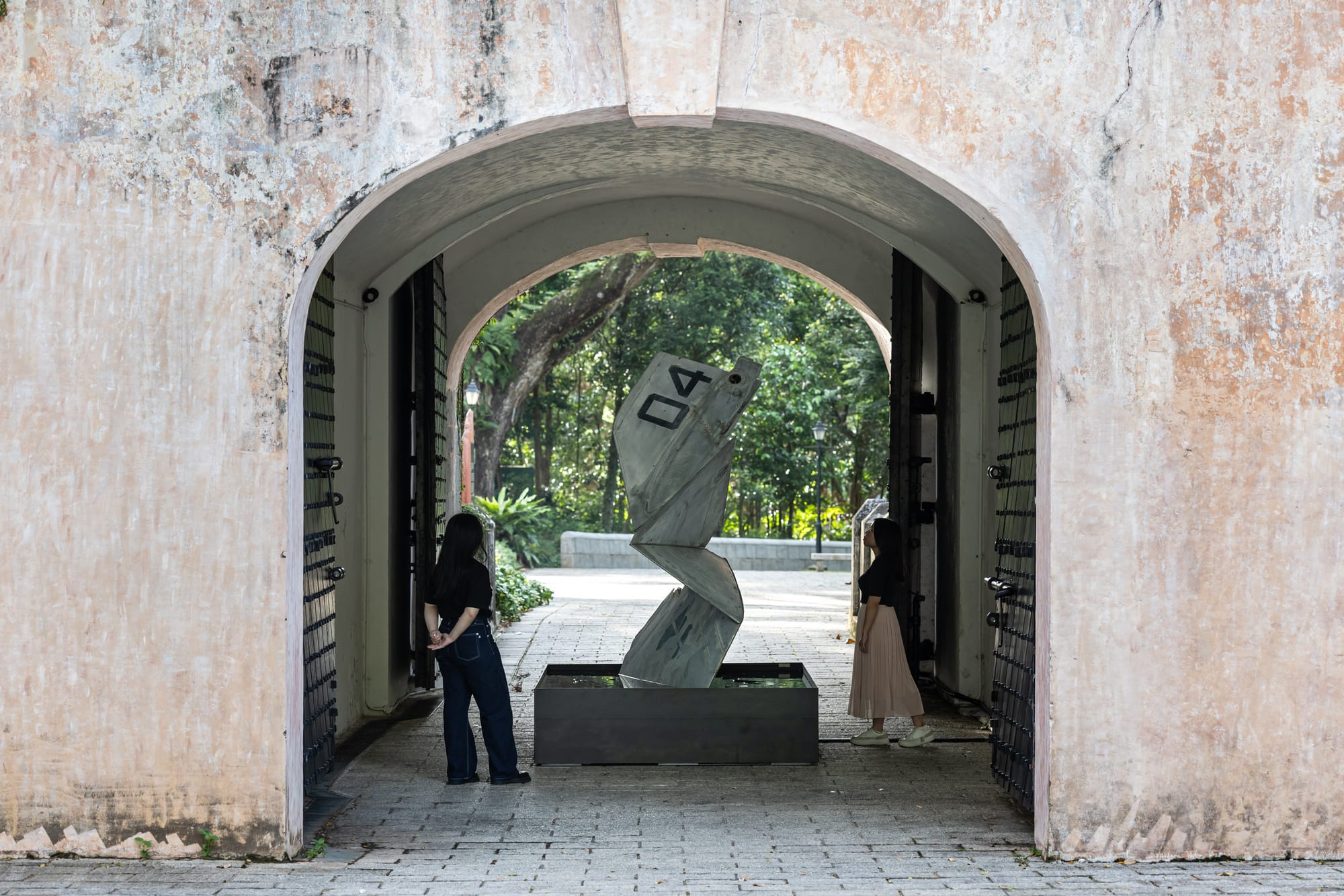
At Fort Canning—once a British and Japanese command post—Jacqueline Kiyomi Gork’s faux “zen fountain,” built from WWII aircraft scrap, erupted in abrasive bursts of noise that shattered the site’s manufactured calm. Nearby, Kapwani Kiwanga’s Flowers for Africa: Rwanda (2019) mirrors the 1961 independence arch, draped in eucalyptus left to wilt. Decay becomes a reminder that sovereignty is a process, not a conclusion—and that stories of liberation must be tended if they are to endure.
Wessex Estate’s Blenheim Court, former British military quarters, housed Allora & Calzadilla’s Returning a Sound (2004) and Under Discussion (2005). The films reassert sonic agency to the Puerto Rican island of Vieques, where decades of US weapons testing persist as environmental and bodily harm. Upstairs, ikkibawiKrrr’s film installation Seaweed Story (2022) channels the voices of Jeju’s haenyeo (female divers), whose labor and anticolonial resistance are carried through song. Together, these works insist that war does not disappear; it calcifies into land, bodies, and memory.
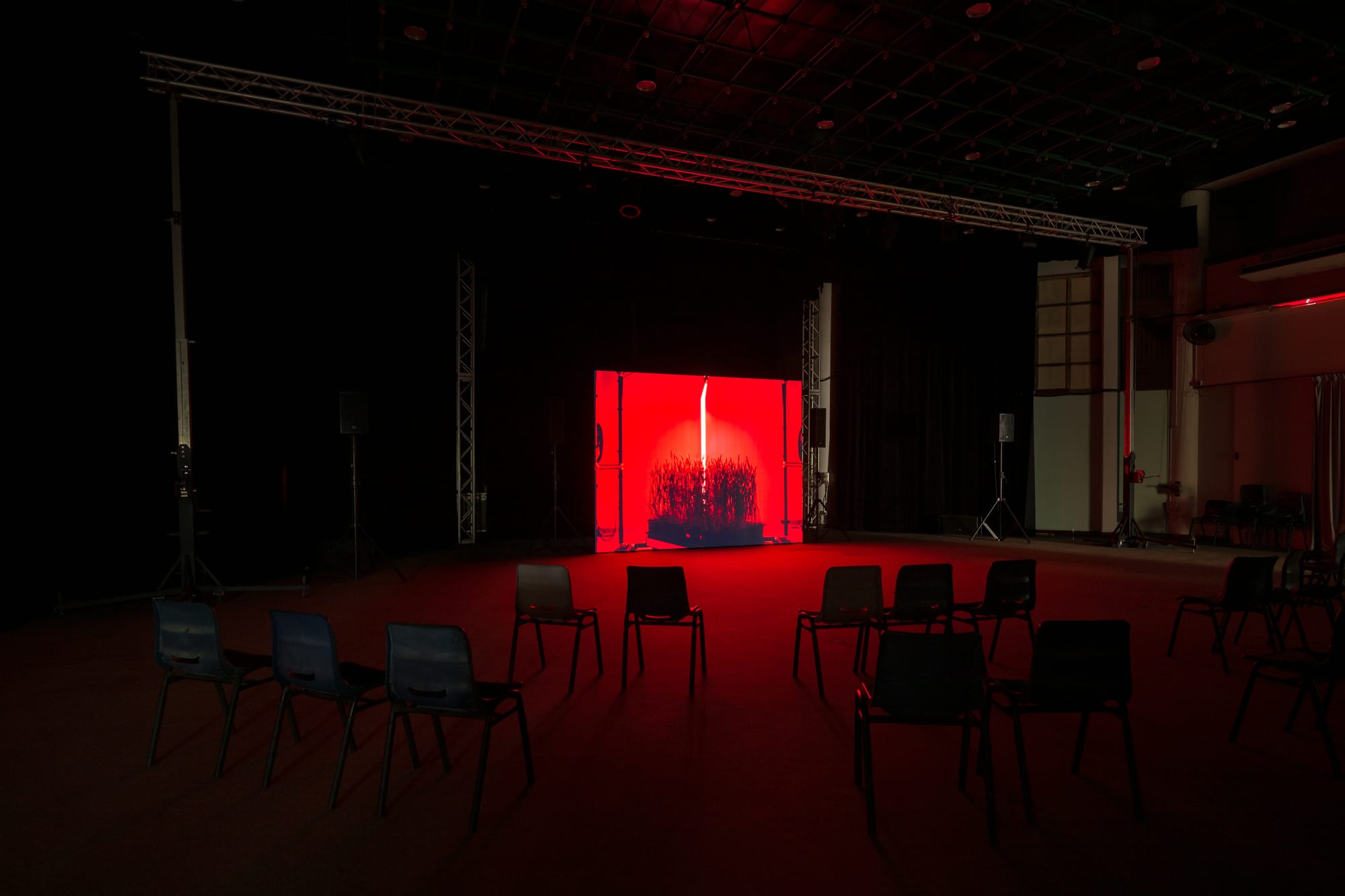
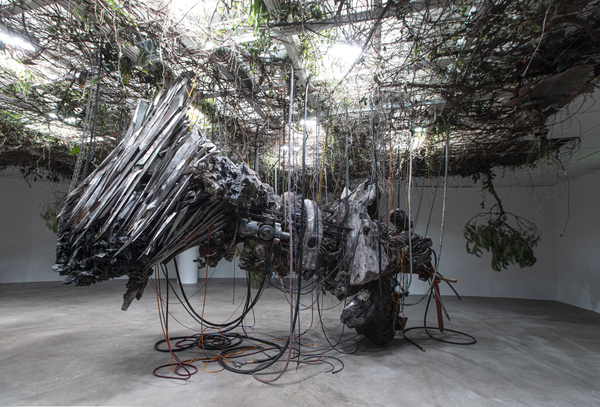
Ecological precarity took center stage at 20 Anderson Road—the former Raffles Girls’ School. In their film installation 7 Summers (2025), Diakron & Emil Rønn Andersen subject wheat fields and salt marshes to simulated climate futures—heatwaves, rising CO₂, even the hint of a new ice age—exposing the fragility embedded in “controlled” environments and the hubris of prediction as mastery. In the field behind the school, Hothouse’s curatorial presentation, “PRIMAL INSTINCT,” punctured the “Garden City” ideal: Tini Aliman reclaimed sonic knowledge long suppressed by colonial taxonomy, releasing a discordant hum through the site; Elizabeth Gabrielle Lee’s sculptural forms policed desire through design; and Salad Dressing’s Square Forest (2025) allowed unruly ecology to take root. Together, the works dismantled the myth that nature can be perfected, reminding us that wildness persists, even in a city built on order.
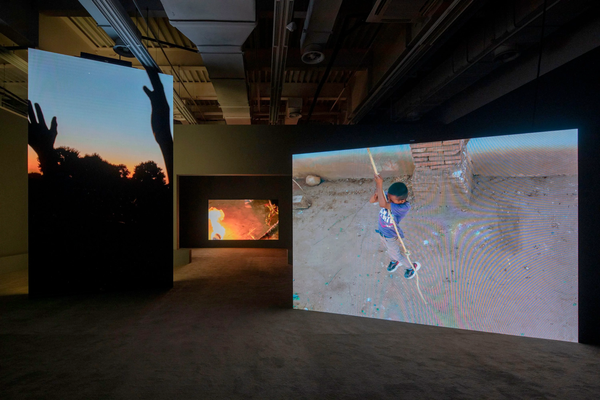
Elsewhere, nature emerged less as backdrop than as witness. Tan Pin Pin’s video installation paired two earlier works, Inuka (2008)—a polar bear pacing a fabricated Arctic—with 80km/h (2004), a drive along the Pan-Island Expressway. Projected onto translucent screens, their tempos overlap without merging: biological rhythm meeting infrastructural time, revealing how control scripts both environment and movement.
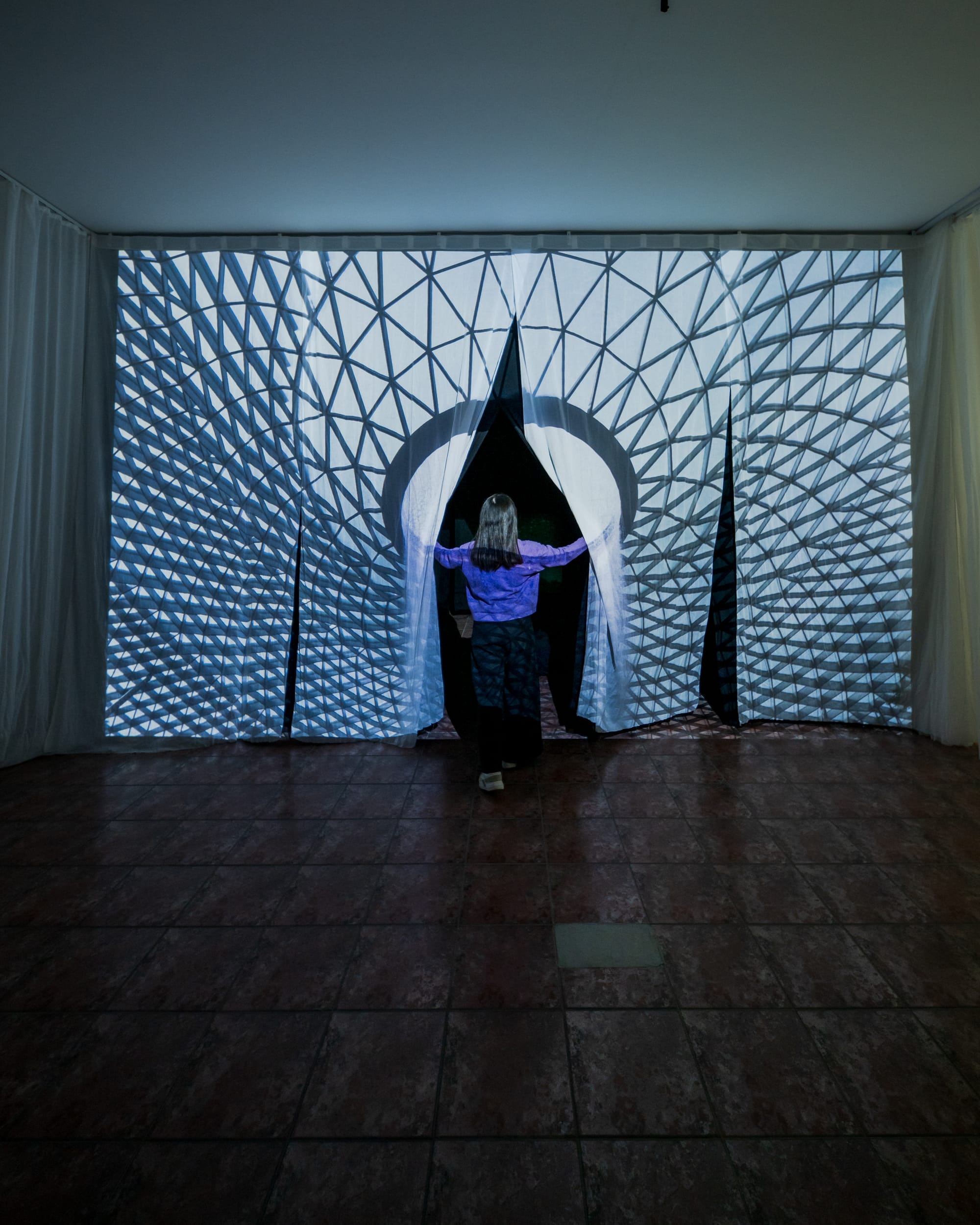
field-0’s Drifting Bodies (2025) maps a hidden circuitry of interdependence, where the hydroelectric grid powering Jewel’s Rain Vortex is the very system that submerges forests and displaces Karen communities upstream in Thailand. And in Cui Jie’s Thermal Landscapes (2025), modernist watchtowers—once symbols of progress—drift as debris through warming oceans, their confidence undone by the very futures they helped imagine.
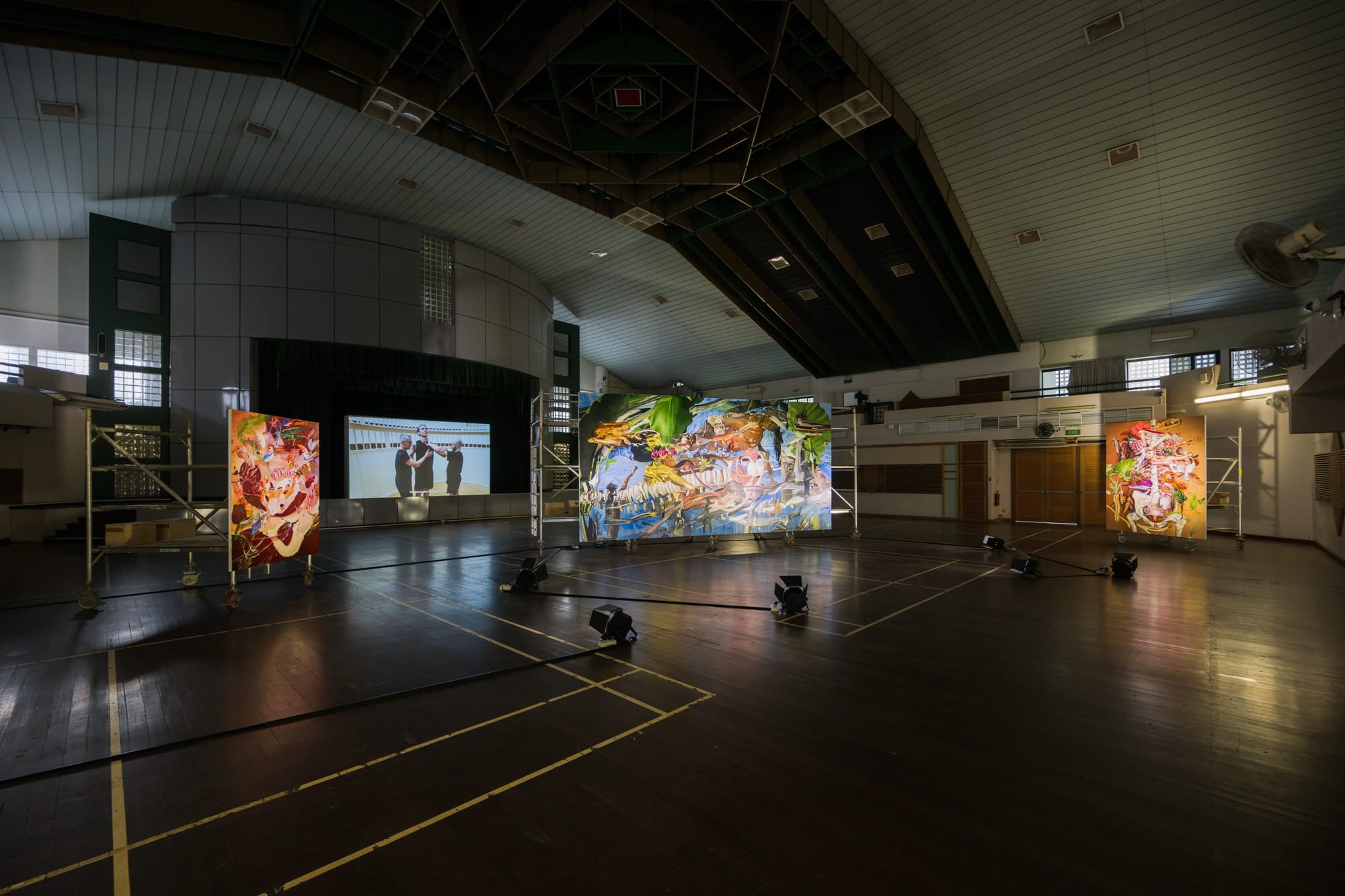
Yet alongside these scenes of unraveling, Kei Imazu’s Hainuwele series (2023) turns to what endures: bodies that regenerate; land that remembers. Rooted in a myth where a buried goddess gives rise to crops, her paintings suggest that even exploited ground holds the seed of renewal—that history, like ecology, resists finality.
If “pure intention” was the biennale’s provocation, “Water Under the Bridge / A Bridge Under Water”—curated by The Packet—answered with a glitch. Installed as a suspended internet café in Far East Shopping Centre—once a portal to progress—it showed how the futures we script are continually interrupted by unresolved pasts. Videos loop, histories reload; progress stalls in buffering.
The biennale reveled in complexity, at times retreating into it—stretching its threads wide and scattering its arguments, leaving viewers to piece coherence together for themselves. Yet perhaps disjunction and conflict were its truest provocation. Labor remains essential yet unseen; ecologies bear ambition’s scars; myths remind us that origins are never clean. In a milestone year, the biennale resisted easy resolution, asking instead what kind of progress remains possible—and for whom—as Singapore, and the world it moves with, strides into the next chapter.
Yvonne Wang is an art writer and ArtAsiaPacific’s Singapore desk editor.