Shows
“Palestine from Above” at ANAMED Gallery
Palestine from Above
ANAMED Gallery
Istanbul
Mar 19, 2025–Jan 25, 2026
Prior to aviation, only the winged could defy gravity, look down at Earth, and see the living from the perspective of heaven. This aerial vantage became a metaphor for transcendence: believers imagined their late loved ones ascending to that view. In early Islamic lore, Palestine set the stage for a miracle of flight in the tale of Al-Buraq, the flying horse that lifted the Prophet Mohammed into the skies above Jerusalem.
At ANAMED Gallery in Istanbul, the second iteration of “Palestine from Above,” which began at the A.M. Qattan Foundation in Ramallah in 2021–22, opened with a poster of The Prophet’s Buraq (1920–40). Framed by golden light bulbs, the image of the mystical steed is illustrated with a vintage flair owing to its provenance in Bombay, retracing how the creature once circulated across Muslim Asia as a brand icon for postal services, aerial industries, shipping companies, and even Pakistani drones.
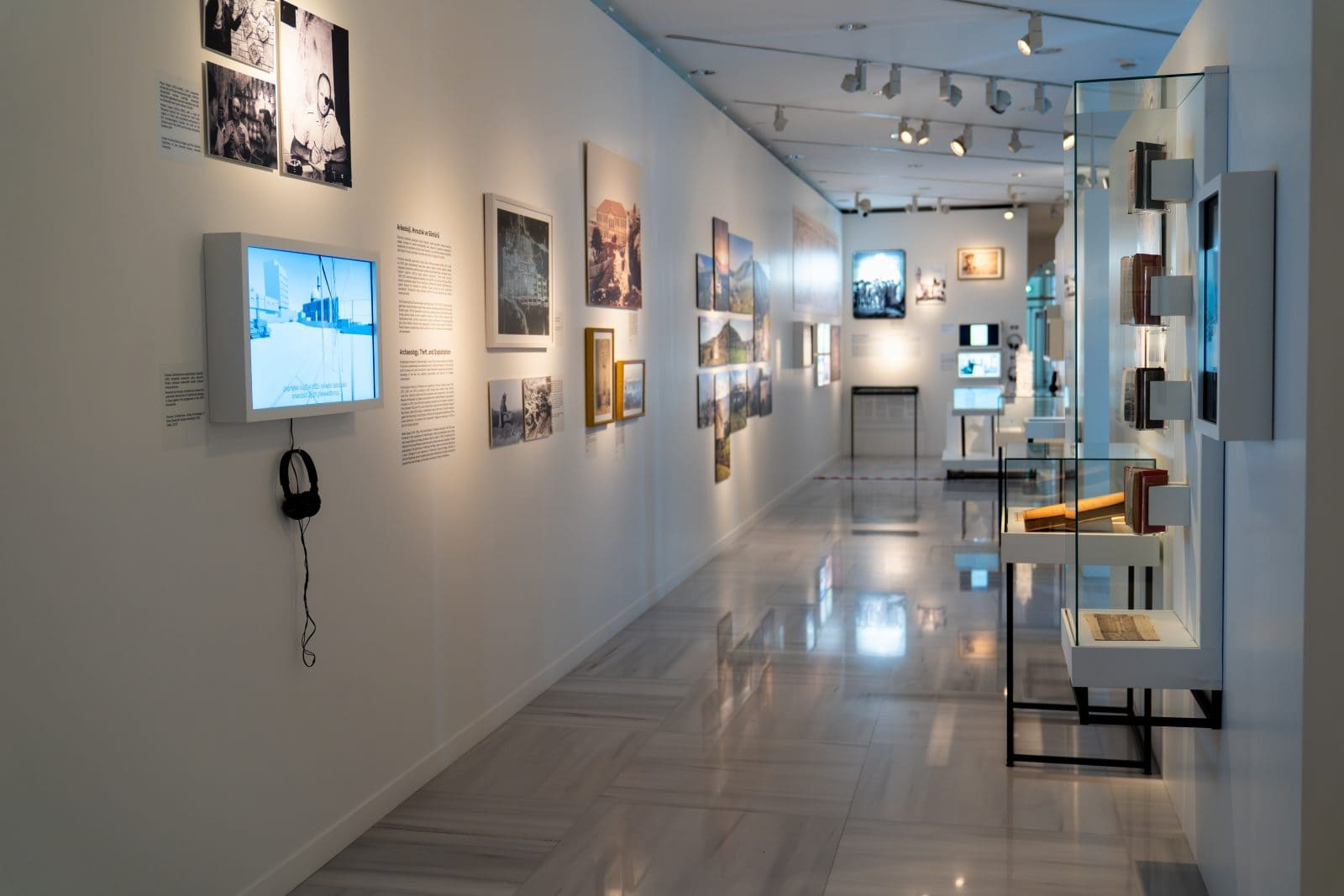
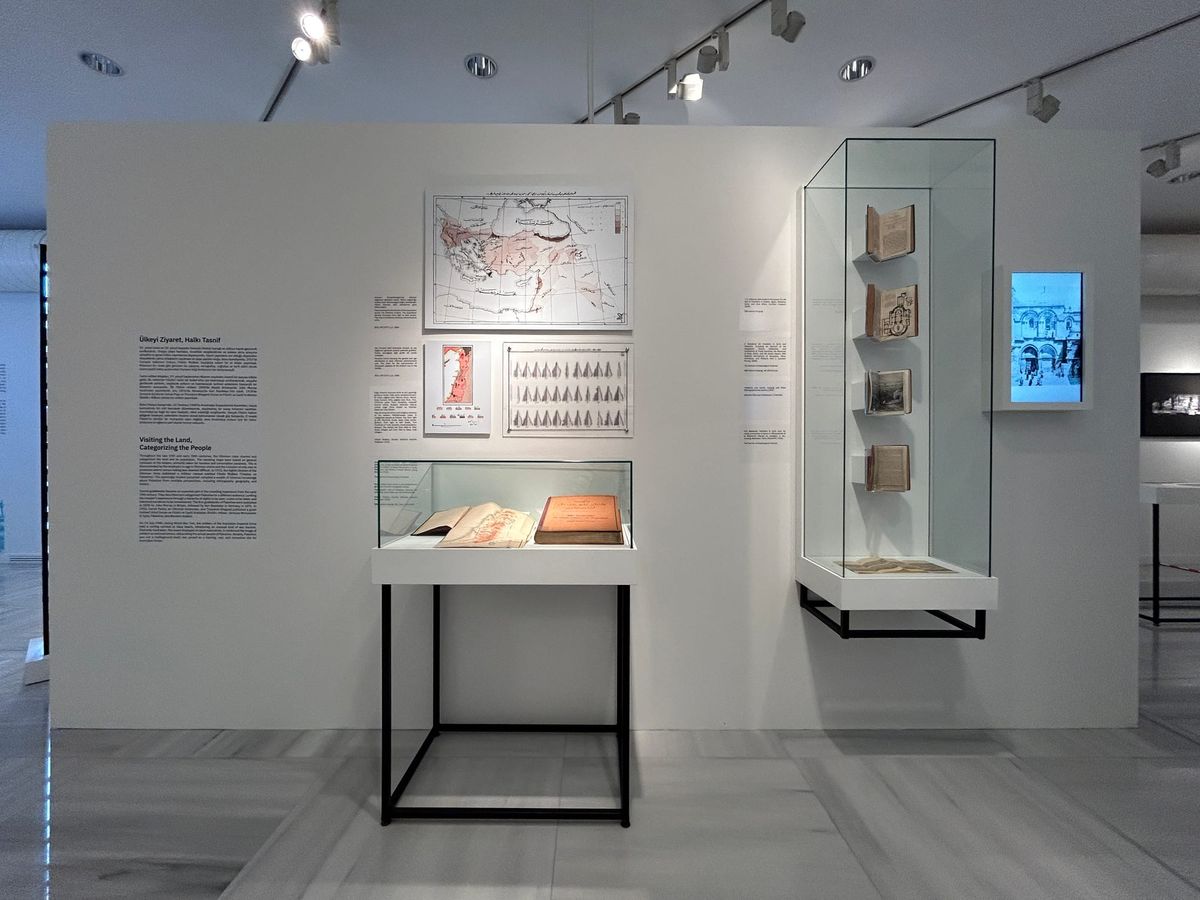
What followed was a richly informative exploration of historical Palestinian territory. Co-curated by art professional Yazid Anani and sociologist Salim Tamari—both Palestinian—together with Turkish historian Zeynep Çelik and British scholar Zeinab Azarbadegan, the exhibition zeroed in on how the region has been surveyed, mapped, and represented since Western industrial and political modernization first took hold in the Levant. A wall text under the heading “Sky Spies” notes: “[T]he Israeli judicial system still depends on old British and German photographs to obliterate and exclude Palestinians, concealing their sustained historic presence on the land.”
This is a fair encapsulation of the Istanbul presentation of “Palestine from Above,” which expanded the show’s archival depth with Ottoman-era materials documenting how Palestinians, as a national collective rooted in these territories, were gradually erased under Turkish rule. The show was ostensibly faithful to the historical record, but amid the ongoing genocidal catastrophe in Gaza, it was deficient in rendering Palestinian humanity. While it foregrounded critical works by the stateless nation’s leading artists, it often did so with a faceless obscurity that intellectualized and aestheticized the unrelenting tragedy of forced displacement—whether through recontextualizing Gaza-born Mahmoud Alhaj’s visually arcane digital deconstructions of episodes of violence; profaning Jerusalem-born Sophie Halaby’s landscape watercolors beside kitschy Orientalist art; or peripherally situating US-born Nida Sinnokrot’s installations of readymades that critiqued performative media next to the building’s security exit.
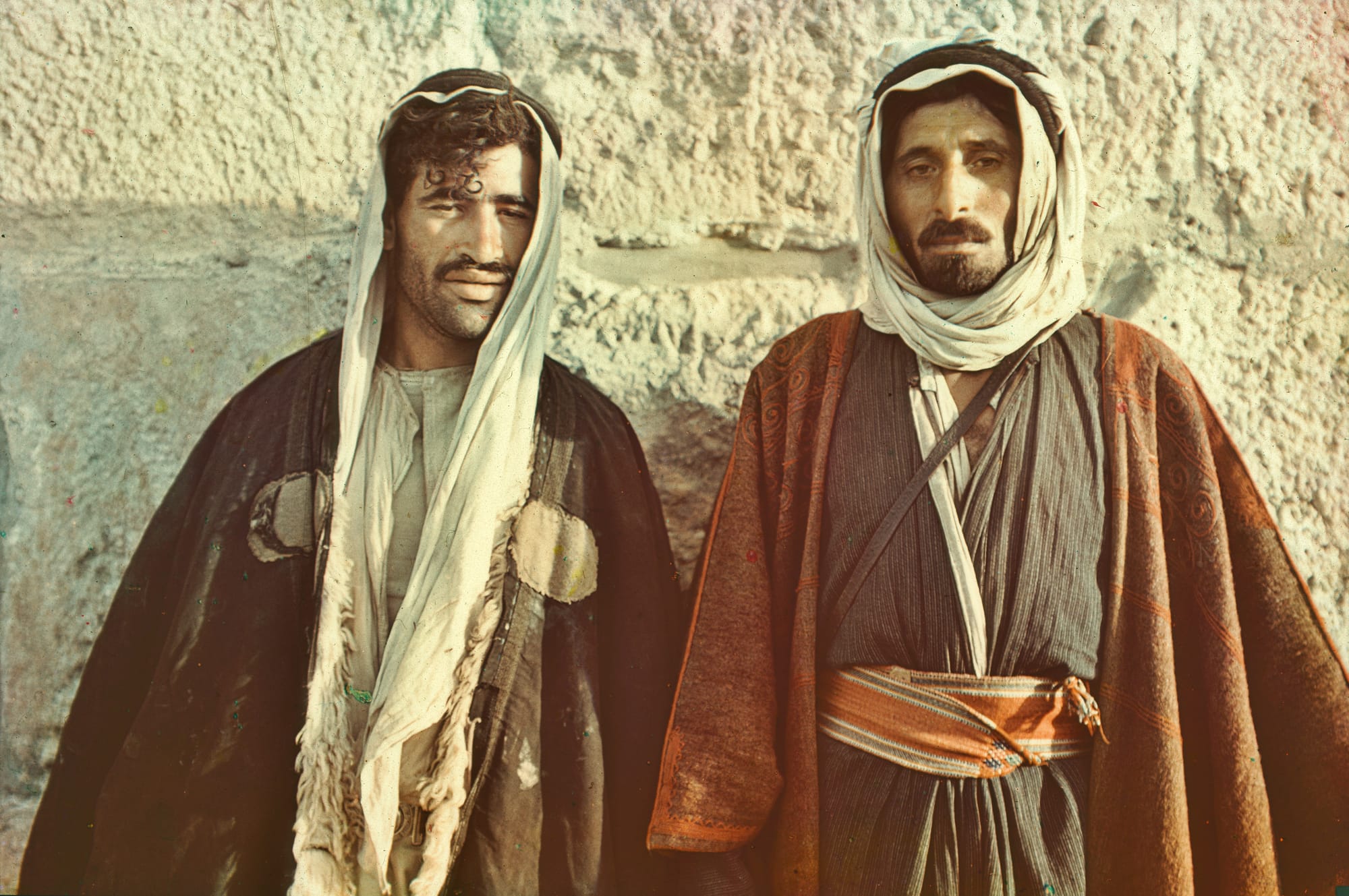
Though peppered with gems of Palestinian modernism, the exhibition was mainly a theater of objectification, an archival historiography of misrepresentation by European Orientalists. Several photographs exemplify this simplistic othering in which Palestinians are impersonalized amid wayward crowds and impenetrable boundaries. One image by Gustaf Dalman of the German Protestant Institute of Archaeology, titled Natives (1914), shows two turbaned men standing in long, folkloric robes—a scene stereotypically rendered for a touristic postcard or colonial ethnography. In a similar vein, Allenby Bridge Photograph (1967) by the United Nations Relief and Works Agency for Palestine Refugees in the Near East (UNRWA) depicts a mass of Palestinians in transit, some carrying infants, traversing the ruins of a destroyed overpass while an entourage of Western-attired bystanders look down at them from the top of the severed concrete—some leisurely under an umbrella and in the company of at least one photographer.
The term “genocide” was glaringly absent from exhibition texts, which opted for less censorious vocabulary. For example, the show described itself as gaining new relevance in the “critical historic moment of a massacre.” Even the word “onslaught”—used twice in reference to Israeli assaults on Gaza since the Hamas attack on October 7, 2023—felt restrained. The result was a narrative that stopped short of conveying a clear, ethical stance against the aerial imperialism that has long underpinned the ongoing acts of ethnic cleansing that Palestinians have suffered on their lands since the first Nakba of 1948.
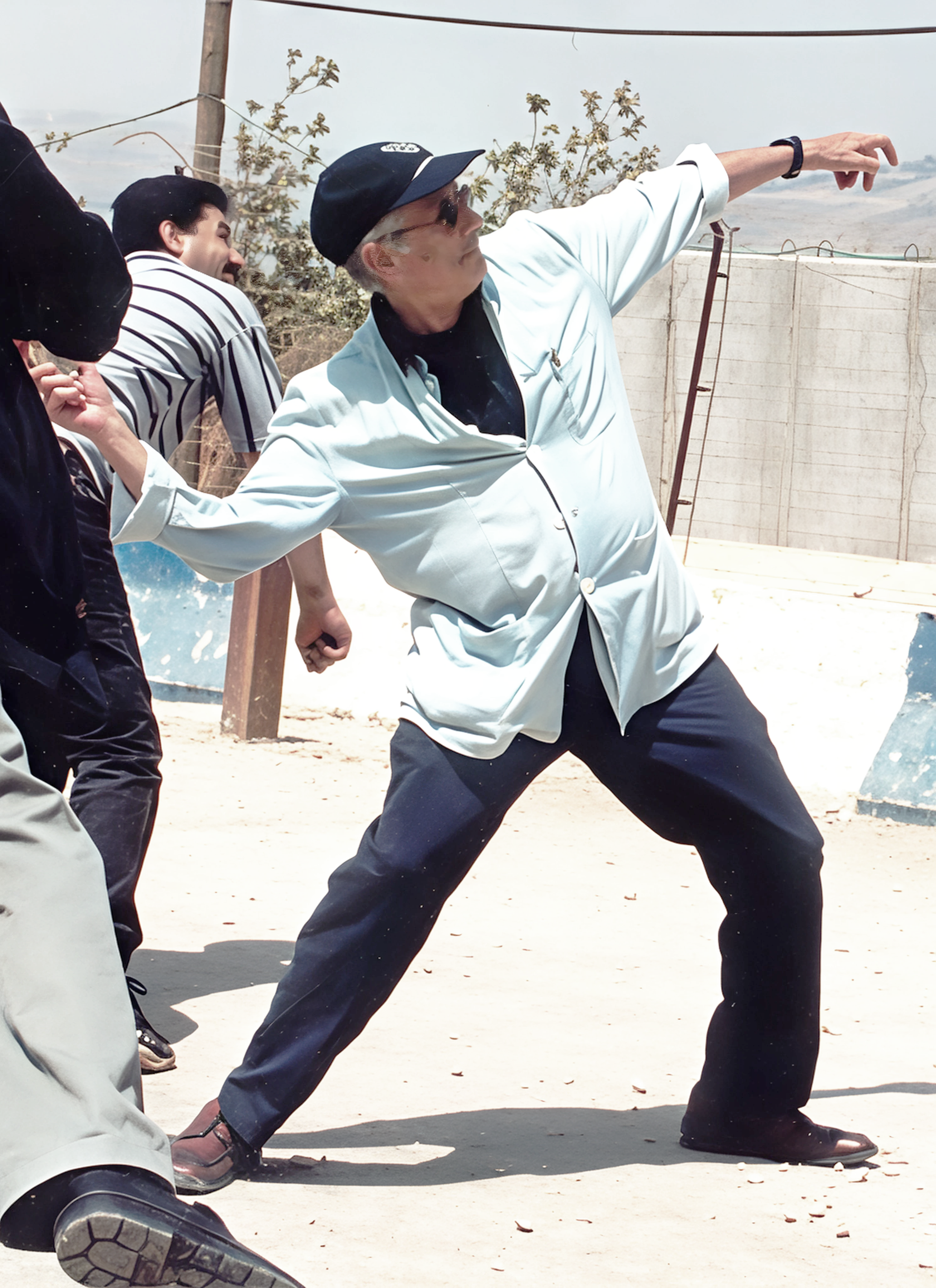
The exhibition’s flood of black-and-white documentation—lifeless surveillance imagery, and sterile, grainy archival footage—acquired a haunting proximity to the conflicts raging just beyond Turkish shores. Yet flashes of activistic, scholarly, and even aesthetic wonder broke through, among them a 2000 photo by AFP Getty Images of Edward Said hurling a stone at the Israel-Lebanon border, and Forensic Architecture’s Destruction and Return in al-Araqib (2010– ). The latter is a 15-minute video collage that proves the enduring presence of Palestinian Bedouins in the al-Araqib village, which faced demolition by Israeli forces over 170 times. Incorporating aerial photographs from 1945, which reveal that the village predated Israel’s founding in 1948, alongside further GPS-precise cartographic evidence, the meticulously researched work dismantles the Zionist fiction of Palestine as an empty, uninhabited land.
Outside the gallery on Istanbul’s ever-busy Istiklal Avenue, scenes of shop-happy mobs resembled those in the lurid, retouched color photographs of Palestine’s traditional Nabi Musa processions—pilgrimages honoring the prophet Moses—displayed inside. These pictures, courtesy of the Library of Congress and Bruno Hentschel of the Germany Protestant Institute of Archaeology, are breathtaking snapshots of life at the height of Muslim expression in Palestine: locals organized proudly in their strength of numbers, marching, praying, and reveling, under bright green banners.
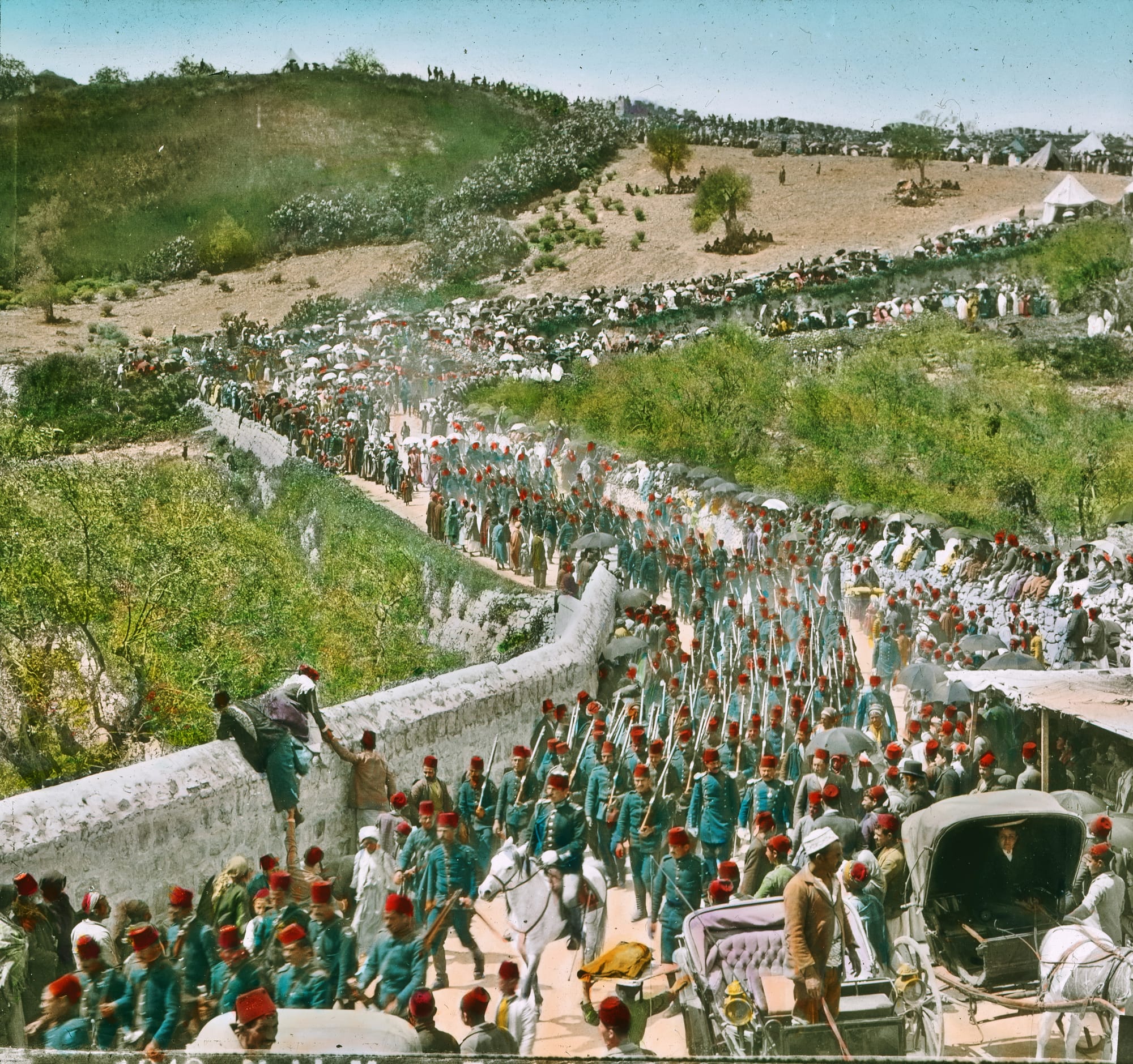
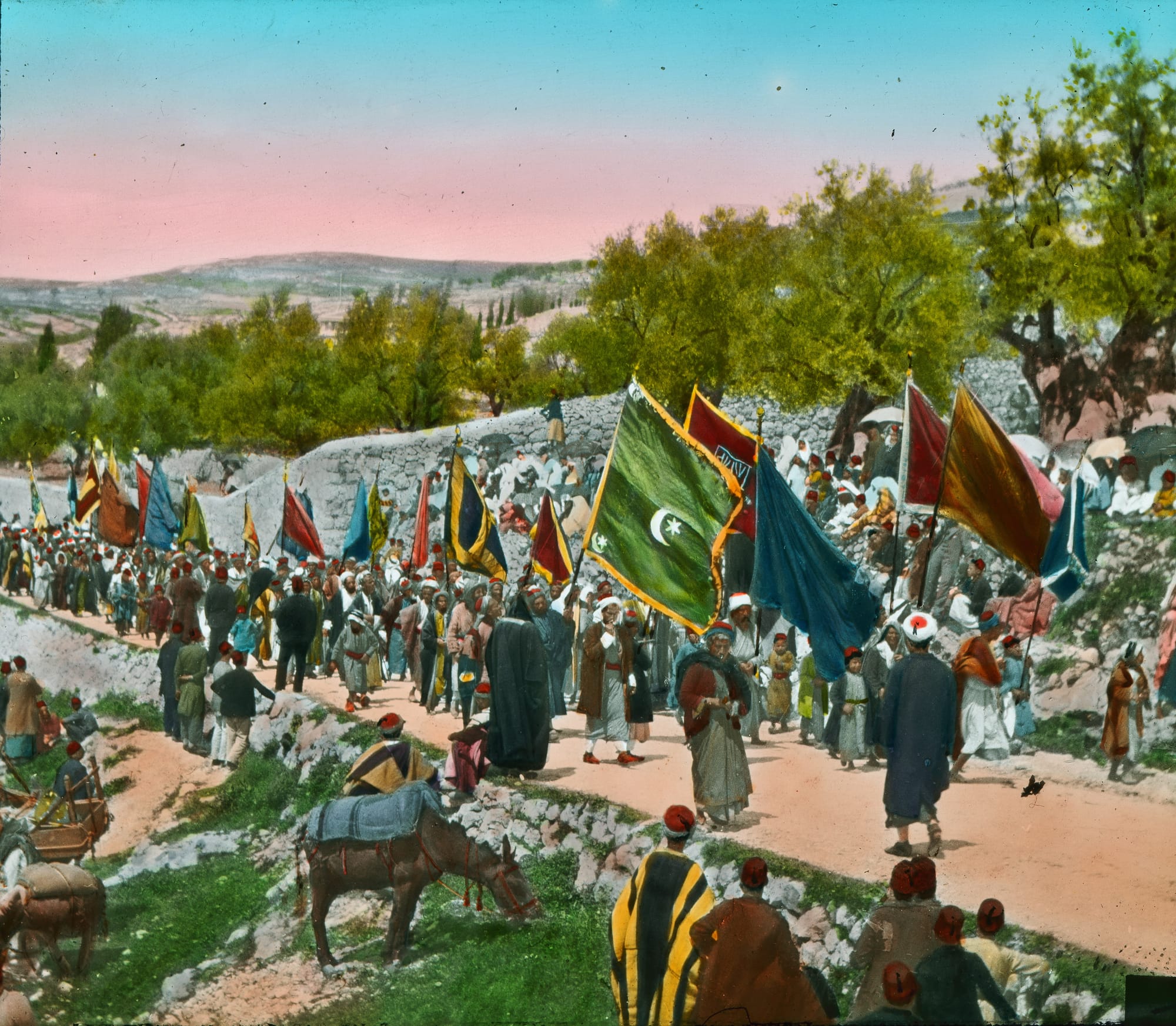
BRUNO HENTSCHEL, photograph of a Turkish garrison in the Nabi Musa procession, undated (left); and photograph of a Nabi Musa procession, undated (right). Courtesy the German Protestant Institute of Archeology, Jerusalem, and ANAMED Gallery, Istanbul.
While the undated Hentschel photograph demonstrates the remove at which imperialist Europeans stood from Palestinians on the ground, the colorized images from the Library of Congress, taken in 1943, affirm the continuity of a formidable Palestinian social order independent of Western hegemony. However, beyond these glimpses, the exhibition largely neglected the pride and cultural vitality of early 20th-century Palestinian life.
As the show highlighted international efforts to make Palestine a nexus for transportation networks throughout the Middle East, the Hentschel photographs memorialize a tradition of failed infrastructure projects across the land—from obsolescent railroads to decommissioned airports. These aspiring nodes of connection with the outside world sought to consolidate territorial unity from within, to serve as a potential impetus for national sovereignty. Yet, as Israeli forces continue to destroy these gateways and their memory, Palestine remains a cemetery of futures, its population left isolated and vulnerable to occupying powers.
Despite the exhibition’s apparent reluctance to overtly thematize or even quietly advocate for Palestinian peoplehood, it included several welcome gestures, such as Palestinian artist Jack Persekian’s photographic collage The Hejaz Railway in Palestine (2024), which imagines an unbroken line of train travel throughout his home(land); and a lecture video by Salim Tamari, Could the Archives Lie? The Disappeared Train (2017), which contextualizes how these systems of transportation were built in the first place and why they did not last. According to Tamari’s assessment, which is substantiated with historical proof, it was not only the foreign military origins of the al-Bireh train that presaged its abandonment. Referencing old wedding songs rejoicing at its arrival, he points out how Palestinian communities celebrated the train but rarely followed its departures—perhaps because they were content at home among their people. Such figures and narratives were largely absent from the rest of the show, which attempted, with high-minded if turbulent conviction, to tell the unfinished history of this endangered, flightless world.
Matt A. Hanson is an art writer based in Istanbul and ArtAsiaPacific’s Istanbul desk editor.