Shows
Mapping Saudi Modern Art’s Origins: “Bedayat” in Riyadh
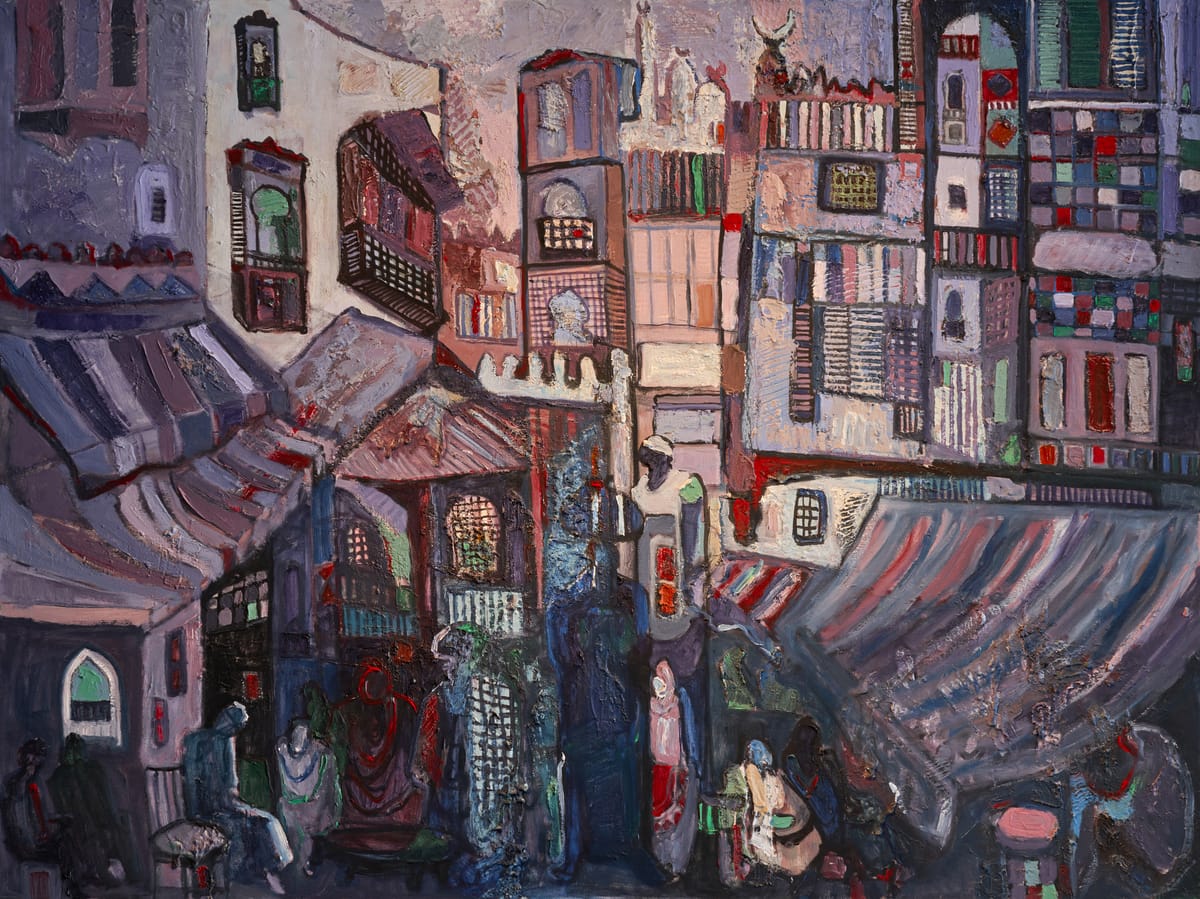
Bedayat: Beginnings of the Saudi Art Movement
National Museum of Saudi Arabia
Riyadh
Jan 27–Apr 11, 2026
In 1988, the word “modernity” (hadatha) was temporarily banned from Saudi newspapers and television as the Ministry of Culture and Information sought to quell heated public debates over the “modernity wars.” Rapid prosperity and development propelled by the kingdom’s oil boom was fostering what the intellectual Abdullah Al-Ghaddami called cultural “schizophrenia,” driven in part by escalating tensions between progressives supporting individual liberties and Wahhabi ideologues who had seized power after the 1979 siege of Mecca’s Grand Mosque.
These existential debates coursed through “Bedayat: Beginnings of the Saudi Art Movement,” an important if unevenly curated exhibition of Saudi art from the 1960s to ’80s at Riyadh’s National Museum of Saudi Arabia. Curated by Qaswra Hafez, an éminence grise of Saudi Arabia’s modern and contemporary art scene, the show featured over 250 artworks by 73 artists. Unfortunately, the nondescript exhibition texts largely sidestepped the kingdom’s unprecedented political and social transformations during the period. Even cursory statistics would have helped convey the scale of the petrostate’s development: from 1960 to 1980, Saudi Arabia’s GDP soared from USD 1.75 billion to USD 164.5 billion, while its population more than doubled from 2.4 to 6 million. The first state-run television channel was launched in 1965, and by 1975, 1.5 million Saudis had access to television. Additionally, events such as the 1973 OPEC oil crisis, the Iranian revolution of 1979, and the Soviet invasion of Afghanistan that same year triggered domestic and foreign policy realignments with material impact on everyday lives. It is a pity that these indicators of modernity—industrialization, mass media, and urbanization, among others—received little attention in the exhibition texts, as they would have contextualized the artists’ courageous, often vulnerable explorations of the self, society, and environment.
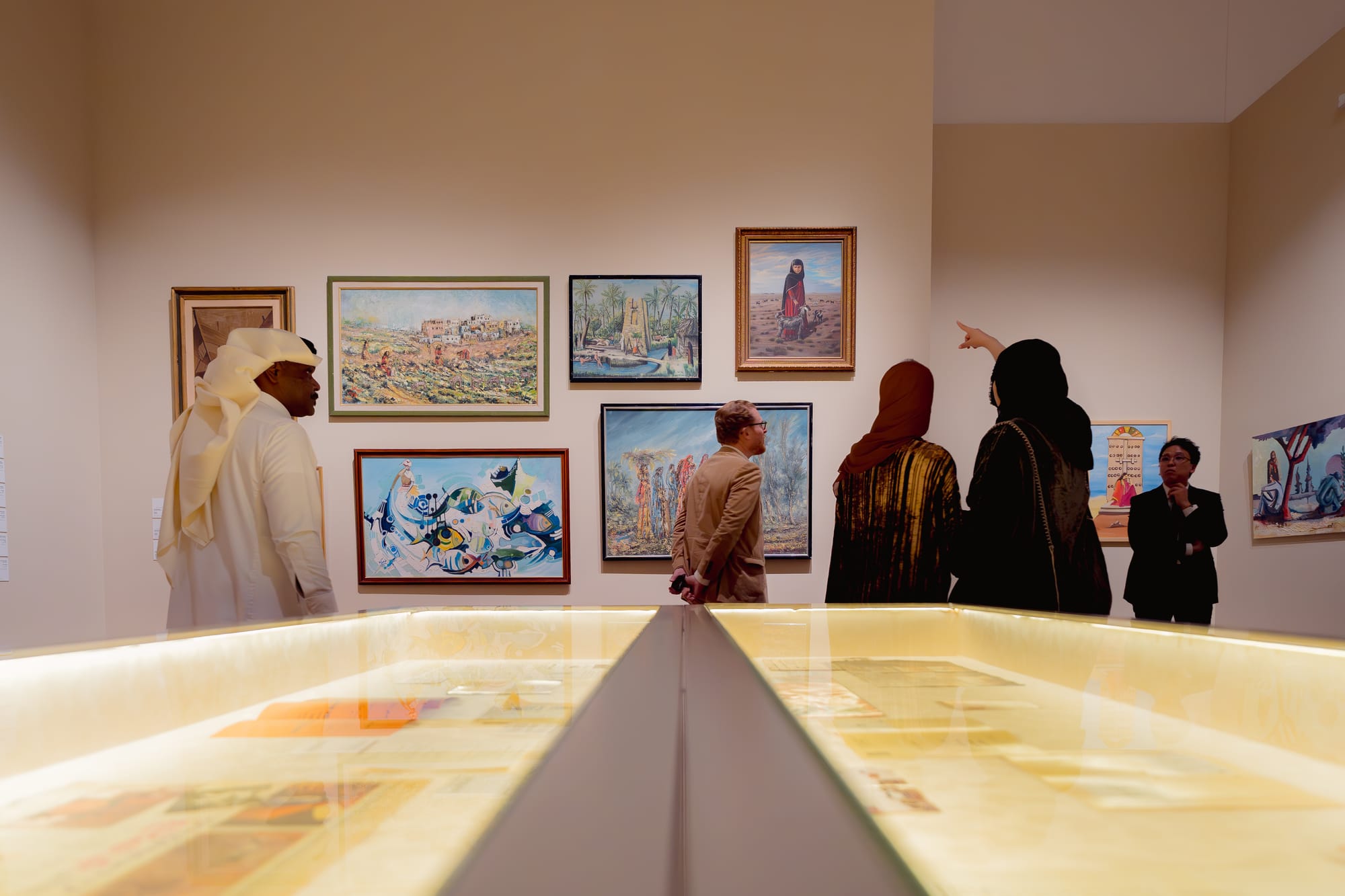
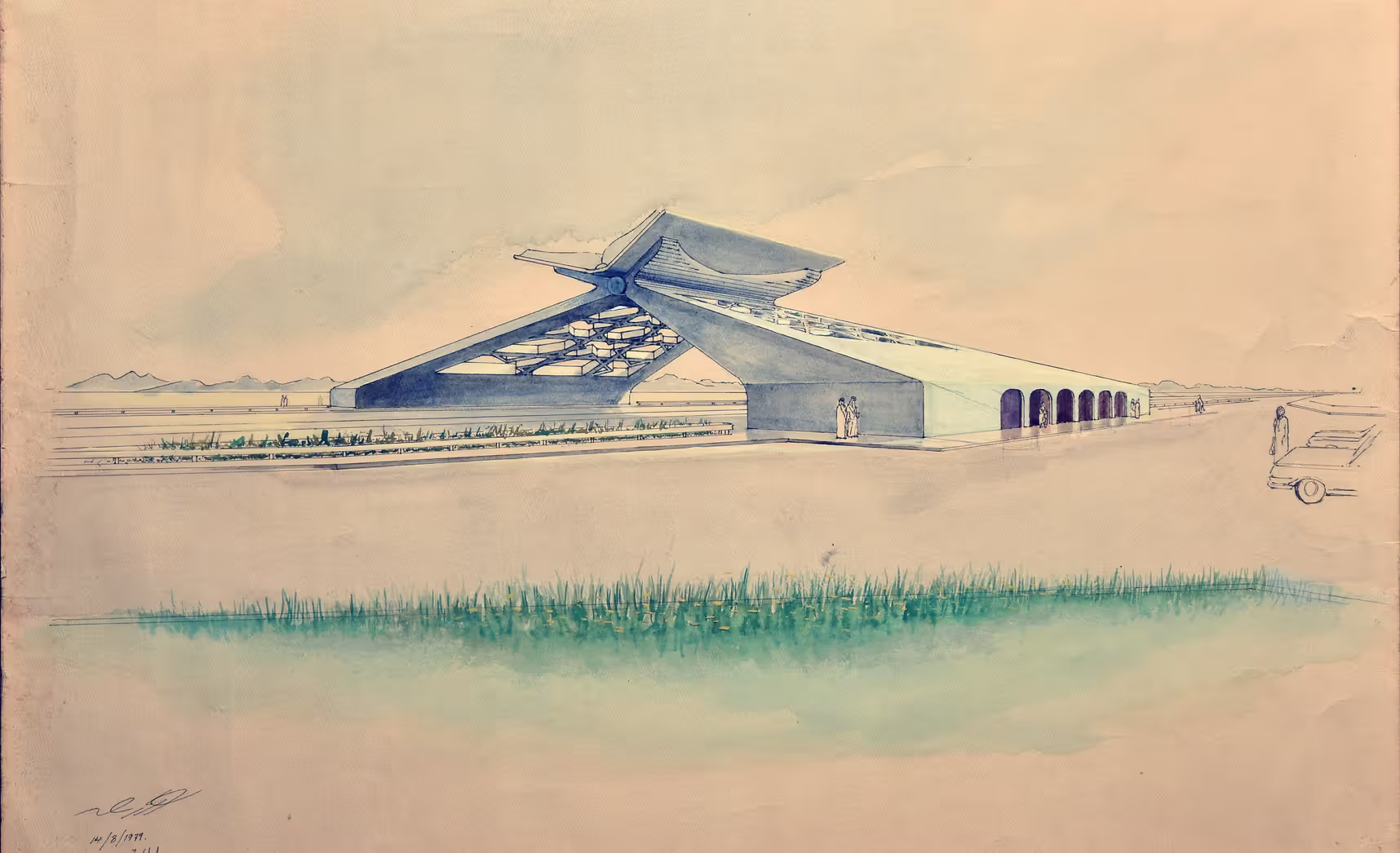
Archival materials were the standout exhibits of the first section, “Foundations of the Modern Art Movement in Saudi Arabia.” Exhibition catalogs, newspaper clippings, scholarship letters, drafts for public art commissions, and even PhD dissertations offered a fascinating window into a nascent art scene, testifying to the extraordinary speed at which the kingdom’s contemporary art ecosystem evolved in just 50-odd years. Catalogs of the Ministry of Culture’s “First Fine Arts Competition” (1976) and the “First Group Exhibition of the Artists of the Central Region” (1980) in Riyadh appeared alongside the Jeddah Fine Art Group’s announcement for its second exhibition at Galeria Sous Sol in 1971. Original letters from the Ministry of Education granting overseas scholarships to Saudi artists underlined a hunger for travel and exposure. Documentation of public commissions included Dia Aziz Dia’s original 1979 sketch for Makkah Gate, the iconic structure resembling a Quran rehal (book stand) marking the official entrance to Mecca, completed in 1985. According to artist and critic Mohammed Al Resayes’ PhD dissertation, also on view, only a handful of private museums and art institutions existed in the kingdom as late as 1989.
A surfeit of diverse and imaginative paintings constituted the second section, “Currents of Modernity.” The works were grouped under four themes—“Faces and Features,” “Nature and Landscape,” “Social Life,” and “Dreams and Symbols”—yet the accompanying texts offered little in the way of an original thesis. Many of these artists had studied or traveled abroad, particularly in the US and Europe. While their experiments with surrealism, expressionism, cubism, collage, and abstraction were not always stylistically innovative, they reflected a repertoire of societal anxiety, psychological angst, and a common quest for artistic languages capable of capturing the remarkable textures and tempos of these decades. Memorable examples included Khalil Hassan Khalil’s The Broken Mirror (1982), a deconstructed head portrait alongside an intact clock, and Dia Aziz Dia’s Father / A Study (1972), a composite portrait of the artist’s parent that appears both heroic and reticent. A compelling meditation on modernity, Faisal Samra’s enigmatic Untitled (1985) depicts a man, seemingly without arms, in a short-sleeved button-down shirt, standing over the black drain of a dry sink. Abdulsattar Al-Mussa’s The Sailor (1986) is a poignant carving on cardboard of a weather-beaten man in a shemagh, gazing ambivalently sideways as he lifts a cigarette to his lips; behind him, three boats bob on the water against a distant lighthouse.
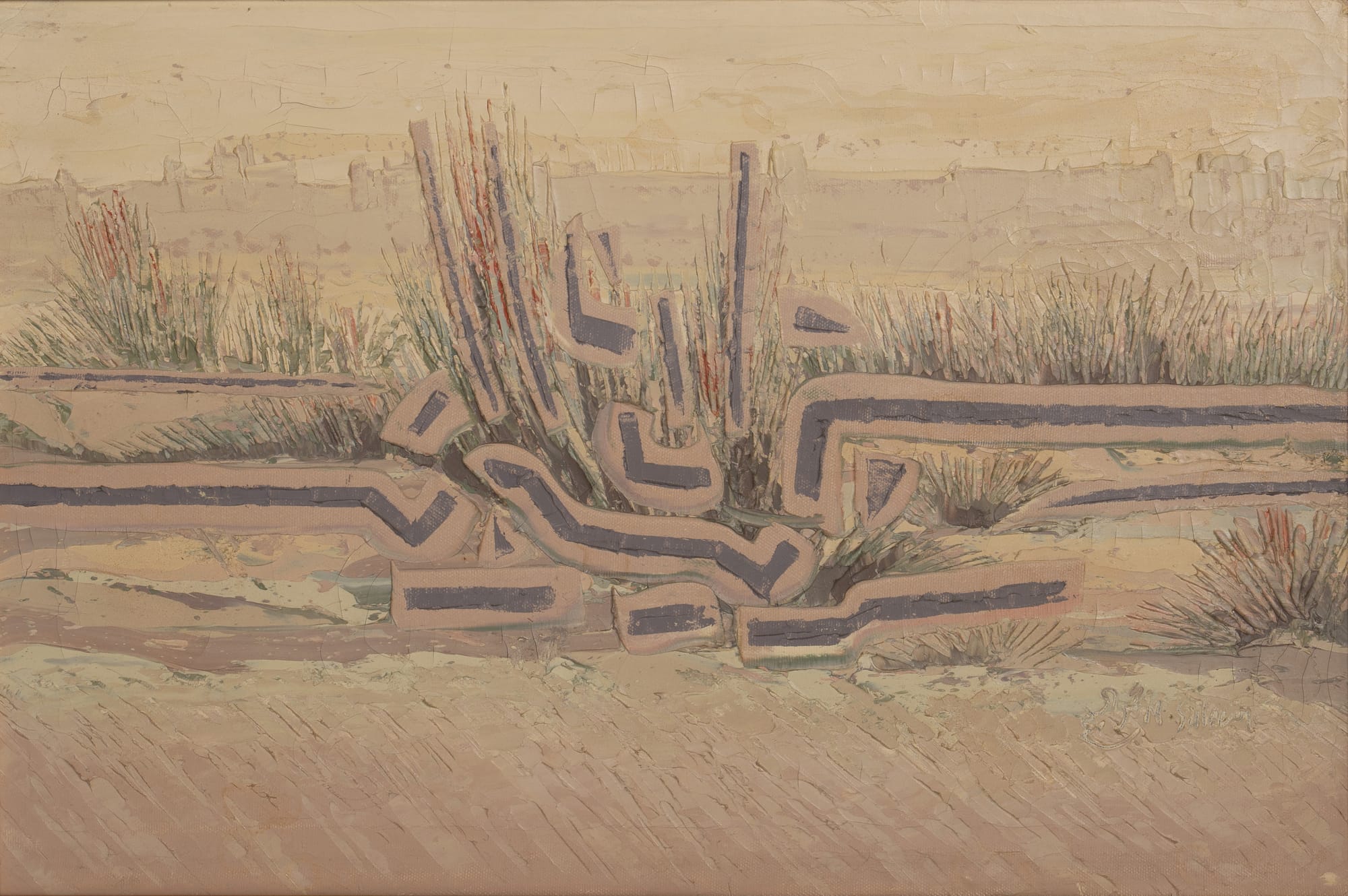
“Modernist Pioneers,” the third section, offered solo presentations of works by Mohammed Alsaleem, Safeya Binzagr, Mounirah Mosly, and Abdulhalim Radwi, accompanied by extended biographies. In these four enclaves, the evolution of each trailblazing artist’s style and persona emerged with particular clarity, united by a shared pursuit of authentic expressions of Saudi identity. A selection of Marat-born Mohammed Alsaleem’s paintings traced the development of his signature Al-Afakia (“horizonism”), which fuses landscape with abstraction. In 1976, Alsaleem explained how impressionism’s focus on light and shadow could not capture the materiality of the desert: “If I have ignored prismatic colors and overlooked shadow and light, that is because the force of the sun in our land exhibits chromatic and formal variations in warm colors and bronzes . . . producing distinct tones and rhythms.” Abdulhalim Radwi, born in Makkah in 1939 and trained at Rome’s Academy of Fine Arts, was the first Saudi artist to stage a solo exhibition in Jeddah in 1965, though he recalled how his avant-garde works were initially “shot down in exoticism, irony, and surprise.” Of the four pioneers, Radwi drew most freely on expressionism, cubism, and surrealism to produce ambiguous, emotionally unanchored portraits of modern alienation. The viewer is constantly displaced and disoriented in his vibrantly colored, distorted urban landscapes, and in vortex-like images of people swirling around distant mosques. He believed artists should approach their unique heritage as a live source of inspiration rather than an obsolete artifact, a conviction he carried into his later roles as director of the Jeddah Center of Fine Arts and director-general of arts and culture for Jeddah.
Binzagr and Mosly, the two female artists in the show, will no doubt draw substantial attention from feminist critics, yet their work and philosophies mark them as independent thinkers who merit reading on their own terms. Binzagr was educated in Cairo and the UK, graduating from Central Saint Martins in 1976, while Mosly studied in Lebanon and Egypt before obtaining a graphic design degree in the US. The two met in Cairo, and their joint exhibitions in Jeddah in 1968 were the first ever held by women in the kingdom. Although neither woman could attend their own opening due to gender segregation, scholar Eimad Elgibreen notes that the exhibitions were resounding successes, and that it was exceptionally rare for female artists to achieve such early breakthroughs, so close in time to their male counterparts.
Elgibreen further observes that Binzagr refused to be categorized as a feminist even as she sought access to Western art circles in the 1970s and ’80s, pushing back against orientalist assumptions about Saudi women’s agency: “[Do you think] that she [Saudi women] [sic] is disabled? [. . .] incapable of being creative? Incapable of defending herself? When they start speaking on behalf of Saudi women, I say: who assigned you to speak [on behalf of them]?” This position animates Traditional Attire (1997–99), an entrancing wall of 38 handcolored lithographs of women wearing tribal costumes, jewelry, and accessories. Based on extensive field and archival research across the kingdom, these images function both as an anthropological archive and as a vivid celebration of communal heritage and interior life: extravagant hues, textures, embroidery, and intricate construction blossom across Binzagr’s dynamic figures, who seem to spring from the canvases in a cacophony of motion: mid-stride, gesturing, hand on hip, ceremonially seated, or leaning upon a stick. Their expressions are as striking as their garments—proud, demure, daydreaming, welcoming, inscrutable, anticipatory, skeptical, or wistful.
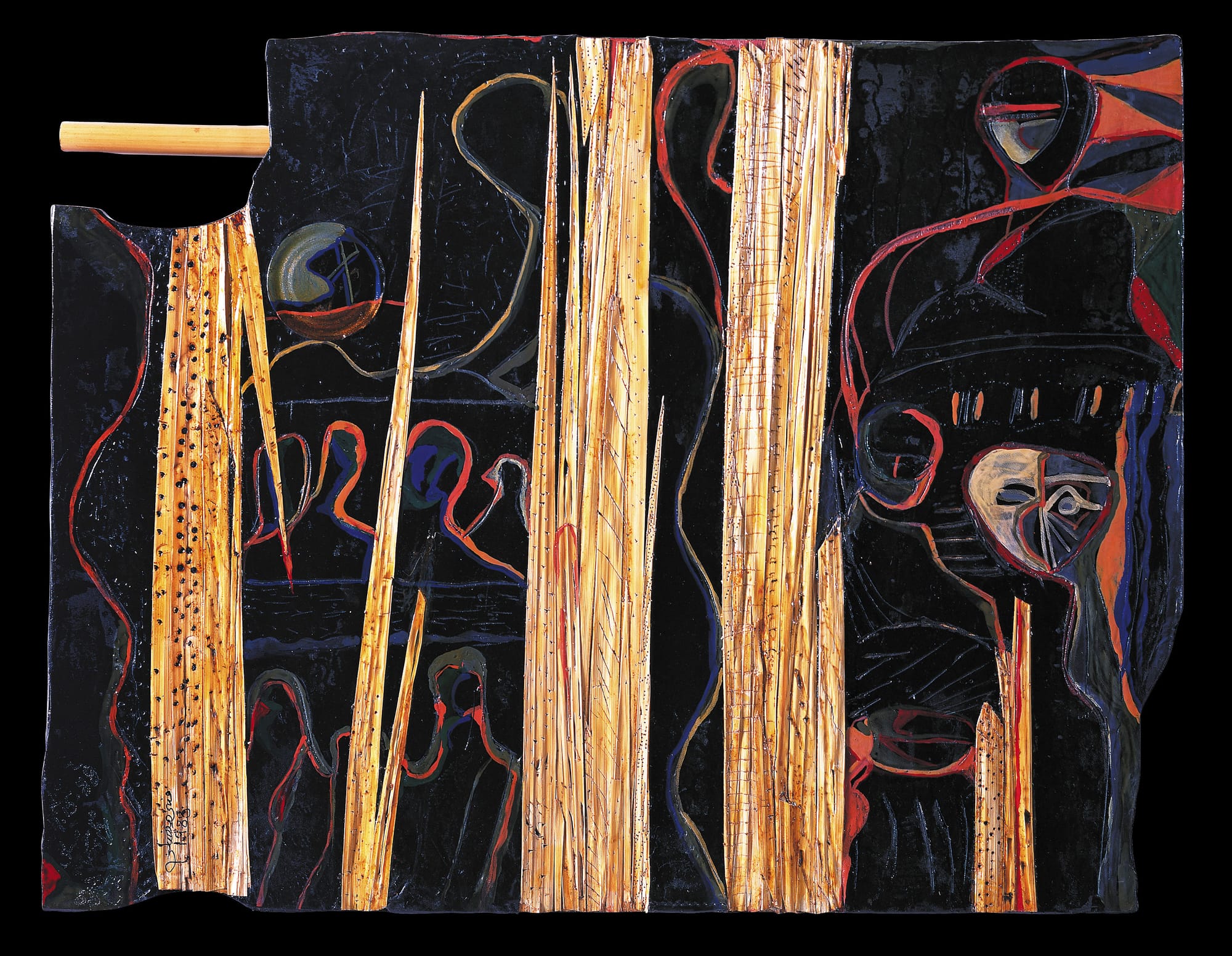
Mosly, by contrast, offers a different take on feminism and modernity. Her iconic Land of Solidities (1970), one of the strongest highlights of the entire exhibition, depicts a veiled figure in a black niqab seated against a blue sky and clouds. Alluding to the Western art historical canon from Caspar David Friedrich to René Magritte while decisively subverting contemporary norms of image-making, the tour de force speaks not only to gender issues but also the orientalist gaze, societal transformation, and the politics of the self. Mosly’s humanist philosophy and experimental technique surface again in works such as A Song from Africa to Palestine (1988), a mixed-media composition of copper burlap, watercolor, and palm leaves on leather. Curator Qaswra Hafez described her as “a force of nature… She championed the cause of the Palestinian people throughout her career. And for that alone she deserves our admiration and respect.”
“Bedayat” was many things: institutional validation for artists and their descendants; a primer for younger Saudis and foreign visitors, most of whom know the scene only from platforms like Edge of Arabia and 21,39 Jeddah Arts; and a state-building gesture that attempts to inscribe this generation within an official cultural narrative. The curators indicated that the exhibition is only the first element of a wider research project, which will include a catalog, a documentary, and public programs. Hopefully, it will inspire more rigorous scholarship and public engagement that does justice to the artists of this momentous era.
Chin-chin Yap is a Singaporean writer and filmmaker based in Lisbon and contributing editor for ArtAsiaPacific.