Shows
Compressed Histories: Irfan Hendrian’s “CLOSED” at ara contemporary
Irfan Hendrian
CLOSED
ara contemporary
Jakarta
Jan 31–Mar 17, 2026
Irfan Hendrian not only works on, from, or with paper, but delves into the medium itself, rigorously examining and exploiting its formal, sculptural, and architectural possibilities. The Bandung-based artist, printmaker, and graphic designer’s solo exhibition at Jakarta’s ara contemporary, “CLOSED,” unveiled new pieces from his Chinatown Window Sample series (2025), embodying the history, culture, and intergenerational trauma faced by the Tionghoa, a Chinese Indonesian ethnic minority in Indonesia.
Drawing on what he calls an “architecture of fear,” Hendrian grapples with the legacy of violence and racial discrimination that has not only afflicted the Tionghoa, but is also embedded within domestic objects and buildings across the country. This psychological undercurrent was immediately palpable upon entering the main gallery. For Paranoia Holder (2025), Hendrian invited visitors to deboss their keys onto small paper cards and hang them on a wall-based structure made of wood and paper, which resembles the inside of a door lock mechanism. While consenting to participate means leaving behind traces of one’s identity, the keys tell a deeper story, alluding to the Tionghoa community’s ingrained habit of securing every threshold of their shophouses—a routine forged in response to the ethnic riots that broke out during Indonesia’s post-independence years, sustained by lingering unease.
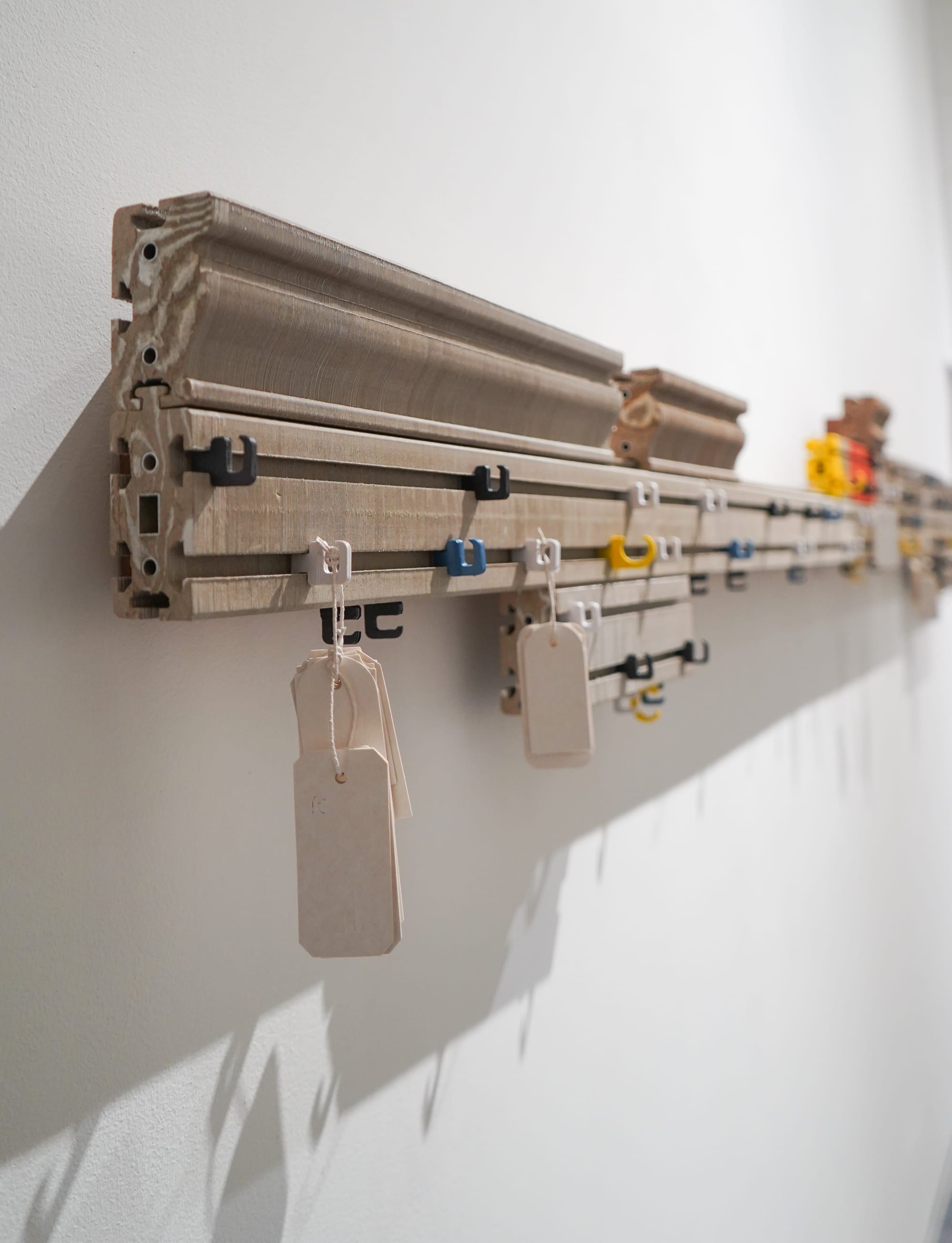
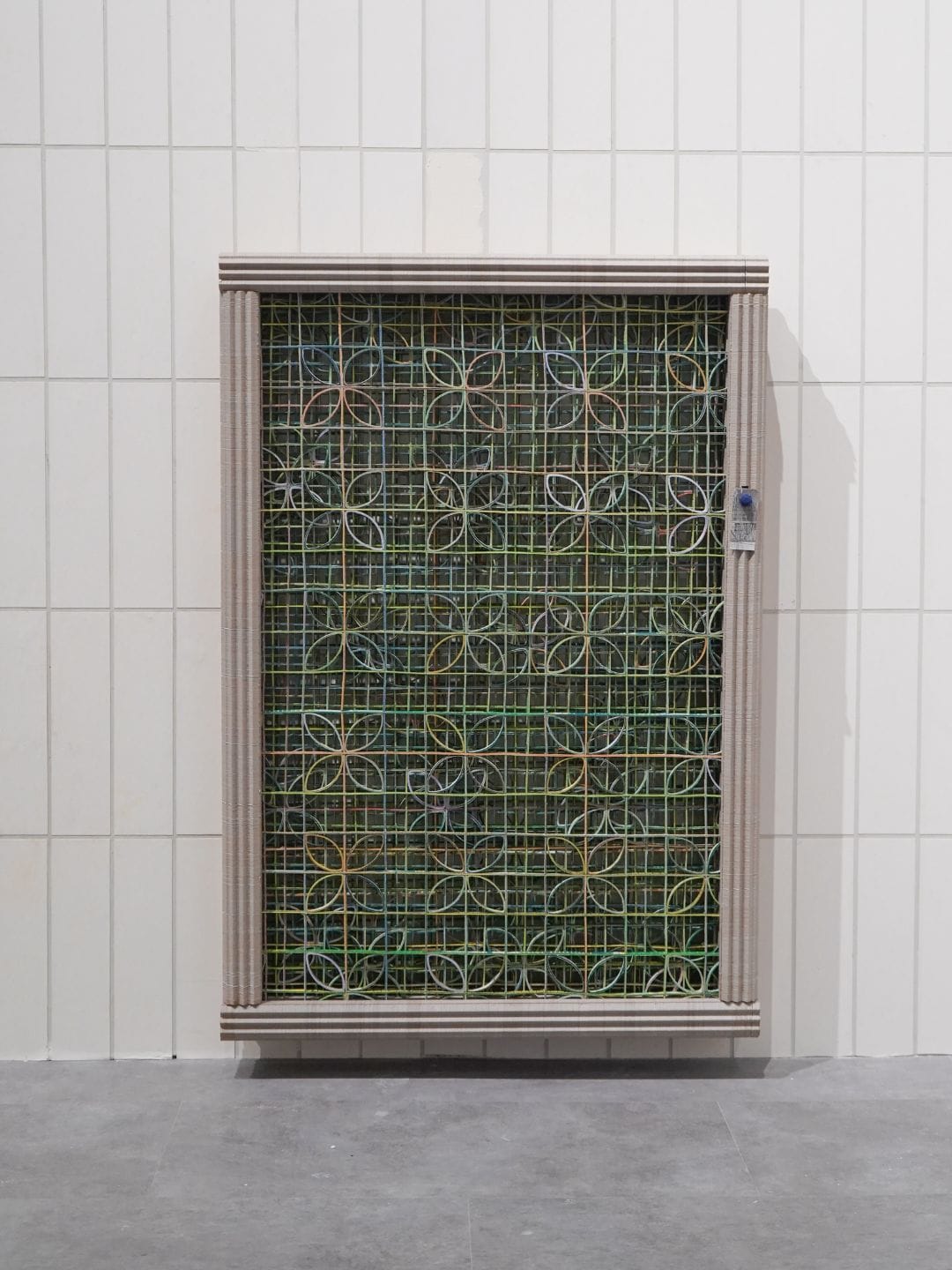
IRFAN HENDRIAN, Paranoia Holder, 2025, dye cut on layers of paper, wood, and aluminum, 35 x 282 x 12 cm (left); and Chinatown Window Sample: Kawung 2, 2025, risograph and dye cut on layers of paper, 92 x 63 x 12 cm (right). Courtesy ara contemporary, Jakarta.
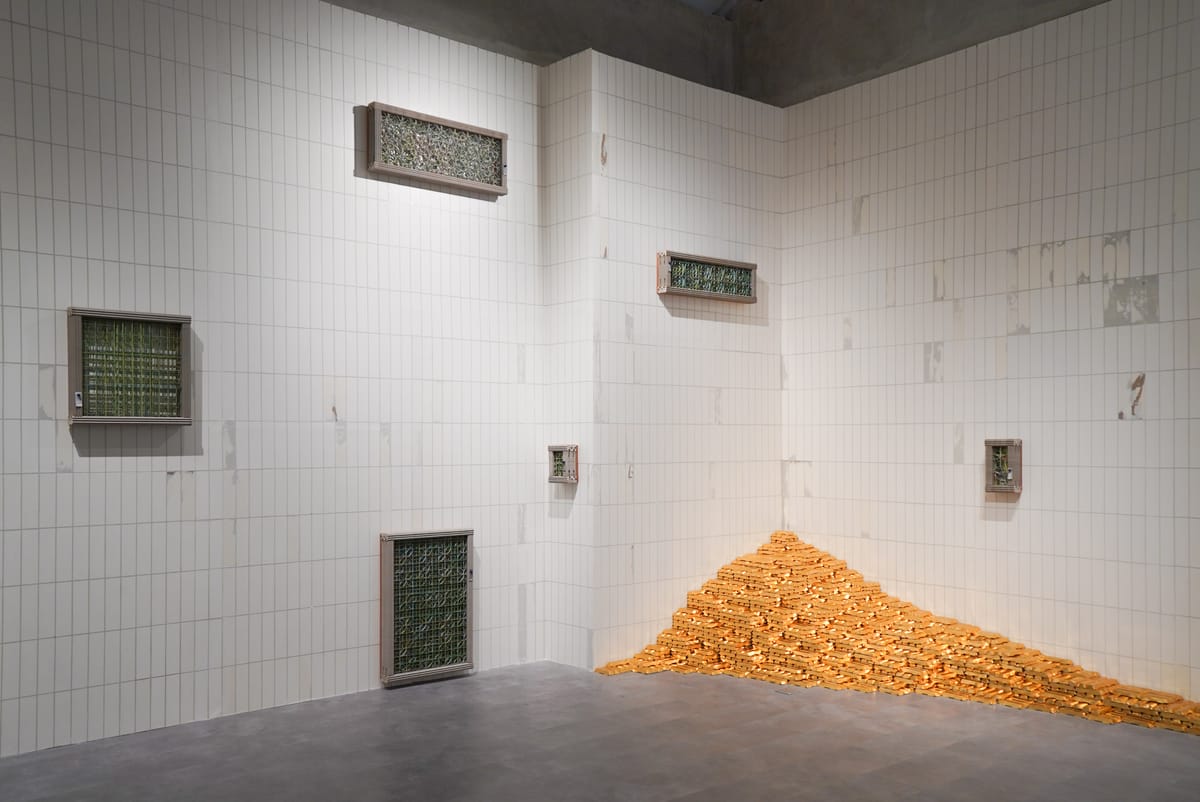
Using precisely cut rectangles of white paper, Hendrian transformed more than half of the main gallery into a space resembling the tiled interiors of Chinatown shophouses. Along this wall, several panels from the Chinatown Window Sample project were presented in varying sizes and at different heights. Each work comprises meticulous layers of paper replicating the ornate metal trellises that typically cover the windows and glass doors of homes and shophouses. Incorporating risography and die-cutting, the series showcases the many intricate designs of these iron trellises, which serve both as a decorative element and as protection. While Chinatown Window Sample: Oblong 2 features a configuration of rectangular grids densely overlapping with spherocylindrical arcs, Chinatown Window Sample: Kawung (both 2025) utilizes a geometric pattern inspired by the kawung or palm fruit that is commonly used in Javanese batik. The compressed, striated paper composites are encased in a gray paper frame that resembles concrete. This surrounding fixture evokes feelings of strict confinement—an architectural reflection of social tensions and segregation.
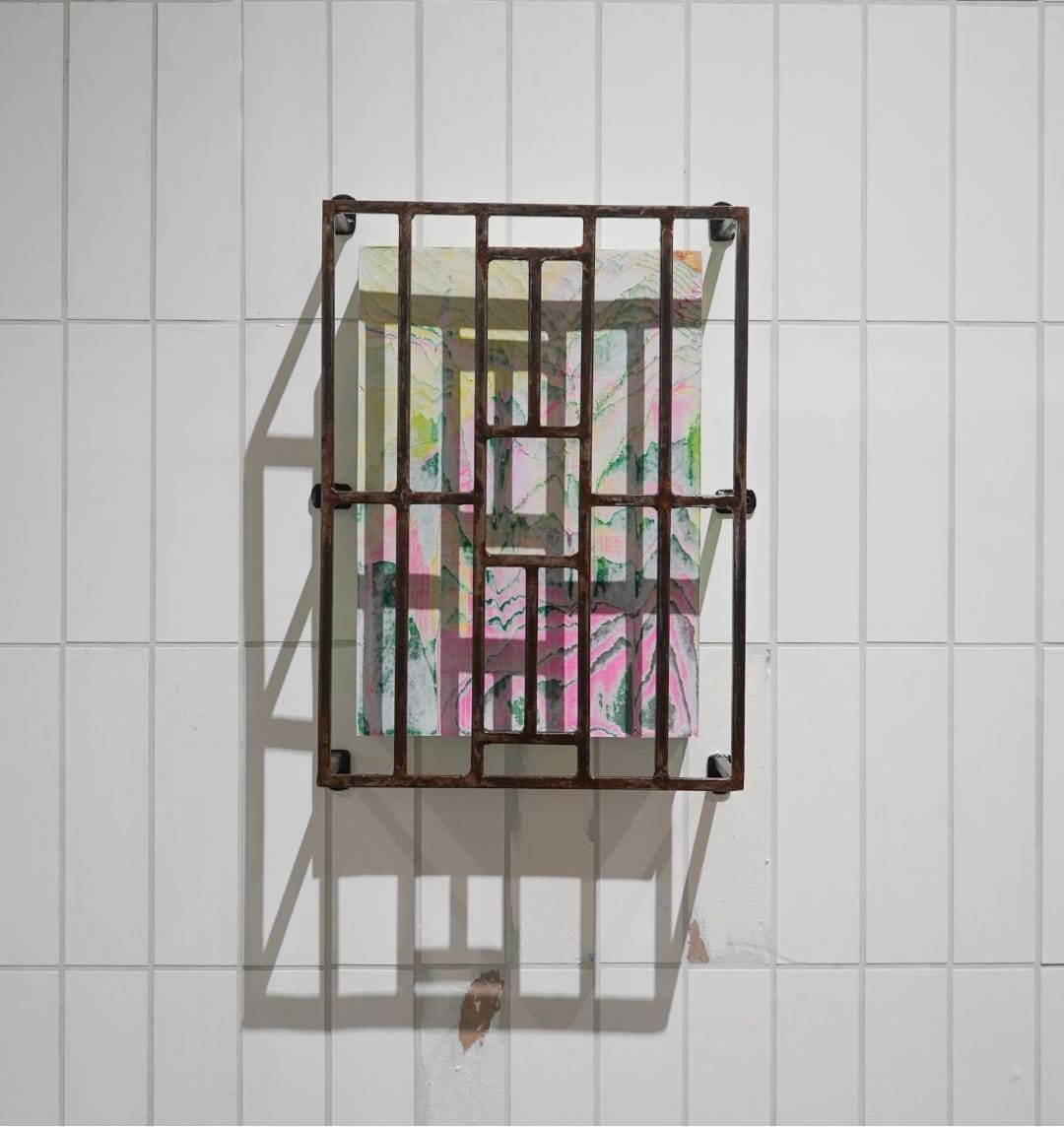
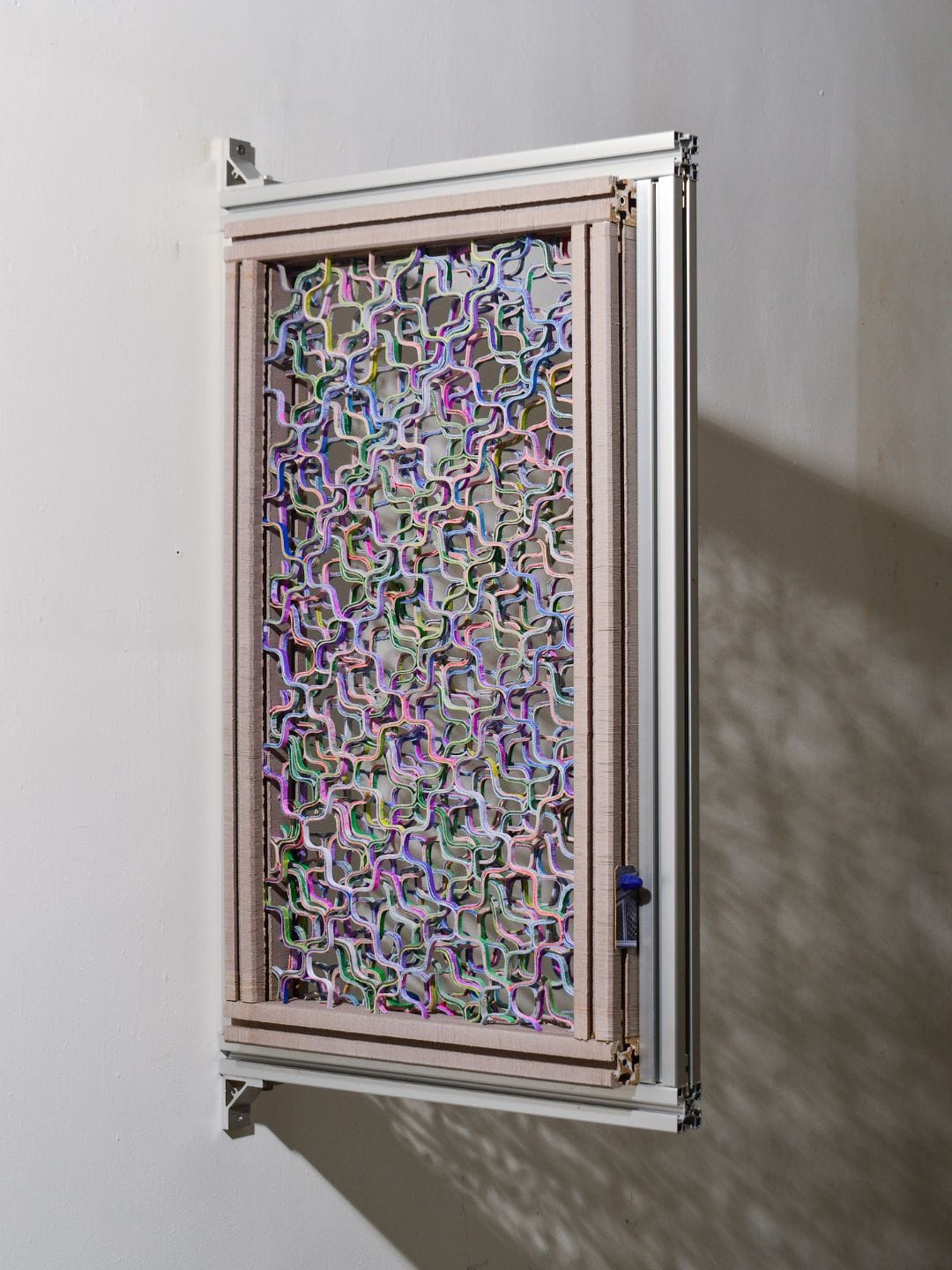
IRFAN HENDRIAN, Trellis trend 2025: The Sahroni, 2025, layers of risography on paper on board and iron bars, 51 x 39 x 9 cm (left); and Chinatown Window Sample: Moroccan 2, 2026, risograph and dye cut on layers of paper, 99 x 53.5 x 8 cm (right). Courtesy ara contemporary, Jakarta.
Other works on view address the recent unrest in Indonesia. Trellis trend 2025: The Sahroni and Trellis Trend 2025: The Sri Mulyani (both 2025) reference the nationwide protests that erupted in August 2025, when civilians demanded the dissolution of the parliament following a controversial increase in housing allowances for lawmakers amid worsening economic conditions. During the turmoil, several residences of officials—including Ahmad Sahroni, a member of parliament, and Sri Mulyani, then minister of finance—were raided by crowds. Hendrian risograph-printed visual documentation of the chaos, sanding the surface until only the spectral ink remnants remained, then fencing in the canvas with weathered metal bars, which symbolize political repression. These works further echo the ordeals of the Tionghoa, who have frequently been targets of such pillage and who harbor a profound mistrust toward the leaders meant to help them. Although last year’s lootings did not reach Bandung, the artist observed that many shop owners in the city’s Chinatown shuttered their stores—a response that bridges historical hardships with contemporary issues in Indonesia through the complex motif of the window trellis, which denotes both safety and oppression.
Ultimately, “CLOSED” functioned as more than a mere exploration of paper’s materiality. Beneath Hendrian’s painstaking process of layering and the works’ immaculate forms, fear and anxiety remain unresolved, unspoken, yet tangible. In a predominantly tech-driven age, where news of sociopolitical strife flashes across screens before vanishing into a digital void, his choice of this supposedly obsolete medium becomes a physical confrontation with memory. “CLOSED” provided a haunting glimpse into the Tionghoa’s fraught past, where even the most elegant trellis is a quiet emblem of resistance.
Ibrahim Soetomo is a Jakarta-based curator and critic.