Shows
Araya Rasdjarmrearnsook: The Bouquet and the Wreath
Araya Rasdjarmrearnsook
The Bouquet and the Wreath
MAIIAM, Chiang Mai
Jul 26, 2025–May 25, 2026
A quiet yet substantial figure in Thai contemporary art, Araya Rasdjarmrearnsook’s life and practice are marked by womanhood, longing, and the looming viscosity of death. For Rasdjarmrearnsook, joy is borrowed, while suffering remains humming in the backdrop of life: it is up to us as individuals to weather life’s currents and learn to stay afloat. Prolific in both artmaking and writing, she has channeled life experiences, dreams, and visions into a haunting array of fiction, sculptural installations, photography, and video works. “The Bouquet and the Wreath” at MAIIAM, Chiang Mai, the city where the artist currently resides, surveyed 45 years of her creative labor, from the 1980s to today. The show reconstructed and recontextualized her major installations—from sculptures that explore the intricate inner world of femininity to video installations that invoke speaking to corpses, dissecting corporeal memories, and grappling with grief that stems from the loss of loved ones.
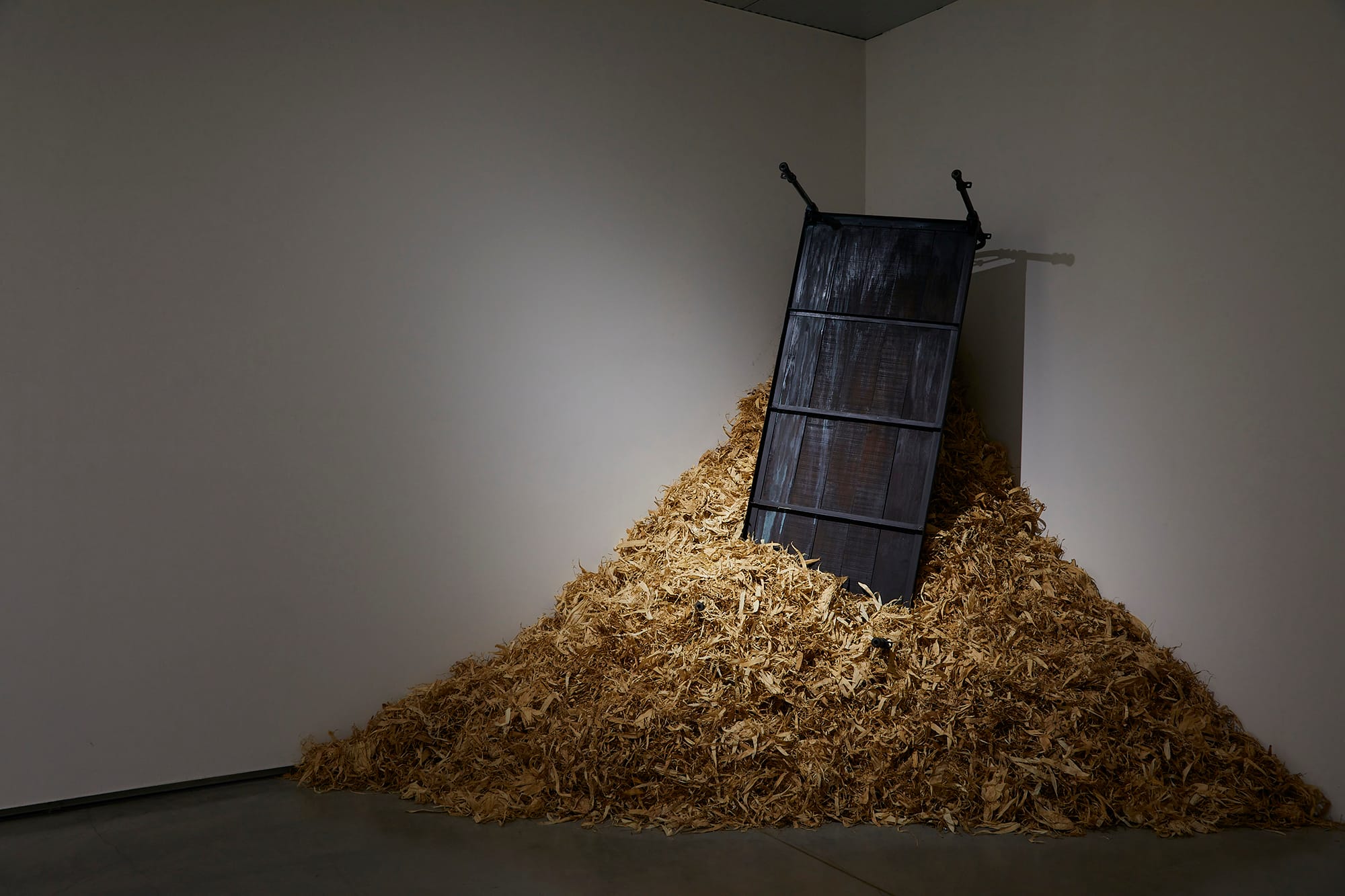
Death has been a constant companion to Rasdjarmrearnsook’s practice. It sits by the side of an upturned bed frame—a shocking flip—in her installation Has Girl Lost Her Memory? (1994/2025). The empty bed is half-buried under a pile of dried corn husks, mementos not only of her childhood snack but also of the making of funeral wreaths in her village. An eerie silence exudes from this material, as if death were simultaneously biding time and beckoning us toward eternal rest. Rasdjarmrearnsook recalled her mother’s funeral when she was merely three, the first of many that haunt her life. Her memories thus tread the line between life and death—inherently inextricable. The vacant bed reappears in another installation, Dinner with Cancer (Rebirth) (1993/2025), perched precariously on steps, strewn with intravenous tubes. On it sits a glass box—evoking the fragility of a heart with hollowed arteries. Bowls of black liquid that resemble diseased blood surround the bed, the walls behind them also darkened with ink. These unsettling objects invoke Rasdjarmrearnsook’s memories of her father’s passing in the hospital, of her own care and devotion until his last breath, and of life’s fleetingness and the futile attempt to hold on when death comes knocking.
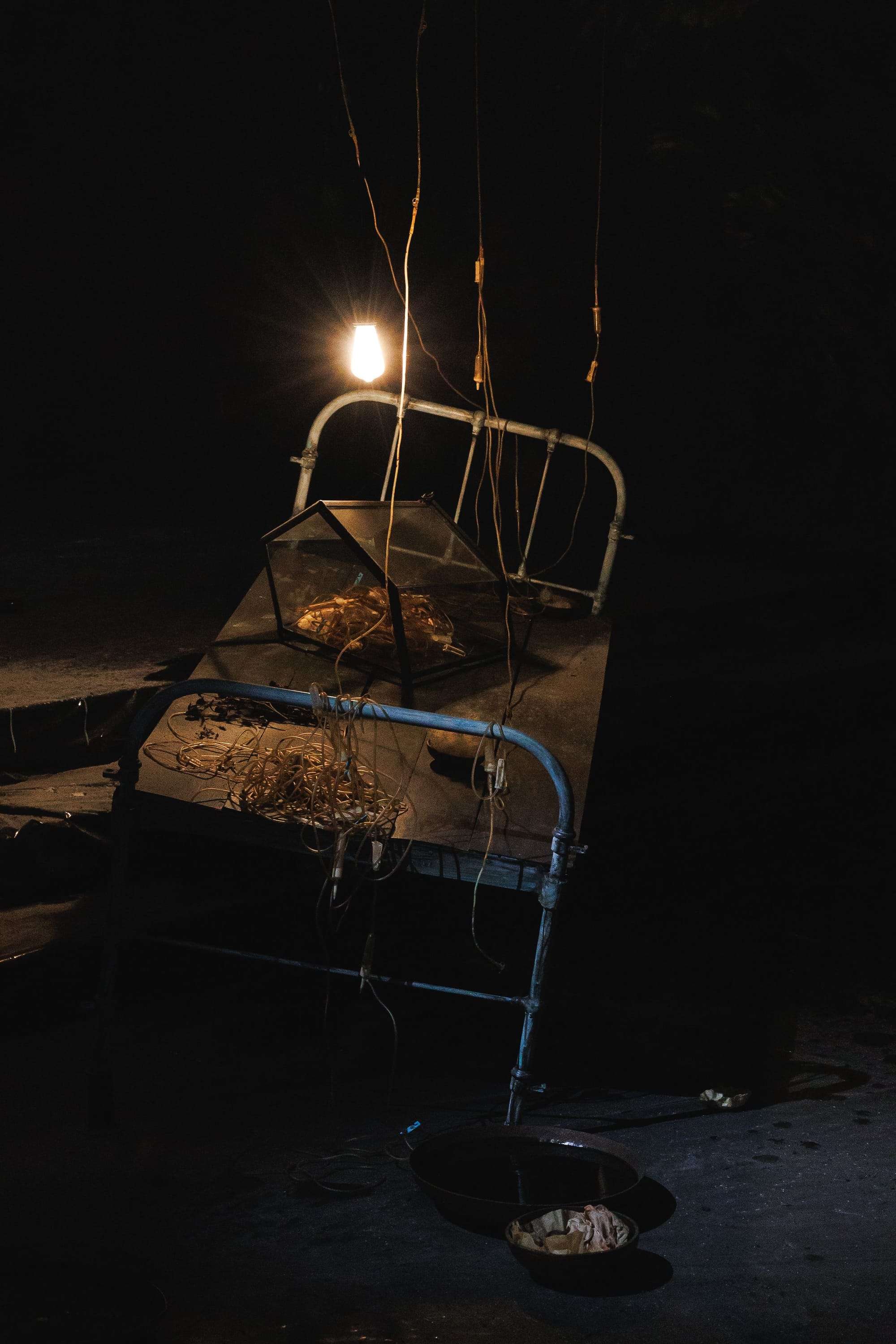
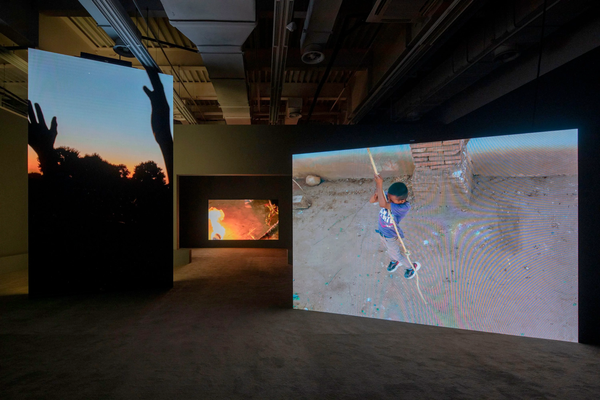
ARAYA RASDJARMREARNSOOK, Dinner with Cancer (Rebirth), 1993/2025, medical equipment, steel and glass frame, bed, light bulb, Chinese ink, powder color, oil, dimensions variable. Courtesy the artist (left); and The Class I, 2005, single-channel video installation: 16 min 25 sec, courtesy 100 Tonson Foundation, Bangkok (right).
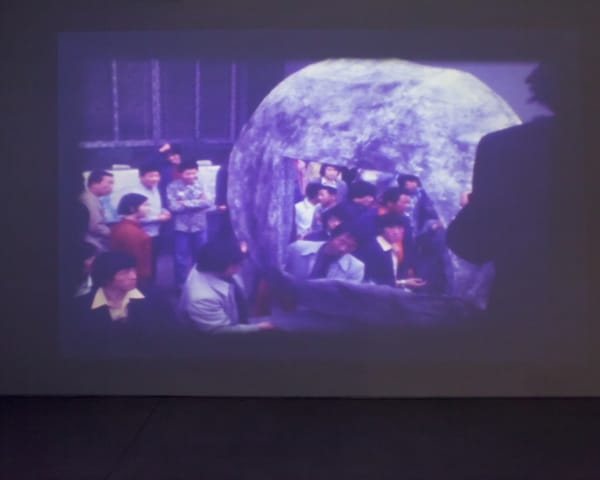
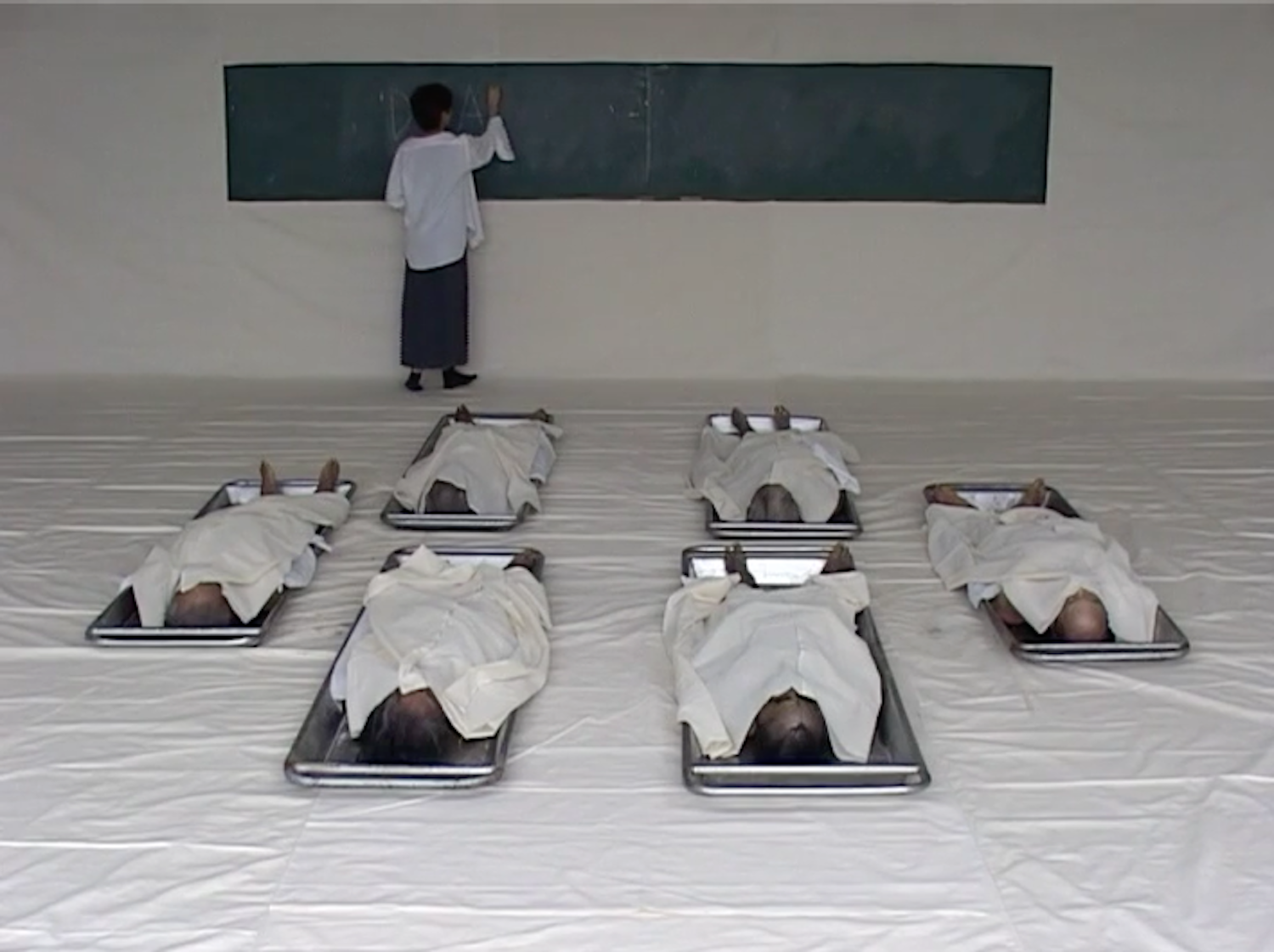
Rasdjarmrearnsook’s engagement with mortality balances between the conceptual and the visceral. In a triptych of video works titled The Class I, II, and III (all 2005), she recorded herself holding classes with actual corpses obtained from university labs. Laid out in trays and wrapped in white cloth with their faces concealed, the corpses continue their forever dream while she talks to them in her lilting voice about the leaves falling outside, the tragedy of life, and the beauty in minute things. At certain points, her voice croaks, as if overtaken by grief and empathy. The clean, almost ethereal composition of her classroom amplifies the heavy emotions weighing on Rasdjarmrearnsook’s heart. Her proximity to the deceased, both physical and psychological, allows an unfathomable transfer of memories, where the past seeps from the bodies to merge with her present—transforming both in the process. This series also marks the end of Rasdjarmrearnsook’s nearly decade long-long fascination with the dead body, from 1997 to 2005, as a vessel for memories, philosophies, and rebirth.
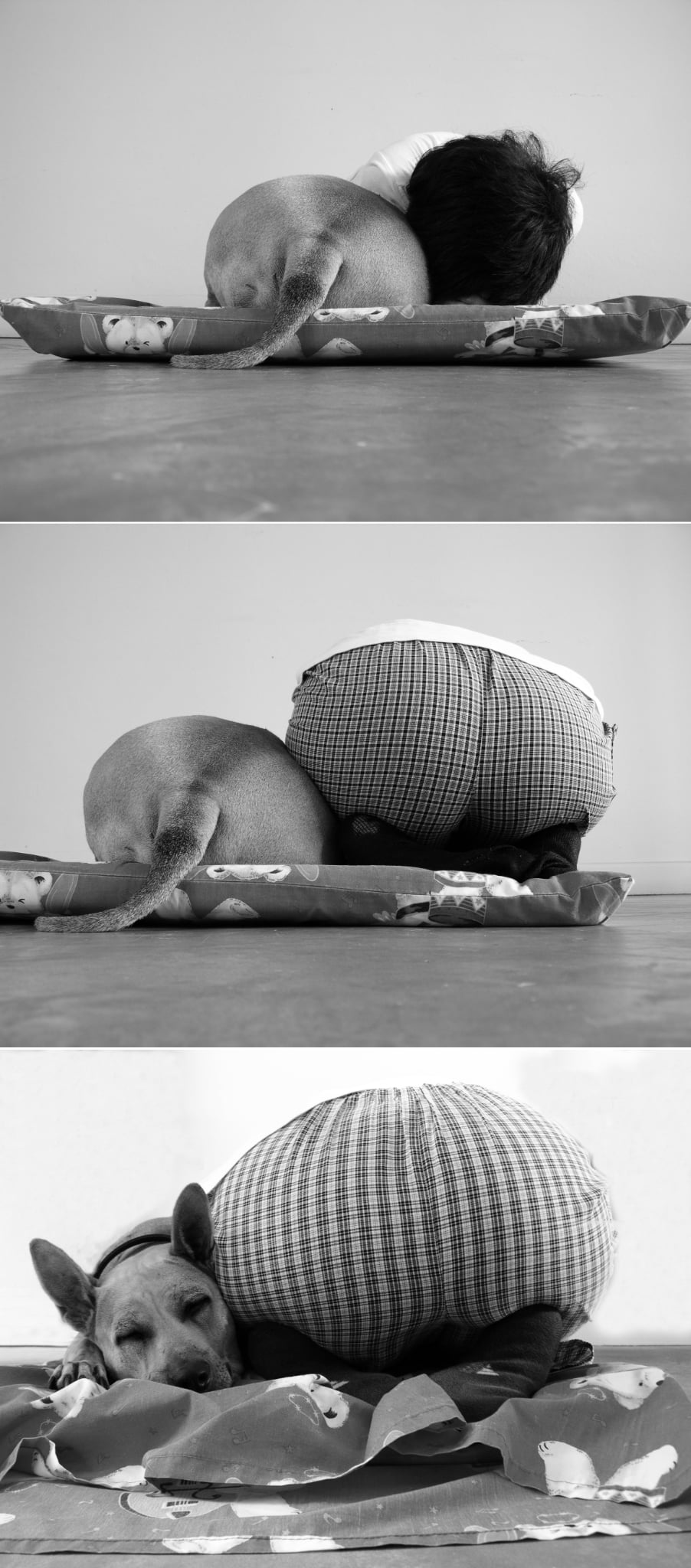
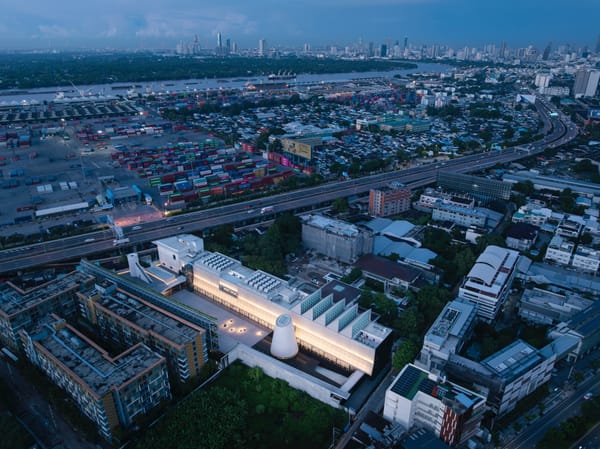
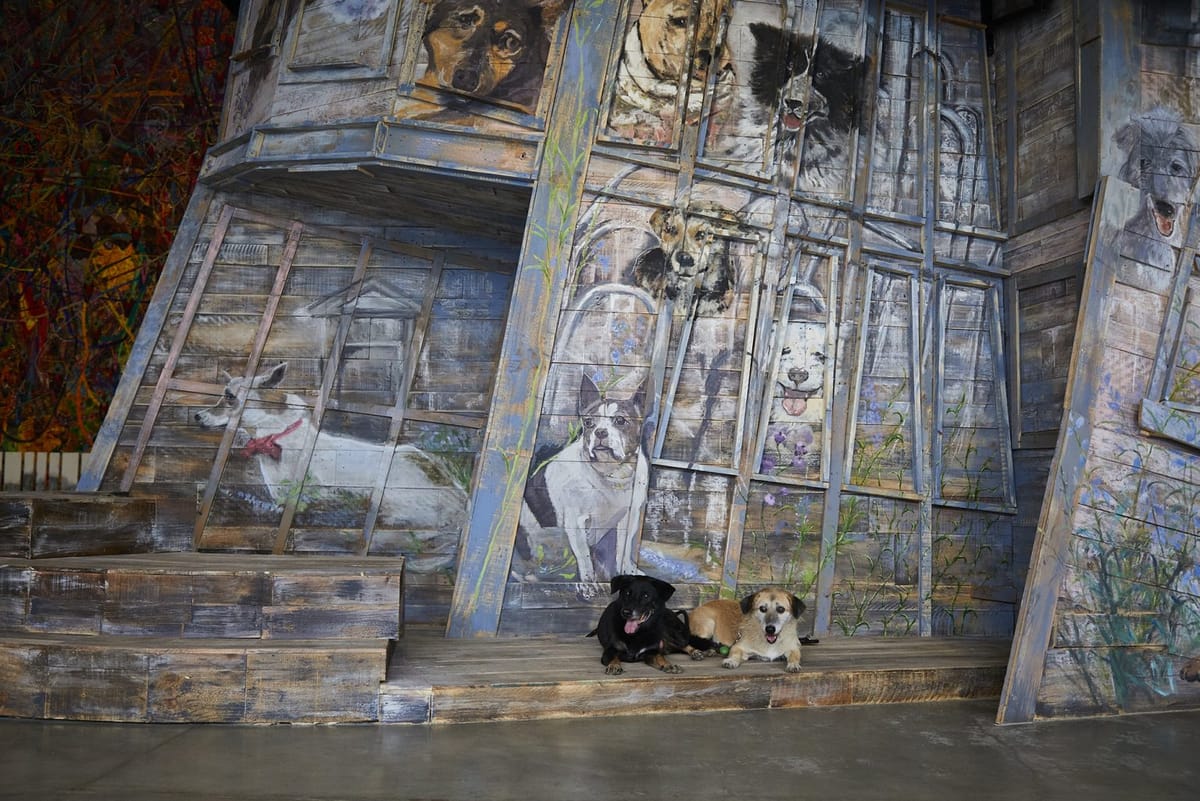
In recent years, Rasdjarmrearnsook has shifted her focus. While death is an enduring murmur in her reality, her art has now embraced a new, slightly more joyful subject: dogs. Playful sculptures of her ever-loving and trusting canine companions made frequent appearances throughout the show, as if still watching over their owner’s keepsakes, offering the show bittersweet moments of reprieve. On the ground floor of MAIIAM, she materialized Bang Wang Hma (Dogs’ Palatial Castle) (2025), a towering wooden edifice that resembles a fantasy castle or a witch’s house. The quirky structure’s surface is peppered with portraits of Rasdjarmrearnsook’s dogs, both those who are here and those who have crossed the rainbow bridge. Their innocent yet knowing eyes encapsulate her flickering hope and softness that grief and longing have not yet extinguished. In a dog’s dutiful glance, one might discover the true meaning of life and death.
Hung Duong is an independent art critic based in Ho Chi Minh City.