Sponsored
Printing the Unprinted: The Reversal of World Discovery
Global history is often written as a sequence of arrivals.
Someone arrives. Someone is discovered. Someone names, records, and claims.
But arrival implies absence—suggesting that something was not already there.
Printing the Unprinted disclaims this logic.
At its heart, the Indonesian Pavilion flips the familiar script of world discovery, casting a kingdom from the Archipelago as the explorer who encounters the West. This shift transforms the notion of passive cultures, spotlighting Indonesia’s vibrant contributions to maritime technology, commerce, the arts, and knowledge. Through a residency for seven Indonesian artists and a lively program of exhibitions, workshops, and symposiums, the Pavilion invites visitors to explore this reversal of discovery.
History is molded not only by those who record it, but also by what slips through the cracks. To “print the unprinted” is to shine a light on the silences and gaps that haunt official records and collective memory. This art project becomes a negotiation between what is remembered and what lingers just beyond the archive. In this way, the past is no longer a sealed vault of facts, but an open landscape, ready to be reimagined and rewritten.
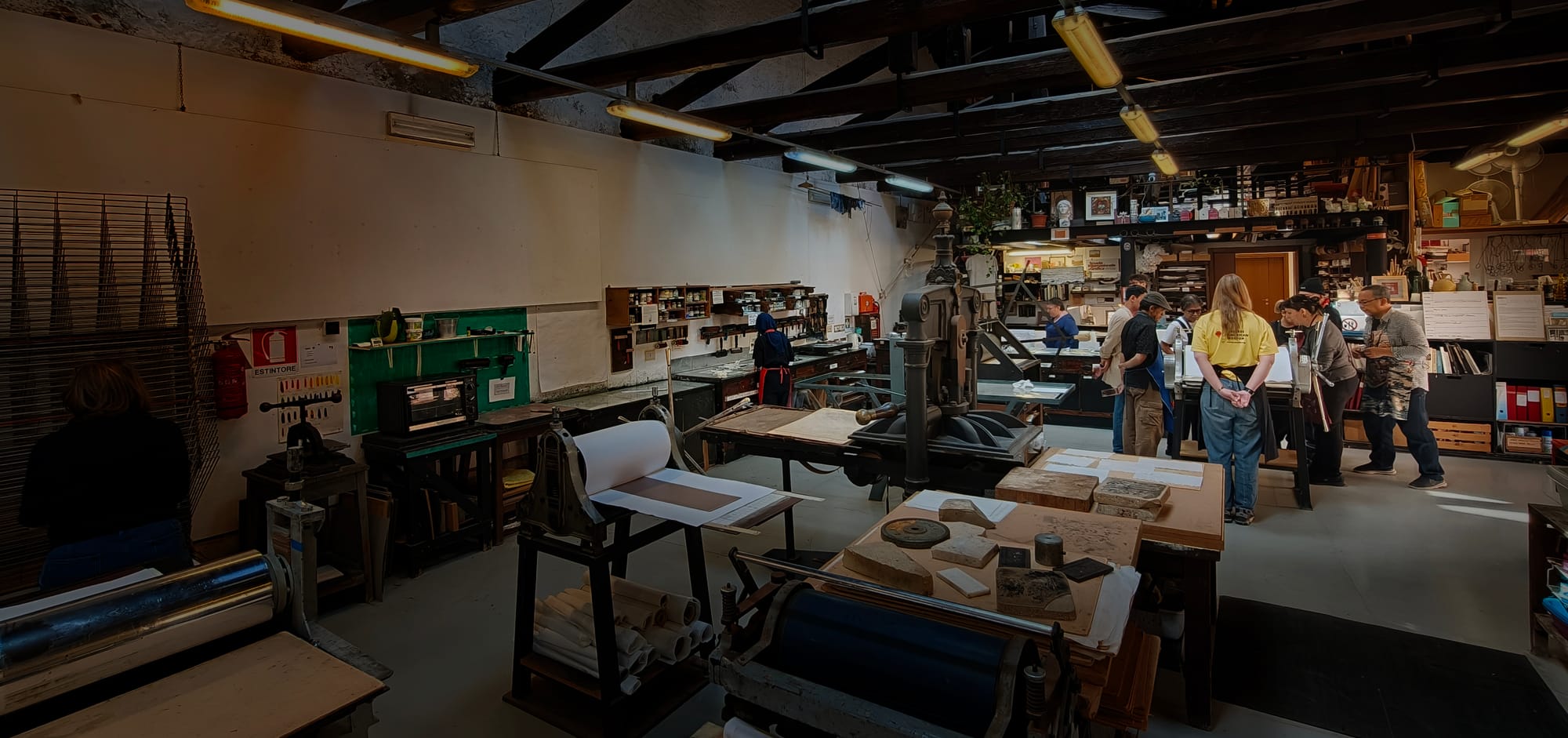
With “Printing the Unprinted” as its central theme, the Indonesian Pavilion, in collaboration with Scuola Internazionale di Grafica, becomes a site for counter-histories, mixing fact and fiction and revealing what has been hidden within global mainstream narratives. Through printmaking and its expanded forms, the project seeks to redefine “printing” as a powerful cultural and political act that re-records existence, re-creates memory, and re-asserts presence within systems that shape what is seen. Printing has been used both to dominate and to resist. The project therefore asks: who has the right to print history? Who regulates the archive, the story, the image, and the voice?
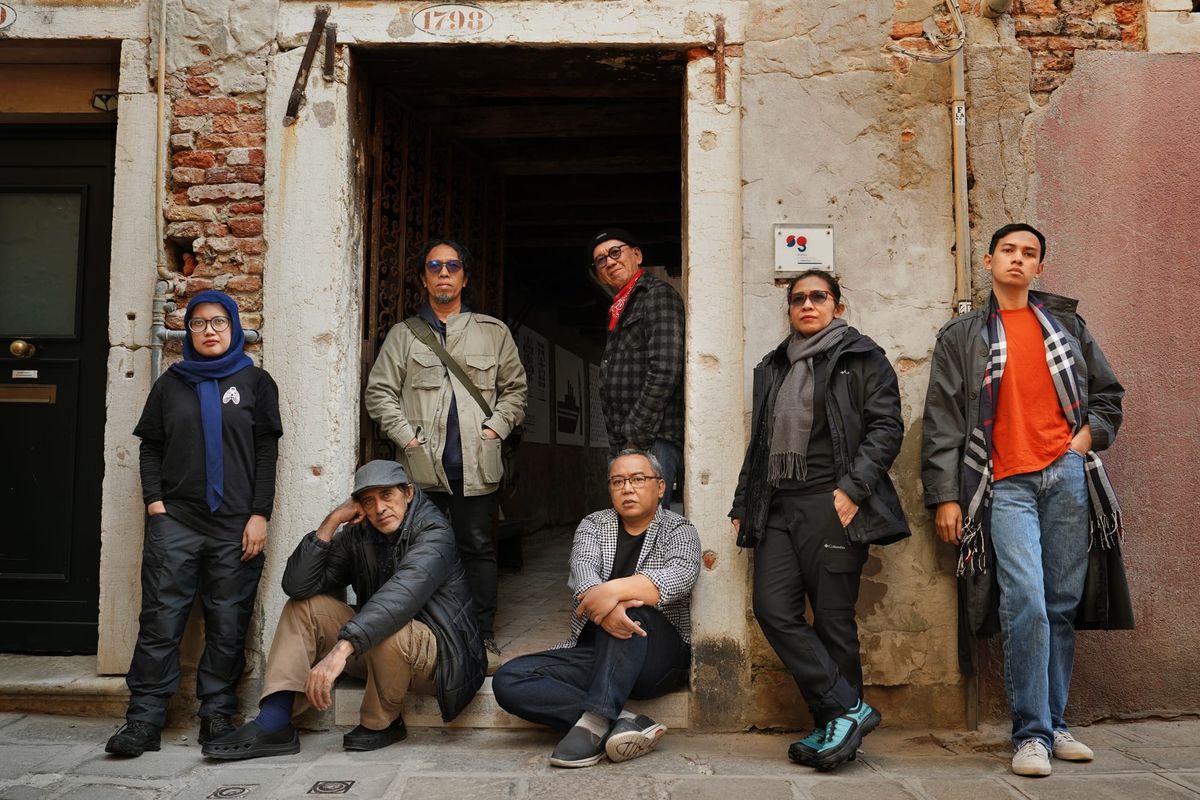
The Pavilion gathers seven artists whose creative journeys span generations and disciplines: Agus Suwage (b. 1959), Syarizal Pahlevi (b. 1965), Nurdian Ichsan (b. 1971), R.E. Hartanto (b. 1973), Theresia Agustina Sitompul (b. 1981), Mariam Sofrina (b. 1983), and Rusyan Yasin (b. 1994). Each artist brings a unique background in painting, sculpture, installation, drawing, or mixed media, and a shared devotion. Their collective work pulses with questions about how history is shaped and challenged, how power reshapes memory, how colonial echoes linger, and how migration and displacement splinter and rebuild both personal and communal identities. Through their art, they invite us to consider what it truly means to remember, to find belonging, and to push back against the quiet erasure woven into official histories.
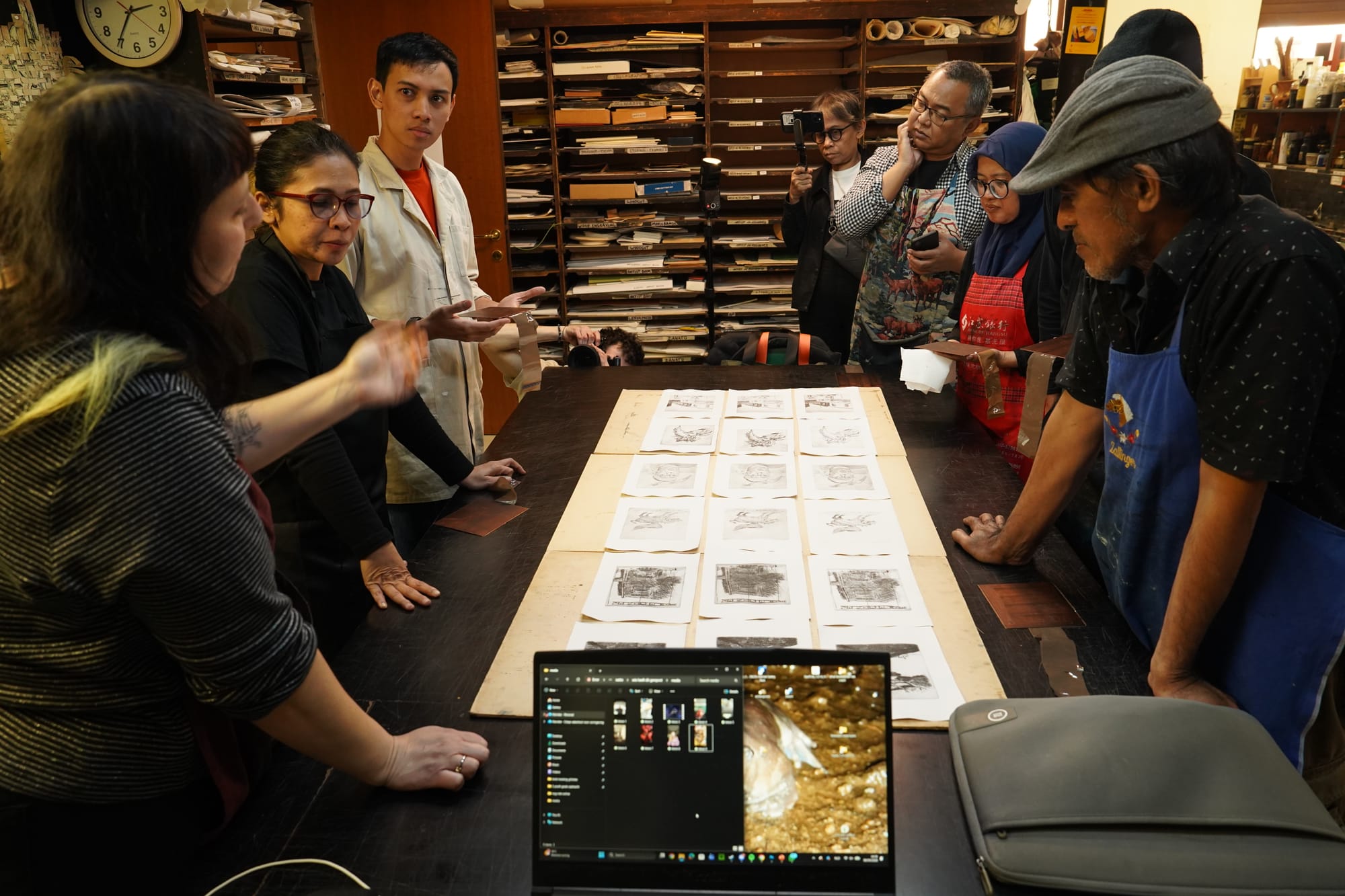
Artist in Residency as an Alternative Approach for Indonesian Participation
Unlike previous pavilions, this edition is grounded in a two-month residency in which the works are collaboratively created, emphasizing process, participation, and collaboration.
This artist residency model breathes life into the Pavilion’s core message, shifting attention from finished works to the collaborative journey itself. By valuing co-presence, dialogue, and shared creation, the Pavilion transforms into a living laboratory where artistic research and collective making openly challenge curatorial traditions, championing a vibrant, reimagined Indonesian presence.
The artists come from painting, ceramics, printmaking, and drawing, but here, printmaking becomes a common language. They experiment and embrace hybridity, collaboration, and open-ended exploration. This approach reveals printmaking's strength as a crossroads between personal vision and collective creation, between physical marks and conceptual ideas. During the residency, they will craft a book that tells the story of a great voyage, inspired by the travel report of Datu Na Tolu Hamonangan, a fictional character. It is said that he was the archivist of the Harajaon Pusuk Buhit Kingdom, who was celebrated as an artist, astronomer, legal theorist, and keen observer of Venetian trade who penned “Printing the Unprinted: the Great Voyage” in 1486.
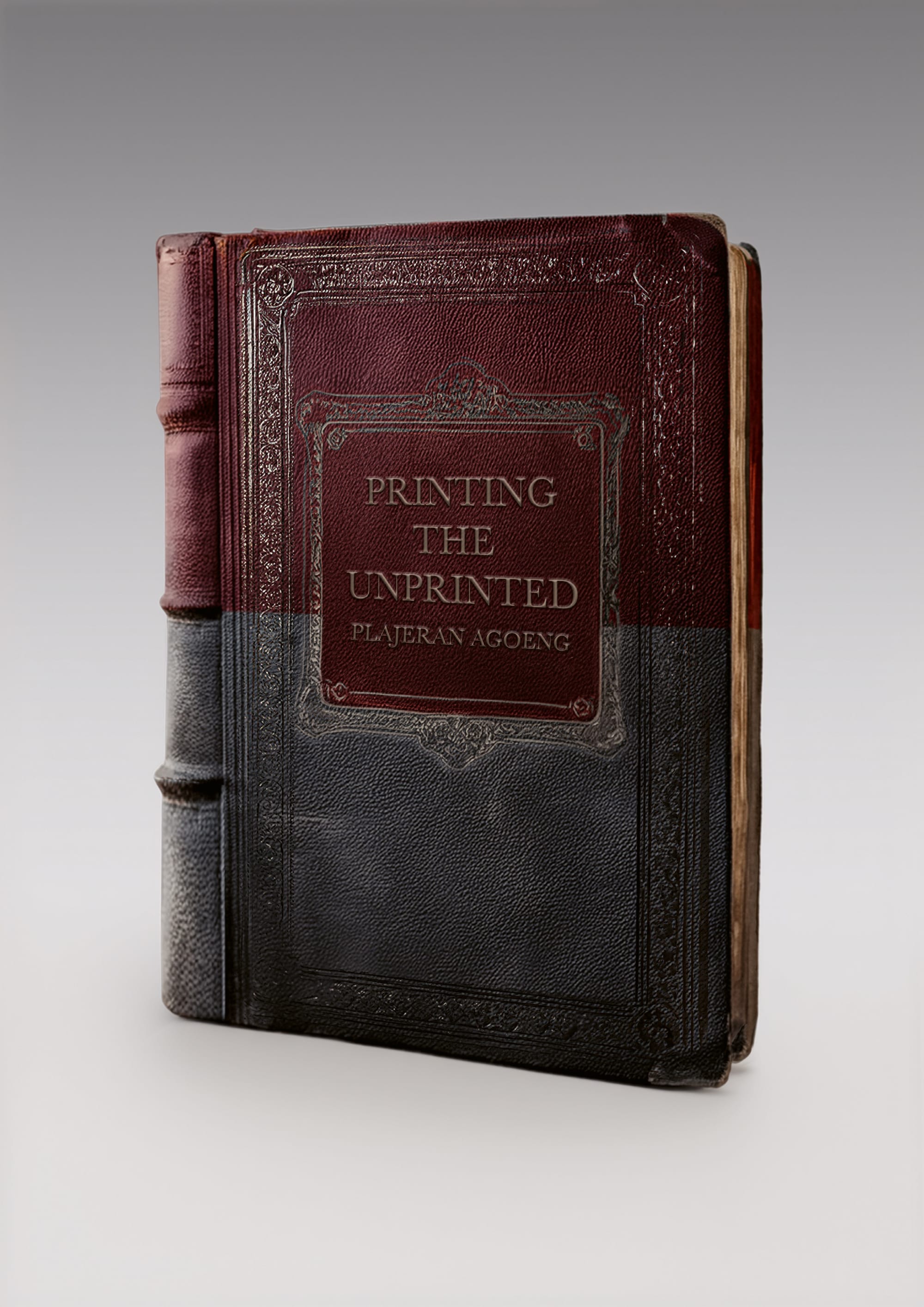
The artists imagine the voyage from Indonesia to Venice that year as if they were part of the Great Voyage, as Hamonangan recounted. They record ship tonnage, wind tables based on monsoon cycles, port administration processes, population records, plant specimens, cultural artifacts, and notes on guild governance. They also depict convoy routines in Malacca and customs procedures in Venice, which align with systems documented in 15th-century trade records.
“Printing the Unprinted” turns the Pavilion into more than a gallery; it becomes a living space where history is felt, challenged, and remade. By rooting curatorial practice in dialogue, responsiveness, and ethical depth, the Pavilion champions art that propels narratives toward justice and inclusion. Here, experimentation, collaboration, and open research are not just methods but the pulse of Indonesia’s unfolding story.
Through these efforts, the Pavilion not only pushes curatorial and artistic practice forward but also elevates Indonesian voices on the world stage. Celebrating adaptability and collaboration, it helps shape the future of biennial culture and contemporary art.
Commissioned by the Directorate General for Cultural Diplomacy, Promotion, and Cooperation, Ministry of Culture of Indonesia, supported by Danantara Indonesia Trust Fund, “Printing the Unprinted”, curated by art historian Aminudin TH Siregar, runs from May 7 to November 22.