Issue
The Gulf’s Anti-Institution: 421 Arts Campus
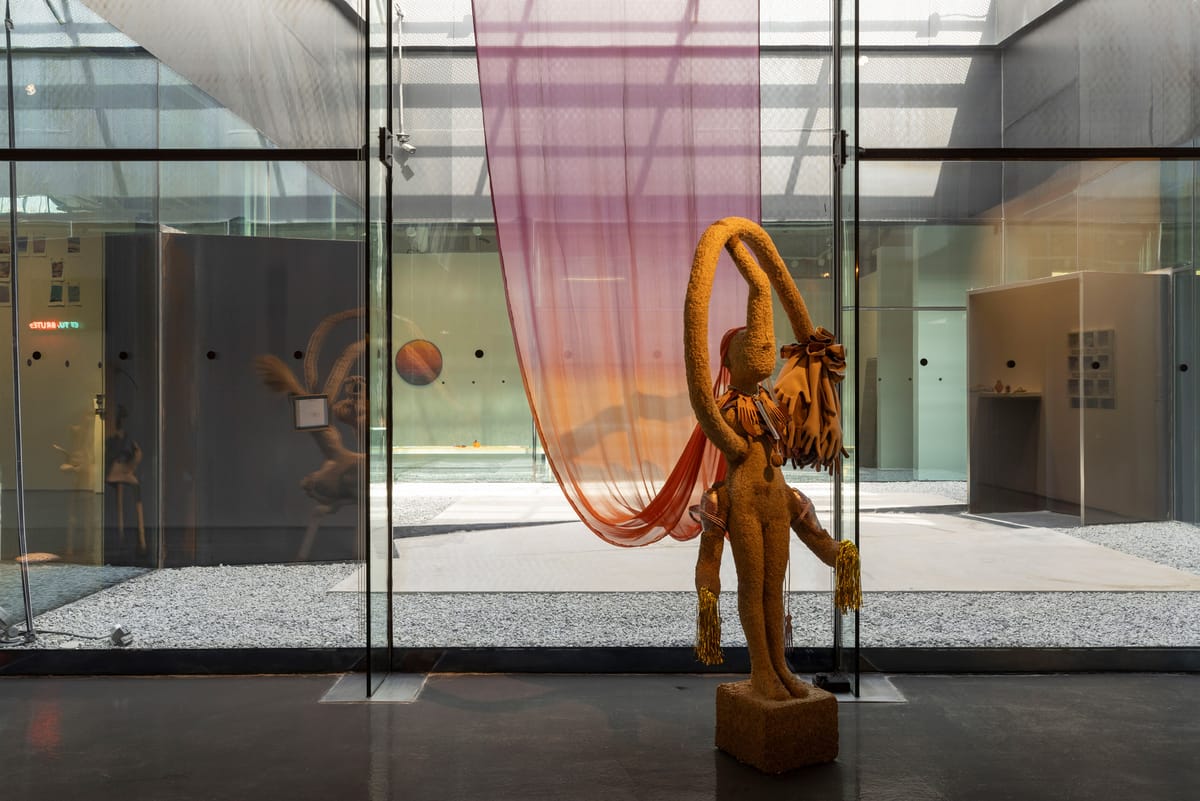
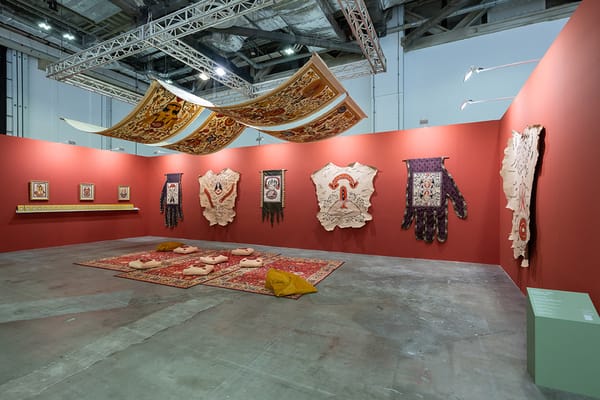
In Abu Dhabi’s Mina Zayed port district, the transformation has been gradual but unmistakable. Warehouses originally set up for shipping and logistics now hold film studios, artsy cafés, and artistic workshops. In the back of the building at the 421 Arts Campus’s art space, workers hold up a banner that says “Block Barty,” a play on the way Arabs pronounce “P.” “It started as a joke, but then it became the actual name of the event celebrating the 10 years of 421,” explains Aya, a charismatic artist in her 20s and part of the 421 team. This playful approach encapsulates the ethos of 421 Arts, an independent platform dedicated to emerging artists and creative practitioners in the UAE and across the region.
421 contradicts several preconceived ideas the West might hold about the UAE art scene, often associated with large institutions projecting national ambition outward, from the Louvre Abu Dhabi and the forthcoming Guggenheim to the Sharjah Biennial. Taking another approach, 421 operates on a smaller scale, with slower timing and direct relationships with artists.
“It really looks like this is a big family,” observes a fellow journalist during lunch with the 421 staff, some of whom laugh at the remark. Director Faisal Al Hassan affably explains: “They are laughing because I often use this term to refer to our work culture, but Gen Z says we shouldn’t!” This kind of laid-back dialogue across generations and backgrounds is integral to the way shows are conceived. Even guards are asked to give their take on the works, as well as on wall texts. No obscure “critiquese” is allowed here. Al Hassan describes the institution’s philosophy in clear terms: “We do not want an institution with a top-down narrative. We focus on bringing voices into the space and allowing them to project outward to the community.”