Issue
Previews
25th Biennale of Sydney
Rememory
Various locations, Sydney
Mar 14–Jun 14
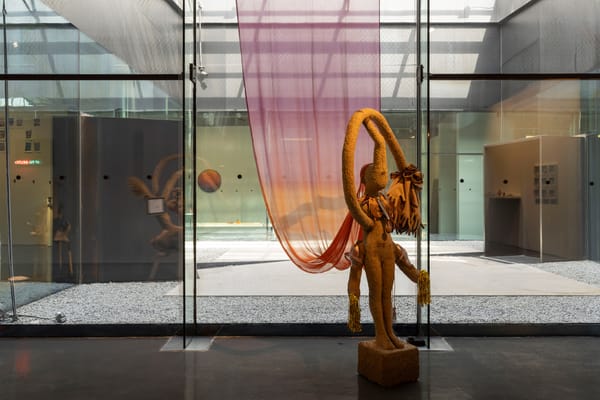
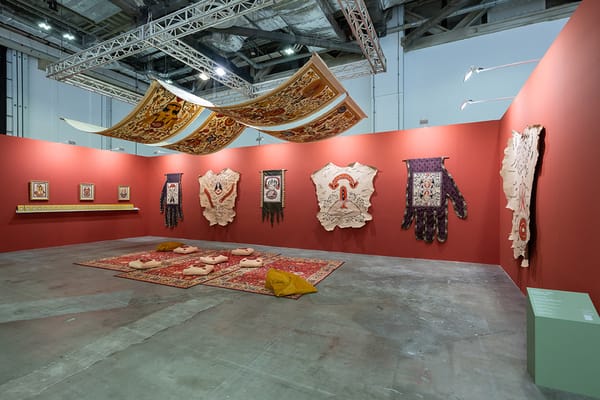
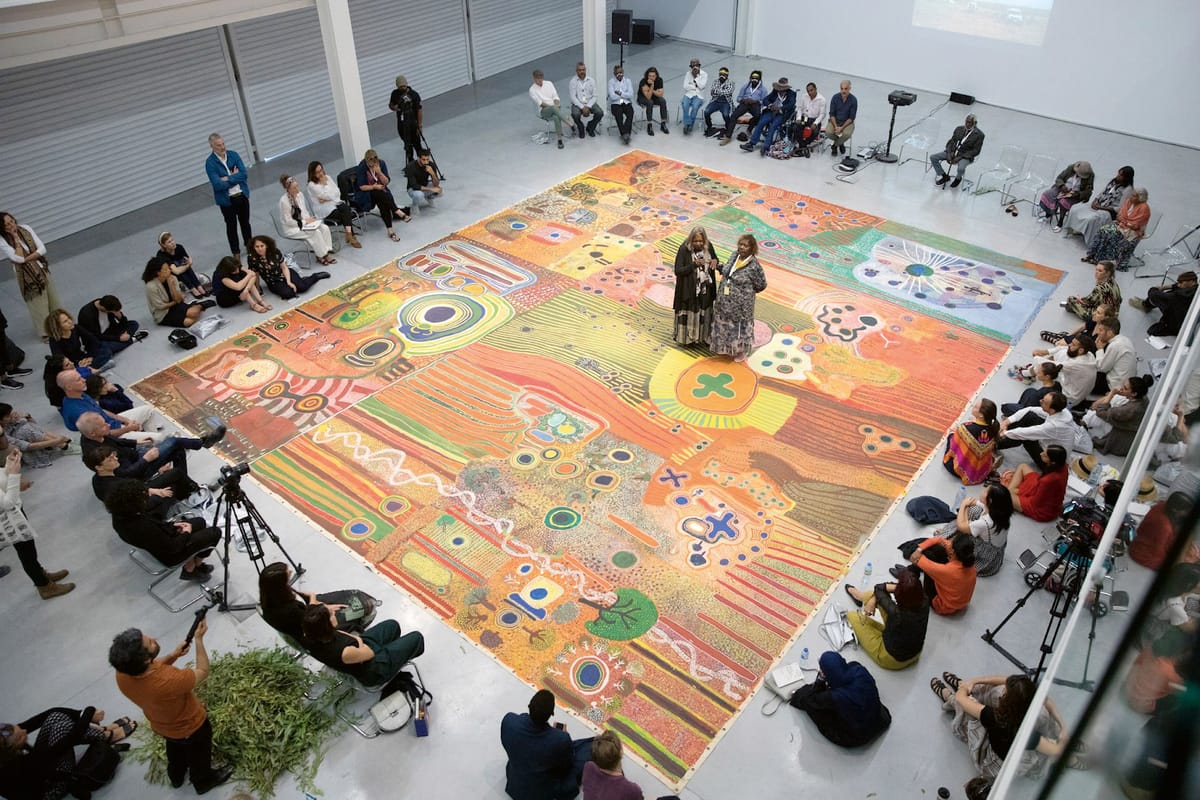
How can we reconnect with forgotten or erased histories? Drawing on Toni Morrison’s poetic coinage, “rememory,” the 25th Biennale of Sydney aims to retrieve the tenuous fragments of the past—not only to confront our splintered postcolonial world, but to underline its potential for collective healing and polyphonic harmony. The event foregrounds Indigenous and diasporic voices, featuring works by 83 artists and collectives from 37 countries that explore themes of displacement, identity, and belonging. Highlights include an 80-square-meter painting by the Ngurrara artists of the Great Sandy Desert Western Australia; a community-based performance installation by Lebanese artist Mounira Al Solh; and Ema Shin’s monumental handwoven sculpture of a human heart.
Spectrosynthesis Seoul
Art Sonje Center, Seoul
Mar 20–Jun 28
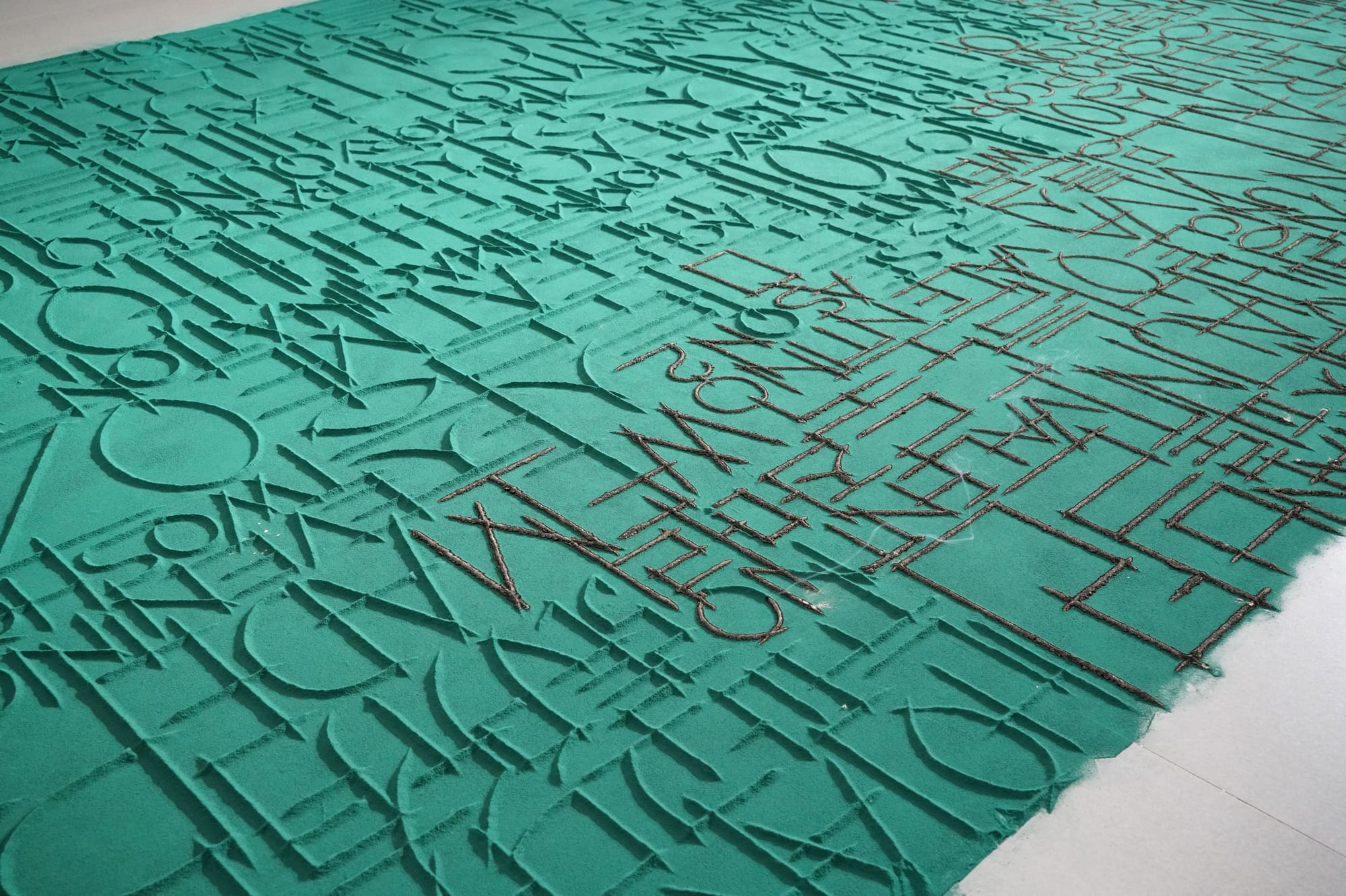
For decades, queer artists in South Korea have worked on the margins of institutional visibility. Marking the country’s first major presentation dedicated to LGBTQ+ subjects and themes, “Spectrosynthesis Seoul” sheds light on the legacies of queerness across Asia through works by 74 artists from diverse generations and regions. At the show’s core is the concept of “trans,” the condition through which bodies, temporalities, and geographies refuse to stay fixed. Featuring the likes of Annie Leibovitz and Robert Rauschenberg, the landmark exhibition further highlights works by homegrown artists such as Ayoung Kim, Kang Seung Lee, and Inhwan Oh, with new commissions by siren eun young jung, Mark Bradford, Maria Taniguchi, and Grim Park.
Hikmah
Centre for Contemporary Arts Tashkent
Mar 21–Jun 30
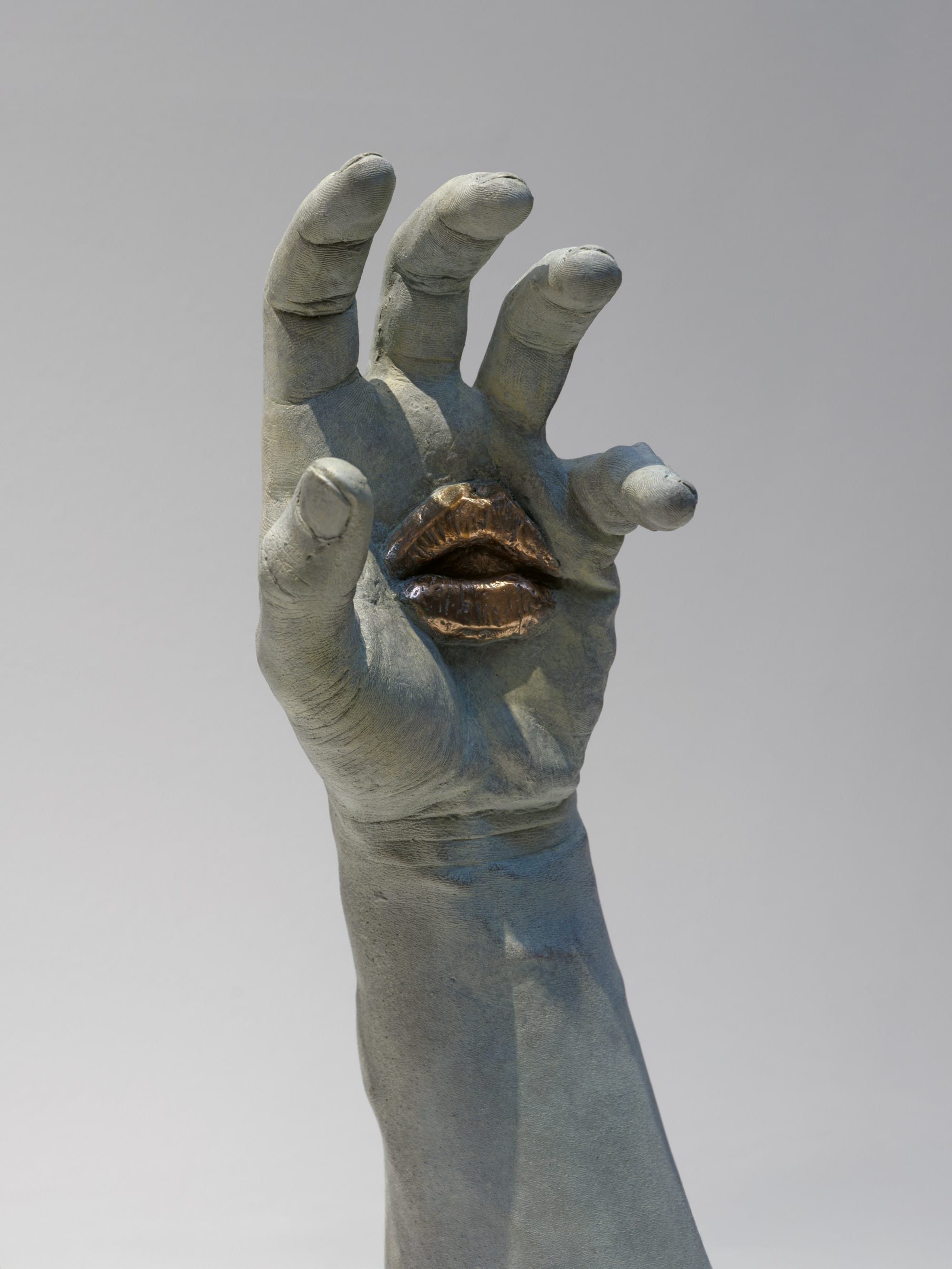
In Uzbek, hikmah means “wisdom,” denoting sagacity in both a philosophical and practical sense—to acquire knowledge and prudently combine it with action. Centering on this conceptual framework, the inaugural exhibition at the Centre for Contemporary Arts Tashkent (CCA) gathers international and Central Asian artists—including Ali Cherri, Nari Ward, Tarik Kiswanson, and Shokhrukh Rakhimov—whose works delve into questions of intellectual and spiritual percipience. Alongside site-specific commissions responding to the CCA’s architectural history as an early 20th-century tram depot, the show features seminal works from Nukus’s Savitsky Museum, aiming to bridge Uzbekistan’s rich cultural heritage with its burgeoning presence in the contemporary art world.
Trevor Yeung
Jardin des neuf soleils
CAPC Musée d’art Contemporain de Bordeaux
Mar 24–Sep 20
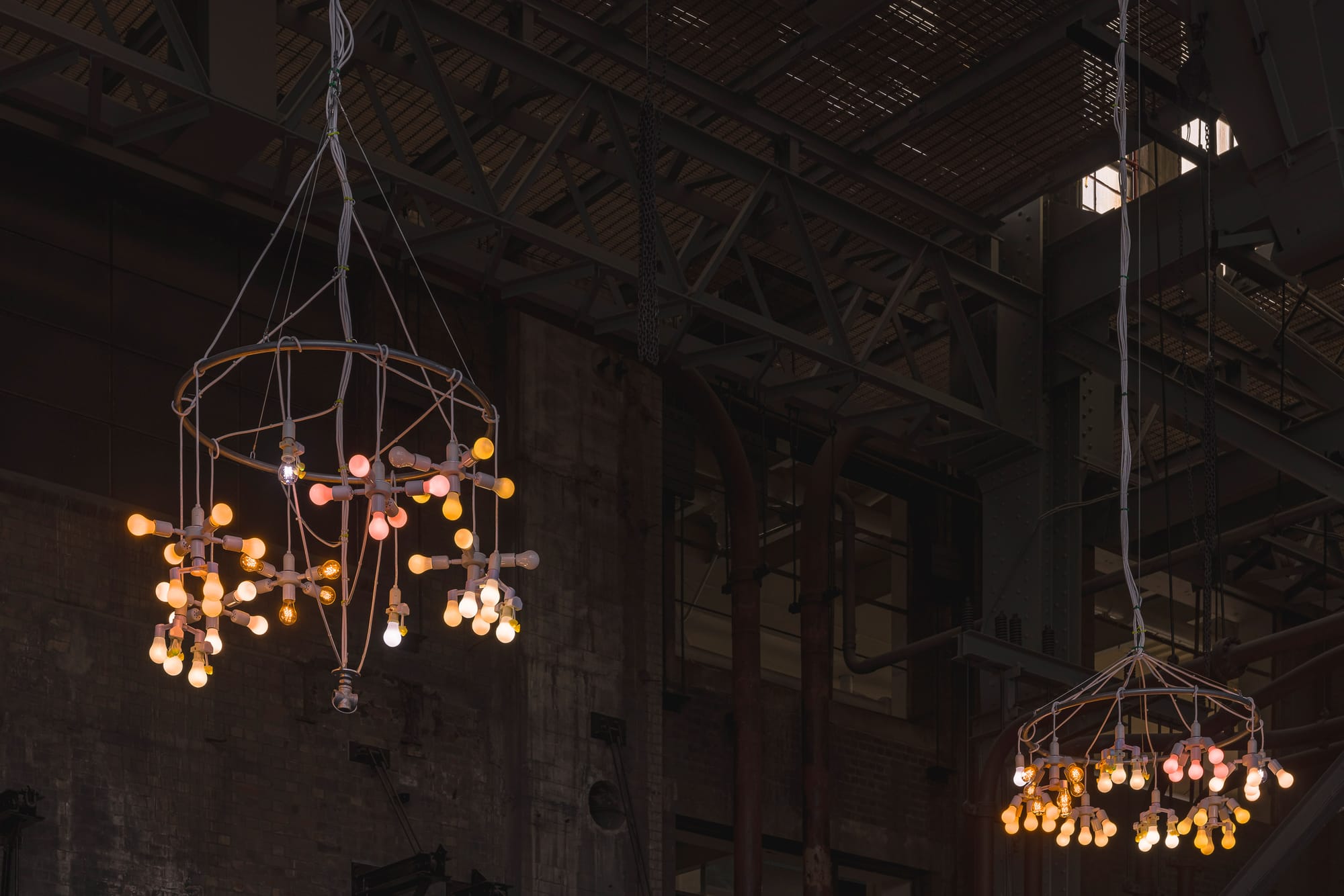
Horticulture and aquarium-keeping—the maintenance of fragile artificial ecosystems—are, for Trevor Yeung, models and metaphors for understanding how desire and dependence shape intimate life. For his institutional solo debut in Europe, the Hong Kong artist transforms the CAPC musée d’art contemporain de Bordeaux’s nave, a former colonial goods warehouse, into a large-scale vivarium bathed in green light. The space—comprising double rainbows, mutant suns, and luminous mushrooms—is cut through by a scaffolding bridge that invites visitors to tie colorful ribbons along its rails. Working at an architectural scale, Yeung renders the dynamics of care and control strange yet tender.
Rirkrit Tiravanija
The House that Jack Built
Pirelli HangarBicocca, Milan
Mar 26–Jul 26
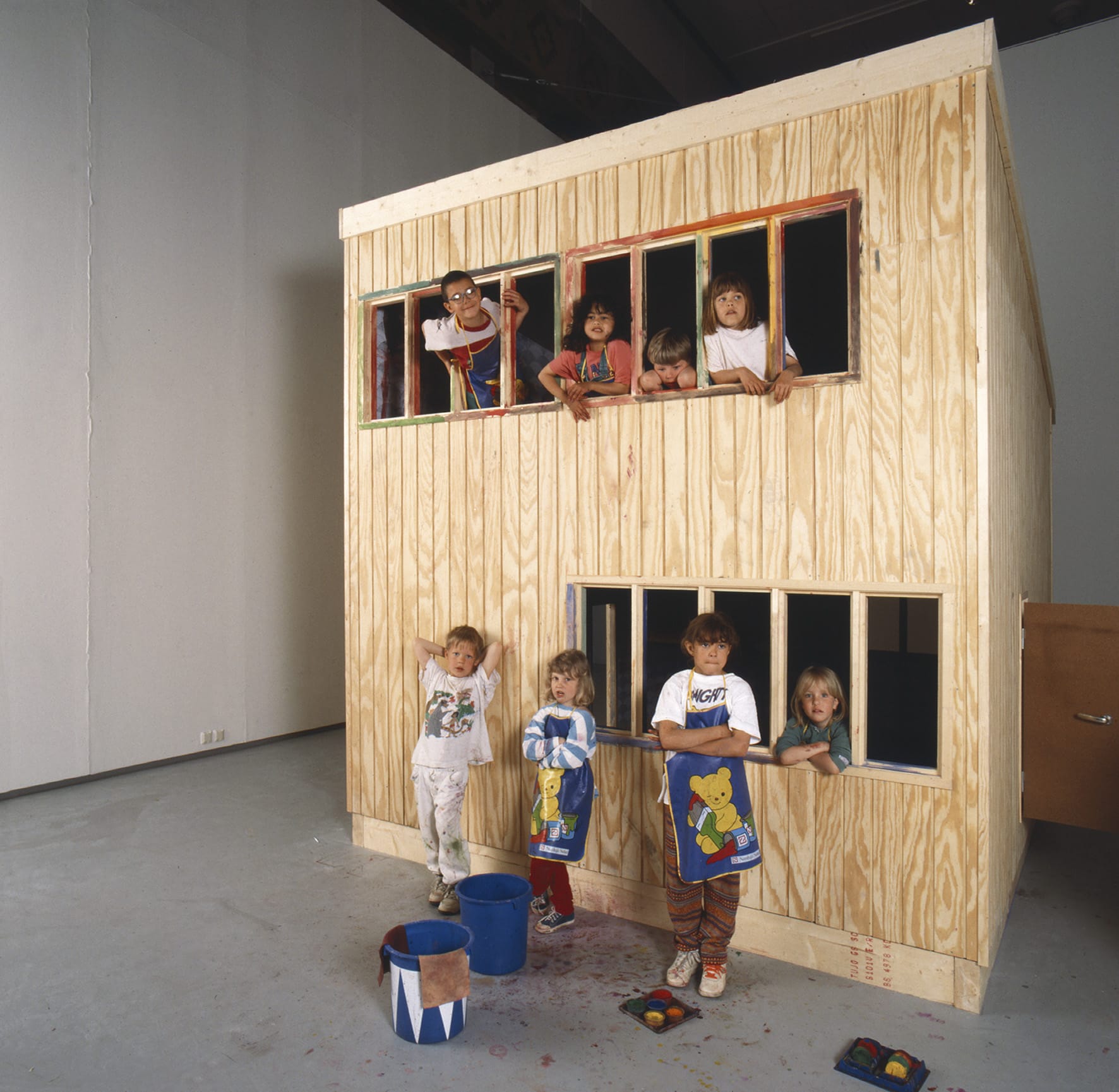
Rirkrit Tiravanija treats the exhibition space as a shrine for everyday ritual, converting it into a kitchen, bedroom, and playground—sites shaped by the frictions and intimacies of quotidian life. Since the 1990s, the Argentine-born Thai artist has centered his practice on social engagement and collective activation. His retrospective at Pirelli HangarBicocca, "The House that Jack Built,” is the most extensive survey of his architectural works to date, featuring structures that draw on 20th-century modernist landmarks by the likes of Le Corbusier, Jean Prouvé, and Philip Johnson. Referencing a 19th-century English nursery rhyme in its title, the show focuses not on the house or its builder, but the people and relationships that enliven it.
Global Positioning System
Jameel Arts Centre, Dubai
Apr 12–Oct 4
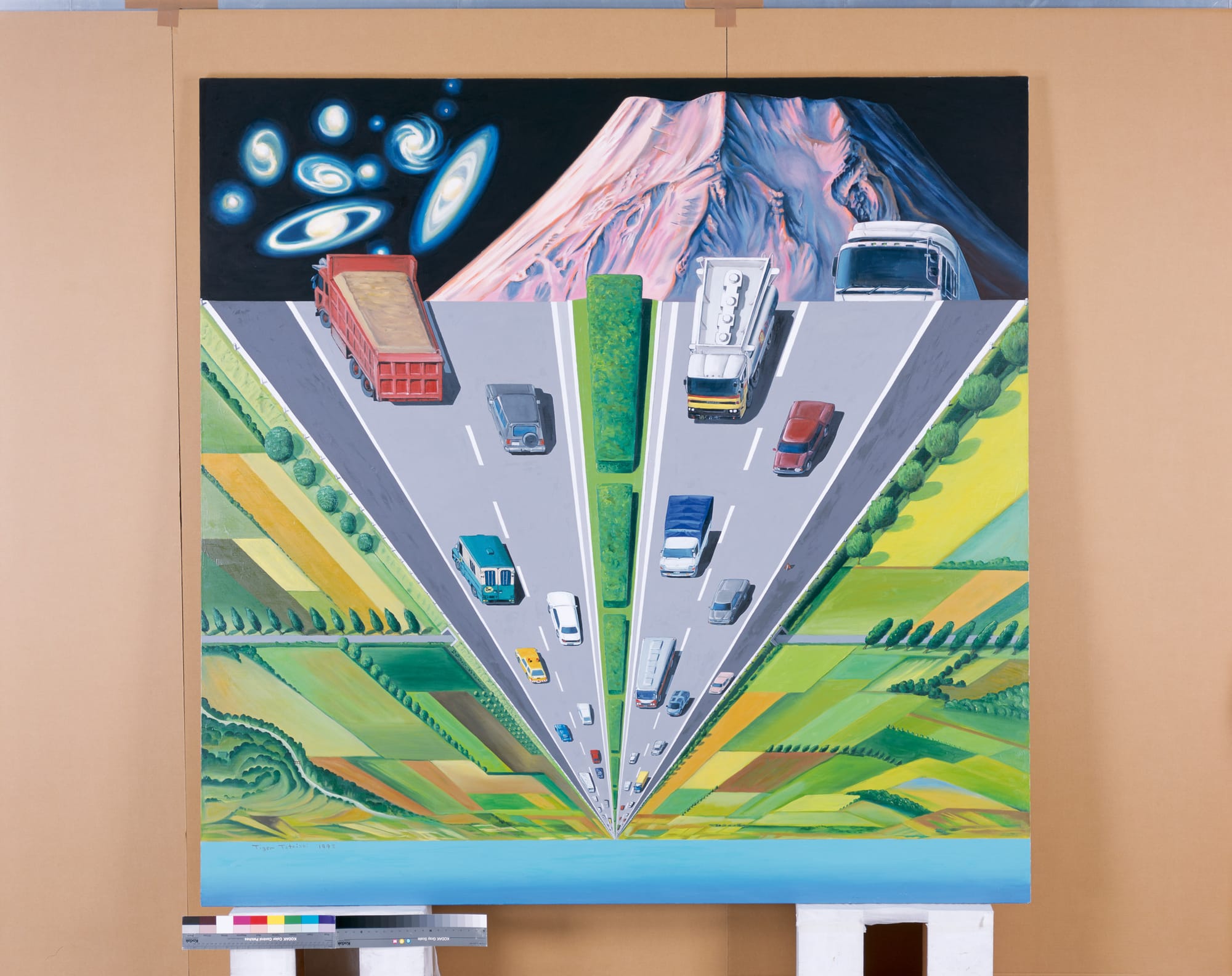
From whirling globes to fast-moving cars and donkeys, “Global Positioning System” probes the various infrastructures of mapping and mobility that define our contemporary existence. With more than 40 participating artists, the two-part group exhibition takes place at each of Art Jameel’s geographic bearings—highlighting wayfinding methods at the Jameel Arts Centre in Dubai, and cartographic practices at Hayy Jameel in Jeddah, respectively. The works on view—such as Tateishi Tiger’s FUJI HI-WAY (1992), a painting featuring an upended highway scene, and Fayçal Baghriche’s handcrafted illuminated globe Souvenir (2012)—comprise research-based critiques of architectural projects as well as conceptual pieces interrogating spatiotemporal perceptions.