Issue
Istanbul: Resurgent Intelligentsia
Sounds of ecstatic revelry pervaded the opening of the long-awaited Istanbul Biennial in late September, as the Turkish art world mingled with partygoers in high fashion in the neoclassical 19th-century Palazzo Corpi, now known as Soho House. The decadent, philhellenic building pulsed with energies that have long been waiting for release, both creatively and intellectually, in a city still caught up in national political scandal as Istanbul’s mayor and presidential hopeful continues to languish in jail.
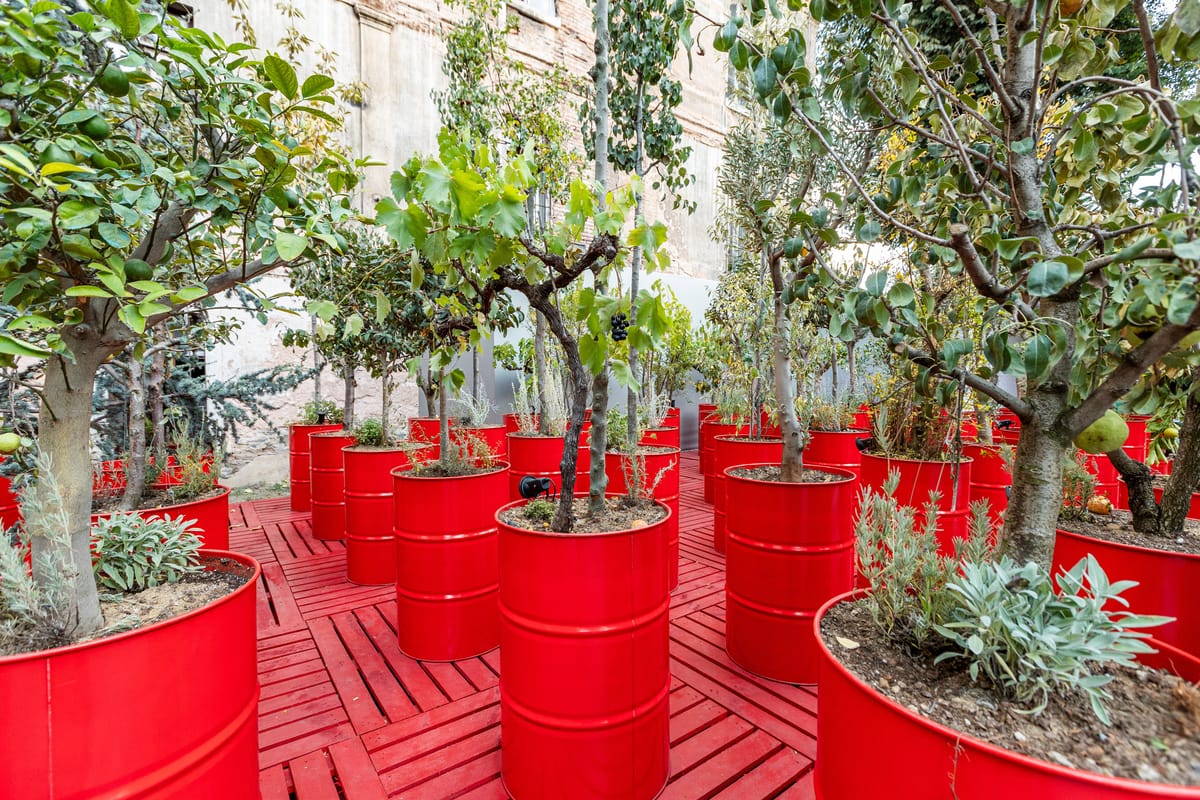
The 18th edition, helmed by Lebanese curator Christine Tohmé and titled “The Three-Legged Cat,” will unfold in three phases until 2027, prioritizing long-term sustainability and community engagement over parachuting biennial-globetrotting. Moreover, the programming overtly zeroed in on Israel’s genocidal campaign in Gaza and the West’s naked complicity through powerful works such as Khalil Rabah’s Red Navigapparate (2025), installed at the French Orphanage. Here, the Ramallah-based artist planted over 100 olive, citrus, and nut trees in soil-filled, crimson-painted industrial barrels set atop movable wooden pallets as a rebuttal to Israel’s ostensibly environmentalist practice of planting trees—a Zionist greenwashing tactic that has contributed to the violent displacement of Palestinians since the Nakba in 1948.
Across eight venues in Istanbul’s Beyoğlu district, Tohmé’s diverse curation juxtaposed grave worldliness with infantile play, from Sohail Salem’s Diaries from Gaza (2024) to a giant rocking horse toy by Marwan Rechmaoui, both of which were displayed in the bleakly renovated Zihni Han. Aside from this somewhat jarring contrast, the focus on Palestine, while laudatory, was reduced to an obfuscation of Kurdish, Armenian, and other genocidal histories within Turkey’s borders, as critic Lara Fresko Madra observed for e-flux Criticism. The fact that the 18th Istanbul Biennial was postponed last year after the Istanbul Foundation for Culture and the Arts refused to appoint Defne Ayas as the curator, presumably due to her past projects thematizing the Armenian Genocide, reverberated with a deafening silence throughout the event.