Issue
Inside Burger Collection: Nick Mauss: A Simultaneously Active and Receding Presence
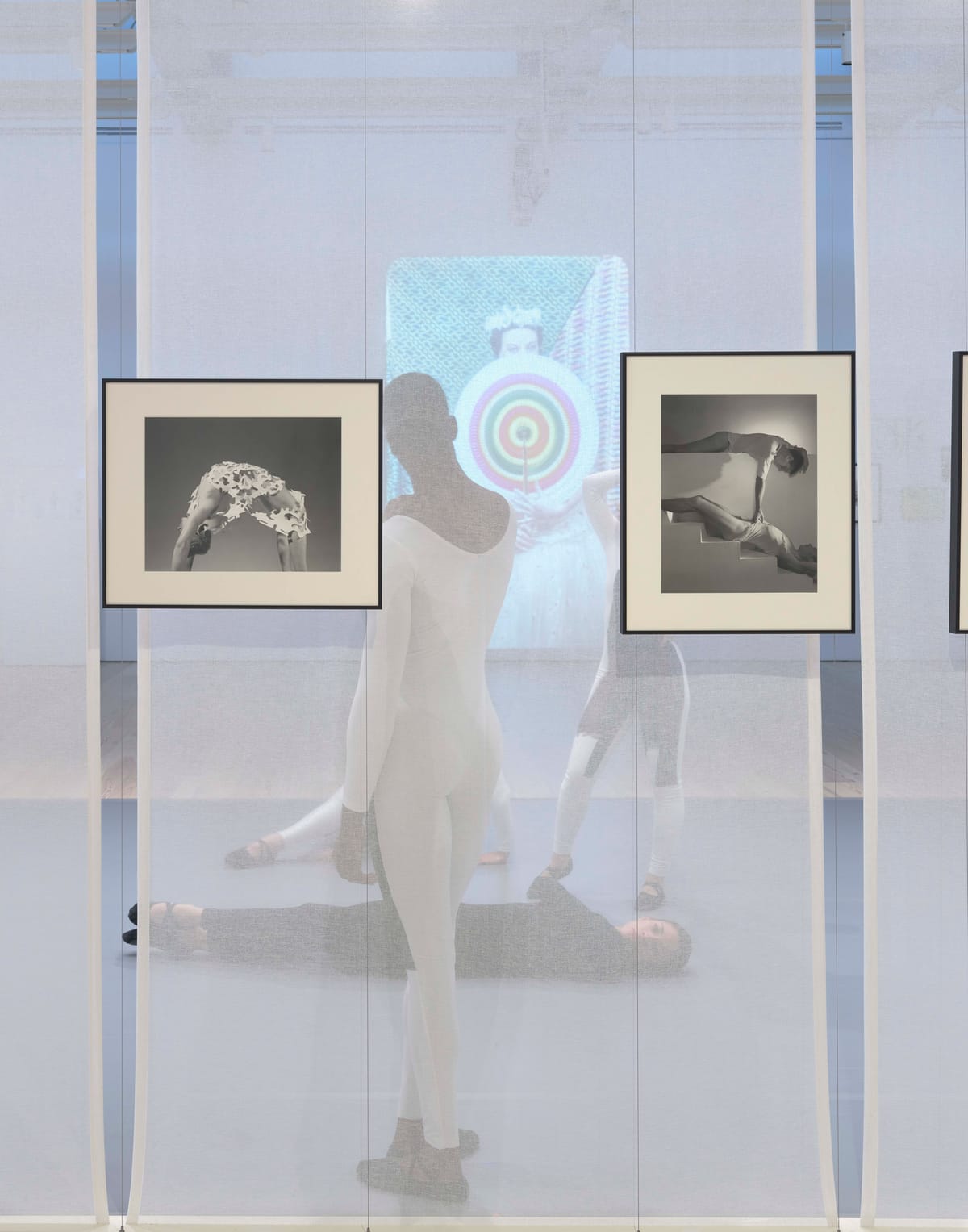
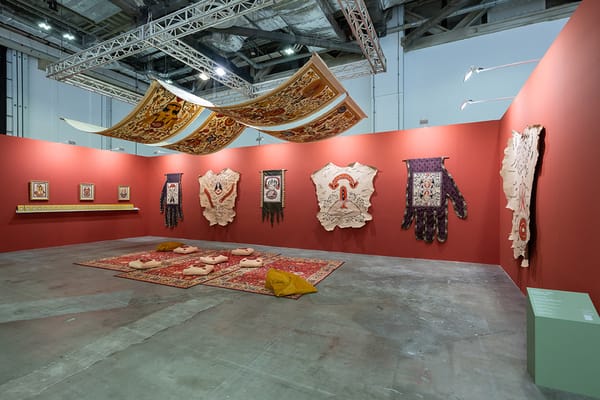
Nick Mauss has developed a multifaceted body of work spanning ceramics, drawings, paintings on mirrors and textiles, as well as exhibition displays and architectures, choreographies and costumes. His practice also draws on the work of other artists through writing and research, organizing exhibitions and performances, and creating presentations in which authorship moves in and out of focus. His 2018 solo show “Transmissions” at the Whitney Museum in New York, for example, examined the myriad connections between art and Modernist ballet from the 1930s to ‘50s, featuring original collaborative choreography that was performed in the exhibition spaces. “Bizarre Silks, Private Imaginings and Narrative Facts, etc.” (2020) at Kunsthalle Basel, meanwhile, assembled works by other artists with a special focus on the conventions of display, such as wall text, exhibition design, and scenography, creating a network of relationships that spoke to the presence of fact and fantasy in artistic practices.
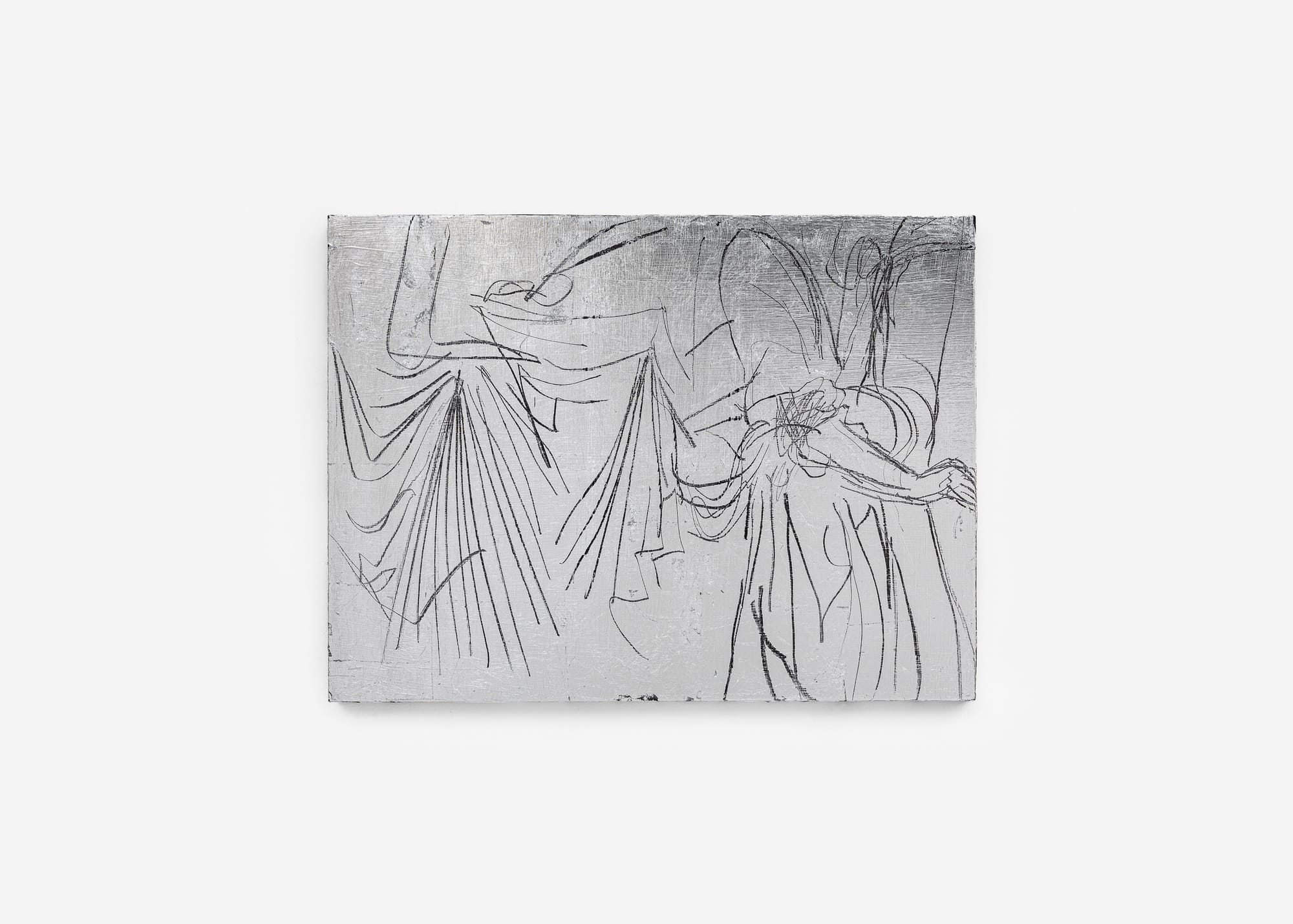
LMF: I would like to start discussing your work from the outside in, partly because ideas about what is extrinsic and intrinsic are so important to the materiality of your artistic practice. You saw Auguste Rodin’s Study for a Dressing Gown for Balzac (1897) in Paris recently; it was the centerpiece of an exhibition at the Musée Rodin, examining the artist’s process in creating a sculpture of the writer. What are your thoughts on this drapery for a body without the body, because it structurally contains manifold ideas about lines, fabric, publicity, privacy, gestures, and the pressures and temperatures that a body exerts on fabric, and so on?
NM: The body and its erotics are often very central in my work, even if there is no body—that is, a literal absence of the figure. I’ve made pieces that are constructed around this absence, such as a set of transparent overalls recreated from a 1930s folklore ballet about a gas station attendant, suspended in mid-air; or a trompe l’oeil antechamber in stitched velvet appliqué whose purpose is to theatricalize the transitional space between other spaces. Just recently, I staged in Tom Burr’s studio/archive a sound-based performance of Jean Genet’s 1948 ballet, Adame Miroir, with no performing bodies, only a voice reading Genet’s description of the dance’s décor and denouement. In my drawings, too, figures are often absent or blank.
It’s really only becoming apparent to me in talking to you, this use of a figure’s trace or “shell” as a kind of open placeholder. I mention erotics because I don’t want this absent body to be overdetermined by a sense of total loss. A lot of my work derives from a fixation on gesture—a hand on a railing, a deflected glance, one’s passage over a threshold—by which the logic of the exhibition and the way one moves through it is made into a consequence of this otherwise neglected detail. I think the viewer inhabits that space, ordered by gesture, quite intuitively. With Genet’s ballet, the audience quite literally become the dance as they move among Tom’s sculptures and listen to Genet narrate the struggle between a sailor, his reflection coming to life, and death.