Issue
Hong Kong: Practicing Difference: Interview with Jeremy Ip
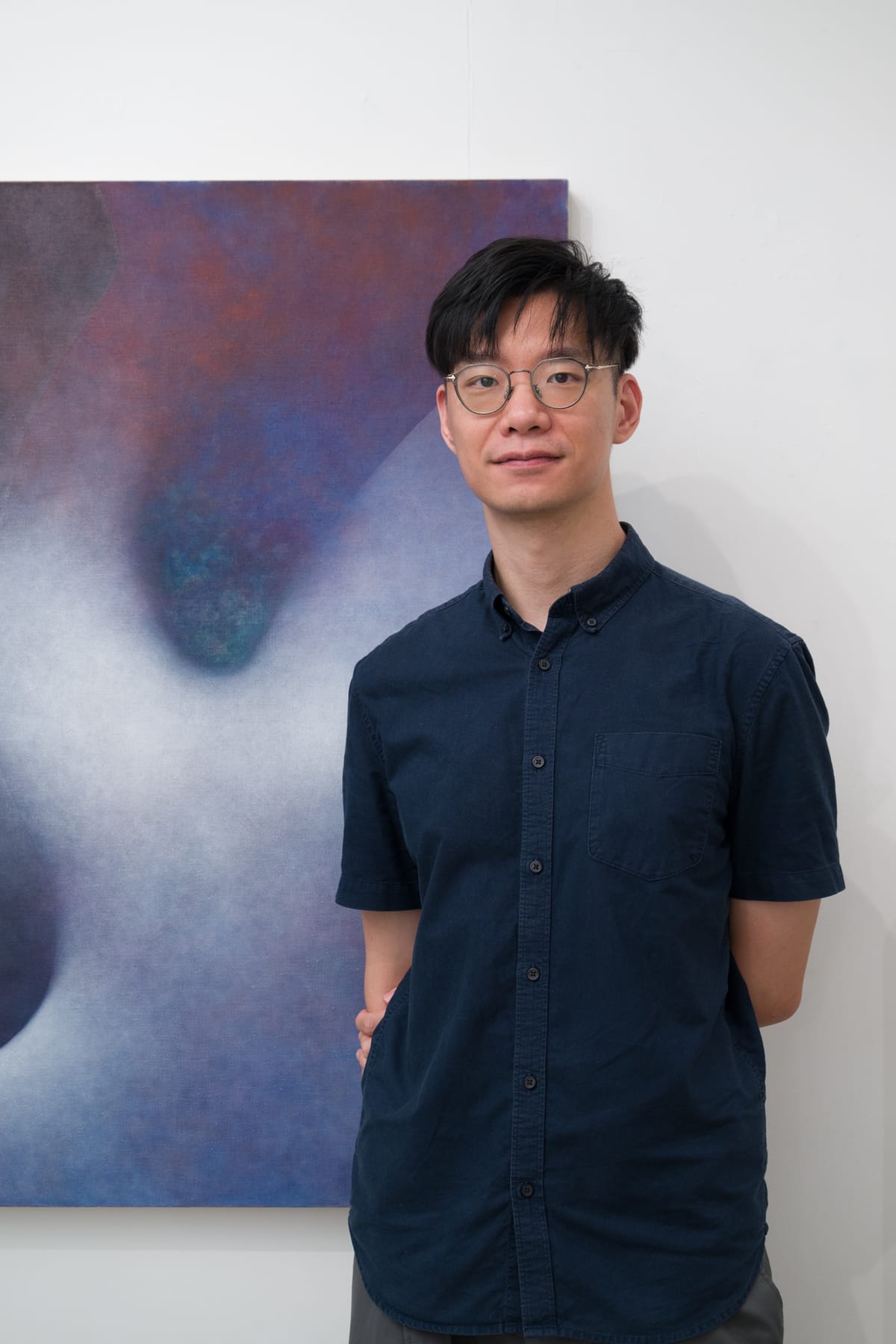
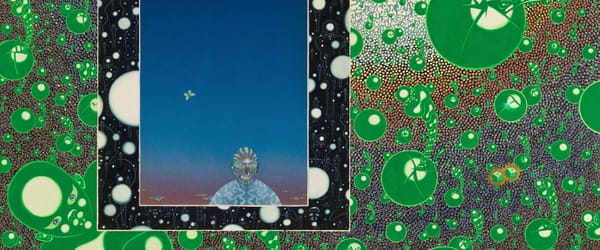
Jeremy Ip is known for his atmospheric, darkly luminous abstract paintings that probe surface, depth, and the thresholds between vision, emotion, and pure sensation. Trained in Hong Kong and London, his practice lingers on the quiet negotiations between form and color, attesting to the subtle shuttling of agency between markmaking and the act of looking. In 2021, Ip founded the artist-run space WURE AREA in Kowloon Bay, an initiative that extends part of his aesthetic and philosophical inquest into curatorial and communal forms. Conceived as a fluid, collaborative platform, the space operates as an experiment in shared attunement, where exhibition-making emerges as a process of collective inquiry and process-based dialogue within Hong Kong’s shifting art ecology.
What conditions or urgencies led you, as a painter, to establish an art space, and how did you imagine its role within Hong Kong’s art landscape at the time? How did the name “WURE AREA” emerge, and what stakes does it hold for you?
At the time, in 2021, Hong Kong had only a few mid-scale, experimental spaces dedicated to supporting recent graduates in developing their practices, building networks, and testing ideas. I was interested in environments that could accommodate unconventional lines of thought—ones that diverged from grand narratives, market priorities, and institutional agendas—and envisioned a space that could facilitate subtle, intimate exchanges along with room for interpretive viewing.
WURE AREA derives phonetically from the Chinese words 待回異逮that conceptually ground the space. 待回逮 (“return”) evokes a sense of going back, suggesting not just a journey but also movement, circulation, and a certain looseness of passage; while 待異逮 (“difference” or “strangeness”) speaks to an Otherness—something that resists assimilation. The name implies both return and detour, encouraging an observation of co-existence: to loop back, encounter an unfamiliar logic, and re-enter as a practice or trial in order to reacquaint oneself with previously inert patterns. Through close observation of an artist’s behavior, viewers step into an alternative system of values—an entirely different ideology outside of everyday routines.