Issue
Ching Ho Cheng: The Poetics of Process
Ching Ho Cheng’s ever-evolving practice reveals the artist’s restless desire to give material form to the metaphysical forces shaping the universe. In his career of just two decades, Cheng left behind a rich trove of works that has only continued to accrue long-overdue critical attention. Yet recent efforts to foreground Cheng’s life and art underscore the difficulty of encapsulating his expansive visual vocabulary—and the fullness of his lived experience—without flattening their complexity. In 2024, the artist was included in two acclaimed group exhibitions in his home of New York City: “The Appearance: Art of the Asian Diaspora in Latin America & the Caribbean” at the Americas Society and “Legacies: Asian American Art Movements in New York City” at 80WSE. Although framing Cheng with cultural and geographic markers offers valuable context for his identity as a Cuban-born, ethnically Chinese artist who lived in the US, it only accounts for one facet of his story.
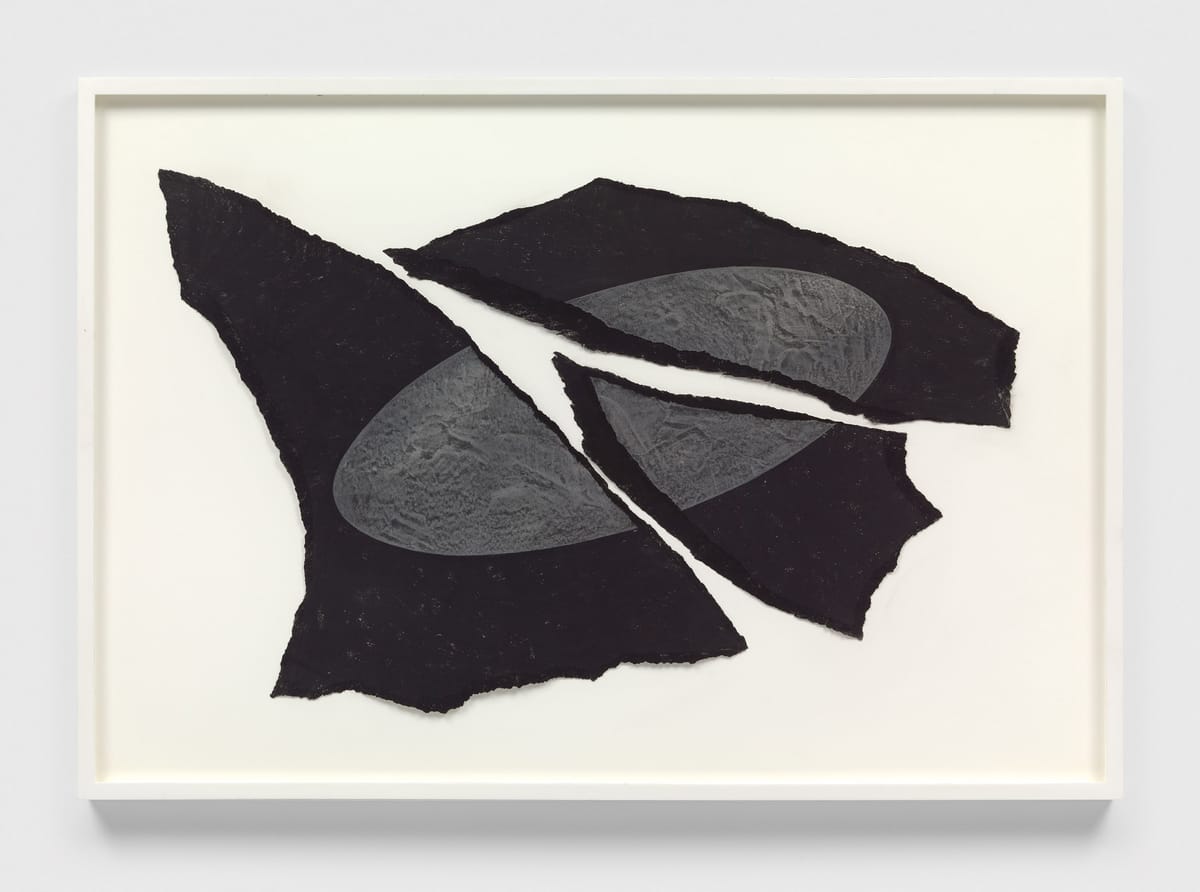
A more illuminating perspective may be to consider Cheng through his lack of conformity to mainstream identity and artist groups. He was positioned at the margins of established movements and networks as he came of age in the height of 1960s counterculture and developed his artistic approach in the experimental milieu of Downtown New York in the ’70s. Cheng found close friends and lovers in the likes of bohemian occultist Vali Myers and underground performance icon Tally Brown. His practice steadfastly explored the medium of paper and metaphysical themes that transcend the magnitude of human experience, taking decisive formal turns that are often described in four key phases: the psychedelic, gouache, torn, and alchemical works. However, their distinctive stylistic qualities belie a deep conceptual continuity. Whether in prismatic, hypersaturated gouaches inspired by Tibetan art or iron oxide-treated papers torn into reduced shapes, Cheng’s art reflects a persistent inquiry into how process and materiality can serve as metaphors for cosmic and spiritual forces.
Cheng was born in Havana in 1946 to Rosita Yufan and Robert Paifong, the last ambassador to Cuba representing the Republic of China before Mao Zedong’s Chinese Communist Party rose to power. In 1951, the Cheng family immigrated to Kew Gardens, Queens, in New York. Cheng, who showed early artistic inclinations, enrolled at Cooper Union in 1964. He lived in the East Village and SoHo during a period marked by major social movements—civil rights, antiwar, feminist, and gay liberation movements, among others. Amid this climate of unrest and transformation, countercultural currents popularized the use of psychoactive substances to expand consciousness and seek spiritual awakening, often informed by elements of Eastern religion. Aligning with the spirit of his times, Cheng became deeply interested in Taoism and experimented with hallucinogenic drugs to access different orders of consciousness, which formed the basis of his psychedelic gouache paintings.
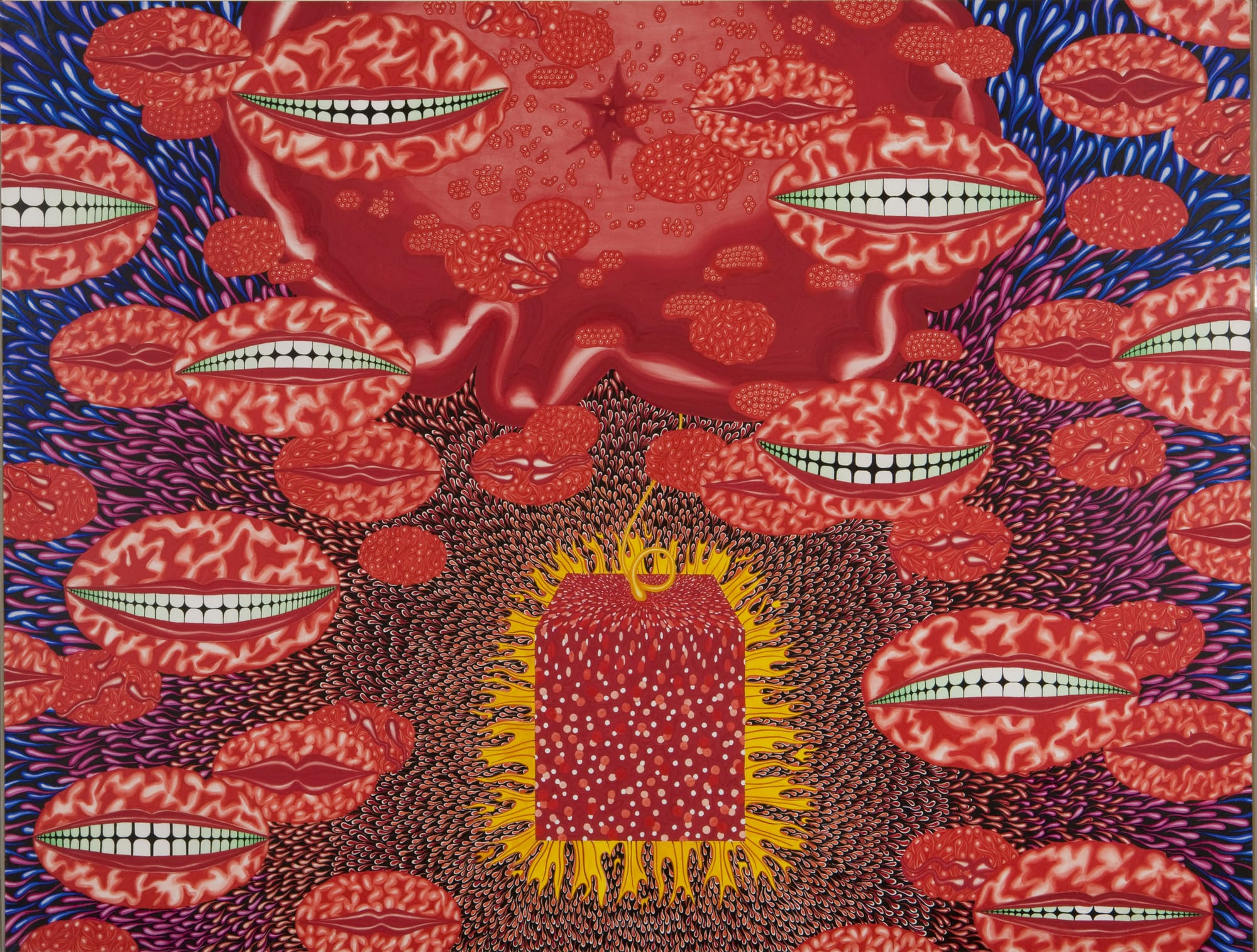
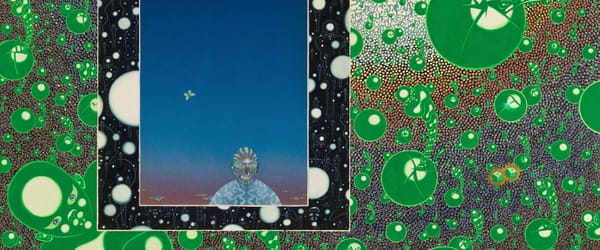
Angelhead, painted in 1968, presents a hypnotic field of biomorphic shapes and floating mouths that bare their teeth both seductively and menacingly. A cube patterned allover with dots anchors the central region of the painting, from which countless sperm-like shapes swim outward in radial multiplication, making the entire background pulsate with a sea of blues, purples, and reds. Dropped into this dislocating environment, one feels as if they, too, are a bundle of cells functioning within a larger, harmonious ecosystem. Angelhead’s graphic style demonstrates a strong aesthetic connection to Pop art, Op art, and other illustrative art forms that influenced psychedelic art. These otherworldly qualities return with enhanced narrativity and Taoist philosophy in Astral Theater (1973), which Cheng painted five years later.