Shows
Time as Witness: Ai Weiwei at Nature Morte
Ai Weiwei
Nature Morte
New Delhi
Jan 15–Feb 22, 2026
Ai Weiwei’s solo debut in India arrived with a sense of urgency. Presented at Nature Morte in New Delhi, the untitled exhibition was part of India Art Fair 2026’s parallel program. Although Ai’s work has been shown at fairs in Delhi and Mumbai, this marked the first sustained presentation of his oeuvre beyond an art week duration, featuring a concise yet pointed selection of projects spanning nearly three decades of his practice. Throughout this period, the Chinese artist has continually treated ordinary materials such as porcelain, earthenware, wood, and marble as historical evidence, using them to challenge collective memory, notions of authorship, and networks of power.
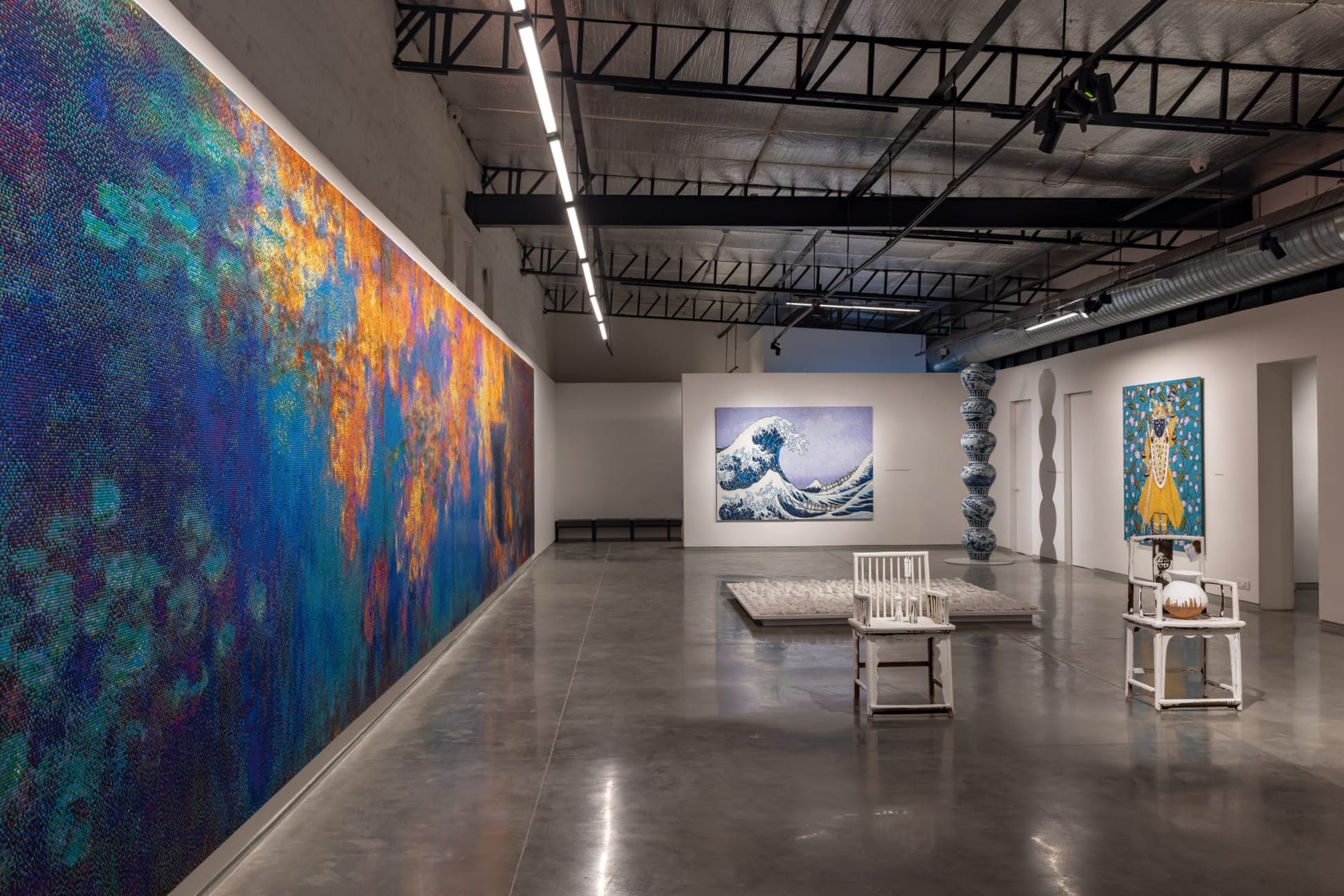
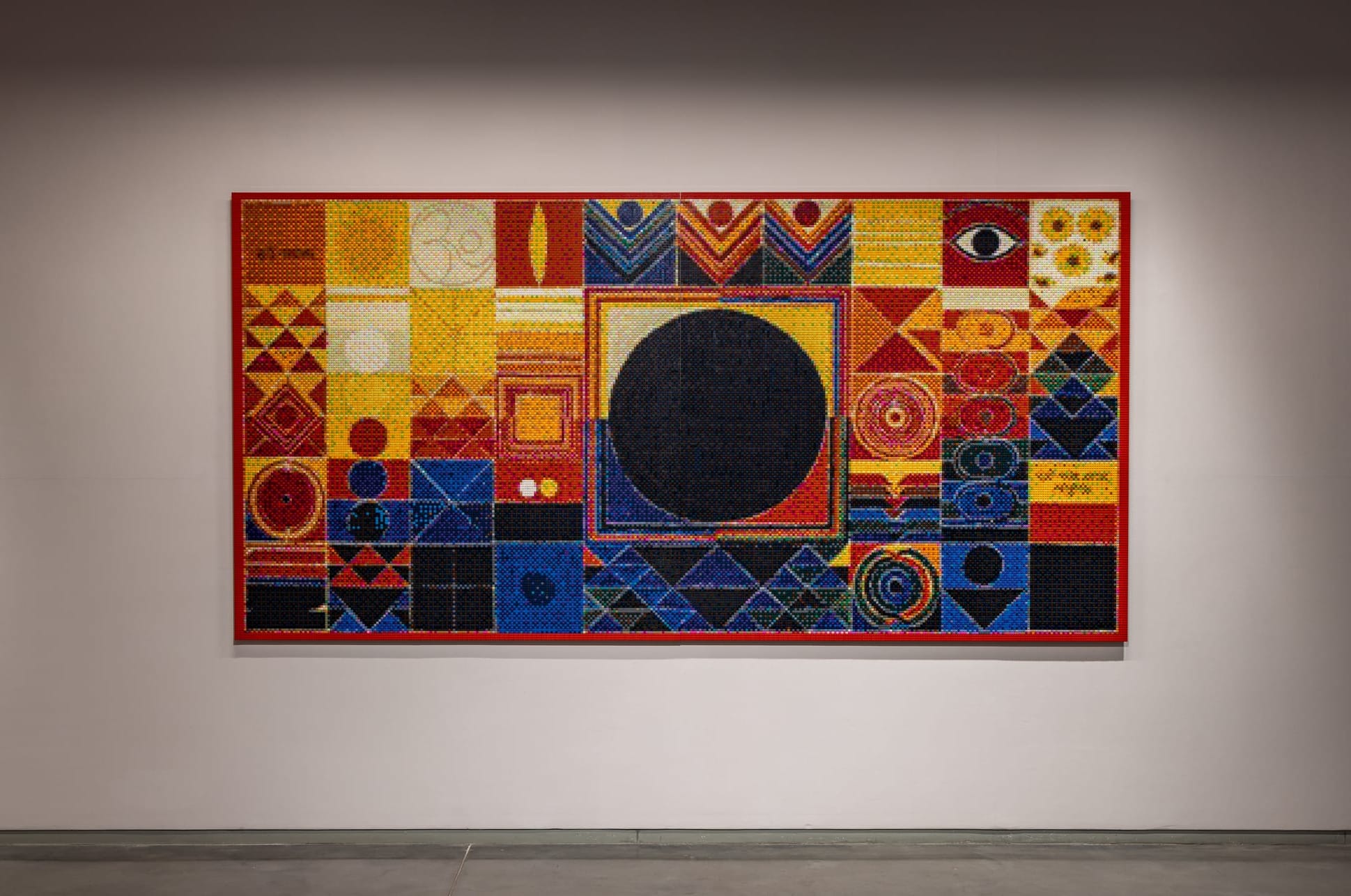
Installation view of AI WEIWEI’s solo exhibition at Nature Morte, New Delhi, 2026 (left); and Surya Namaskar (Sun Salutation), 2025, toy bricks, 1.52 x 3 m (right). Courtesy Ai Weiwei Studio, Nature Morte, and Galleria Continua.
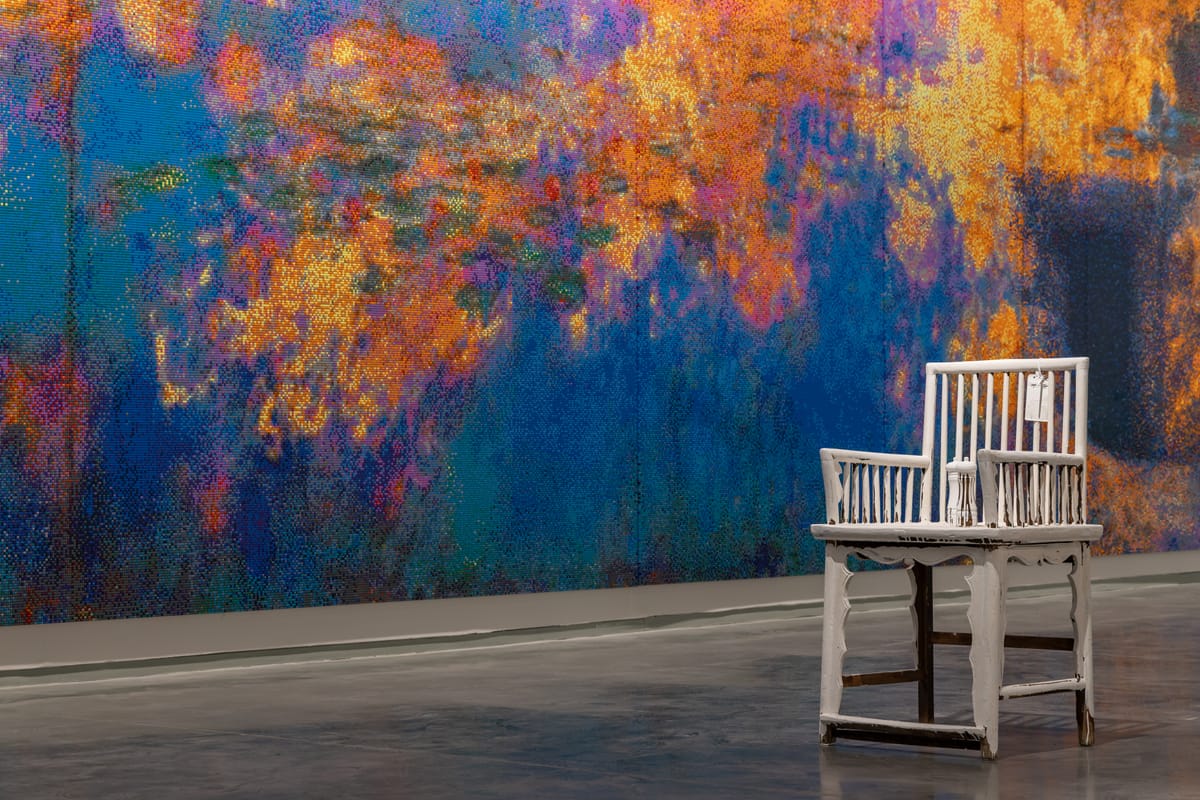
While the exhibition was anchored by two large-scale Lego compositions, Surfing (After Hokusai) (2025) and Water Lilies (2023), Ai had also created new pieces in response to works by the late Indian modernists SH Raza and VS Gaitonde, as well as Pichwai—a devotional painting style originating from 17th-century Rajasthan, whose name translates to “that which hangs from the back.” Rendered in the same modular idiom as his aforementioned reinterpretations of Monet and Hokusai, these works extend Ai’s investigation of canon formation into an Indian art-historical lineage. For instance, his Lego replica of Raza’s 2006 serigraph-on-paper, Surya Namaskar (Sun Salutation), reimagines and further abstracts the Indian artist’s geometric canvas, paying tribute to the sun as a symbol of life and cosmic energy by incorporating Ai’s own voice through tiny building blocks. These works are not mere homages: they examine how context-specific visual forms are absorbed into global systems of circulation and eventually uprooted from their original meanings.
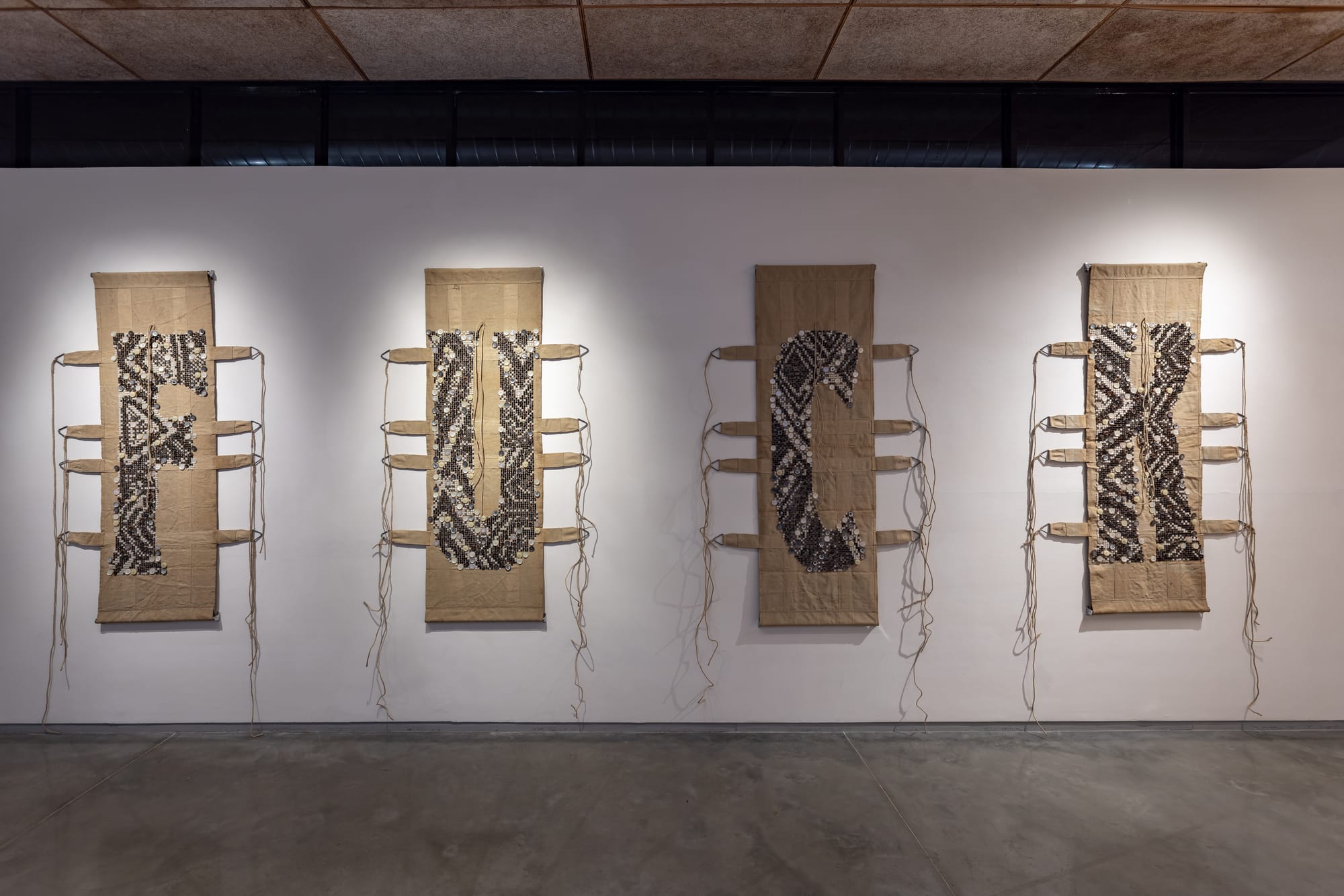
More outspoken registers appeared in the artist’s recent projects, such as F.U.C.K. (2024) and Whitewashed remnants of History of the State of Emerging Future Works (2025), shown publicly for the first time. The former comprises four connected World War II military stretchers with buttons sewn on to spell out the titular expletive. A deliberately vociferous display, the button-laden banner functions as a critical condensation of Ai’s research into textile history and industrialization. Meanwhile, the latter is a locally sourced earthenware pot perched neatly atop a wooden chair, both messily drenched in white paint. The haphazardly paint-soaked installation points to Ai’s preoccupation with erasure as a strategy of control, whereby the “truth” is often clumsily concealed—yet obviously so.
The tallest sculptural piece on view, Porcelain Pillar with Refugee Motif (2017), is composed of six qinghua vases arranged into a single column. Here, Ai foregrounds the vessels’ fragility as a vehicle for narratives of migration and displacement. The surface of each vase depicts intricately painted scenes of women, men, and children fleeing from armed conflict—vertically stacked together, the almost spherical and identically shaped containers transcribe this violence and anxiety into an endless loop. Ai’s repeated use of porcelain in his practice serves not so much as craft revivalism than as a form of material historiography that bears a genealogy of labor, trade, and power.
In this show, political gravitas was absorbed into institutional display: Ai’s critique of state power operates less as confrontation than as recognition, making it legible within the established grammar of contemporary art. Rather than becoming neutralized within this formal framework, his works expose how dissent today often survives through its aestheticization.
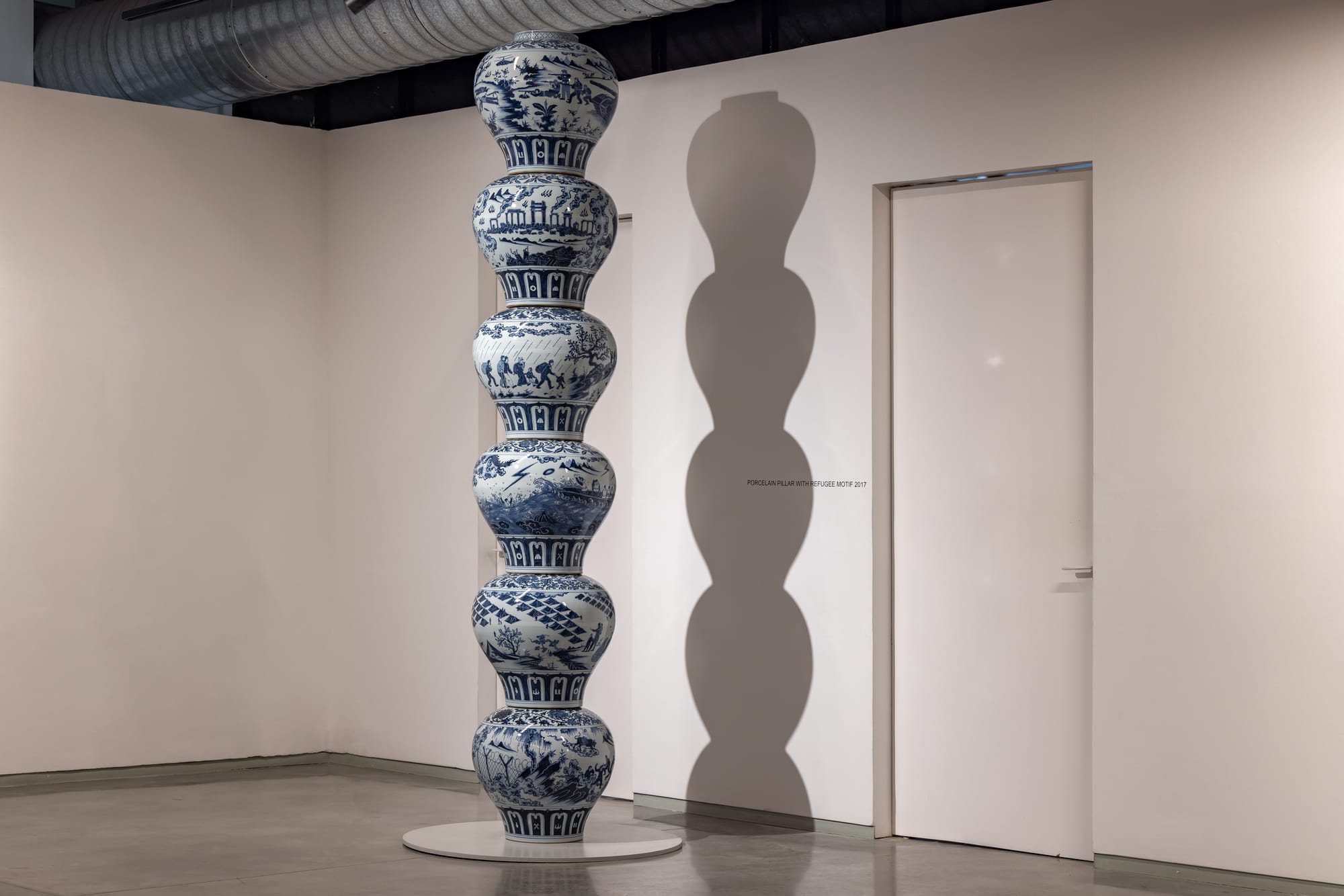
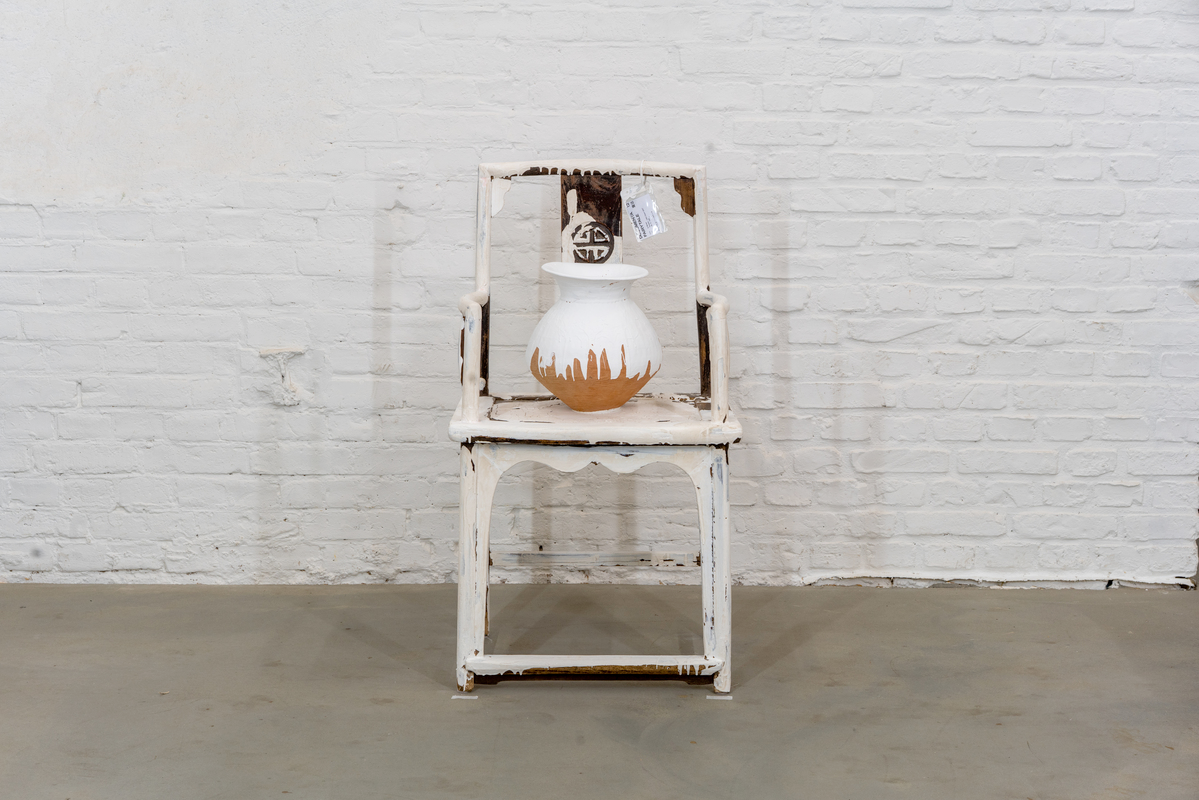
Installation view of AI WEIWEI’s Porcelain Pillar with Refugee Motif, 2017, porcelain, 52 x 50.5 x 50.5 cm (each), at Nature Morte, New Delhi, 2026 (left); and Whitewashed remnants of History of the State of Emerging Future Works, 2025, mixed media, 56 x 105 × 45 cm (right). Courtesy Ai Weiwei Studio, Nature Morte, and Galleria Continua.
Measured against its own ambitions, the presentation’s strength resided in its refusal of conceptual purity. Moreover, Ai’s intentional inclusion of the porcelain works alongside urn-like jugs reminiscent of the matka (a ubiquitous earthen pot in South Asia used to hold water) proved especially resonant in the Indian context: by highlighting this seemingly recognizable object—dislodged from its everyday purpose, and reinserted into a transnational dialogue and institutional setting—Ai lays bare the subtly entangled hierarchies of culture and order.
As the artist continues to operate in the interstices of craft and critique, history and spectacle, activism and commodification, one could argue that the translation of political commentary into stylized, almost decorative form risks a certain subduing. However, the exhibition’s distinctive milieu denoted a moment when India meets Ai and Ai meets India, offering viewers a renewed perspective on advocacy while underscoring how Ai’s themes are universal and prevalent—even if the existing hegemonic structures have not been challenged in the same way or scale.
Shreya Ajmani is a writer and art professional focusing on art from Asia and its diasporas.