Shows
The Giant Peach and Co: Ming Fay’s Sculpture Paradise
Ming Fay
The Campus
Hudson
Jun 28–Oct 26, 2025
Ming Fay’s whimsical, larger-than-life sculptures of fruits, vegetables, seeds, mollusks, and critters remind me of Roald Dahl’s James and the Giant Peach (1961). I first read the book at an Eslite bookstore one Sunday afternoon when I was 10. I didn’t like the story but finished it anyway—scared yet compelled, the way one reads a horror story to the end. My reluctance had less to do with Dahl’s narrative than with peaches: I simply cannot get past the tender, juicy flesh that everyone else covets. The thought of living alongside giant anthropomorphic insects and arthropods inside a giant peach—floating at sea, surrounded by mushy walls, soggy floors, and “furniture” oozing and rotting—seemed less like wonder than pure dread. The stickiness, the sweet scent… I wouldn’t call that a fantasy.
Chinese semiotics typically involve visual and phonetic associations, some popular during Lunar New Year. You eat, say, and display as many auspicious things as possible: apples 蘋果 (píng guo) for safety 平安 (píng ān); pineapples 鳳梨 (ông-lâi in Hokkien and Taiwanese dialects) for incoming fortune 旺來 (ōng-lâi); tangerines 橘 (jú) for good luck 吉 (jí). So much pressure to improve one’s fortune through the magical power of language! The Japanese believe in kotodama 言靈, “the spirits in words,” that spoken words can shape reality. Fay selected his subjects not just for their formal qualities but with these double-entendres in mind: peaches, one of his favorite motifs, are symbols of longevity. Today we still offer peach-shaped sweet buns, called “longevity peaches,” to guests on birthdays.
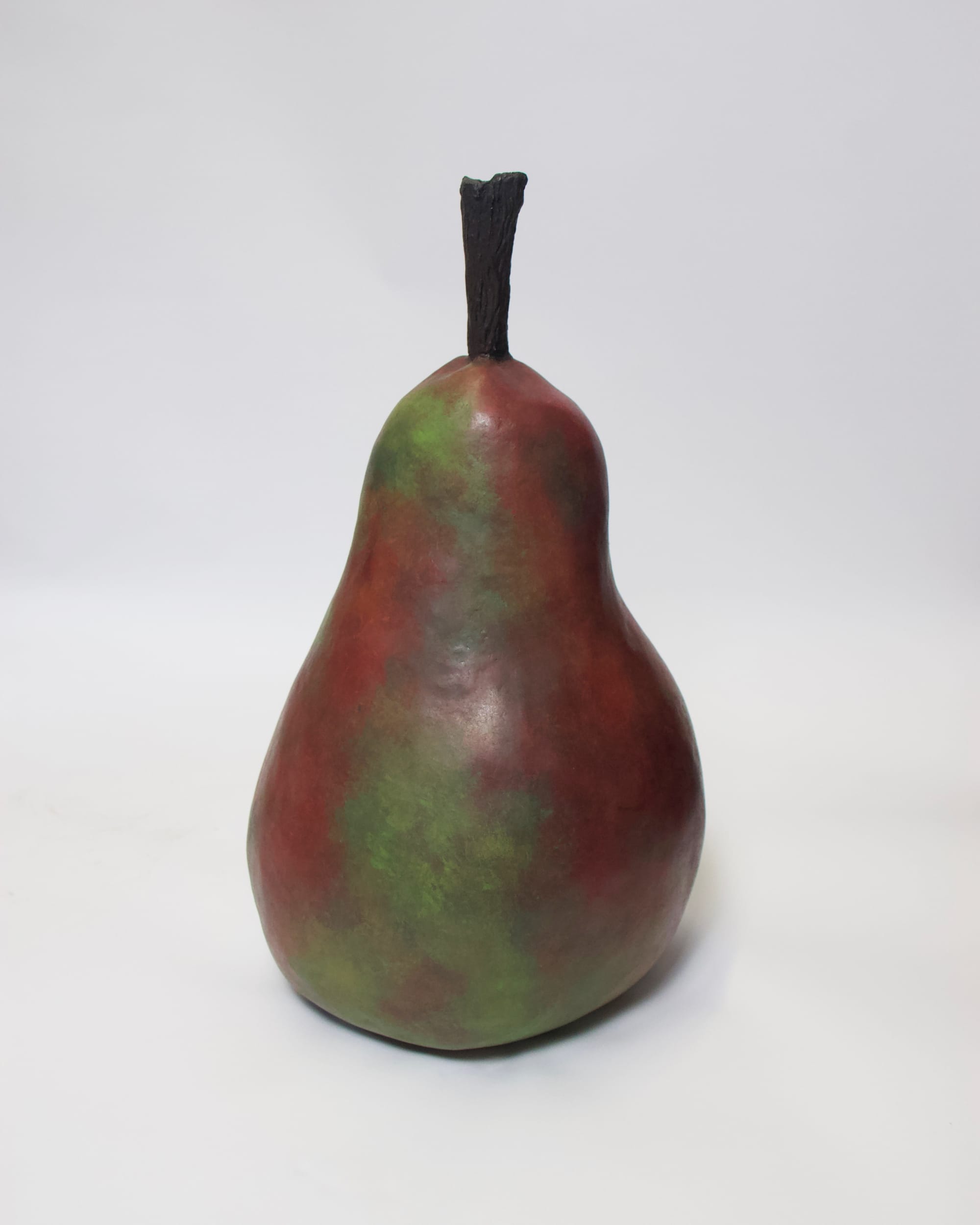
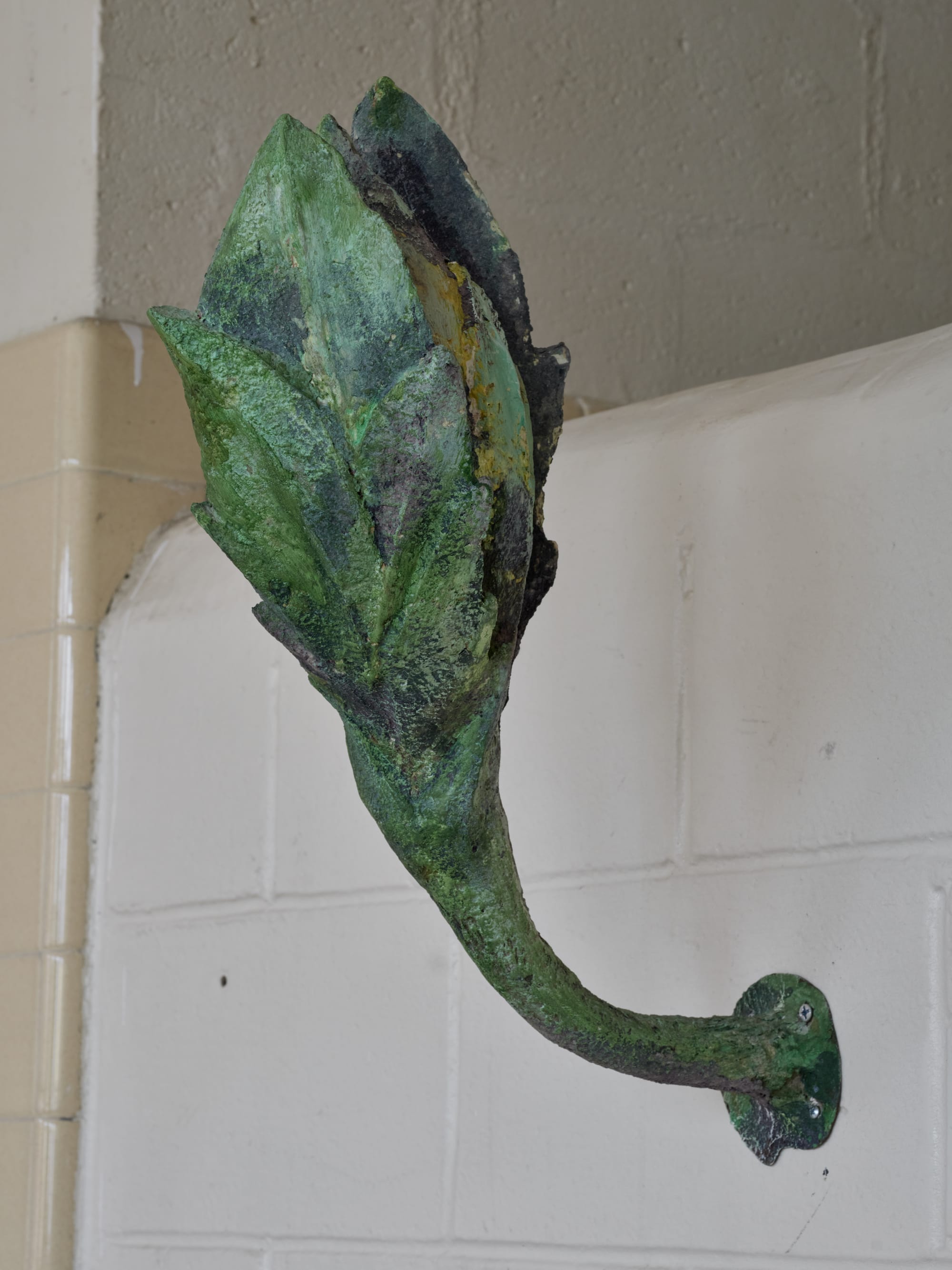
MING FAY, Pear (left), 2021, bronze, 49.5 x 28 x 25 cm. Courtesy Estate of Ming Fay and kurimanzutto, Mexico City; and installation view of Young Sprout (right), 1996, mixed media, 45.7 x 20.3 x 17.8 cm, at The Campus, Hudson. Courtesy The Campus, Claverack, New York.
The Isabella Stewart Gardner Museum in Boston presented a retrospective of Fay’s work in the summer, which I failed to see, so I resolved to visit the rest of his posthumous exhibitions in 2025, starting with a group show organized by Timo Kappeller at the Campus in the Hudson Valley. The Campus took over a decommissioned high school and its surrounding 22 acres in Claverack, New York (about a two-and-a-half-hour drive north of Manhattan) and is collectively run by six galleries: Bortolami, James Cohan, Kaufmann Repetto, Anton Kern, Andrew Kreps, and kurimanzutto. They launched their first annual exhibition in summer 2024, and every art world person I met or saw in the last year asked if I had been. Although I don’t usually suffer from FOMO (as my life without peaches may attest), I decided the sophomore outing warranted a pilgrimage. Getting to the Catskills without a car, after all, is a bigger commitment than taking public transportation to Boston.
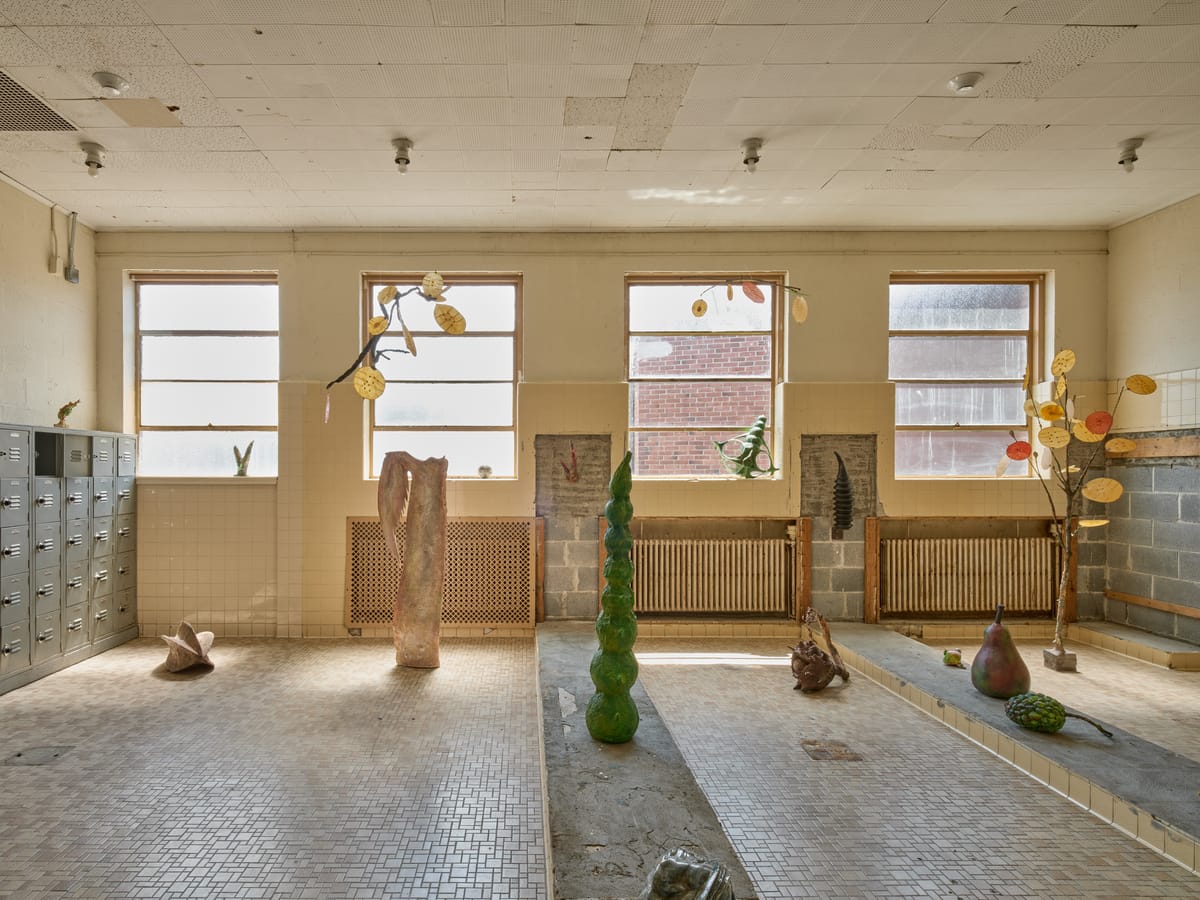
I kind of wished there had been more text besides a map, artists’ names, and artwork titles contextualizing each artist’s practice, even though much of the work was quite straightforward. (Richard Long’s rocks? Check. Kiki Smith’s drawings and textiles? Check. Elias Sime’s circuit-board assemblages? Check. But not every visitor would be familiar with the signature styles of all the artists.) The experience felt like a scavenger hunt—a contemporary art history exam, slide ID edition—or perhaps a daytime “test of courage” (試膽 shì dan in Chinese; 肝試し kimodameshi in Japanese; one culture holds courage in the gallbladder, the other in the liver). Wandering through a deserted American high school building felt mischievous, like serving weekend detention à la The Breakfast Club (1985). Or, with a bit more rebellion, perhaps a visitor could be a dancer on the Party Train in Mike Kelley’s film Day Is Done (2006). The exploration felt innocent enough, discovering artworks displayed in all kinds of inconspicuous spaces, indoors and out: classrooms, a gymnasium, quads, a tennis court, a library, and labs. Looking for a restroom, though, was quite the adventure: who would have thought it was inside a room within a room, surrounded by art! I’d wager that it was once the principal’s office, with an ensuite. Fay’s work occupied a boys’ locker room, its lockers, a sink, and a urinal still in place.
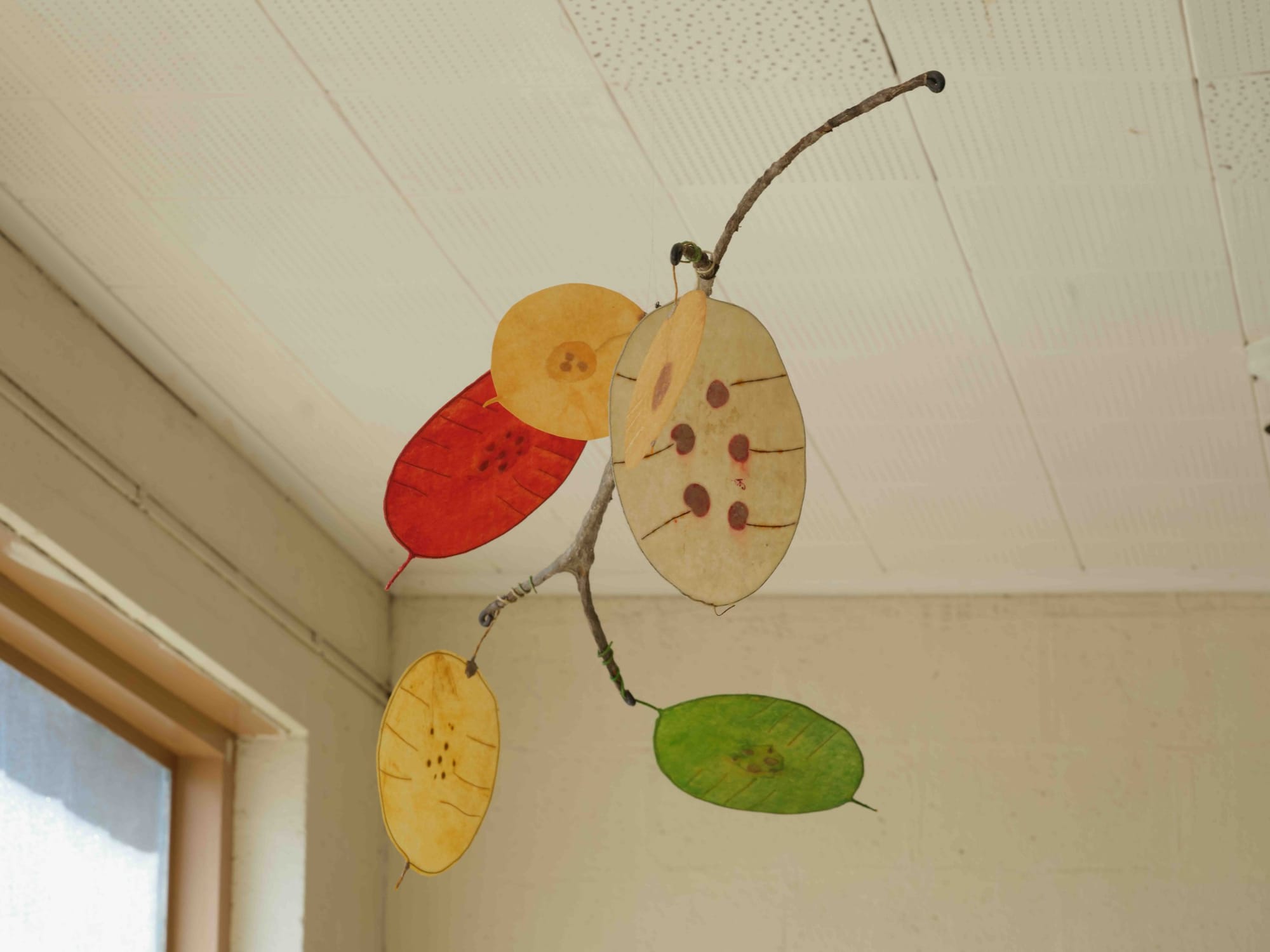
When the autumn afternoon sun streamed through the frosted windows, illuminating the translucent leaves of Fay’s Money Tree sculptures, it almost had the glow of stained glass. The calm that filled the once-bustling locker room lent it a sacred air. Some locker doors were ajar, revealing small ceramic sculptures—figurines, a bust, and a skull. You could imagine a student once stored his football helmet in there. Several sculptures sat atop the lockers, and one looked like a faceless bust overgrown with lichen and crowned with antlers. It gave me Dead Poets Society (1989) vibes, specifically a scene where Neil, the talented prep school student (played by a fresh-faced Robert Sean Leonard), wore a crown of twigs as Puck in a local theater’s rendition of A Midsummer Night’s Dream. The earthy tone of the floor and wall tiles, the exposed concrete and cinder blocks where lockers had been removed, and the geometry of the space all harmonized unexpectedly with Fay’s colorful, irregular forms. There were brilliant shades of okra green from perhaps the hybrid or imaginary tail or shell of arthropods, while a garnet red gradually bled into ocher and green on an Anjou pear. Even the porous, honeycomb-like texture of a white wall-hanging piece, resembling a wasps’ nest, could pass as a mutated double of a urinal due to its size, color, material, and placement.
Fay had a marvelous sense of humor for turning the mundane into the curiouser and curiouser. While I didn’t exactly feel like I was Alice in Wonderland or James with the Giant Peach at the Campus—or at other recent solo exhibitions, whether in September at Alisan Fine Arts, who has shown Fay’s work in Hong Kong since 1985, or in November at the kurimanzutto in Chelsea—he shined a different light on the ordinary through scale and play. In Chinese meals, fruits are usually served last, as a palate cleanser or dessert. Despite their auspicious symbolism, they remain supporting actors at a banquet table. Fay’s sculptures and public art, though sometimes phallic, are mostly innocent and well-meaning. Fay had said that his sculptures are “comments on the botanical world and its relationship to humans,” and that his displays, like abundant gardens, are symbols of “the ultimate desirable state of being.” Influenced by the garish Haw Par Mansion Garden he frequented while growing up in Hong Kong, Fay’s flamboyant, colorful fruit-and-vegetable sculpture paradise cultivates a place for the mystical to exist—maybe not so much in the style of Dahl, but with a more hopeful outlook on life.
Kelly Ma is a New York-based curator and writer.