Shows
Kochi-Muziris Biennale 2025–26: For the Time Being
Kochi-Muziris Biennale
For the Time Being
Multiple locations, Kochi
Dec 12, 2025–Mar 31, 2026
The tender, somewhat speculative title “For the Time Being” is the mantle that nurtures the breadth of projects scaffolded by the sixth Kochi-Muziris Biennale, curated by Nikhil Chopra with HH Art Spaces. The distinctive nature of this cultural gathering, which launched on December 12, 2012, was defined from the outset by Bose Krishnamachari (the former president of the Kochi Biennale Foundation) in the inspired determination that the curator is always to be an artist. Chopra’s own practice in durational and site-responsive performance was resonant throughout the biennale, given the abundance of performative projects as well as the honest acknowledgement that art exists in a state of flux and becoming. In Chopra’s words, the biennale was “an invitation to embrace process as methodology.”
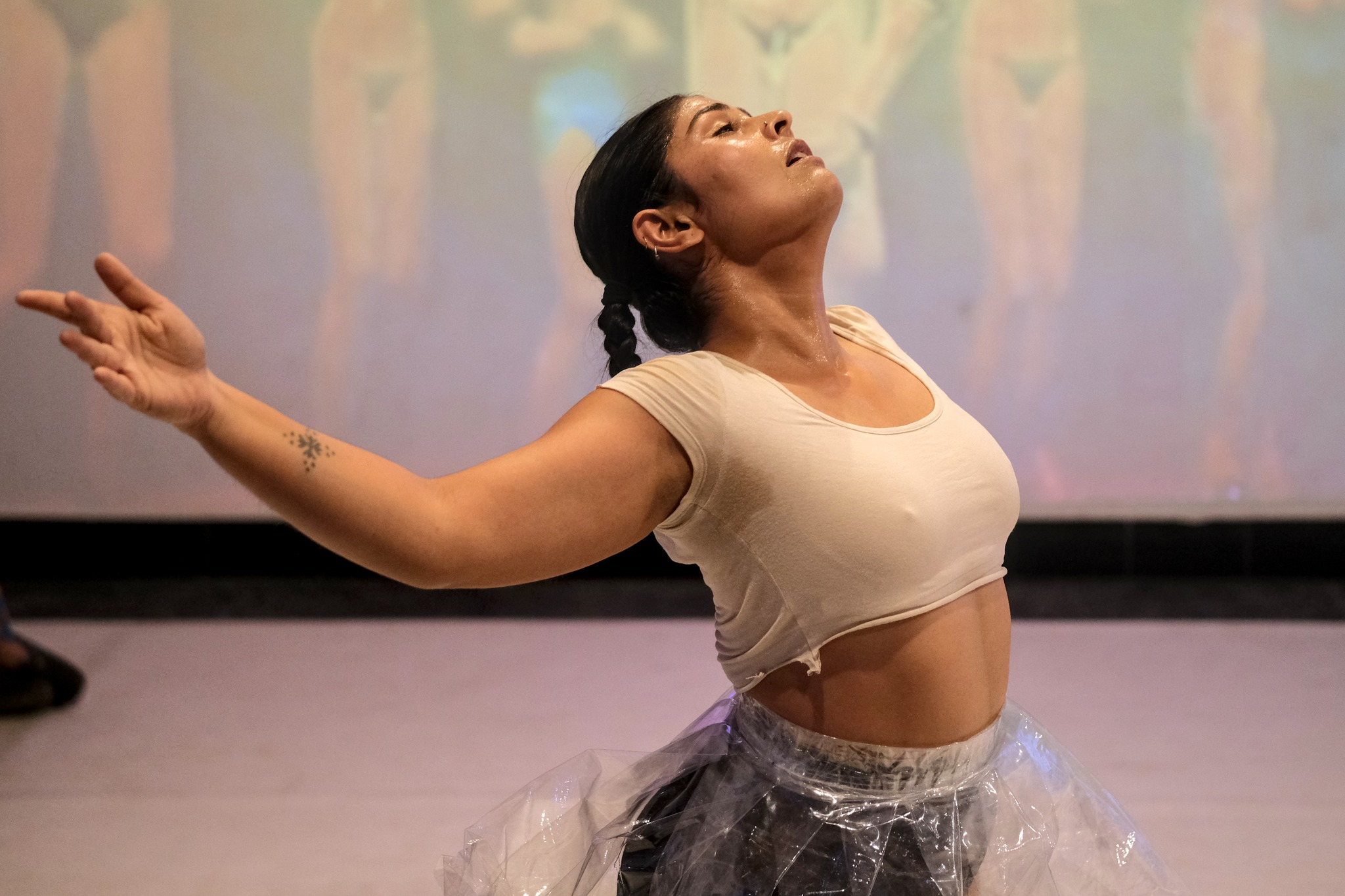
This strategy played out with charged energy during the opening week through multiple performances, including durational live actions by Panjeri Artists’ Union, a sound-based performance by Mónica de Miranda, Mandeep Raikhy’s frenetic choreographic work Hallucinations of an Artifact (2023), and Statues Must Die (2025), a performance-lecture by Naeem Mohaiemen and Mallika Taneja. The intention continued throughout the biennale with daily Instagram posts announcing performances and events. Working within what Chopra describes as “friendship economies,” 65 biennale artists were presented alongside hundreds more under the aegis of eight associated exhibition platforms and programs, including the Students’ Biennale, Invitations, Collaterals, and Special Projects. Only six of the 20-plus venues were ticketed. With a budget a fraction of its international cousins, the Kochi-Muziris Biennale—also known as the “People’s Biennale” and the “Artists’ Biennale”—has quickly become the largest contemporary art festival in India, serving as an open and dynamic gathering space for artists and thinkers across the region. Conceived with the local Kerala community as well as domestic and international visitors in mind, the event attracted 160,000 attendees in the first 20 days.
This sixth iteration required considered forethought, particularly after the pandemic’s suppression of the 2020 edition and organizational challenges that hampered the 2023 rendition. Chopra’s astute reading of what was needed in 2025 informed his process-based thematic. The biennale’s name references the long-flooded gateway port town of Muziris on the Malabar Coast that thrived from the first century BCE to the fifth century CE—this spirit of international exchange and Kochi’s past as a locus for cosmopolitanism have anchored the project from the outset.
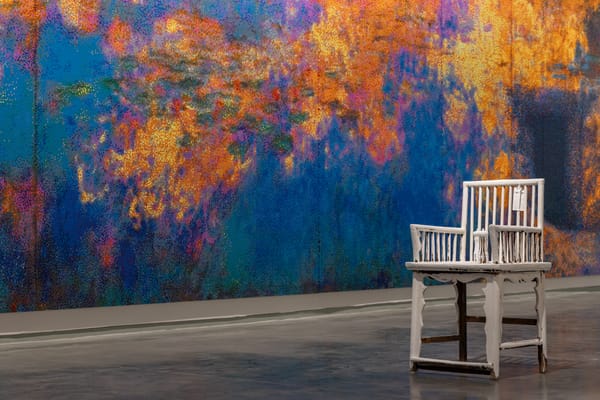
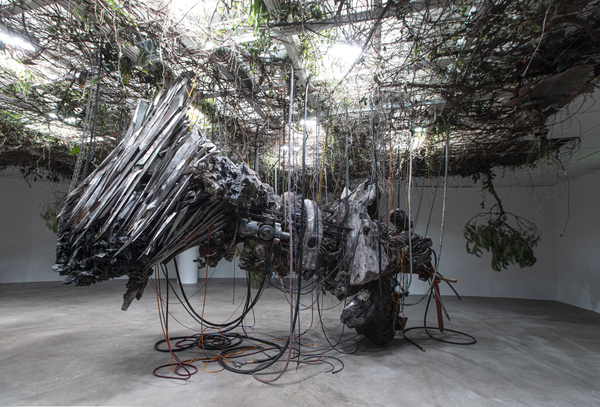
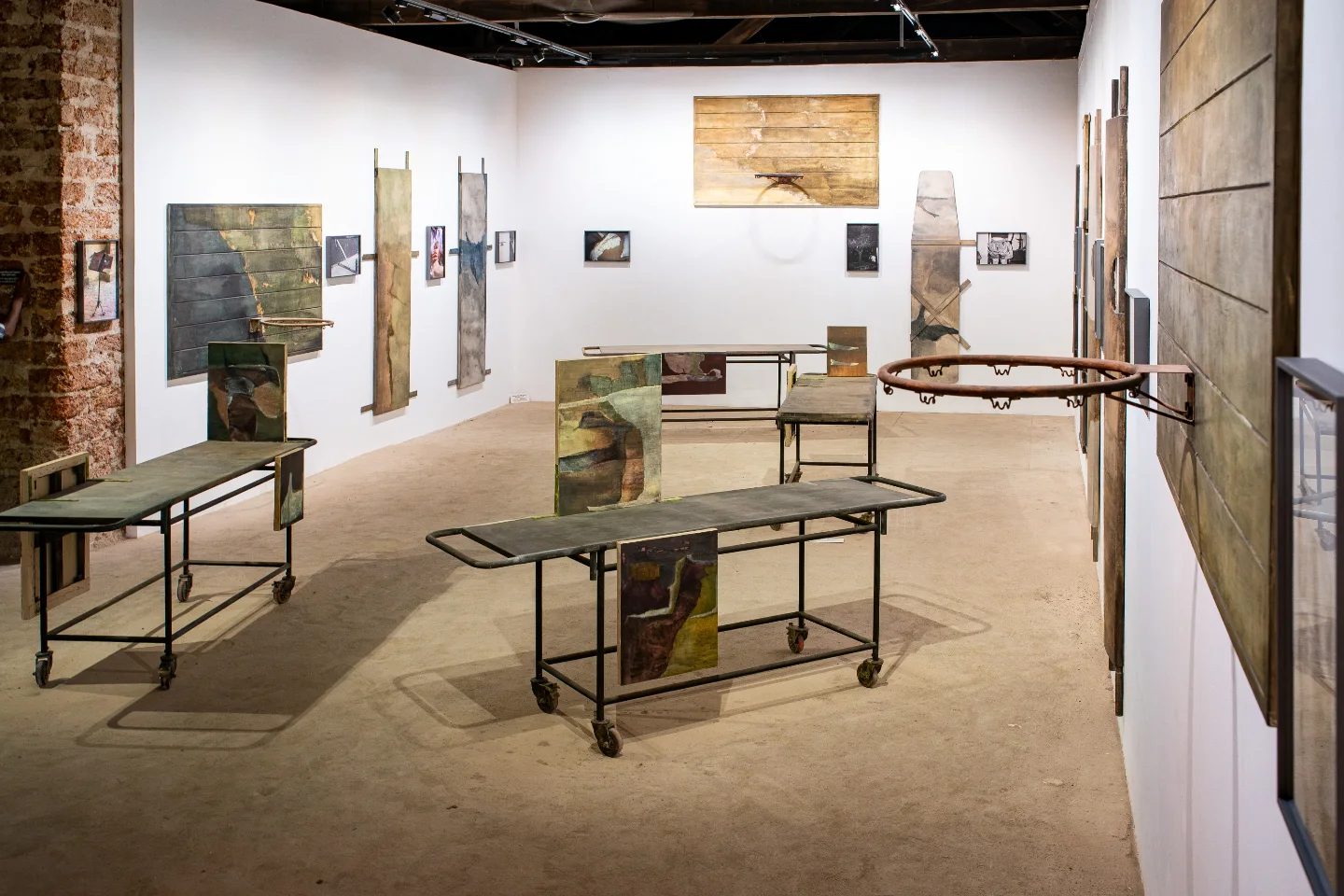
Acclaimed artists associated with the region were featured alongside leading figures from elsewhere, such as Adrián Villar Rojas, Tino Seghal, and Nari Ward, accumulatively offering rich experiential narratives for audiences through many commissioned and site-responsive works. Among the eight venues of the core exhibition, Aspinwall House was the most densely installed, while the new Island Warehouse on Willingdon Island was the most ambitious. Younger voices were ever-present: Ratna Gupta’s poetic sculptures, knitted tapestries, and embroideries drew attention, while Faiza Hasan’s eloquent metal floor drawing of tidal foam evoking the ebb and flow of memory was in perfect concert with the Arabian Sea on view through the window. These glimpses of waterways provided a cadence throughout the biennale journey. As Kirtika Kain’s suspended sheets made of copper plates, jute sacks, and cotton explore the inheritance of the Dalit diaspora, Biraaj Dodiya’s DOOM ORGAN (2025) incorporates clinical steel apparatus, stretchers, paintings, and photographs in an unsettling juxtaposition between the stasis of the mortuary and the dynamism of a competitive sports field.
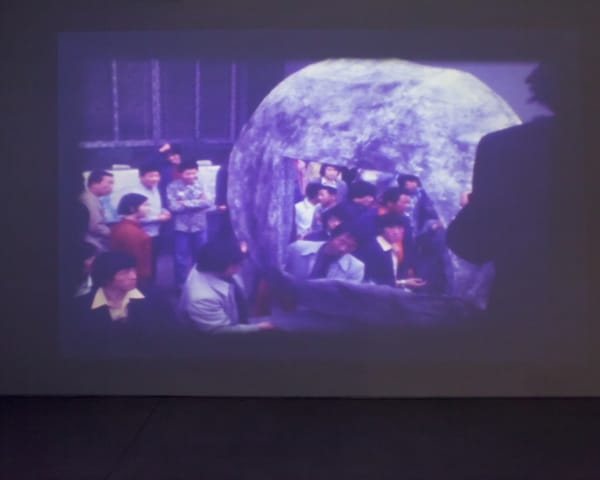
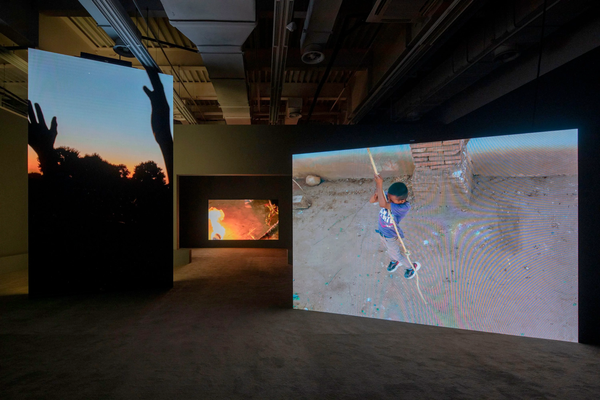
Long-form video marked a strong presence with two particularly powerful three-channel works at Aspinwall House. Pallavi Paul’s Alaq (2025) charts the fatal impact of the zoonotic Nipah virus, which is still active in Kerala. Sheba Chhachhi and Janet Price’s Beauty/Pain (2025) delivers a potent embodied account of the global pharmaceutical industry and its ancient, alchemic, and economic histories, while capturing its reality for those living with chronic pain. Elsewhere, in SMS Hall, Naeem Mohaiemen showcased his conjunctural single-channel film A Missing Can of Film (2025), paying homage to Zahir Raihan, a filmmaker and novelist who went missing soon after the end of the Bangladesh Liberation War in 1971.
Island Warehouse registered a significant milestone for the biennale, as it offered a vast industrial space that allowed the curator to orchestrate works at scale. Alongside Marina Abramović’s imposing video At the Waterfall (2003)—casting a blanket of sound emanating from the chants of 108 Tibetan monks and nuns—were projects by younger artists, including Arti Kadam’s exquisite trompe l’oeil sculpted timber forms, a monumental painting series Retrieve (2016– ) by Himanshu Jamod that metaphorically addresses the life cycle of merchant ships, and Dineo Seshee Bopape’s sound-based installation of domed architectonic enclosures in earth and animal dung, exploring terrestrial and ethereal realms.
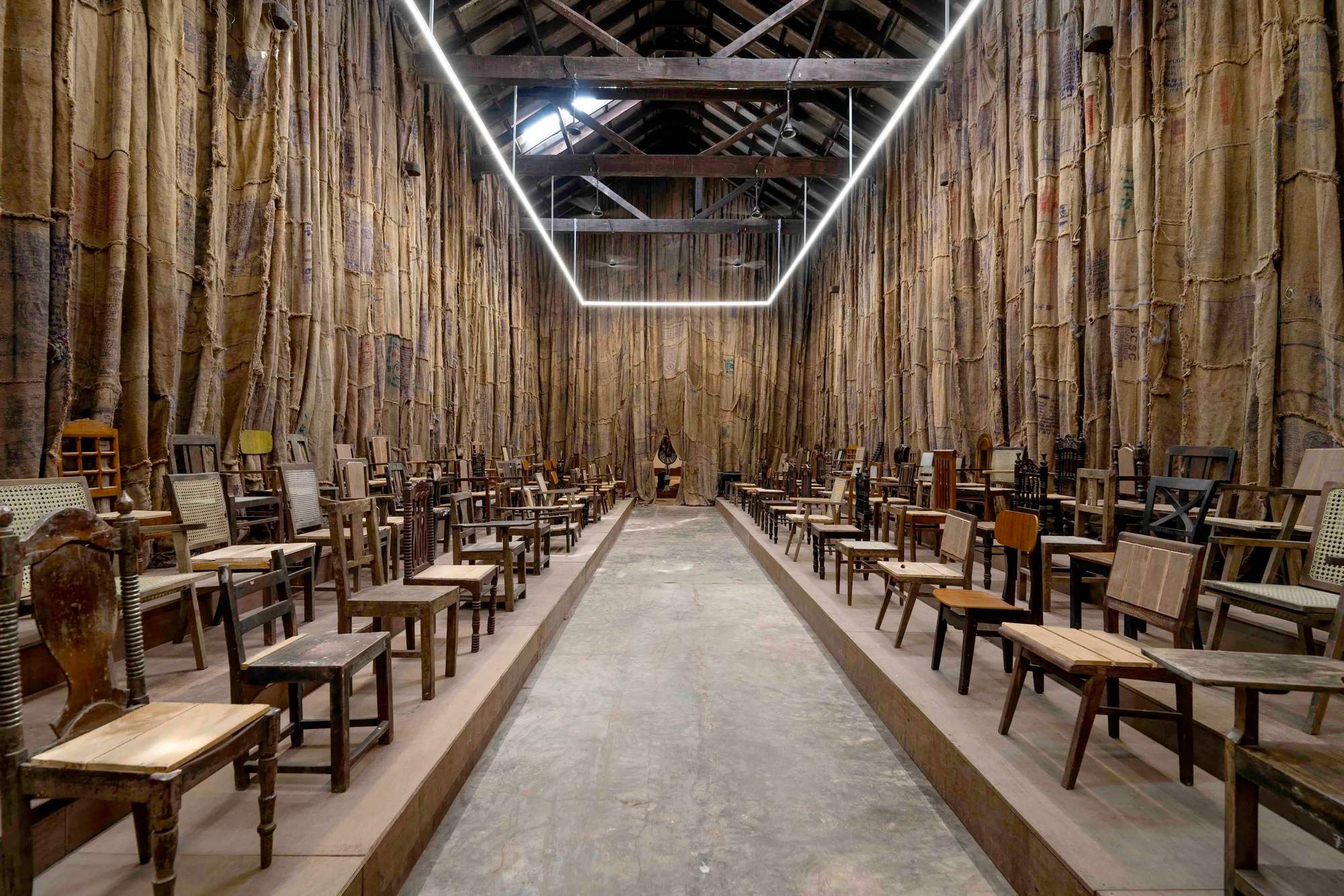
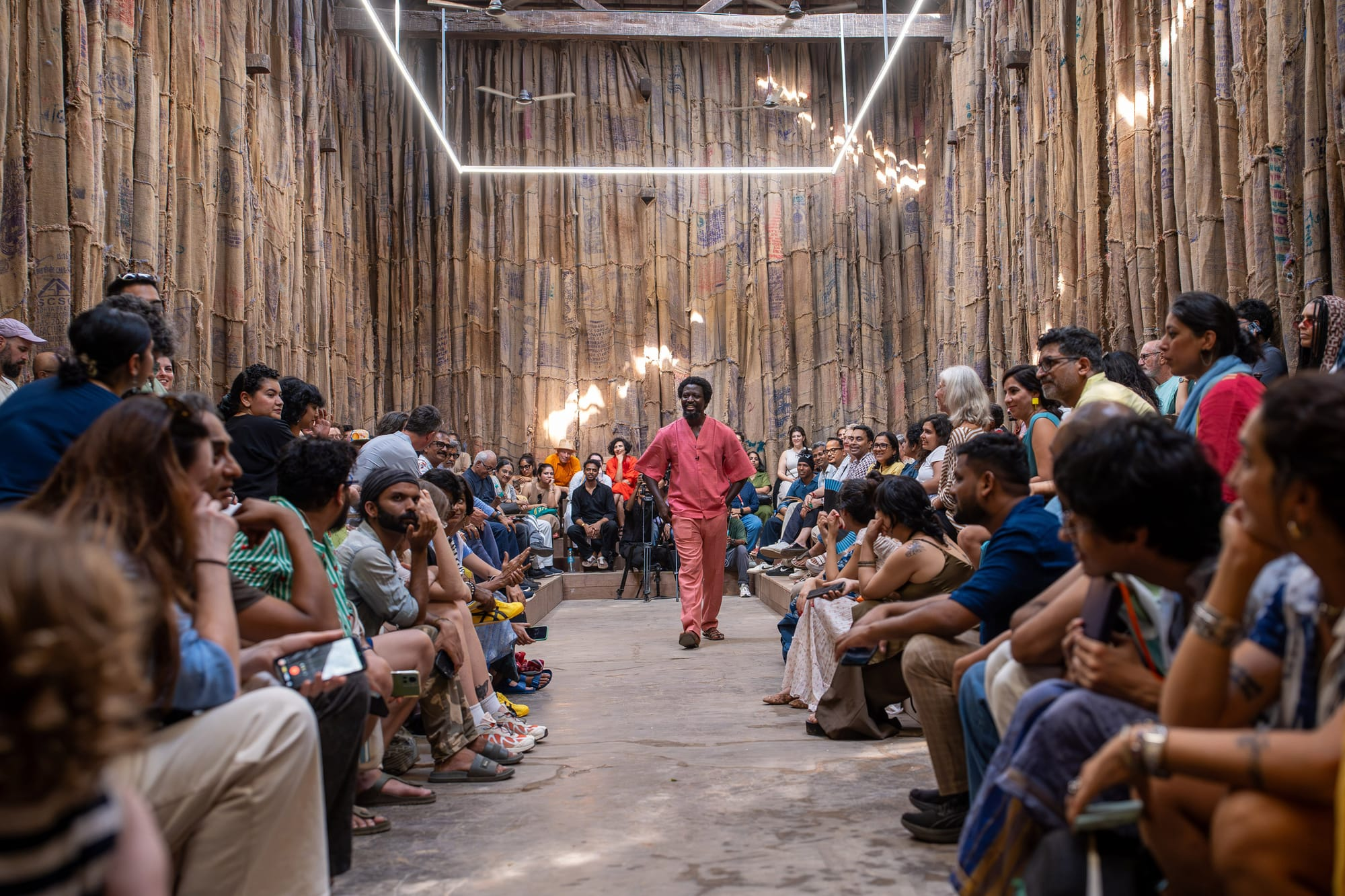
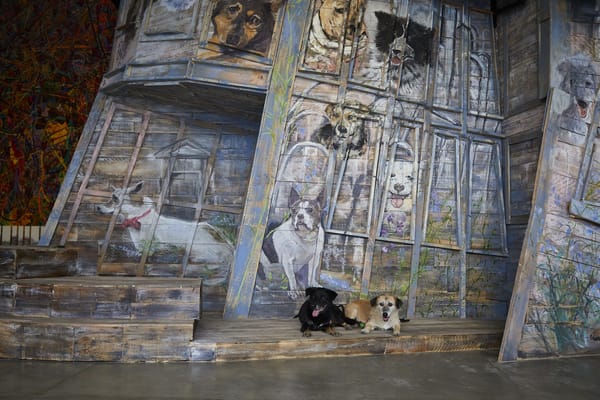
Installation views of IBRAHIM MAHAMA’s Parliament of Ghosts, 2017– , at the Anand Warehouse, Mattancherry, Kochi, 2025. Courtesy the Kochi Biennale Foundation.
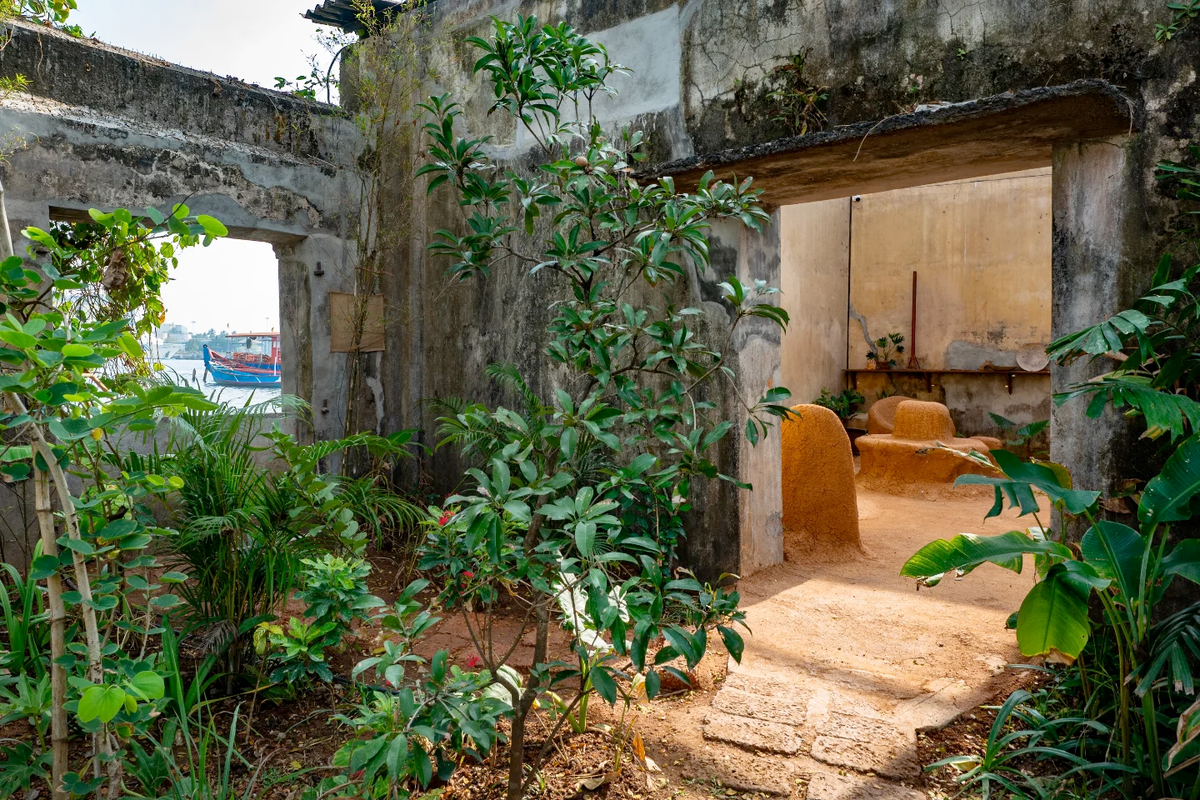
Two outstanding pieces, both extensions of ongoing series, were displayed at Anand Warehouse. Kulpreet Singh’s breathtaking single-channel video Indelible Black Marks (2022–24)—for me the most memorable work in the biennale—brilliantly chronicles the dissonances of the agrarian practice of stubble burning in the artist’s home state of Punjab. The video was presented alongside handsome paintings that are, in fact, singed canvases printed and infused with blackened soot and ash, which exist as narrative artifacts from the documented performance. “Moving and dangerous” is how writer Arundhati Roy, who recently visited the exhibition, described this work. In the same venue, Ibrahim Mahama’s Parliament of Ghosts (2019) continues his engagement with “objects-as-documents” and provides an active discussion and performance space in the colonial-era godown with a forest of locally mended chairs rescued from public institutions within a walled tapestry of jute sacks—stained remnants of resource extraction from Kerala’s grain and spice trade. A hidden gem at 111 Markaz and Cafe was a garden entitled Soft Offerings to Scorched Lands and the Brokenhearted (2025) by Otobong Nkanga with a soundscape by Nithin Shamsuddin. The open-ended garden overlooked the canal, inhabiting a disused building overrun by a magnificent banyan tree.
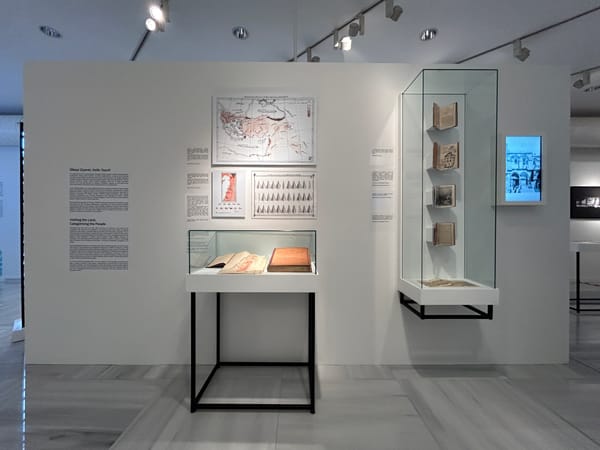
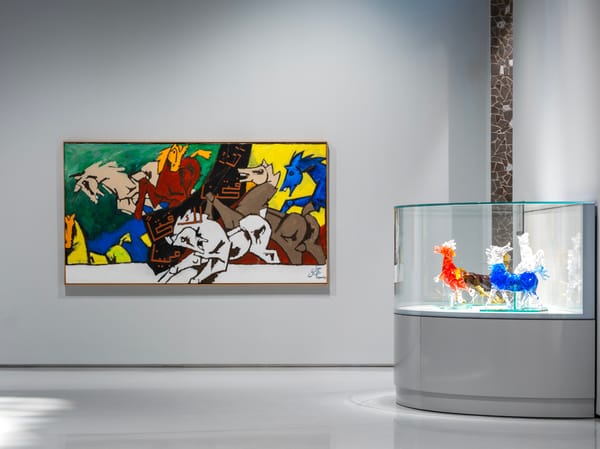
Throughout the biennale, substantial exhibitions of works by seminal historical figures from the region provided depth and pause, such as the groundbreaking Sri Lankan photographer and leader of the ’43 Group, Lionel Wendt; painter and physician Gieve Patel; and graphic artist Jyoti Bhatt. Moreover, a major survey of the influential painter, poet, and educator Gulam Mohammed Sheikh, titled “of worlds within worlds,” was held at Durbar Hall by the enterprising and rapidly expanding Kiran Nadar Museum of Art. Meanwhile, a notable associated project by the late and preternaturally innovative Vivan Sundaram was presented by Photo Ink and Chemould Prescott Gallery.
One of the most compelling associated projects was “A Trilogy of Environmental Trials,” showcased at Space Gallery. The multiyear initiative is led by Zuleikha Chaudari and presented by KHOJ International Artists’ Association, involving creatives, lawyers, and judiciaries working in speculative contexts to address and possibly forge real pathways regarding ecological concerns. For this enterprise, artists volunteered to speak as “key witnesses” in “rehearsal” trials that broached specific environmental crises, with artists presenting before working judges who made independent decisions regarding guilty/not guilty verdicts. The long-term goal is preparatory toward actual future court cases. This is a resonant and urgent work given the alarming pollution and air quality issues confronting the entire country.
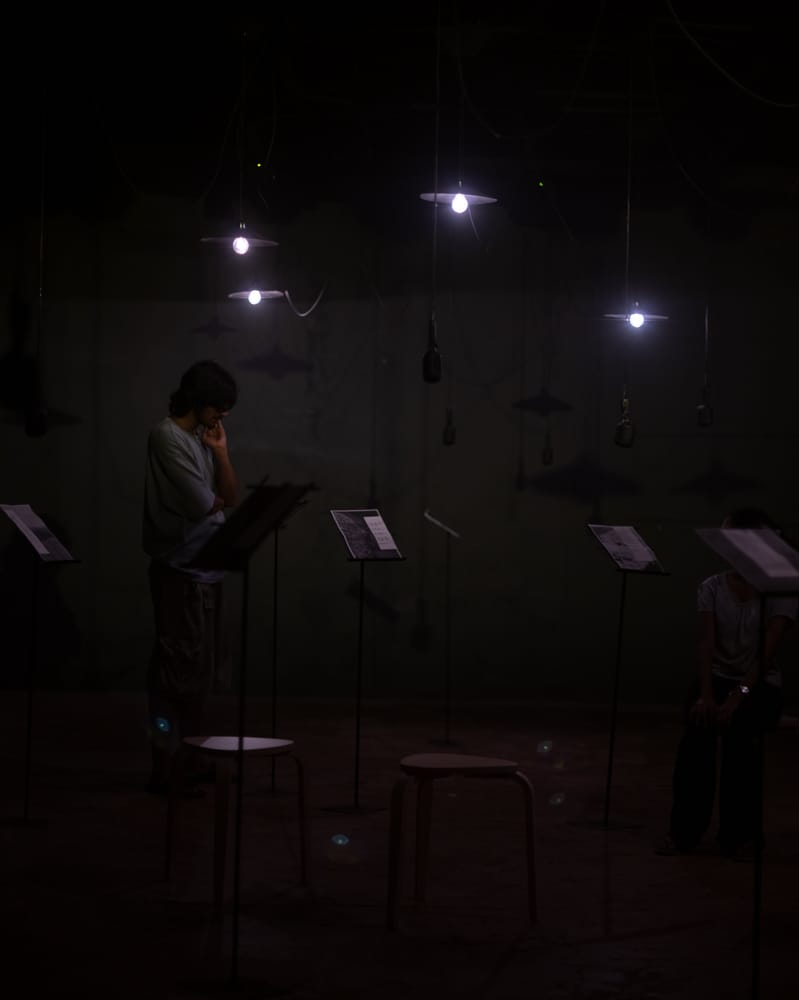
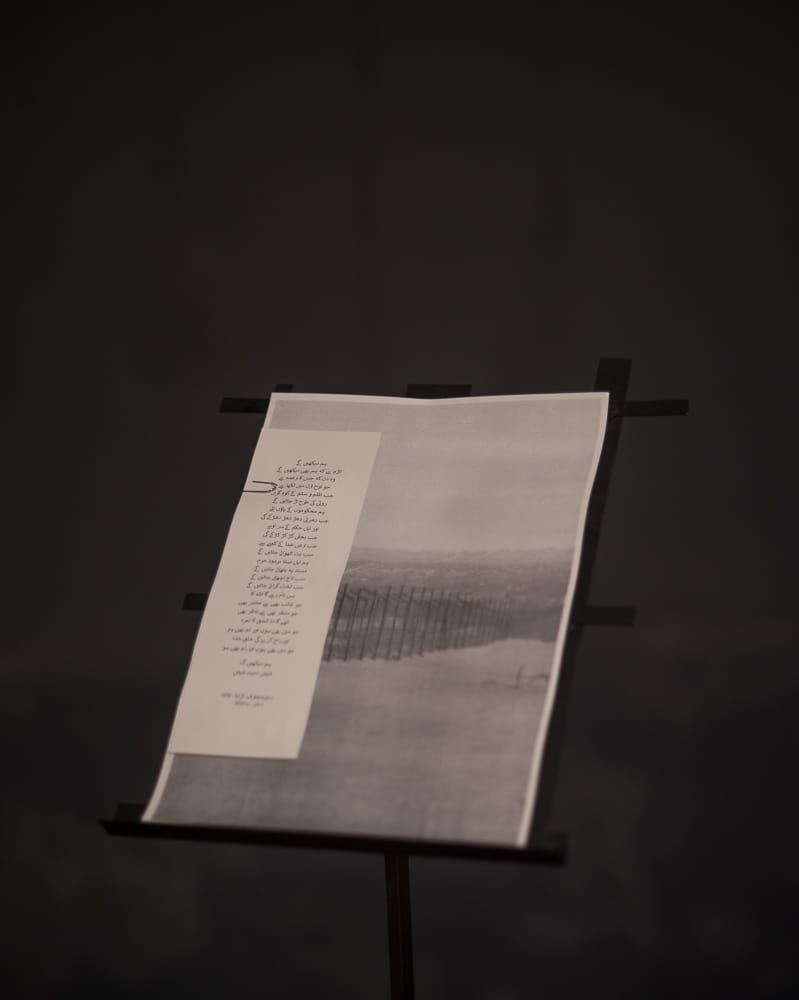
Installation views of SHILPA GUPTA’s “Listening Air” at the Ginger House Museum Hotel, Kochi, 2025–26. Courtesy the Ginger House Museum Hotel.
Independent projects, not under the umbrella of the biennale, were nestled alongside the multitude of venues primarily strewn within walking distance along Bazaar Road. Shilpa Gupta’s “Listening Air” at Ginger House Museum Hotel spotlighted her eponymous sonic installation featuring songs and anthems of resistance that exist beyond borders, substantiating her preeminence as an artist of great eloquence and power. Nearby, “Amphibious Aesthetics,” curated by the inaugural biennale’s co-curator Riyas Komu, also included a related site-specific installation by Gupta titled When the stone sang to the glass (2025), which coopts discarded furniture and household objects as instruments to play Urdu poet Faiz Ahmad Faiz’s 1979 protest song Hum Dekhenge (We Shall See).
This edition of the Kochi-Muziris Biennale consciously respected its multigenerational inheritance as a cosmopolitan, economically charged port city and as a millennia-old tropical hub for trade. It is also born of Kerala’s unique political climate, which over the past decades has predominantly been led by socialist parties working within the legacies of former colonial powers (Portuguese, Dutch, then British). An ethos of generosity underpinned the event, and Chopra’s commitment to “the economies of friendship” and the performative nature of artmaking in “For the Time Being” has proven that an alternate network of artistic production and engagement is humanly possible.
Rhana Devenport ONZM is a curator, writer, and academic based in Sydney. She is the former director of Art Gallery of South Australia, Auckland Art Gallery Toi o Tāmaki, and Govett-Brewster Art Gallery | Len Lye Centre.