Sponsored
BOOM! Big Surprises in Tiny Worlds!

From November 26, 2025 to March 2, 2026, the Taoyuan Children’s Art Center presents “Mini Boom!,” an exhibition that uses “miniatures” as its point of departure to expand our imagination toward art and life. In collaboration with the Miniatures Museum of Taiwan, the exhibition takes the cultural and collecting histories of miniatures as a starting point for children’s exploration, gradually opening the door to the many possibilities of contemporary art. The exhibition features a curated selection of works from the Miniatures Museum and five artists: Suzuki Takahiko, Tang Tang-Fa, Hsieh Chia-Yu, Abe Nyubo, and Chen Yin-Ling. From classic miniature dollhouses and accessories that trace the history of dollhouse development, to both micro- and large-scale sculptural installations and multimedia interactive works, the exhibition further explores how scale opens new narrative possibilities within contemporary artistic contexts.
More Than Toys: The Art History of Dollhouses
Miniature dollhouses are often viewed as beloved children’s toys, yet historically they were prized collectibles enjoyed only by the aristocracy. Today, miniature houses are not only children’s toys but also cherished objects collected or created by adults. In the context of contemporary art, “miniature” becomes an alternative lens for rethinking how we see. Using the dollhouse as a starting point, and beginning from a child’s perspective, the exhibition invites visitors into the world of miniatures to uncover the rich stories within, while also asking: how else might we view dollhouses today?
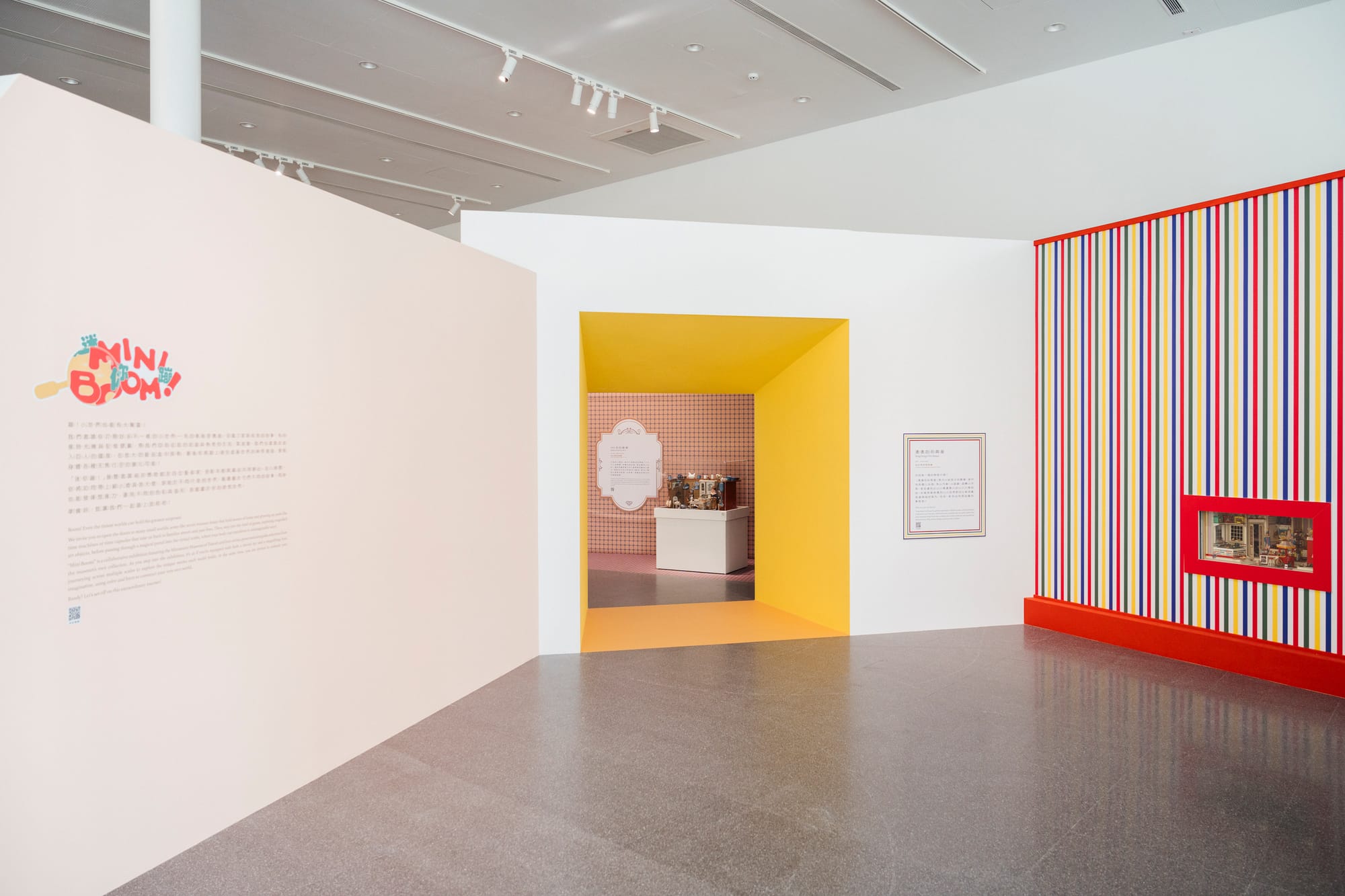
The exhibition begins with “home,” opening with Yong-Yong’s Toy House, which uses toys, objects familiar to children, to spark reflections on “home” and “collecting.” We then encounter the 19th-century German dollhouse Kitchen from the 1800s, transporting viewers nearly 200 years into the past. Serving both as a toy and as a tool for mothers to teach daughters household skills, the piece stands as a testimony to another era and invites contemporary reflection on gender roles and domestic labor. The section continues with various forms of “home:” a mother’s ideal house, a noble salon, a king’s palace, foreign homes, and even imagined fantastical dwellings, guiding visitors through a journey across domestic life and social change.
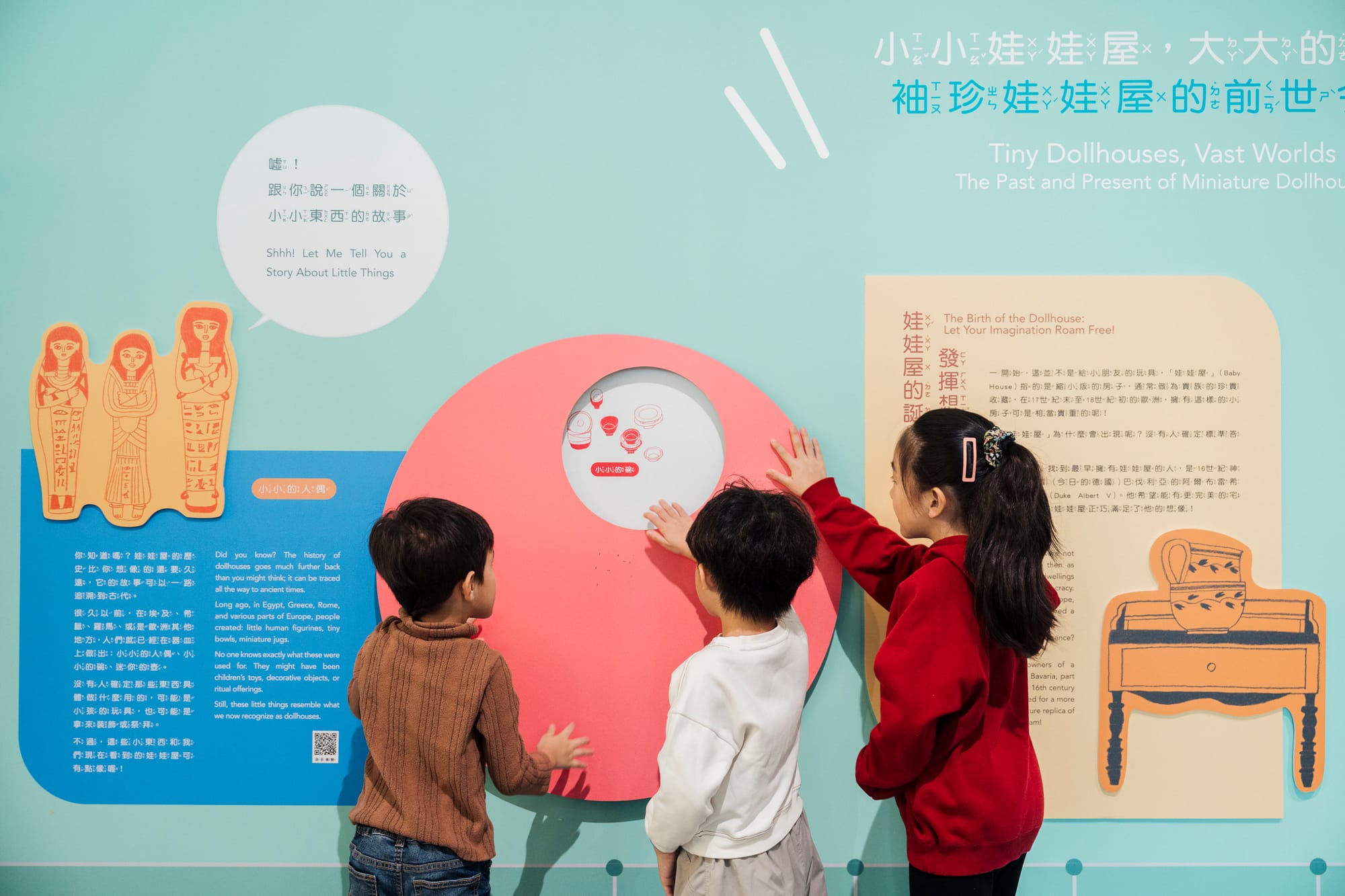
For the first time, the exhibition introduces an interactive timeline wall, using storytelling to help children understand the evolution of dollhouses. The timeline also features Kaleidoscope House (2001) by artist Laurie Simmons and architect Peter Wheelwright, as well as the deluxe publication of Marcel Duchamp’s classic Boîte-envalise (Museum in a Box) (1935-41/reproduced in 2015). Together, these works extend the discussion from traditional dollhouse displays to contemporary reflections on dollhouses and the very notion of collecting art.
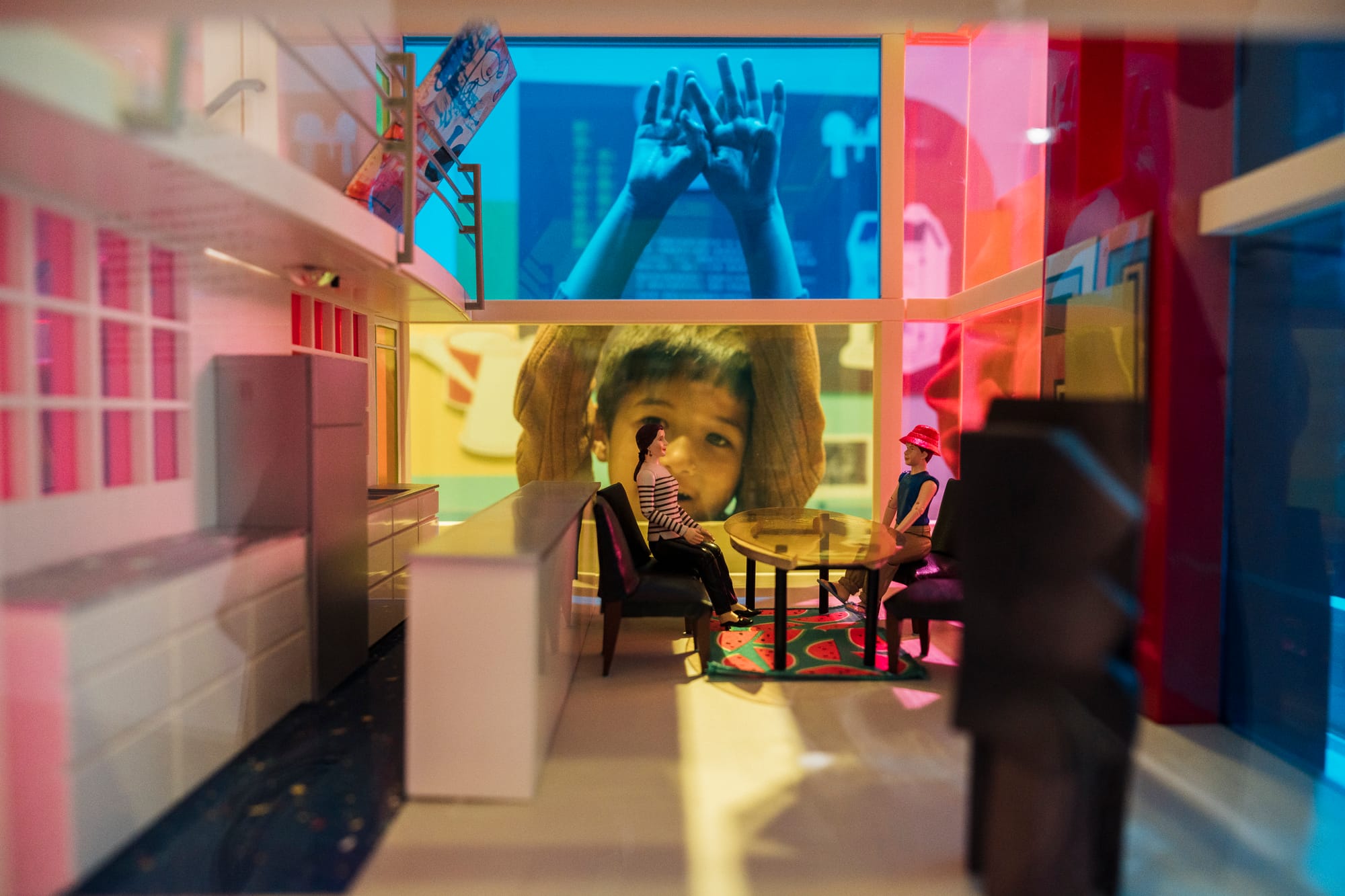

Next, the exhibition expands from the theme of “home” into a broader exploration of worldviews. A selection of shop-themed miniature houses from the Miniatures Museum is presented, allowing visitors to wander the gallery as if walking through a tiny streetscape and discover the richly interwoven worlds created by different storefronts. The rise of miniature houses centered on everyday subjects, such as shops, also signals that dollhouses are no longer merely aristocratic miniatures of grand homes, but objects more accessible to the public, becoming alternative vessels through which we can reexamine daily life.
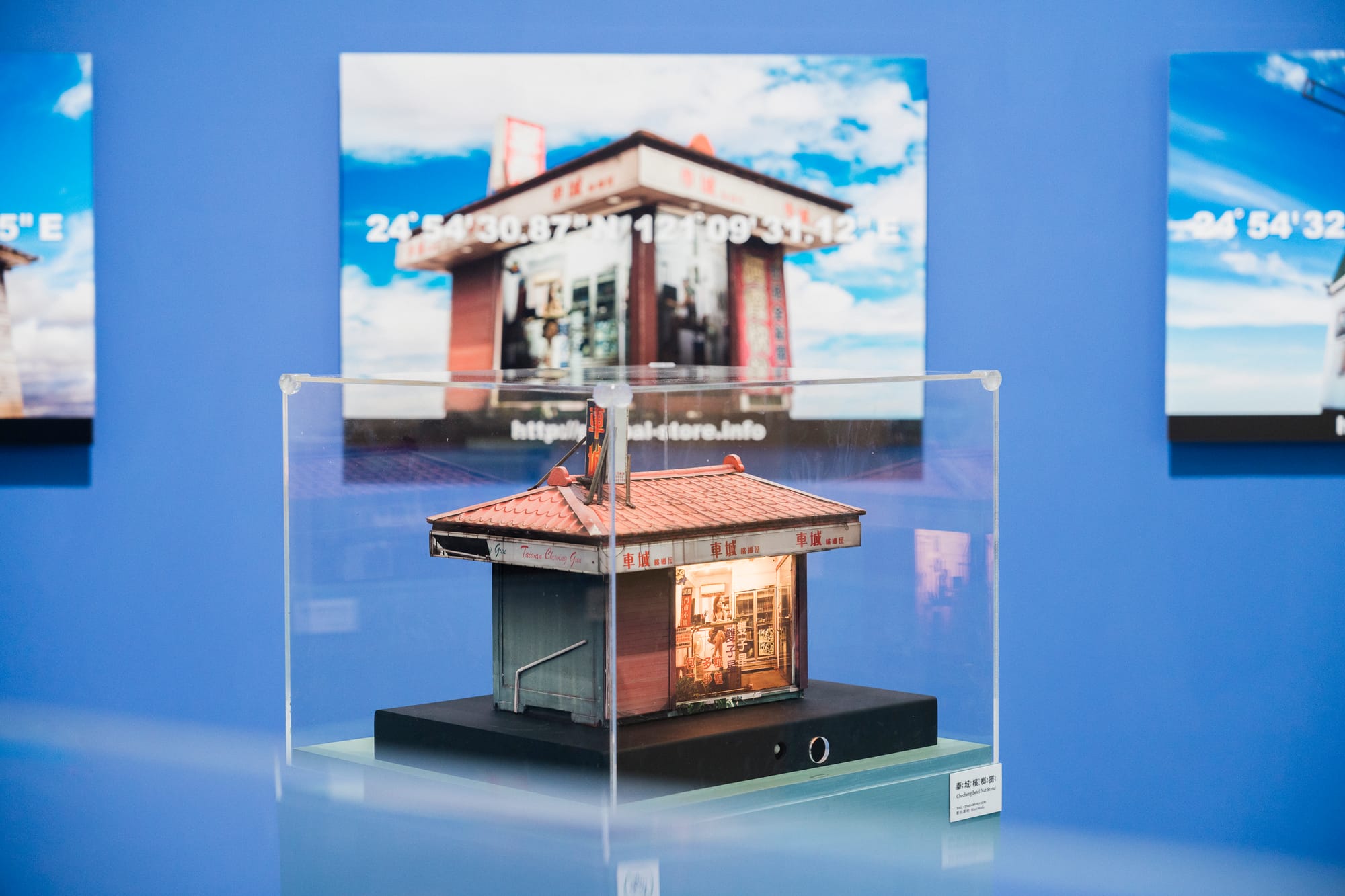
In addition to works from the Miniatures Museum of Taiwan, the exhibition also highlights contemporary artworks that engage in dialogue with the idea of “miniature.” Suzuki Takahiko’s Global Shop Project (2012), part of the museum’s collection, focuses on small shops gradually disappearing under the waves of globalization. Through on-site photography, the artist reconstructs miniature replicas of these storefronts, revealing the possibility of re-seeing the ordinary while reflecting the cultural shifts of local communities. Tang Tang-Fa’s commissioned project Art Market Stall (2025) continues his long-running “market stall” practice, bringing the aesthetics of Taiwan’s traditional markets into the museum. The work offers children an experience of exploring form and color, while also playfully blurring the boundaries between everyday life and the art space.
The Infinite Expansion of Small Things
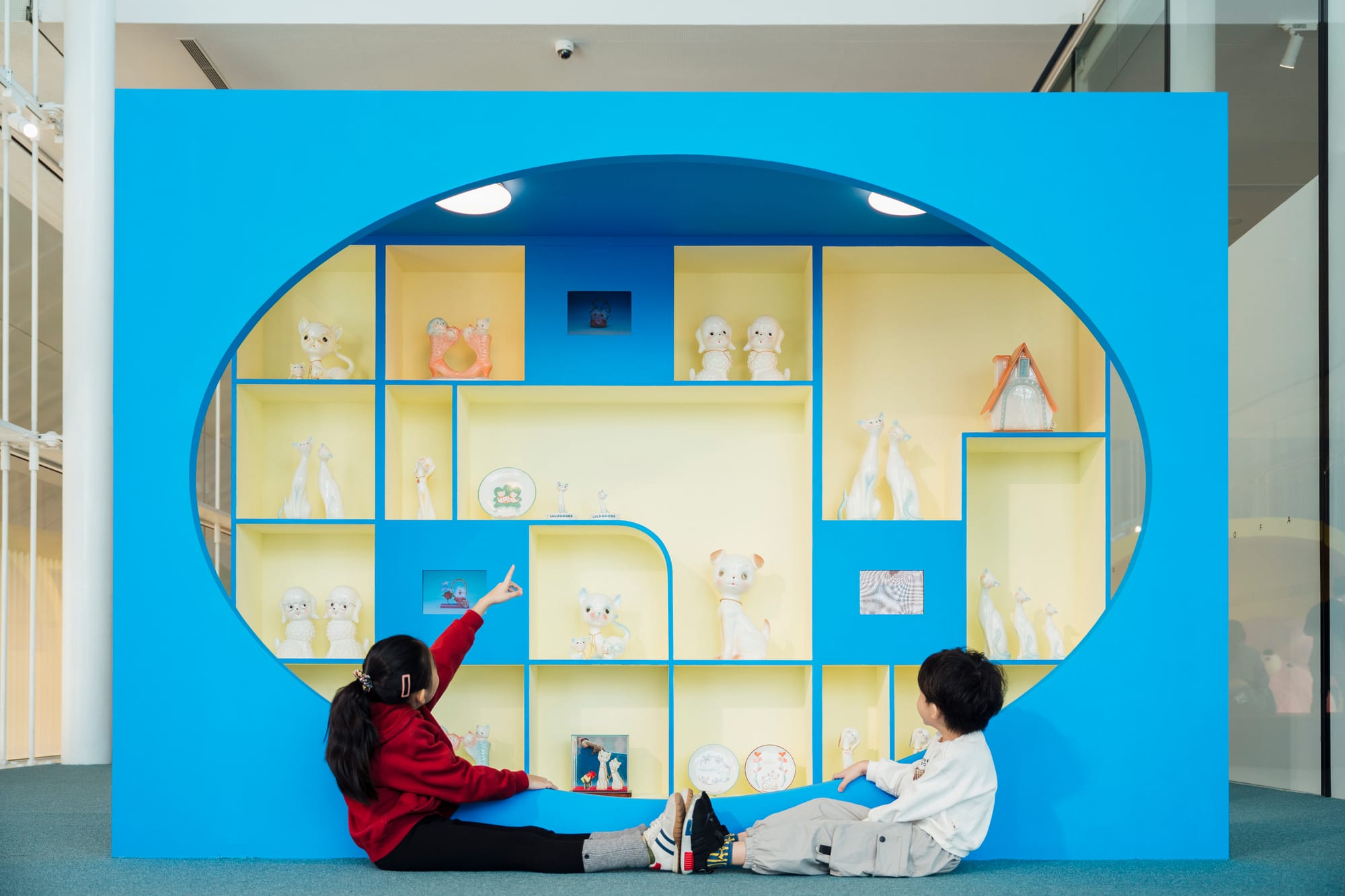
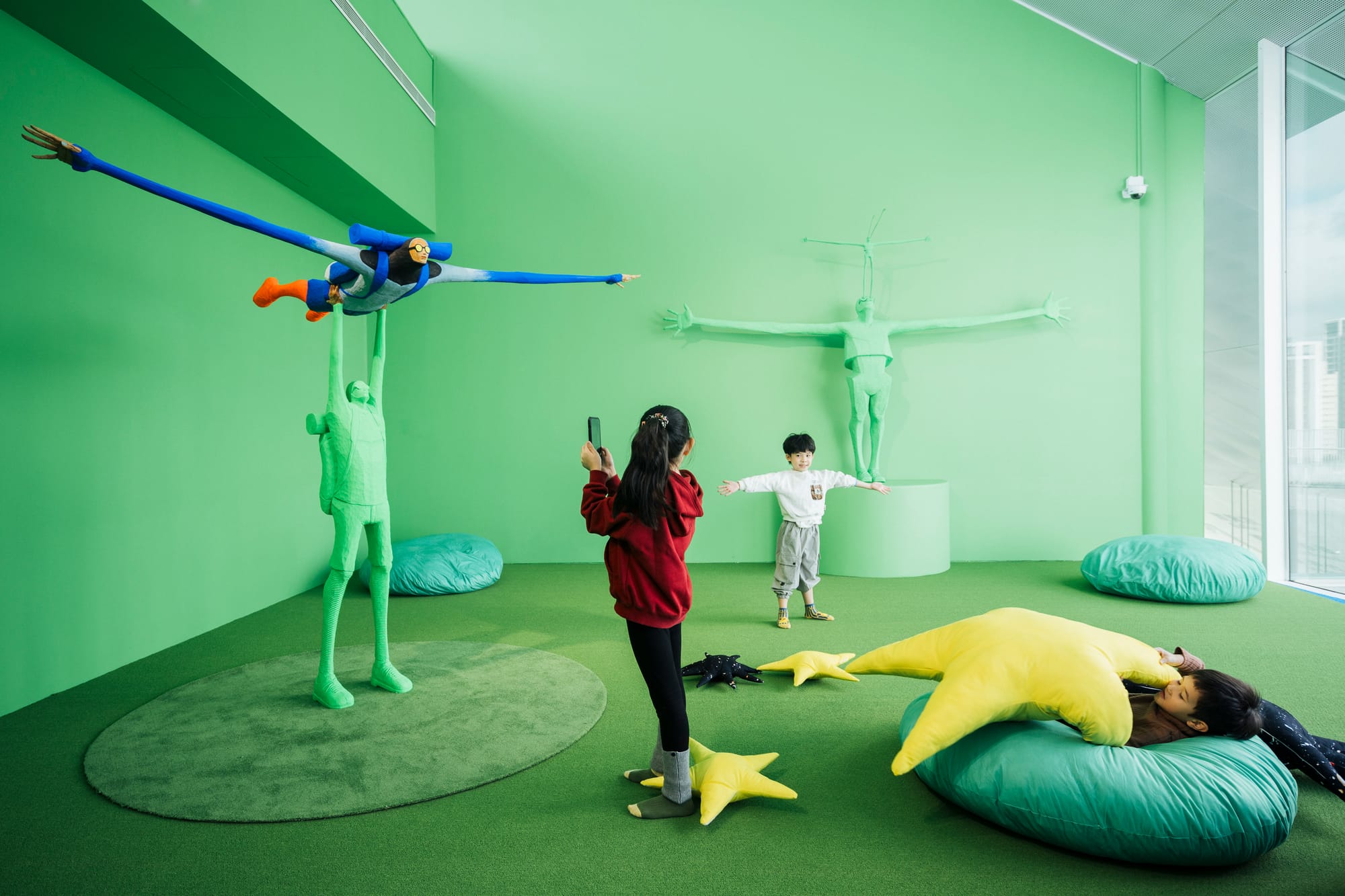
Beyond the narratives opened up by the miniature house boxes, accessories and style form another essential dimension of miniature culture. In the accessories section, children can observe miniature objects displayed independently from their original settings, while an educational interactive zone invites them to arrange and combine these items themselves. Because accessories and décor are closely tied to the shaping of taste, Hsieh Chia-Yu’s Dream House (2025) revisits and reimagines the aesthetics of past Taiwanese decorative objects. Through a large-scale art-object-box installation, the artist invites children into an alternative experience where scale is flipped, and through interactive scenographic elements, they embark on a process of exploring and reflecting on how an ideal life might be constructed. Beyond miniature exhibits, the exhibition also features a multimedia interactive zone, showcasing artist Abe Nyubo, whose work explores the theme of the human body on a grand scale. Using real-time image capture and augmented-reality installations, he leads children across the boundaries between virtual and physical worlds, opening a topological sensory journey of the body.

Installation view of TANG TANG-FA’s Art Market Stall, 2025, at the Taoyuan Children’s Art Center, 2025. Commissioned by TMoFA. Photo by Toisland Project. Courtesy of TMoFA.
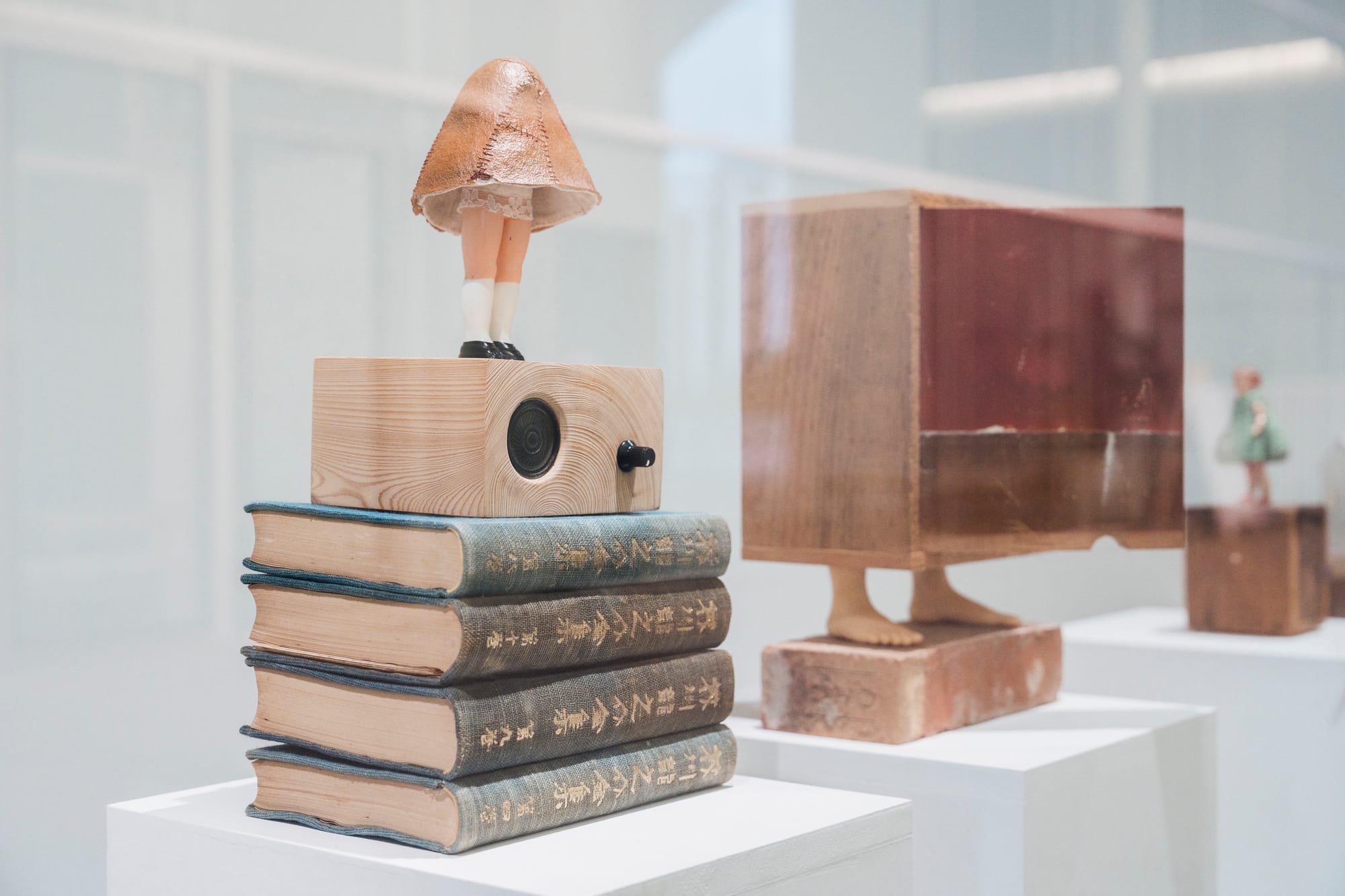
For the first time, the exhibition also includes an Art Street section. Artist Chen Yin-Ling, in I Want to Tell You a Story: Seven Miniature Worlds (2018-2023), presents seven miniature sculptures and kinetic installations that explore the relationship between objects and lived experience, opening a series of life stories unfolding within tiny worlds.
This exhibition centers on miniature art, yet “miniature” does not imply “small” or “limitation.” Rather, when scale shifts, our field of vision expands, and our ways of understanding and reading the world take on entirely new angles. The exhibition invites visitors to step into this rich world of shifting scales and discover the boundless imagination that bursts forth from the tiniest of beginnings.
Mini Boom!
Taoyuan Children’s Art Center
November 26, 2025 – March 2, 2026
For more information, please visit: https://tmofa.tycg.gov.tw/en