Shows
Aboriginal in the Alps: “ROOTS” at Fondation Opale
Nearly three hours by train from Geneva, nestled in the snow-capped Swiss Alps and overlooking the Rhône valley, a modest cube of a building houses and exhibits collections of the Fondation Opale, Europe’s only center dedicated to Australian Aboriginal art. Its façade is modeled on the swirling, pointillist rock painting patterns in Australia’s Western Desert that are said to date back at least 50,000 years as part of the oldest continuous artistic tradition on Earth.
Smiling affably, soft-spoken to a fault and unassuming in jeans, collector Garance Primat, the heir of a billionaire fortune and one of eight children, including Fondation Opale’s founding director Bérengère Primat, stood beside Swiss curator Samuel Gross. The exhibition on view, “ROOTS,” evoked the collection’s taste for ethereal abstraction—the maternal, earthly genesis of creativity—in concert with both nature and modernity, from Aboriginal traditionalists to Western iconoclasts.
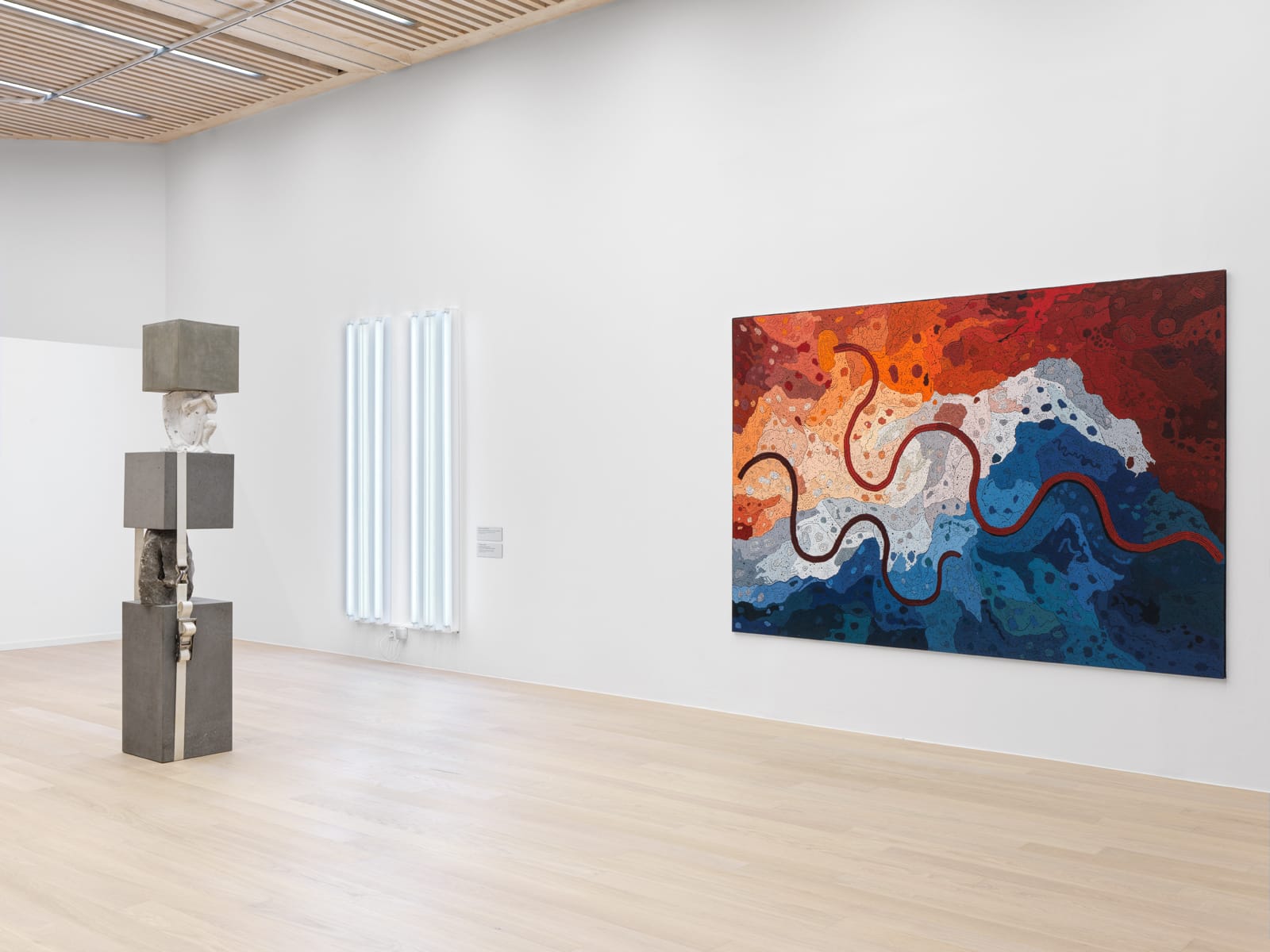
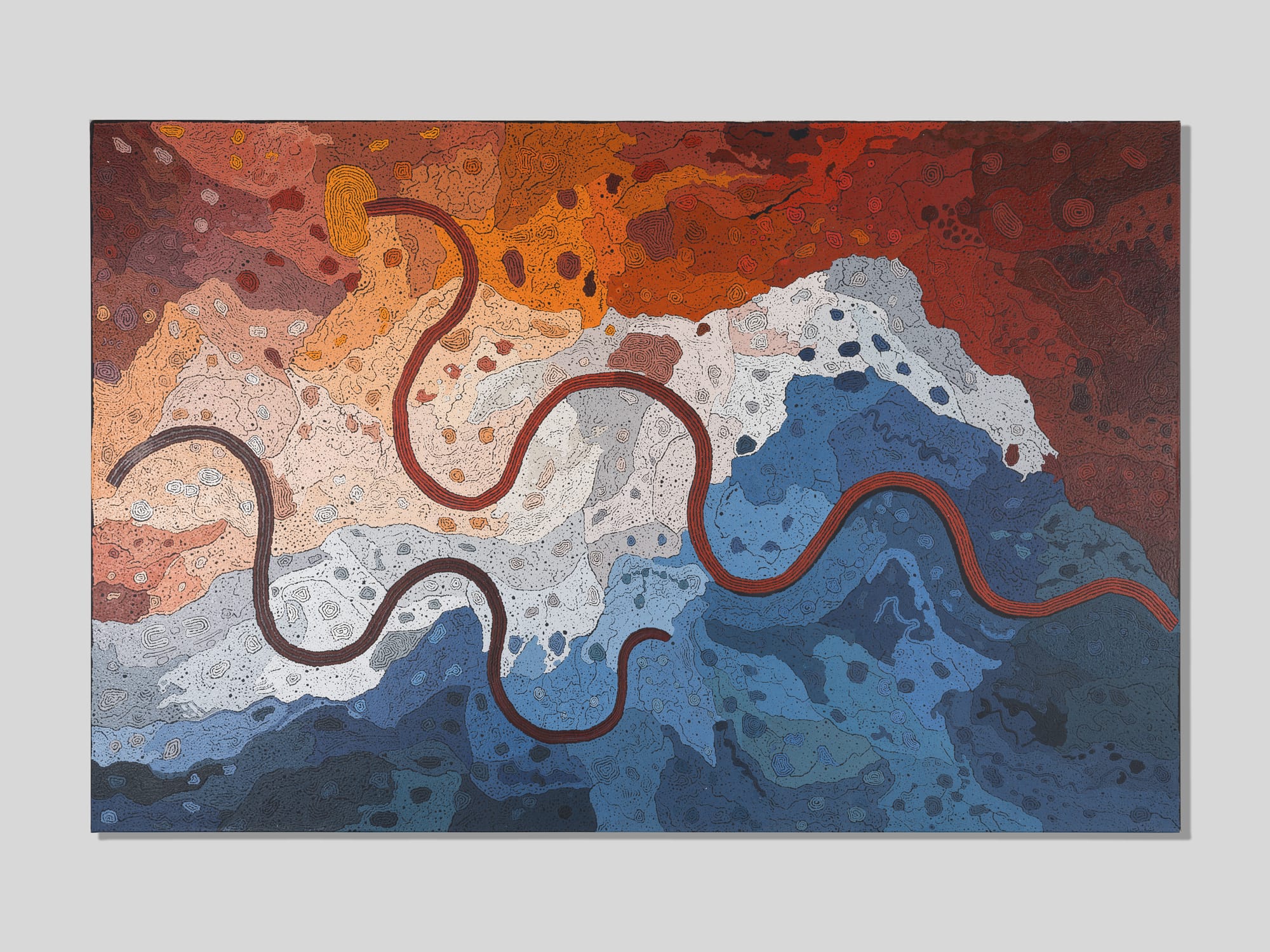
A Pitjantjatjara artist from the Aṉangu Pitjantjatjara Yankunytjatjara Lands in the far north of South Australia, Keith Stevens opened the exhibition with Pilati (2007), a work that that moved beyond pictorial representation to engage the materiality of the land itself, animating the innate beauty of stone as it rests in the heart of his birthplace. His painting of synthetic polymer on linen conveys the rough terrain in its naturalistically pockmarked, tectonic shapes and mineral hues, while serpent-like lines traverse the canvas as an assertion of ancestral territory.
“ROOTS” conveyed the sense of being grounded on the planet as exotic in itself, and considered the interiority of the mind as a world of singularity akin to the geological and evolutionary complexity of the environment. The seeming limitlessness of historical time behind the ongoing traditions of Aboriginal art-making, from cave to canvas, shares a depth that was met, in every sense, by the resources of its chief European collector, who brought invaluable works from rural Australia to the mountainous crown of the West.
Olafur Eliasson’s Wasted but confident light (2021), a constellation of spectrally diverse, silver-colored glass orbs, entered into direct aesthetic dialogue with Sheila Hicks’s VARMAYANA (The Place of Shining Light) (2018), whose various colorful spheres blending linen, cotton, wool, nylon, among others, brought conceptual art to elementary form. And to see both works alongside Clifford Possum Tjapaltjarri’s Fire Dreaming (1996), an acrylic on canvas projecting the embodied spiritual intensity of Aboriginal mastery, was to behold the wonder that is being human: an innately creative force moving between the outer and inner worlds.
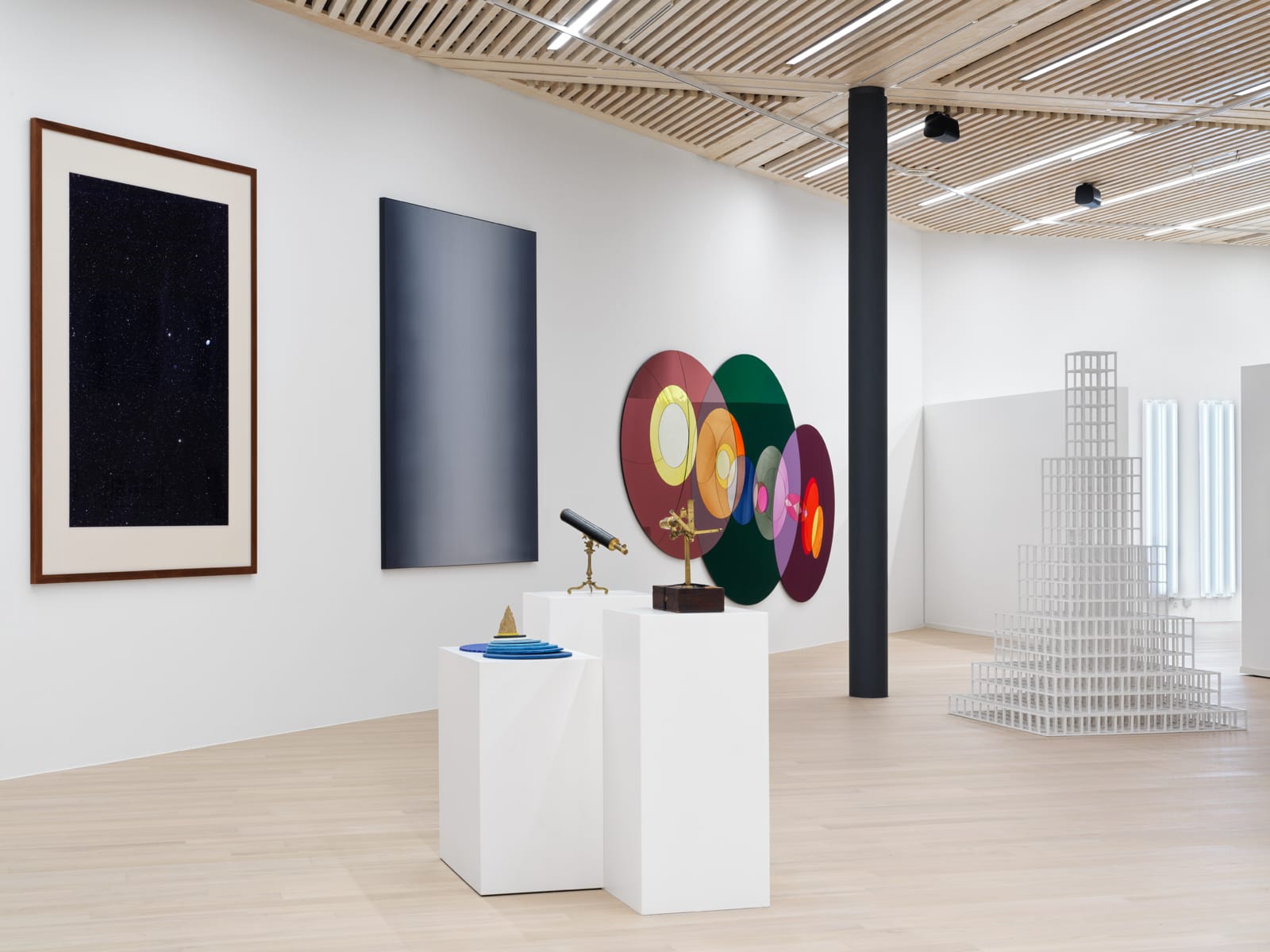
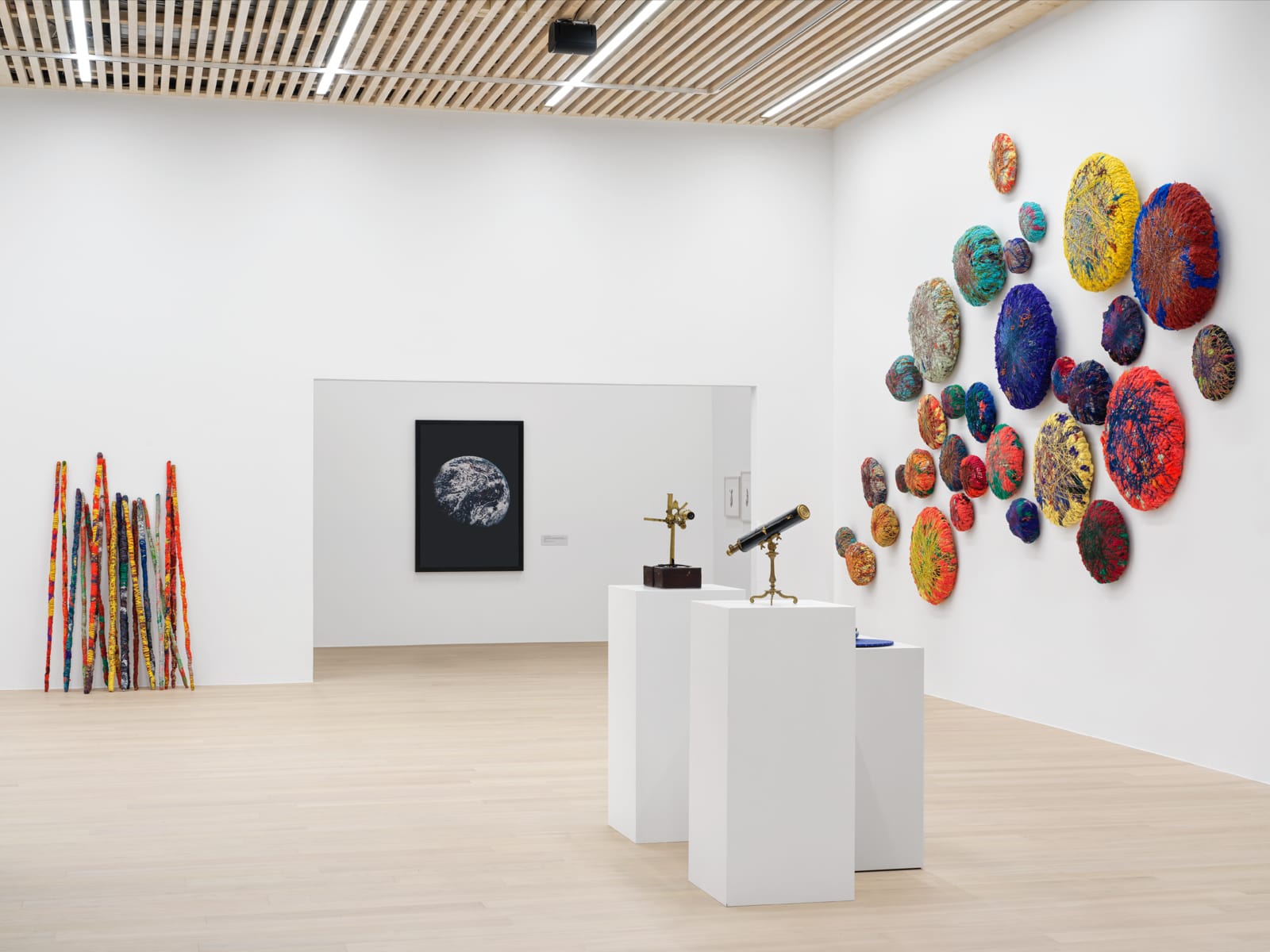
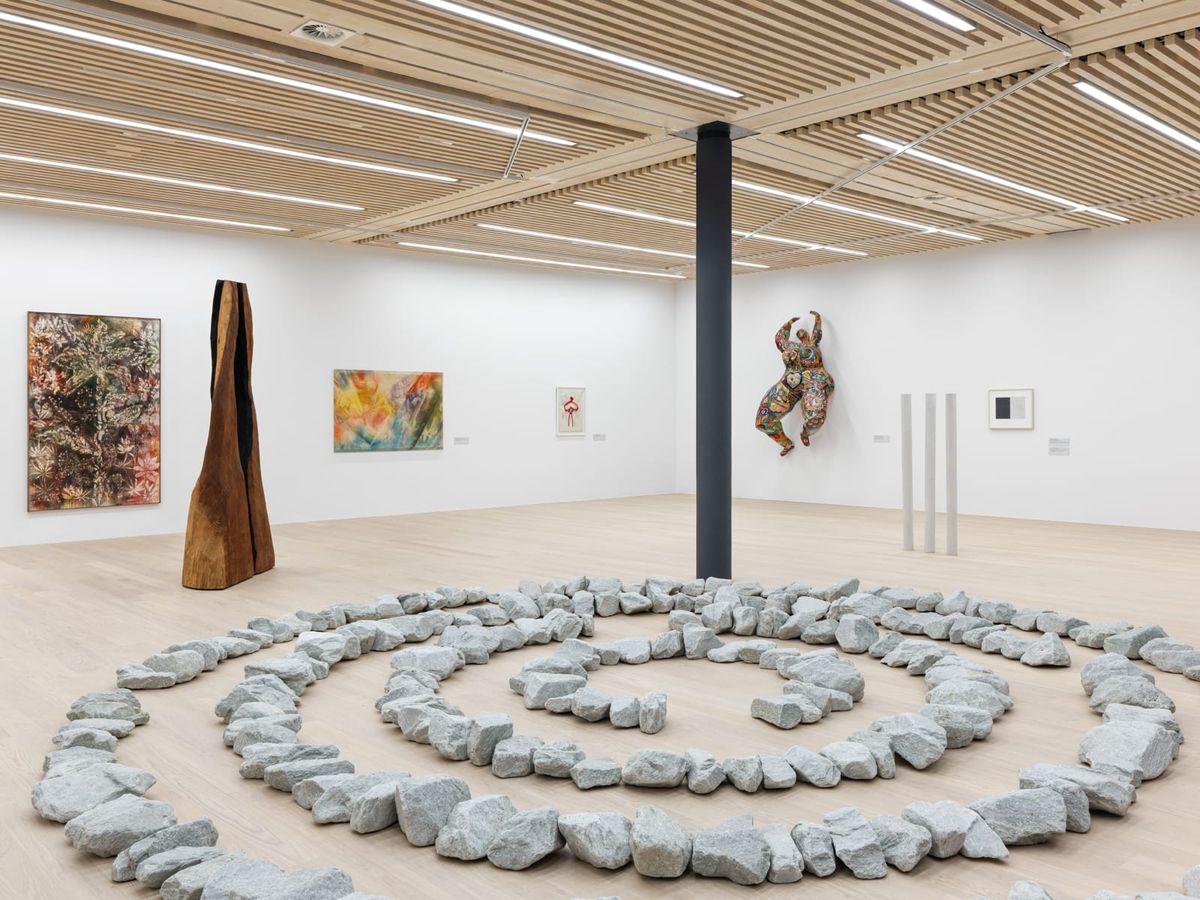
With rare insight into collective ingenuity over geographies and epochs, Gross brought together Jivya Soma Mashe’s Ants Spiral (2010), an acrylic and cow dung on canvas by the Warli artist from India, alongside antique Western curiosities, including a brass-and-leather Gregorian reflecting Telescope fashioned in 1754 by one Claude Paris. And this was only the first floor. Above, Niki de Saint-Phalle’s Lily or Tony (1965), a wall-hung painted polyester resin sculpture pressed its arms up against the archaisms of anthropomorphic relief; nearby, (P.A.C.) An And Then (1970) by Sam Gilliam suspended acrylic on canvas in impressionistic folds of beveled edges, poised in light-born apparitions of movement.
While another, more focused and historically grounded selection from the Fondation Opale’s holdings, some 2,000 works by nearly 440 Aboriginal artists, graced Geneva’s Musée Rath for the concurrent “Elles” show, co-curated by Gross and Belgian art historian Georges Petitjean with a focus on Australia’s Western Desert art, “ROOTS” retained the mystical depth of its otherwise rarefied artists’ subject matter—namely an autochthonous perspective on cosmology, myth, and kindship—evocatively transposed in the cold, white air of the Swiss Alps.
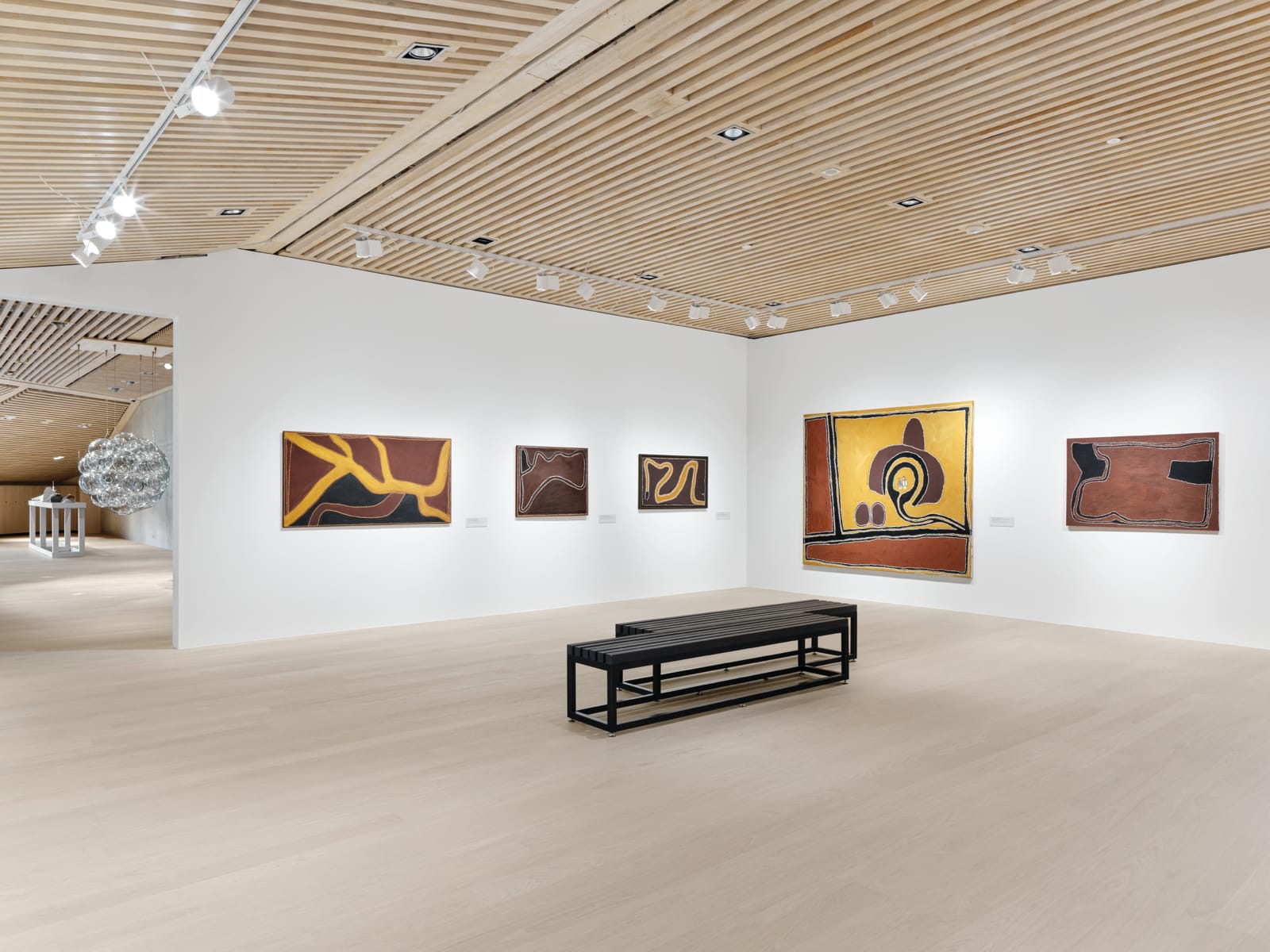
One room at “ROOTS” was devoted exclusively to Aboriginal art, set apart from the canonical international contemporary artists of Gross’ fashionable curation. It featured Untitled (1994), a painting in natural pigments and ochre, by Rover Thomas, an artist who began painting in his fifties and, a decade later, represented Australia at the Venice Biennale in 1990. Ringed with hues of blood and sand, the canvas is almost entirely black, distantly related to Kazimir Malevich’s Black Square (1915), the zero point of universal renewal through its source in all-color.
Matt A. Hanson is an art writer based in Istanbul and ArtAsiaPacific’s Istanbul desk editor.