Shows
A Sea Half Full: Jeddah’s Red Sea Museum
Between late 2023 and 2025, the Red Sea shipping crisis lit up international news headlines as Yemen’s Houthi forces targeted Israeli-linked vessels in solidarity with besieged Palestinians, causing freight and insurance costs to spike. Although the Red Sea is relatively small—at 438,000 square kilometers, a mere one-fifth of Saudi Arabia’s land mass—this ancient rift valley is a critical geopolitical hotspot. It is bordered by Djibouti, Egypt, Eritrea, Jordan, Saudi Arabia, Sudan, Yemen—states of rich and varied civilizations now managing various degrees of political and economic risks; it is also connected to the Mediterranean via the Suez Canal, the shortest maritime route between Asia and Europe which handles 30 percent of global container traffic. Jeddah’s Red Sea Museum, newly inaugurated on December 5, is a timely and welcome institution with unprecedented potential to enhance public understanding and appreciation of the region.
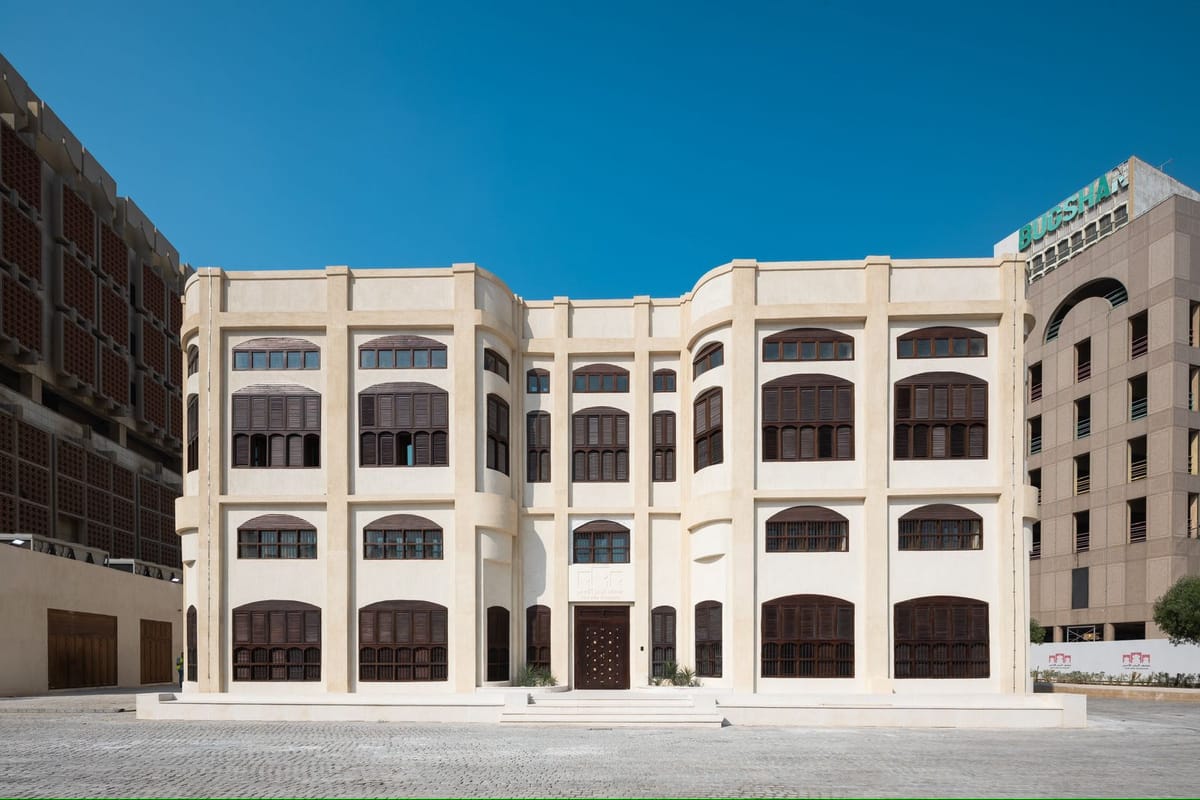
The museum is located in the extant portion of Jeddah’s elegantly repurposed Bab al-Bunt, the port buildings originally erected in 1866 by the city’s Ottoman governor to expand cosmopolitan Jeddah’s capacity for servicing Hajj pilgrims and traders. (“Bab” is Arabic for “door” or “gate,” while the museum catalog tells us that the origins of “al-Bunt” may lie in the Arabic word “bunt” for “print,” possibly referring to the port’s boldly displayed name or to customs records.) Al-Bunt marks the first major commission outside Europe for the Paris- and Geneva-based Chatillon Architectes, who recently restored Paris’s Grand Palais to high praise.
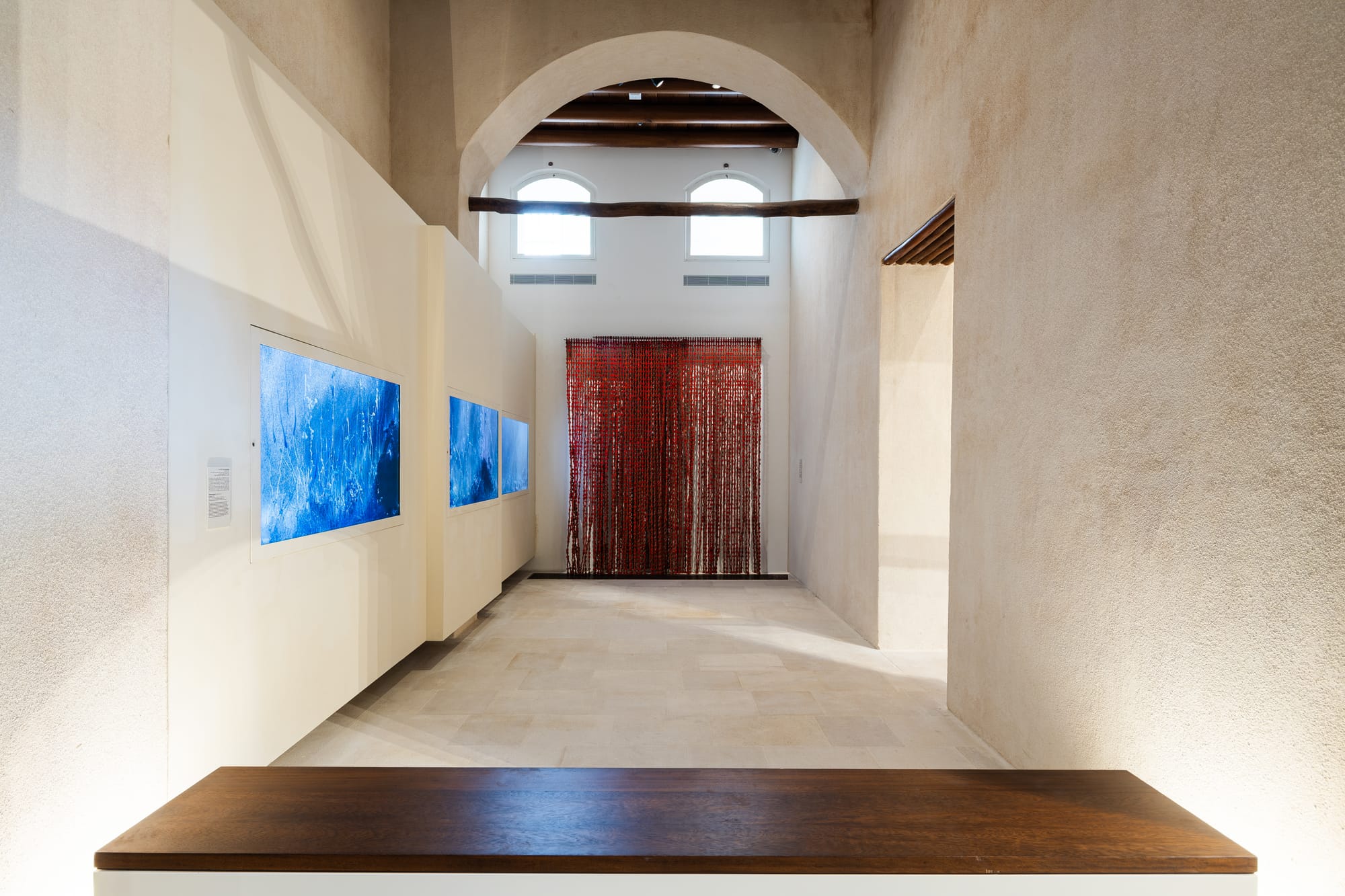
The building’s roof terrace boasts a specially commissioned teak facade by Saudi artist and designer Ahmad Angawi, who reworked Jeddah’s traditional latticework with an undulating wave motif and mother-of-pearl inlay. Al-Bunt was the most important of seven gates forming the fortress wall of historic Jeddah, constructed in the 16th century to defend the city from the Portuguese navy’s attacks. The port’s distinctive coral stone canopies are preternaturally contemporary: a long line of minimalist rectangular structures frames delicate arches of negative space, irregularly multiplied twentyfold, like a mirage glimmering on the water’s edge. In the intervening century, urban development prompted the demolition of all but seven of the canopies, and a parking lot and ring road now separate it from the sea. A city regeneration plan now seeks to restore the original waterfront, returning the sea to the museum’s steps to reinstate al-Bunt as the gateway to Jeddah’s UNESCO-listed historic district.
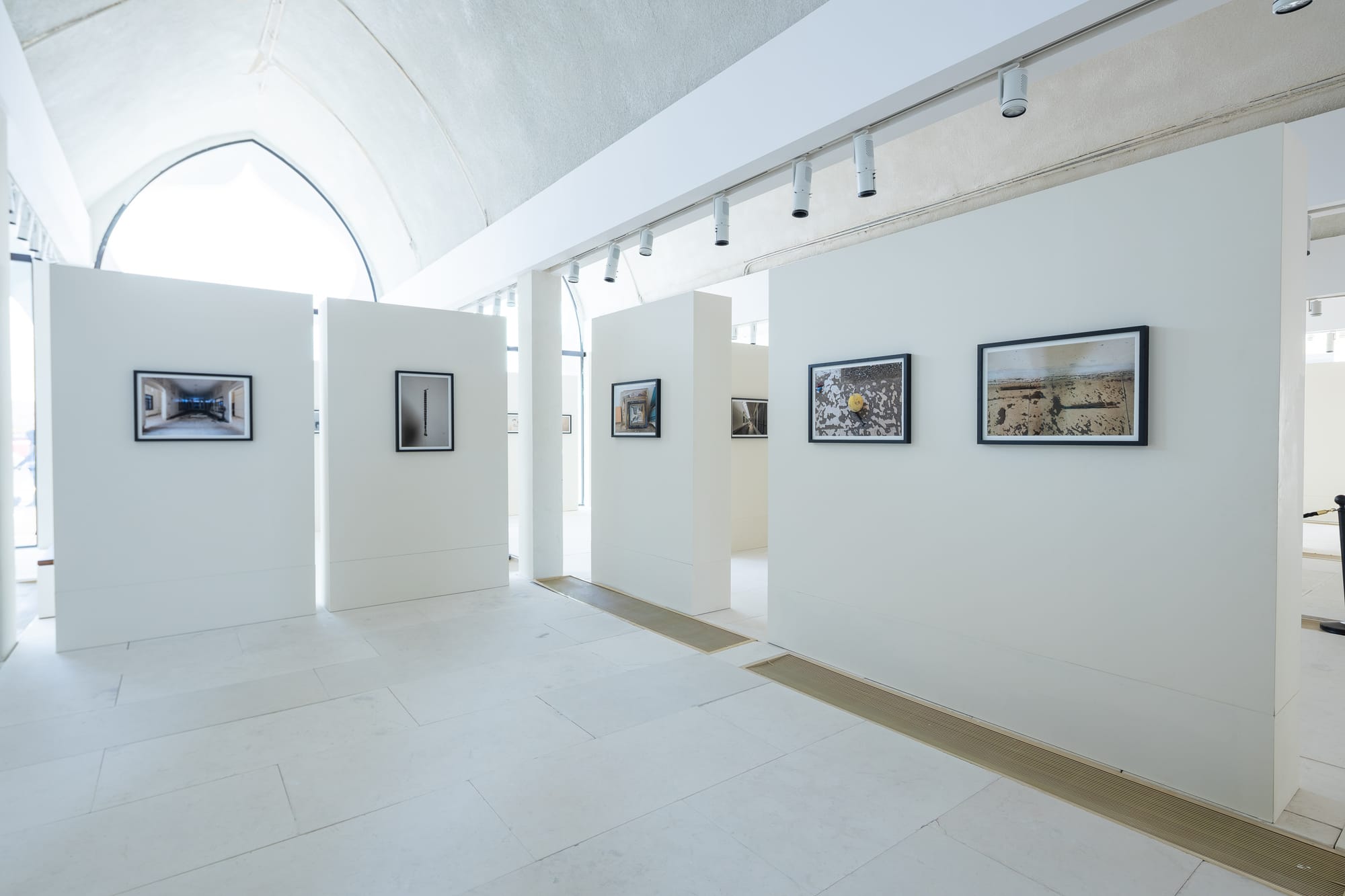
The Red Sea Museum’s permanent exhibition features 1,000 artifacts and artworks across 23 galleries, while its temporary exhibition “The Gate of Gates” presents Saudi artist Moath Alofi’s photographs of the building pre-restoration. The collection’s primary strength lies in its trove of historic objects, photos, and videos about regional history—particularly the Hajj documentation, relics, and other memorabilia, in which the centuries of travelers, pilgrims, and traders passing through al-Bunt spring to life. Their journeys emerge in some of the earliest photographs of the Hajj by the pioneering Ottoman Egyptian photographer Muhammad Sadiq Bey, Meccan doctor and photographer Sayyid Abd al Ghaffar, and French photographer Charles Chusseau-Flaviens. Snapshots of the pilgrim camps in Mount Arafat, Mina, and other locations are especially poignant, as the tent encampments on harsh landscapes emphasize the fortitude required for such trips.
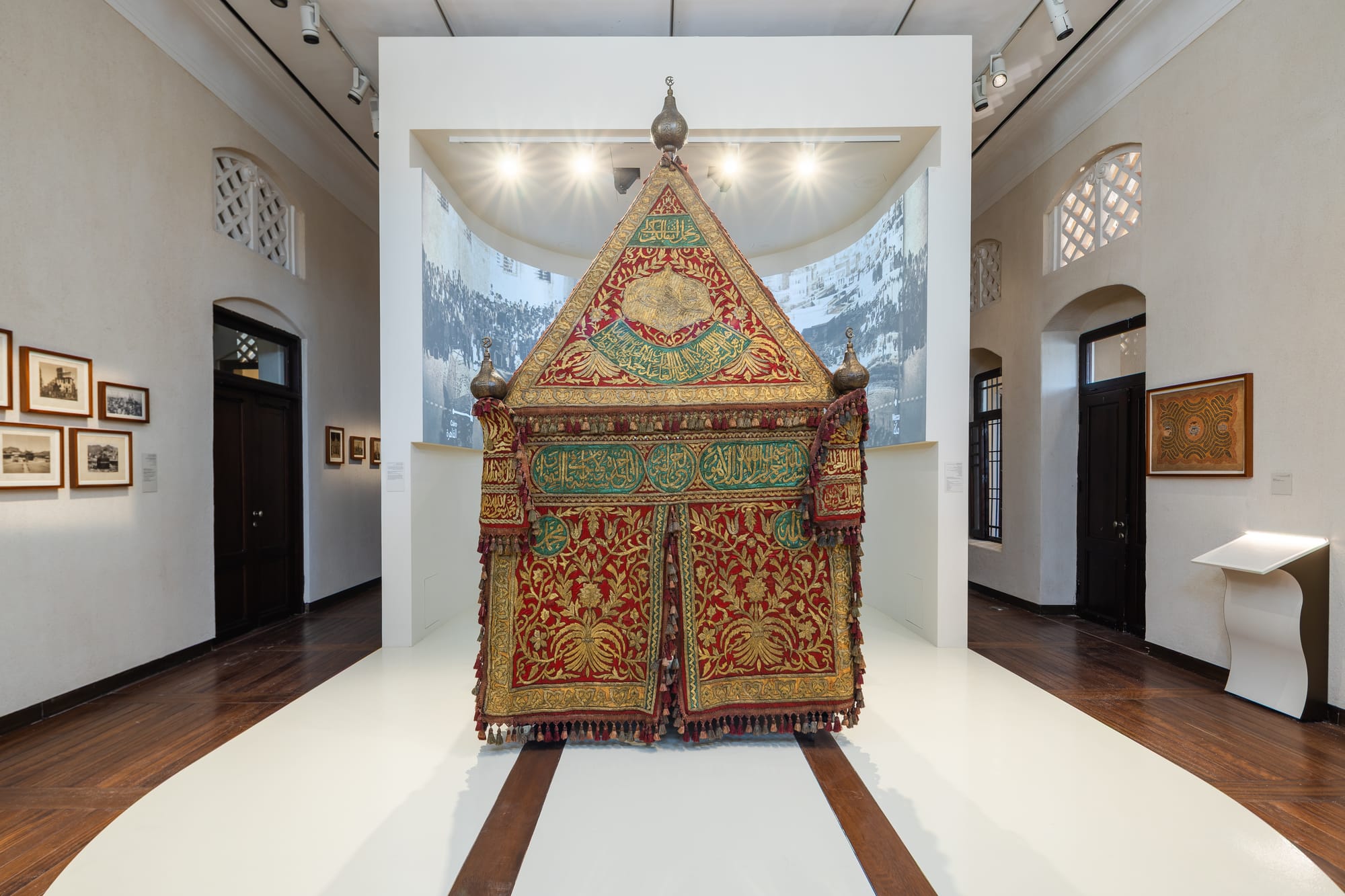
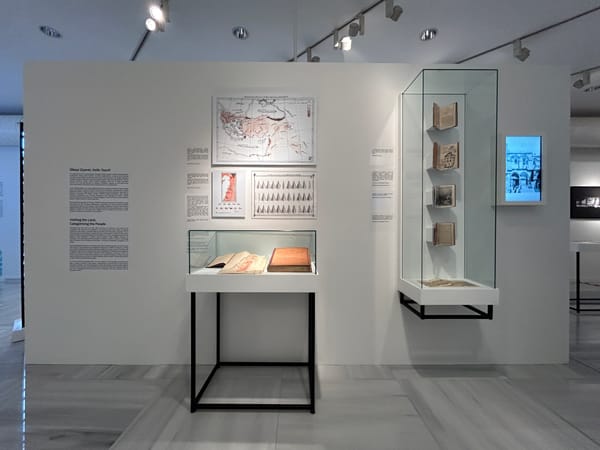
One of the earliest moving images of Mecca and the Hajj are presented in the form of Dutch filmmaker George Krugers’s historic Het Groote Mekka-Feest (The Great Mecca Feast) (1928), a mesmerizing visual diary of a group of Muslims from Bandung, in the Dutch East Indies, undertaking their pilgrimage to Mecca via a shipborne voyage to Jeddah. Another film by the Frenchmen Marcel Ichac and Raymond Ruffin, Mecca and the Hajj (1948), traces Moroccan pilgrims’ passage from North Africa to Mecca. There is also a small selection of photographs by Christiaan Snouck Hurgronje, the renowned Dutch scholar, government advisor, and alleged spy. Regretfully, there is no historical contextualization about the conditions of colonial power within which these works were produced, the othering biases of Orientalist perspectives, or these documentarians’ controversial histories: Krugers and Hurgronje likely posed as Muslims to enter Mecca, and the latter eventually admitted he had appropriated photographs taken by his friend Abd al Ghaffar, presenting them under his own name. Other Hajj memorabilia on view include antique maps showing caravan routes; Hajj passports and diaries; Saudi banknotes specially issued for pilgrims’ and an elaborate 19th-century Egyptian mahmal covering, a ceremonial palanquin that Egyptian rulers dispatched annually to Mecca.
The museum’s other thematic sections touch on the Red Sea’s role in global trade, its dazzling biodiversity, and the seminal contributions of Arab cartographers, inventors, and explorers to navigation, astronomy, and other sciences. Unfortunately, despite the extraordinary potential of these topics, the exhibits are limited to superficial preludes. An animated display about the cartographer Muhammad al Idrisi, explorer Ibn Battuta, and navigator Ahmad ibn Majid only plays a brief introduction to Ibn Battuta on loop. The Suez Canal’s wall text lacks any reference to key historical facts such as the project’s main architect, French diplomat Ferdinand de Lesseps, whose epic, decade-long construction required an estimated 1.5 million people, including forced laborers; or Egyptian president Gamal Abdel Nasser’s nationalization of the waterway in 1956, an unprecedented display of sovereign power that dealt a decisive blow to British and French colonial interests. Likewise, the marine biology displays are missed opportunities to introduce fascinating matters such as the Lessepsian migration—the Red Sea’s marine species’ unprecedented invasion of the Mediterranean that occurred when the Suez Canal connected these bodies of water. One intriguing exhibit that deserves further expansion is the artifacts from the majestic 18th-century Umluj shipwreck, a 40- to 45-meter-long pine and oak merchant vessel discovered north of Jeddah in 2015–16, which was laden with ceramic water jars, blue-and-white Chinese porcelain cups and bowls, and other everyday products.
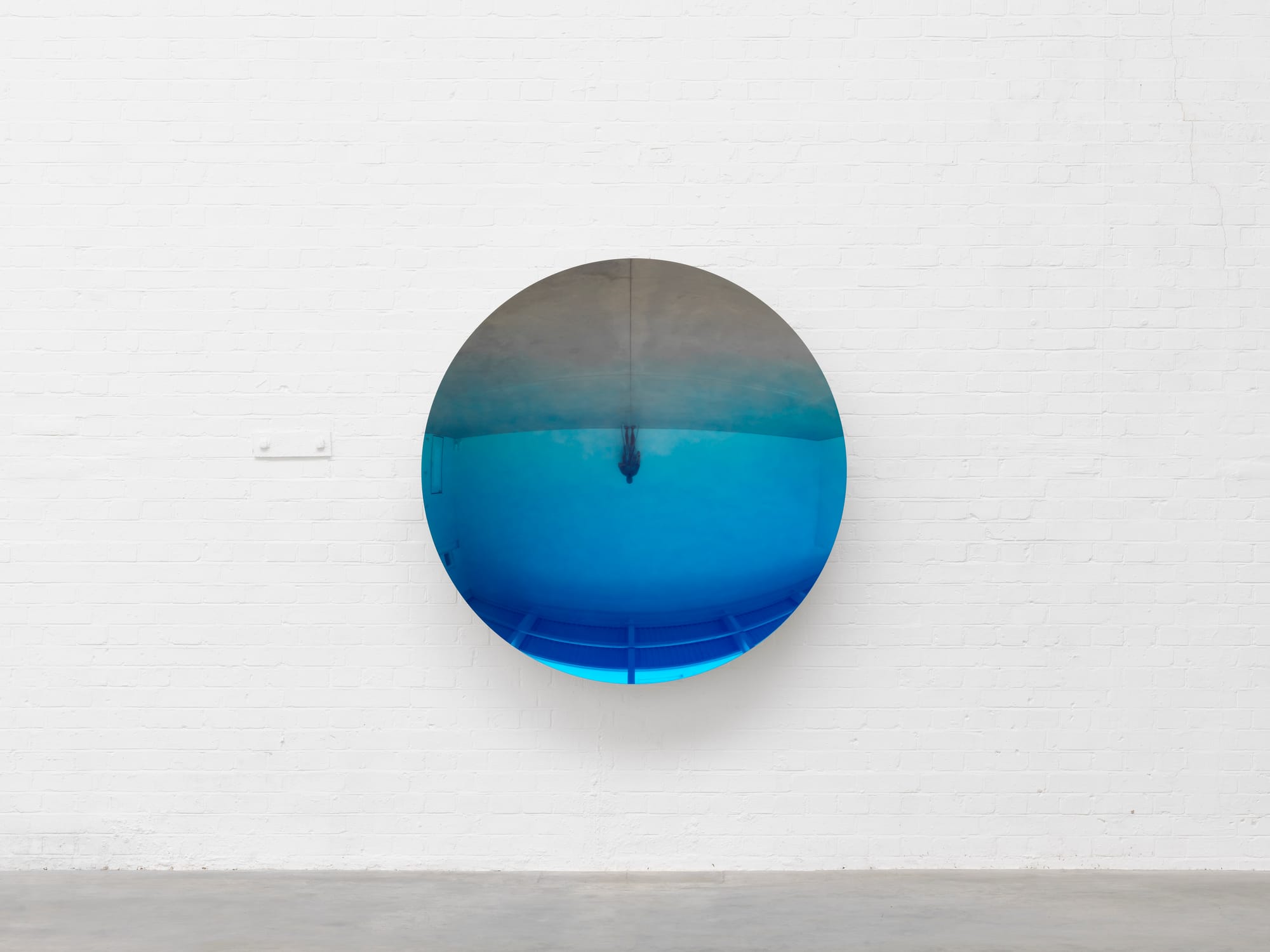
While contemporary artworks are a progressive and integral element of the museum’s program, the current selection offers decidedly mixed results, with a surfeit of anodyne and decorative curatorial choices. The standout installation is a room hung salon-style with Bahrain-born Saudi artist Faisal Samra’s People in Context (Jeddah and Mecca)—a 2021 series comprising 43 photographs and a short film that vividly capture ordinary people in souqs, streets, cars, vans, and fishing boats—juxtaposed with spacious images of Mecca and praying supplicants in mosques. It is a rare work that successfully evokes a natural logic between the human and the divine. A cleverly positioned image of social critique is the renowned Saudi doctor-turned-artist Ahmed Mater’s famed Magnetism II (2012), a photogravure that likens the Kaʽbah and its pilgrims to a magnet attracting iron filings within its force field. Less compelling is the room in which Canadian American photographer Robert Polidori’s large-scale 2019 pictures of the ancient Nabatean port of Akra Kome are unconvincingly paired with an Anish Kapoor reflective concave sculpture; lacking space to breathe, the iconic Kapoor appears almost gimmicky.
These shortcomings are, fortunately, redeemed by the exquisitely illustrated and researched Red Sea Museum catalog, which offers a wealth of authoritative essays on diverse aspects of the sea’s human and natural geography, ranging from architecture and archaeology to sailing communities, songs, and myths. Endowed with an enviable mandate and resources, the museum will hopefully mature quickly to fulfil its potential with thoughtful, imaginative exhibitions of historical depth and critical rigor.
Chin-chin Yap is a Singaporean writer and filmmaker based in Lisbon and contributing editor for ArtAsiaPacific.