People
Bring the Noise: Interview with Marco Fusinato
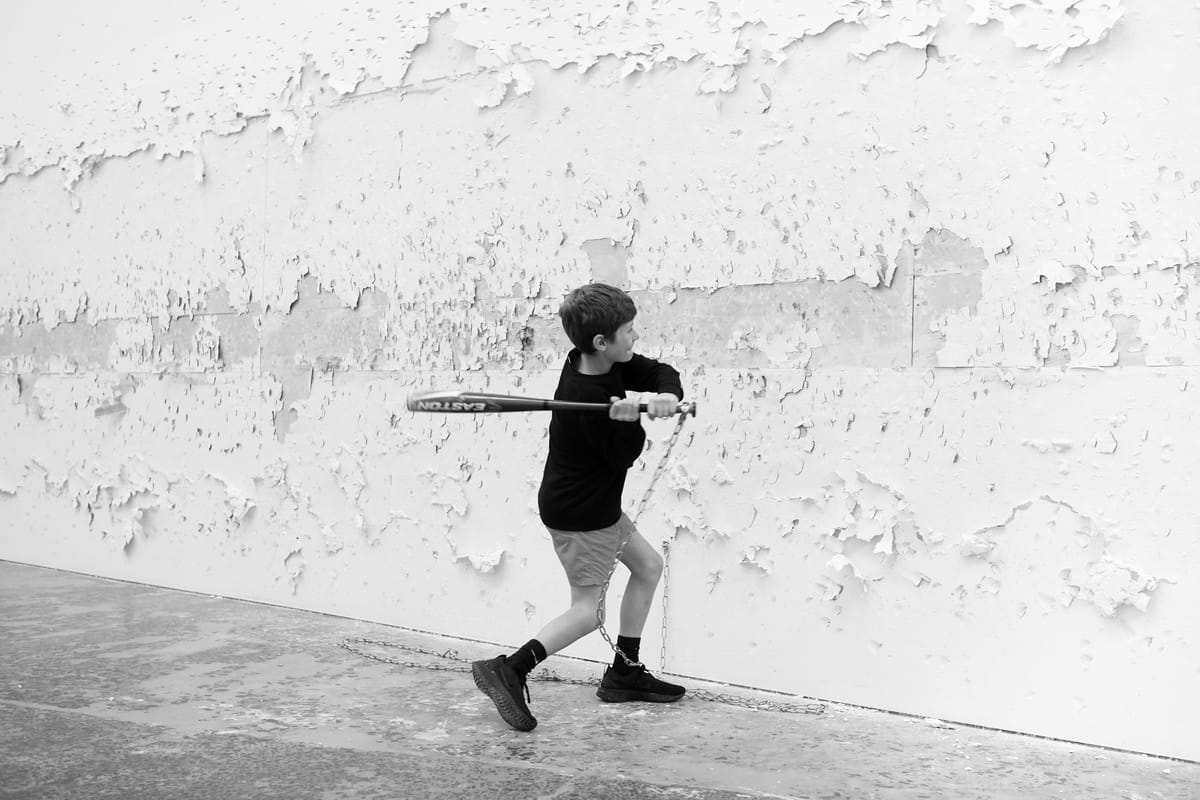
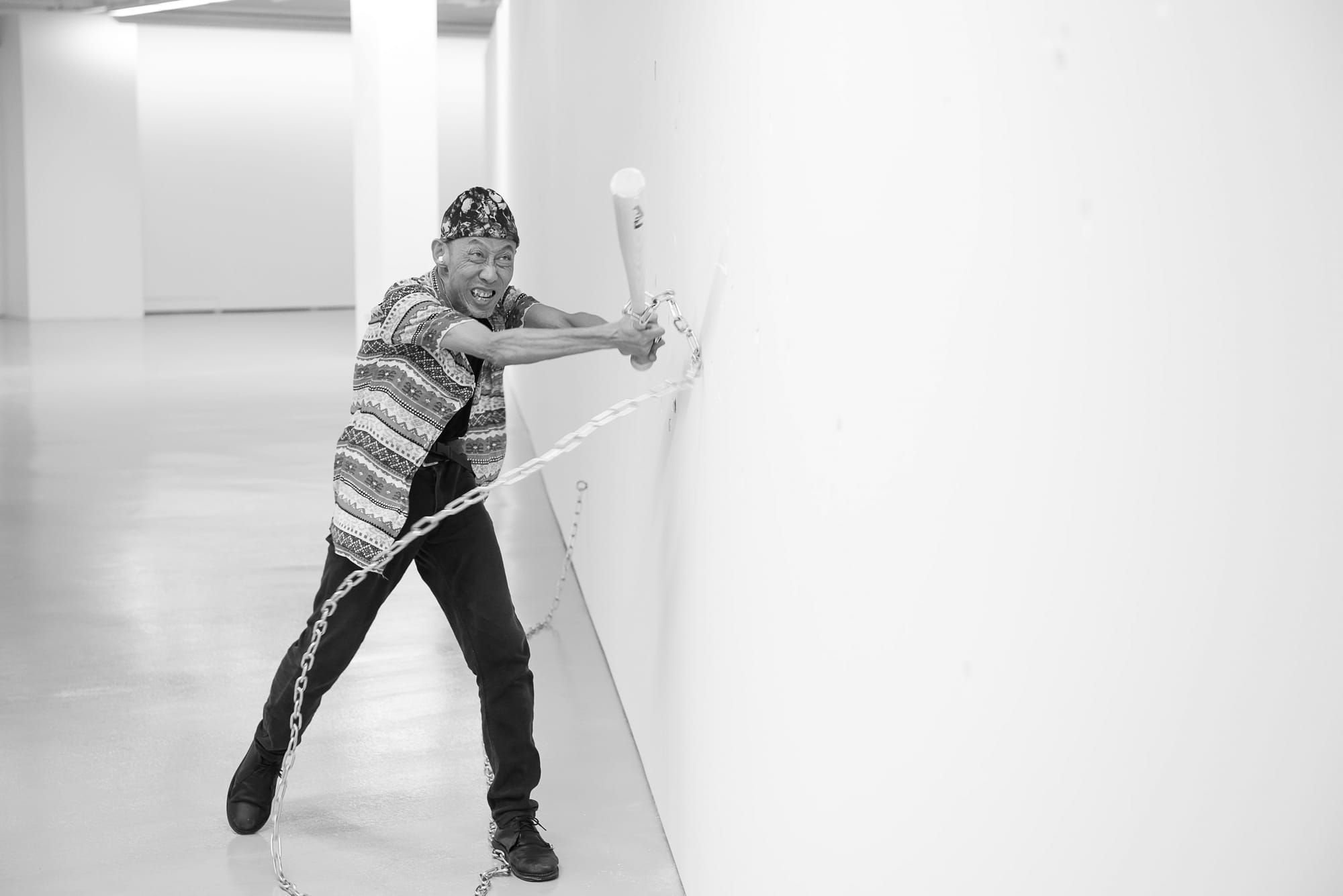
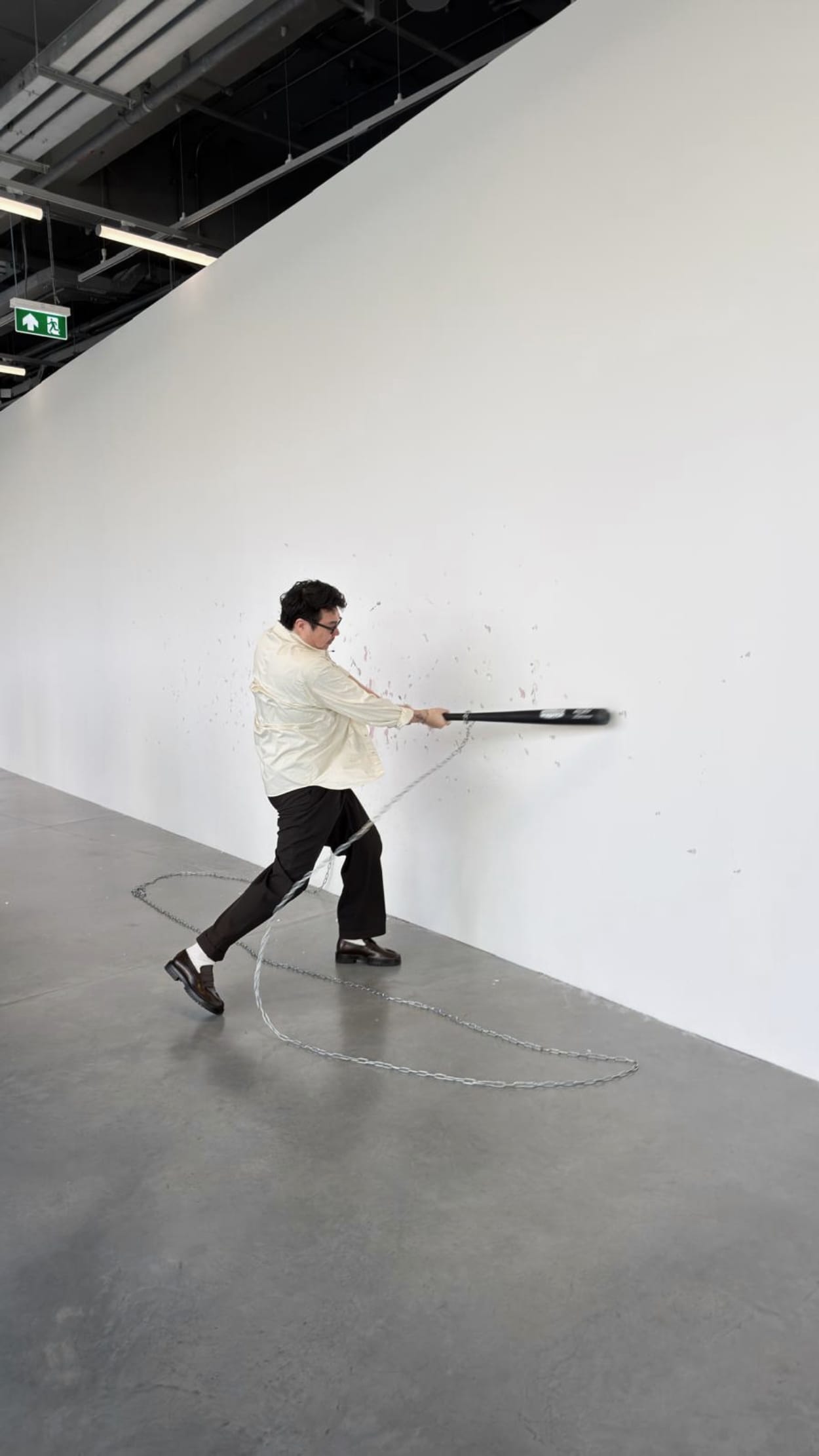
In the luminous expanse of Dib Bangkok’s inaugural exhibition, “(In)visible Presence,” Australian artist Marco Fusinato unleashes Constellations, a site-specific commission that transforms the pristine white cube setting into a theater of rupture and resonance. A chained baseball bat awaits a visitor’s grip: each slug against a purpose-built white wall is amplified by a thunderous 120-decibel crack. What begins as an invitation to destroy becomes a profound meditation on empowerment, aggression, and the physicality of sound—echoing Fusinato’s decades-long exploration of noise as chaos and architecture.
First shown at Singapore’s Institute of Contemporary Arts in 2015, and later at the 21st Biennale of Sydney in 2018, this Bangkok iteration is the very first work that greets visitors upon stepping into Dib Bangkok’s sweeping galleries. Constellation serves as a powerful overture, signaling the institution’s ambitions and artistic vision. Fusinato’s work confronts the sanitized surfaces of progress with raw intensity. Here, it’s all about the action: fleeting, irreversible, and wonderfully liberating.
AAP: I would like to talk about Constellations. I actually originally saw it in Mami Kataoka’s Biennale of Sydney. Miwako Tezuka and I were talking about how we were both scrolling through all our images in our phones, looking for the first time we saw this piece! I remember it distinctly.
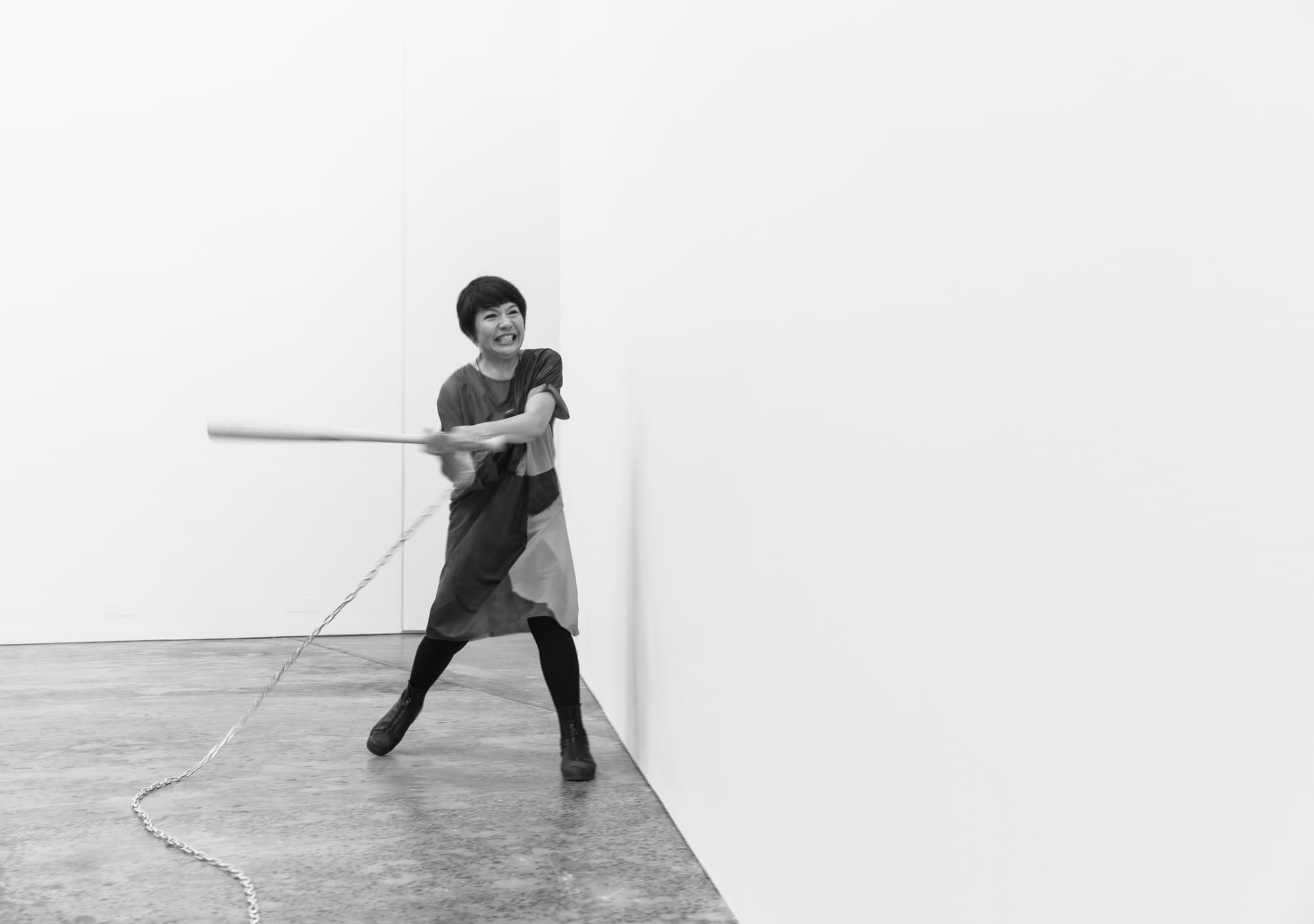
The other day I found some crazy images from downloaded Instagram pictures of when it was in Sydney. There were a lot of women photographed hitting it.
They were into it! This is the work we’ve been waiting for.
There was anger. When it was presented in Singapore, I remember the opening was out of control. Each iteration has been different, as in, the behavior of the audience has been different. So, I’m curious to see how it manifests here. It’s an installation that is constantly changing according to the behavior of the audience. For example, where do they hit the wall… how hard do they hit it… and how quickly does the wall disintegrate? These are all unknowns. The instruction is to hit the wall once; therefore, the aim is to give it your best shot.
When I saw it in Sydney, first of all, it was just my colleague and I. No one else was in the gallery, and all we saw was the bat. We were confused at first, but then my colleague noticed some dents in the wall, so he picked up the bat and hit the wall. We both did it a few times because the sound and the feeling were powerful.
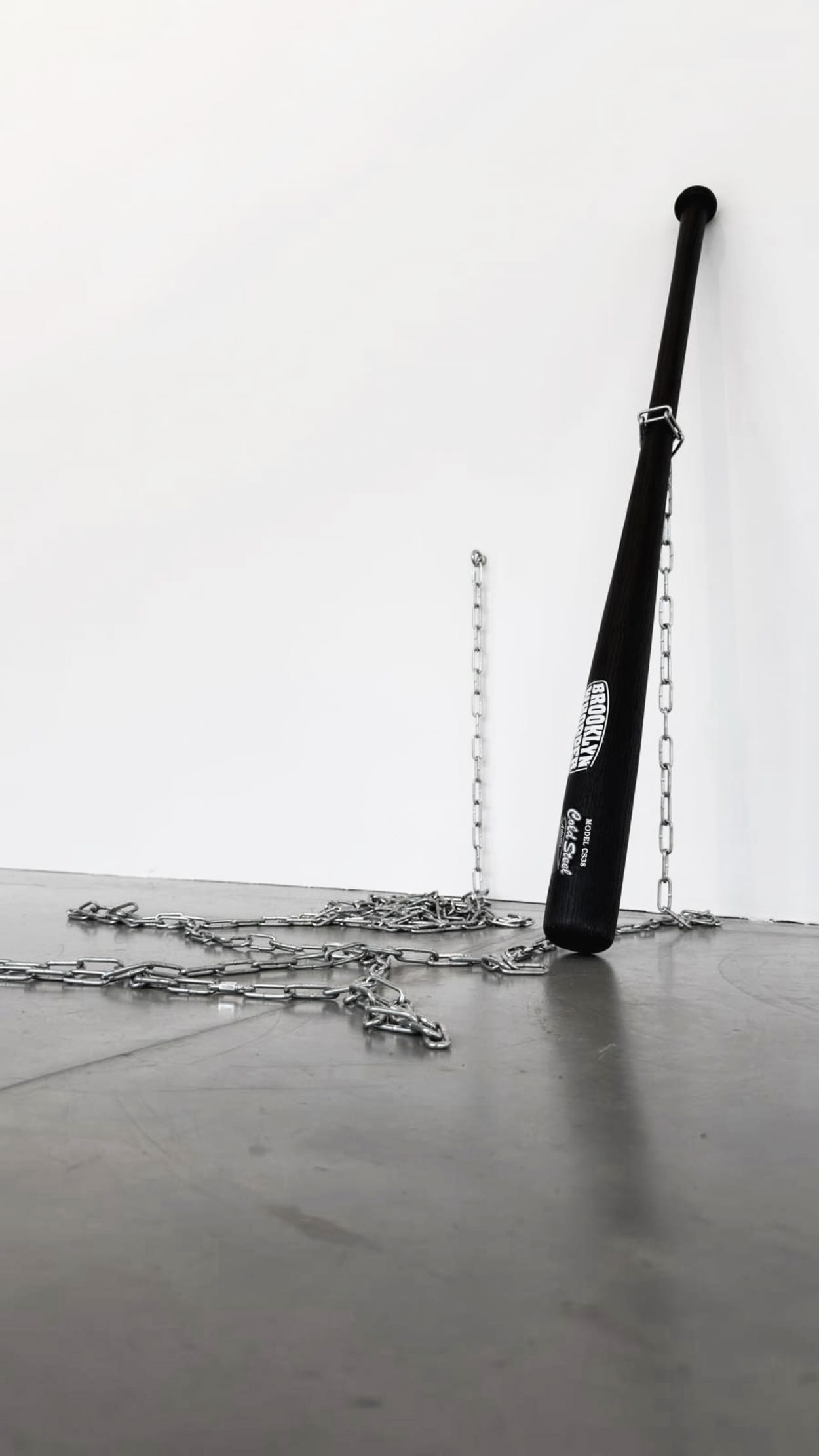
Constellations was born from my interest in how violence is presented to us on the screen. The baseball bat and chain are synonymous with violence, gang warfare, and so on. I had the idea to bring those elements into the gallery, get the audience involved, and amplify their gestures; to take them out of being passive viewers and make them active participants in a physical experience.
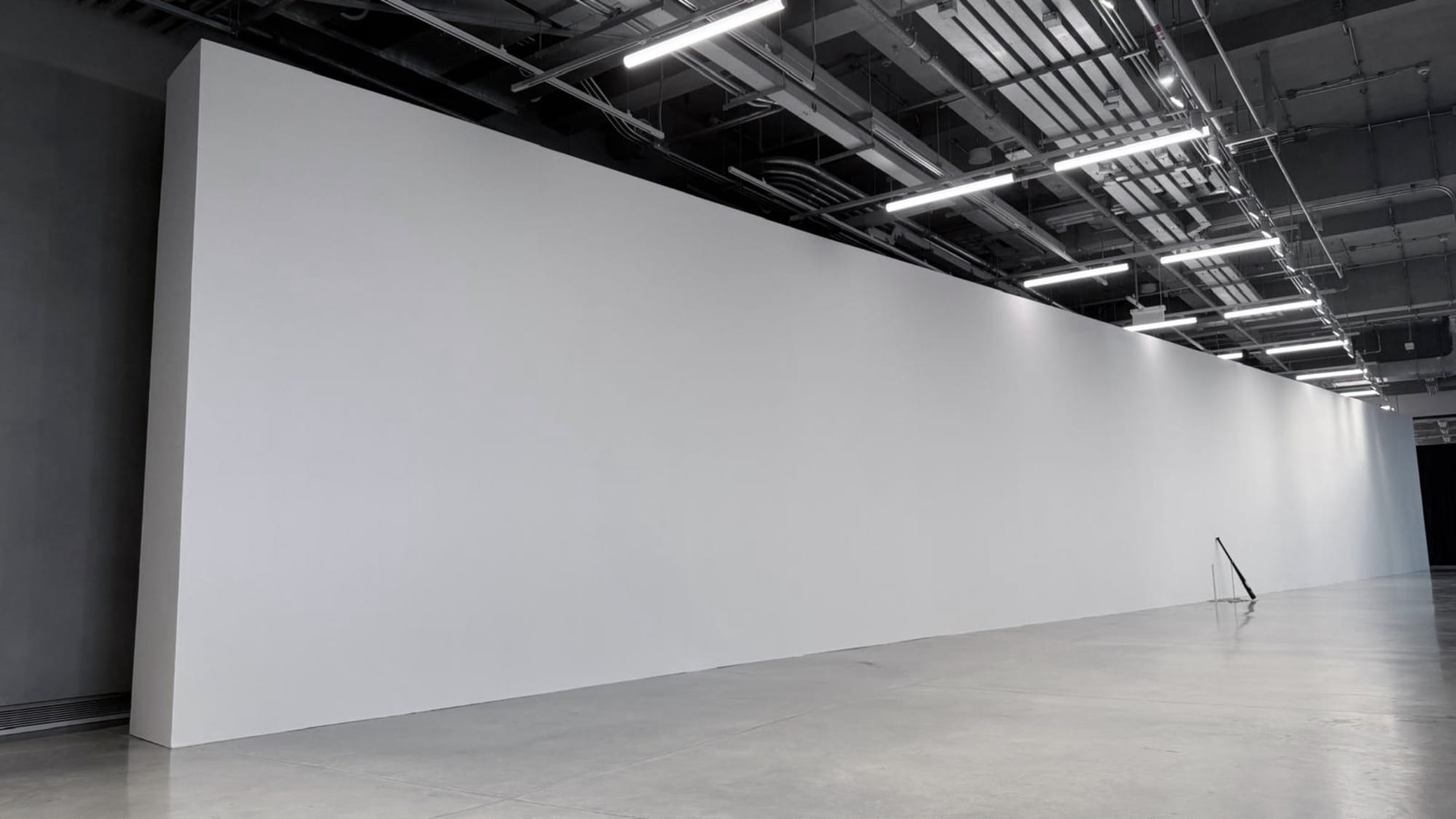
Constellations is dependent on a large white cube space, the bigger the better. I ask for a wall to be built from corner to corner using the same materials and height of the existing gallery space. When you enter the space, you don’t see anything on the wall facing you.
You have to kind of go around, right?
Yes, but when you walk around the other side, the only thing there is a chain coming off the wall at knee height, with a baseball bat attached to the end of the chain. The length of the chain creates an arc and limitation of where you can strike the purpose-built wall. It also stops you from hitting any other walls. What the audience doesn’t realize is that inside the wall is a long row of microphones going into a concert-size PA system, and that when they strike the wall, their action will be amplified at 120db. That is the big surprise for a lot of people.
A lot of my work uses the tensions around opposing forces; minimalism versus maximalism, noise versus silence, the institution versus the underground, order versus disorder, and so on. In this case, an extremely minimal, large-scale installation can explode through the action of the audience to create a maximalist experience.
The top of the purpose-built wall is open, and the speakers inside the wall are facing upwards, therefore when the wall is struck, a blast of air from the PA rushes up to the ceiling and reverberates back down. I’m interested in how air can be sculptural. This idea is something I explore in my performances using the electric guitar into mass amplification; the idea of sound being physical and forceful.
It’s vibration, like in your Australian pavilion in the 2022 Venice Biennale. And what was the very first impulse which led to Constellations back in 2015?
I had the idea long before that, probably from watching stuff like The Sopranos, The Simpsons. . . violence is everywhere. I was interested in taking it out of context and using the focus of the art institution to see how an audience might interact.
Yes, because it was totally mysterious when I went in, because, you know, Mami’s show was everywhere—the Sydney Opera House, Cockatoo Island, Artspace, and Carriageworks. When we walked into the space, we were the only ones in there, and first we saw an empty space and thought that maybe they had forgotten the work. Then we walked around, and then there were only these two objects: the bat and the ball. We had to guess what to do next.
I imagine it would be a different experience if you walked into a gallery that you were already familiar with, because you would immediately recognize that the bisecting wall was something new. The presentation at Dib Bangkok is a bit different because of the architecture.
Yes, it’s like the entrance—it’s the very first thing you see.
Indeed. Because of the architecture, there is no negative space to negotiate. In this case you walk straight into the strike zone; it’s an open invitation to strike the wall and move on to the rest of the museum. But for me, what’s interesting with this version is that the reverberation will be heard throughout the museum.
Did you come and do a site visit?
Yes, I did a site visit early on and then my technician came to install the sound system.
Did you try it out, and then they put a new wall in?
No, it doesn't work like that. It’s more like an architectural brief. I come to work out where the wall—as a sculpture—will sit within the given space; how it interacts with the architecture, and so on. Also, to work out how the sound might work in the given space. With every version there are a lot of unknowns because we can’t fully test it until it’s activated.
Because the wall is still pristine.
It has to be for the initial strike. And then over time, it disintegrates and takes its form; all those dents create Constellations.
Has the piece changed in your own mind since the very original iteration?
Initially, like all my works, it was something I wanted to experience. But I’ve since realized it’s about what others bring to it; about human behavior and the decisions taken. The audience has been given permission and it is their reactions that are fascinating. Also, for some people, they’re quite surprised by the volume.
What is it about noise or extreme volume that fascinates you? For instance, when I was in your Australian pavilion in Venice, a lot of people left quite quickly, whereas I stayed. And it was so fascinating to watch—not just the people but their behaviors and their reactions—who stayed and who left.
The work polarizes. Some people can’t deal with it. Others know the language.
The language of volume?
The language of noise and its use of volume as an element to create a physical and visceral experience for the body.
Going back to the actions and the behaviors. Although we don’t know yet what will happen in Bangkok, what have you noticed in Sydney and Singapore about people and whether they decide to participate or not?
It’s hard to work out but I think it has something to do with permission, as in: Can I do this in a museum? It’s wild that in my lifetime the museum has gone from a place of contemplation to one of entertainment. I’m interested in that paradox.
Constellations has been in Singapore and Australia. When it travels, do you adapt it?
Yes, it’s site specific. The wall is built according to the dimensions of the existing space, from corner to corner, at the height of the existing walls. The depth is determined by the size of the subwoofers of the PA system inside the wall. It’s an ongoing series that can be adapted to any space, but as I said before, the bigger the better—as there has to be a ridiculous relationship between the human body and the nothingness of the installation. The body must be dwarfed by the architecture. The explosion of sound then fills the entirety of the space.
What about cultural context? Is the work adapted in that respect?
No, I don’t think about that. The work is presented in a white cube context, which is a generic international style. What obviously changes in each city is the audience. Previous versions have been for three months, but this will be on for eight months.


Details of MARCO FUSINATO’s Constellations: Bangkok, 2025, baseball bat, chain, purpose-built wall, 2700 x 380 x 70 cm with internal PA at 120 dB, at Dib Bangkok, 2025. Courtesy the artist & PALAS, Sydney.
What will the wall look like after eight months? It could be totally nonexistent.
That’s all part of it, the unknown. It’s an experiment and we adapt as it goes along.
Were there ever any unexpected surprises that you hadn’t anticipated when you’ve shown the work?
I’m constantly surprised by how people strike the wall; it ranges from really quiet to full rage. There’s a huge dynamic range in the PA so the actions are amplified accordingly. It’s interesting to witness. The installation has been designed for improvisation, therefore I have to be open to unexpected things happening. For example, in Sydney, there was a section of wall that had broken through, and so it was patched from the inside with more plywood. Things like that can happen, y’know.
Would you say the anger is the same in these places? Australia, Singapore?
It’s universal.
Now that the piece is here in a museum like Dib Bangkok—one that’s focused on global contemporary art but in a very distinct Thai context—what do you hope it might awaken in the general audience?
I think that for it to be the very first installation the audience encounters as they enter this brand-new museum is perverse, and I think that’s what gives it its power. That Miwako had the courage to present it in this way says a lot about the spirit of Dib Bangkok.