News
Tehran’s UNESCO-Listed Golestan Palace Damaged by US-Israeli Strikes
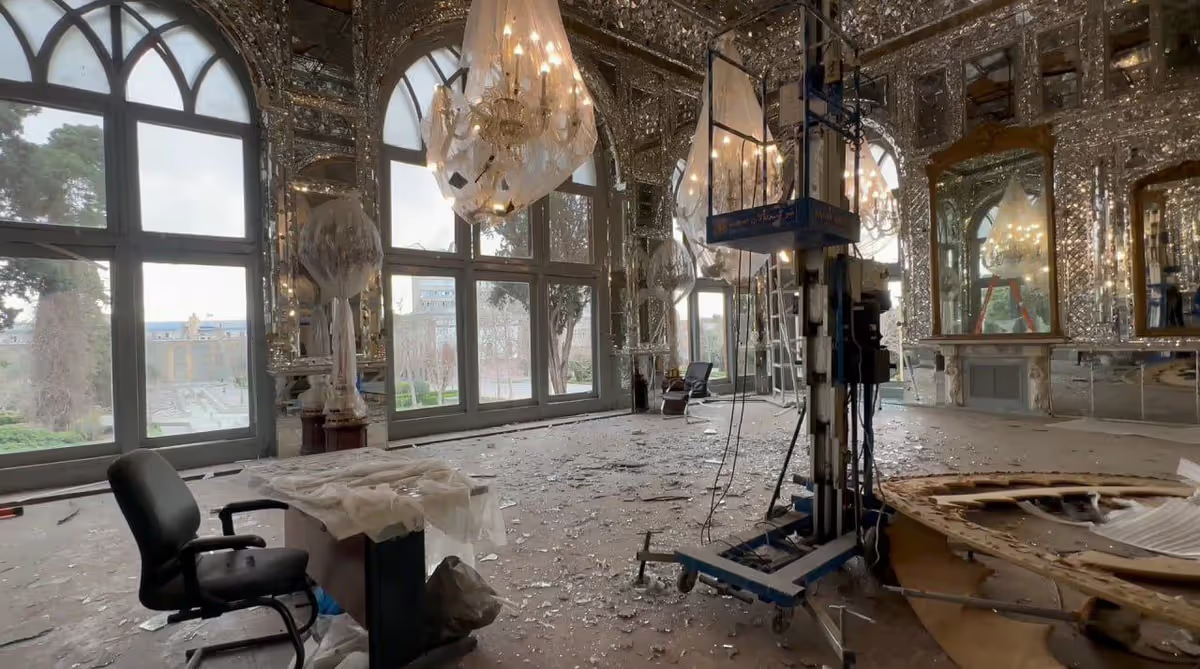
Tehran’s Golestan Palace, the only UNESCO World Heritage Site in the Iranian capital, has sustained blast damage amid ongoing US-Israeli strikes on Iran. According to UNESCO, the 400-year-old palace, located near Arg Square in central Tehran, was hit on March 1 by a missile strike in its designated buffer zone.
Photographs and videos circulated in Iranian media show shattered windows, glass and mirror fragments, and debris scattered across parts of the historic complex. Ahmad Alavi, head of the Tehran city council’s tourism committee, said the force of the explosion had even buckled sections of asphalt within the palace grounds. Officials had already taken precautionary measures in recent weeks as tensions with the US and Israel intensified, wrapping fragile interiors and relocating artifacts to undisclosed storage.
On March 2, Iran’s minister of cultural heritage, tourism, and handicrafts visited Golestan Palace, and officials have said they will submit a formal technical assessment to UNESCO as the basis for restoration efforts.
In a statement condemning both the US-Israeli strikes on Iran and Iran’s retaliatory attacks, UNESCO said it had previously communicated the exact coordinates of World Heritage properties and other protected sites to the parties involved in the conflict, urging them to oblige with the 1954 Hague Convention and the 1972 World Heritage Convention.
Iran is currently home to 29 World Heritage Sites. While no other monument on the list has yet been officially reported as damaged, restricted access to some areas and the focus on recording civilian casualties mean that the full cultural impact of the recent strikes is still unclear.