News
British Museum Removes “Palestine” From Ancient Middle East Displays
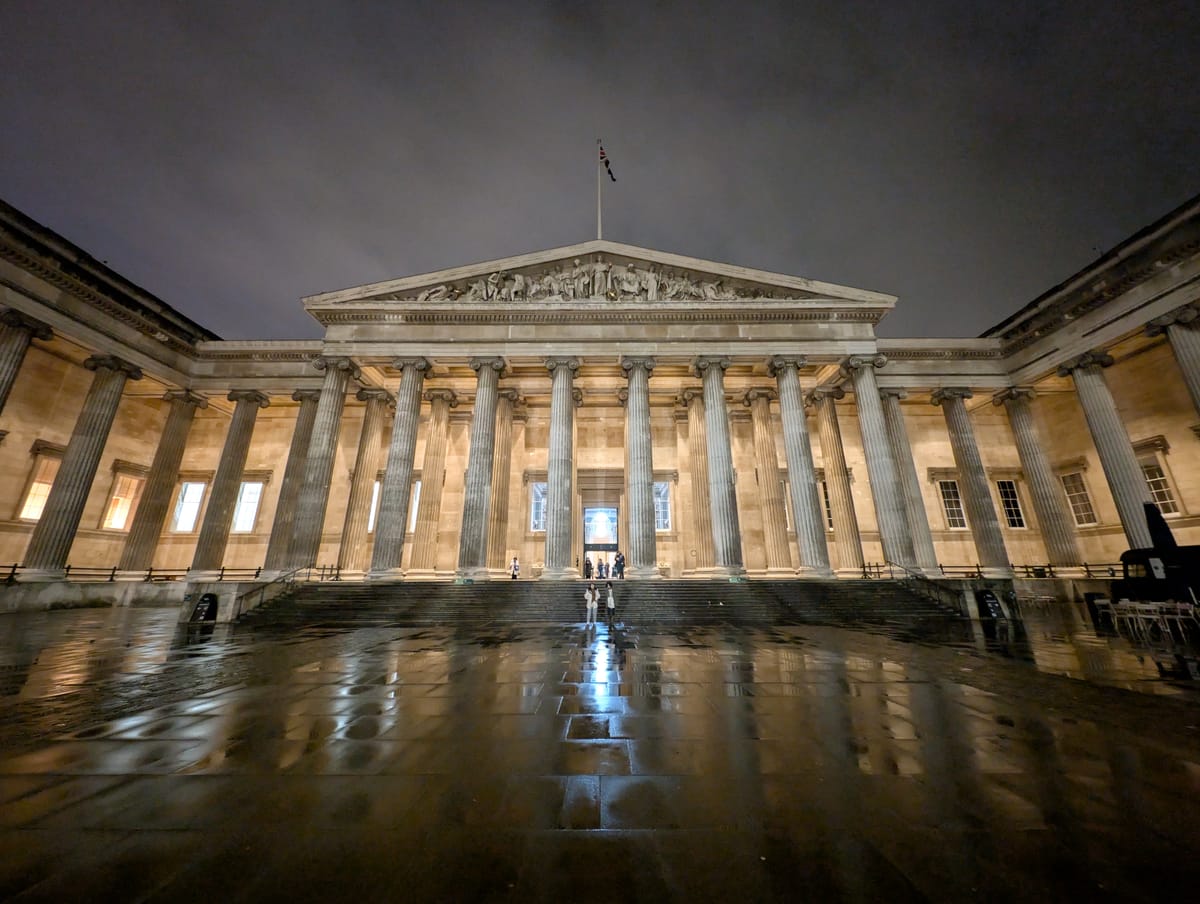
Following complaints from an Israeli legal group, the British Museum in London has removed the word “Palestine” from certain displays in its ancient Middle East galleries, replacing it for the most part with “Canaan,” the Biblical Hebrew nomenclature for the Southern Levant.
The information placards and maps detailing the period from 1700 BC to 1500 BC had previously referred to the eastern Mediterranean coast as Palestine, with some panels describing the populations there as being of “Palestinian descent.”
The adjustments were made in mid-February after UK Lawyers for Israel (UKLFI), a pro-Israel association of lawyers, raised concerns in a letter to museum director Nicholas Cullinan. They argued that the term was being used anachronistically to denote ancient territories that existed before the word “Palestine” was coined: “Applying a single name—Palestine—retrospectively to the entire region, across thousands of years, erases historical changes and creates a false impression of continuity. It also has the compounding effect of erasing the kingdoms of Israel and of Judea, which emerged from around 1000 BC, and of reframing the origins of the Israelites and Jewish people as erroneously stemming from Palestine.” In recent years, UKLFI has lodged similar complaints against various councils, hospitals, and educational organizations across the UK, including King’s College London and the Chelsea and Westminster Hospital.
The Eastern Mediterranean region has been referred to by various names throughout its history. While texts from 1500 BC use the term “Canaan,” the Kingdom of Israel is first mentioned in a 1200 BC Egyptian inscription, and the historian Herodotus is believed to have recorded the first use of the word “Palestine” in the fifth century BC.
A British Museum spokesperson claimed that, in a historical geographical context, the contested term is not “meaningful” anymore, as it “no longer holds a neutral designation and may be understood in reference to political territory.”
After an early report by The Telegraph, the museum initially denied removing the word “Palestine” from its displays altogether, stating: “We continue to use Palestine across a series of galleries, both contemporary and historic.” Another spokesperson later acknowledged that changes had been made, but told Hyperallergic that the institution was not influenced by the UKLFI letter and had independently decided to modify the vocabulary used in the Middle East galleries. The museum added that it would follow “UN terminology on maps that show modern boundaries, for example, Gaza, West Bank, Israel, Jordan, and refer to ‘Palestinian’ as a cultural or ethnographic identifier where appropriate.”
On February 16, the Palestine Forum in Britain published an open letter addressed to the museum’s board of trustees, demanding the immediate reinstatement of the name “Palestine” in all pertinent contexts. The missive reads: “We view this as a troubling act of historical erasure that contradicts the museum’s professional and ethical responsibilities.” Additionally, over 22,000 people have signed a petition which states that the museum’s actions suggest “inconsistency in curatorial standards” and contribute “to a wider pattern of erasing Palestinian presence from public memory.”
Further case-by-case alterations will be made in the British Museum as part of a broader reconstruction plan.
Aisha Traub Chan is an editorial intern at ArtAsiaPacific.