Market
Sustainability over Spectacle: Art SG 2026
In the highly polished corridors of Marina Bay Sands Expo and Convention Centre (MBS), Art SG opened its fourth edition on January 22, aligning with Singapore Art Week (January 22–31). Co-founded by Magnus Renfrew, Sandy Angus, and Tim Etchells, the fair seems to have found its rhythm: over 100 galleries from 30 countries and territories filled the halls, mirroring last year’s scale. The atmosphere was notably lighter—less guarded, more inquisitive—than the cautious tenor of the 2025 edition.
The fair’s program carried self-assured poise. SEA Focus, now fully integrated into the main event and curated by John Tung, offered a sharper representation of Southeast Asian practices. In the Platform section, large-scale installations by artists such as Lee Bae, Bingyi, and Jitish Kallat, along with performative works, also captivated audiences. Citra Sasmita’s Bedtime Stories, presented by Yeo Workshop, drew from her previous hanging installations created for the 24th Biennale of Sydney in 2024 and last year’s Hawaiʻi Triennale. Visitors were invited to recline on carpets and cushions while admiring two monumental kamasan scrolls hovering above, along with large mixed-media works lining the surrounding walls. As her hand-shaped textile remnant, Cosmic Dance 2 (2025), sold for USD 32,000 at the VIP preview, there was further institutional interest in the main installation work priced at USD 120,000. Projects like this anchored the section’s emphasis on scale, materiality, and conceptual rigor.
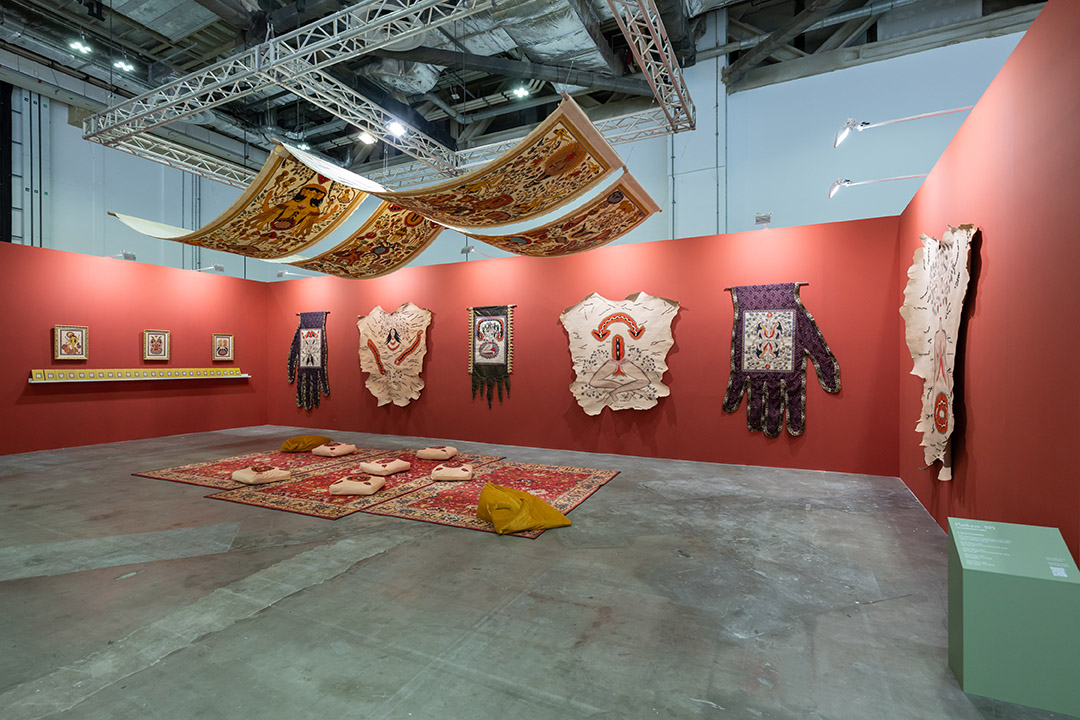
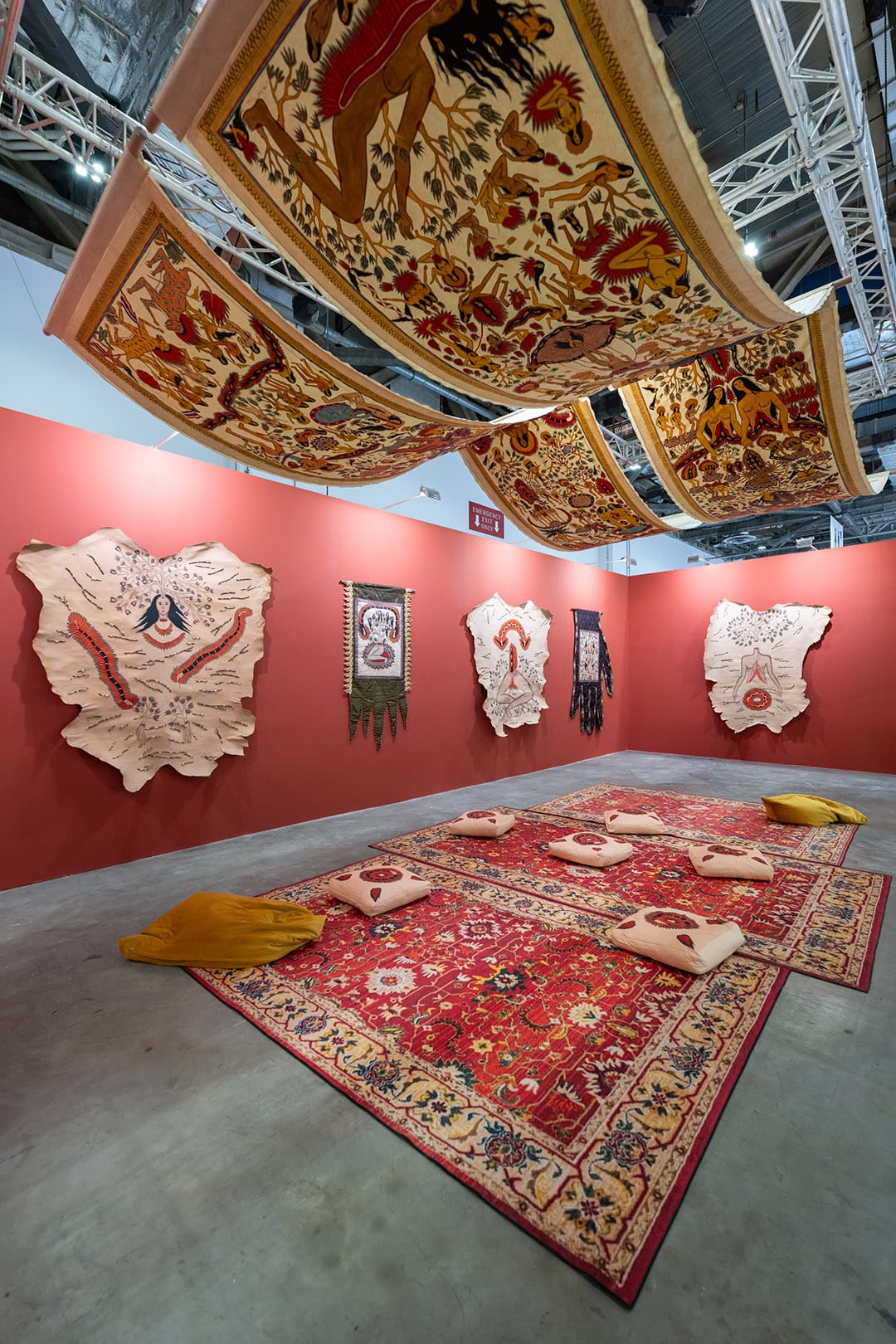
Installation view of CITRA SASMITA’s Bedtime Stories, presented by Yeo Workshop, Singapore, at Art SG 2026. Courtesy Art SG.
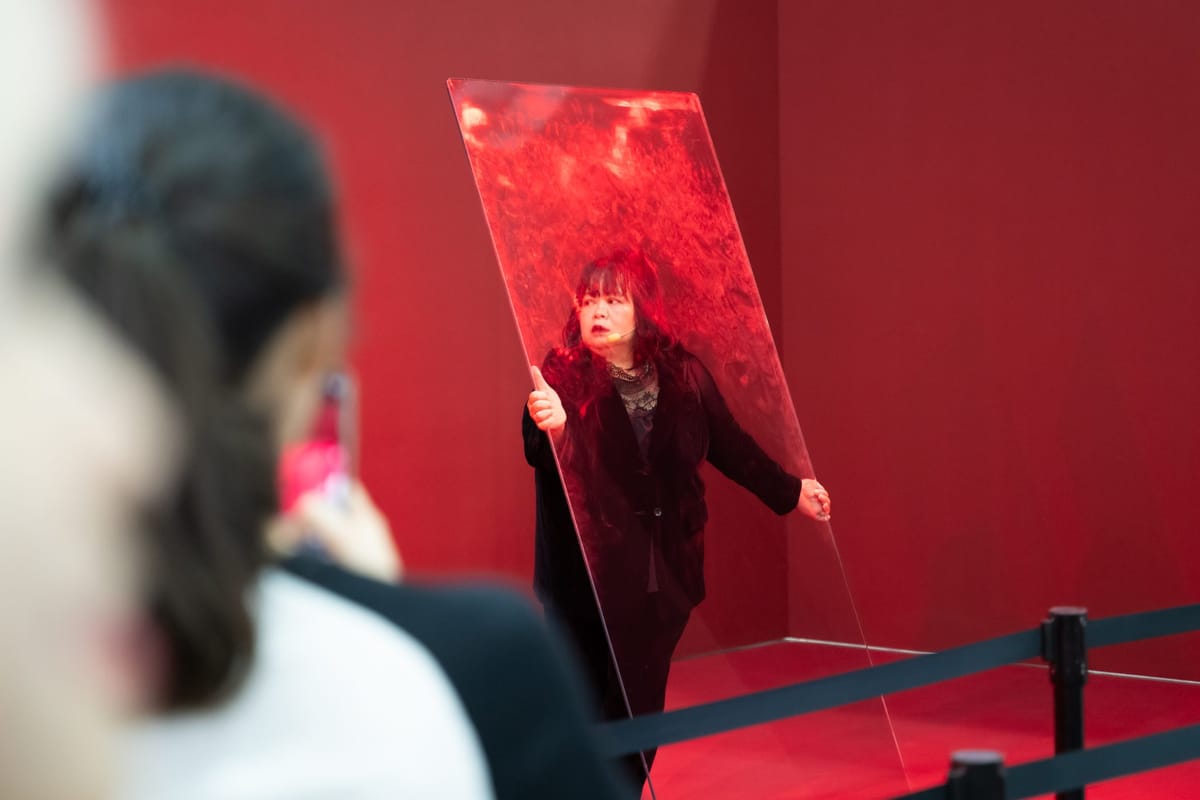
Among the performances, John Clang’s contribution, 1P3, presented by FOST Gallery, took the form of Chinese fortune telling, upending notions of long-exposure photography as, without using a camera, he rendered a metaphysical portrait of the sitter and their lived experiences—past, present, and future—in real time. Elsewhere, Melati Suryodarmo’s I Love You (2007), during the vernissage restaged her iconic, intense five-hour endurance piece driven by repetition, devotion, and physical resolve. ShanghART’s SEA Focus booth additionally displayed photographic documentation of Suryodarmo’s 2018 iteration, enacted during the artist’s first solo exhibition in China at ShanghART Beijing.
Attendance tells its own story. Regional collectors arrived in healthy numbers, many having flown in from Jakarta, Manila, Bangkok, and Hong Kong, alongside a notable contingent from mainland China—an emphatic vote of confidence in Art SG. Curators and directors from institutions across the Asia Pacific, including M+ in Hong Kong, the Museum of Contemporary Art and Design in Manila, Dib Bangkok, and the Los Angeles County Museum, were weaving through the aisles with notebooks in hand and in active conversation with gallerists. The city’s broader Art Week lineup—from the Singapore Biennale 2025 to private initiatives including Tanoto Art Foundation’s inaugural exhibition, “Rituals of Perception,” and The Private Museum’s “Human Being Human” unveiling works from the extensive collection of John and Cheryl Chia—made the visit feel worthwhile. By the weekend, the halls were packed right through the fair’s final hours.
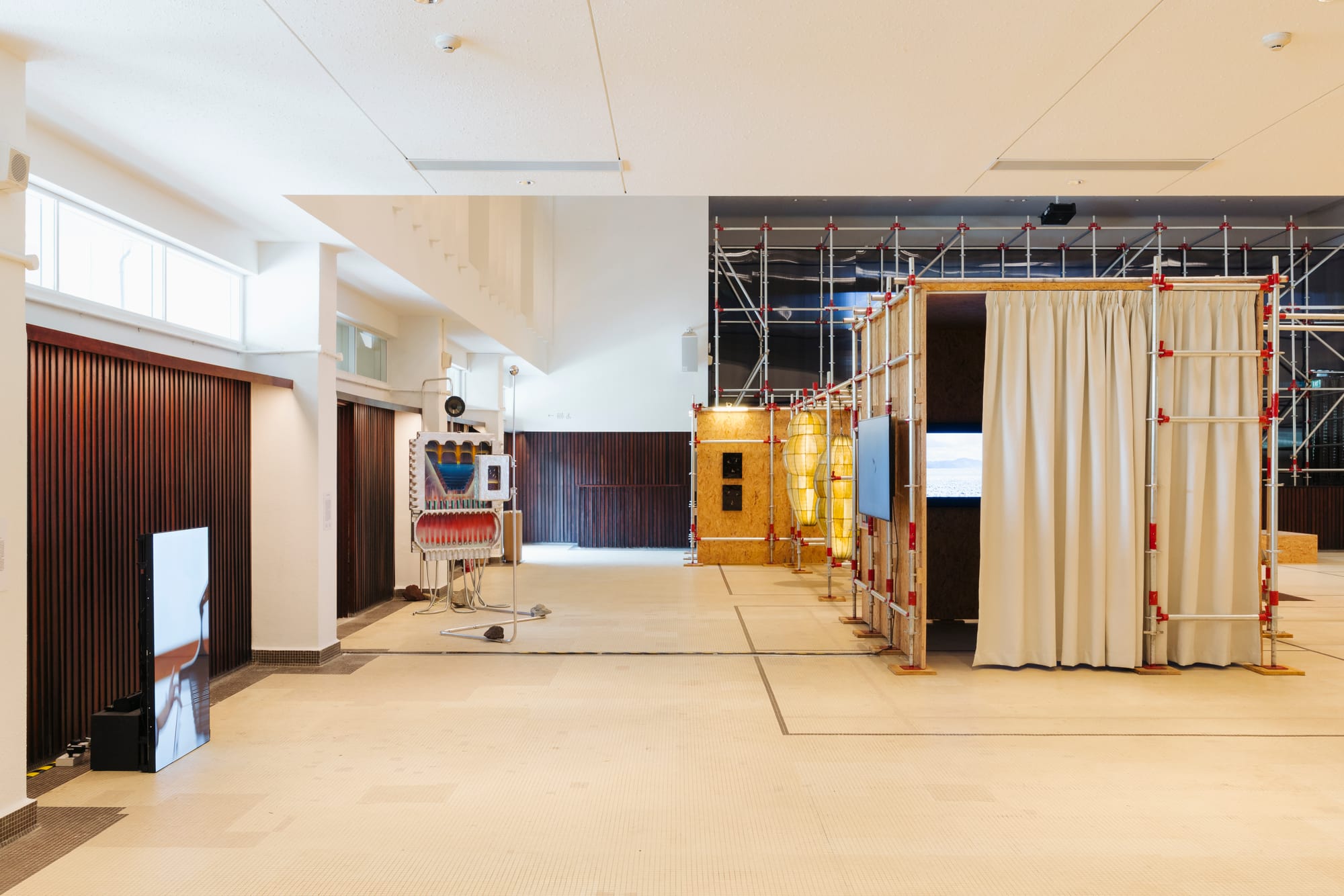
Business moved with a similar mix of restraint and confidence. Numerous transactions were made on the vernissage, largely within modest price ranges. Bangkok’s Warin Lab placed Imhathai Suwatthansilp’s lightbox composed of hundreds of termite wings in a Thai collection for USD 22,000. Manila’s The Drawing Room sold two large-scale canvases by young Manila artist Matina Partosa, based on cave expeditions, for USD 5,800 each. Homegrown gallery Haridas Contemporary moved seven of the 10 works in its booth on the first day, including all three paintings by Esmond Loh depicting imagined quotidian Singapore scenes, with the largest canvas at SGD 12,000 (USD 9,460). STPI, which concurrently hosted an international print exhibition in its gallery, secured buyers for editioned works by Indian minimalist Prabhavathi Meppayil at USD 18,000, as well as several prints by Singaporean modern masters.
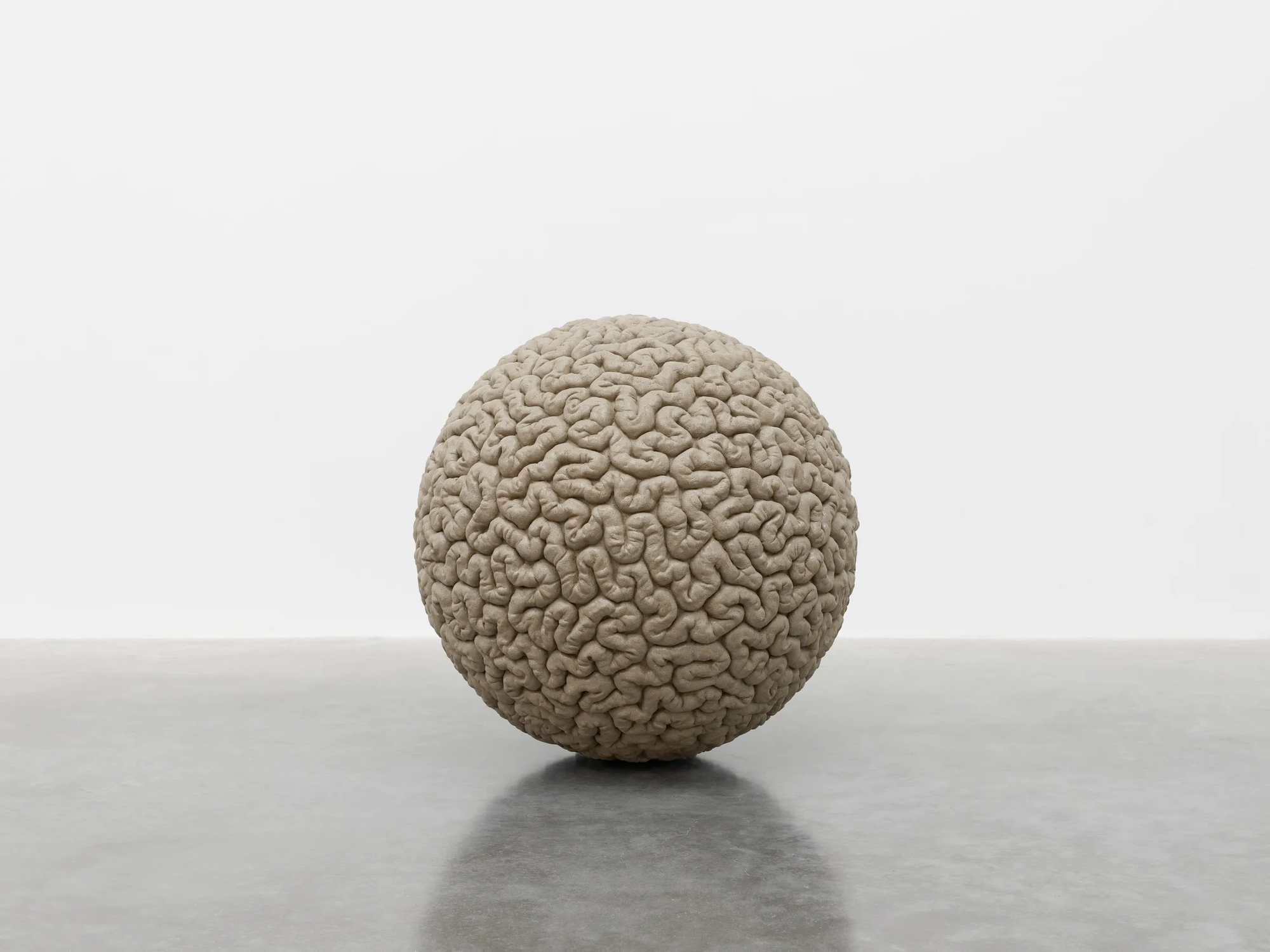
More adventurous acquisitions surfaced at Istanbul’s Zilberman Gallery, where Singaporean photographer Sim Chi Yin’s Time Travels With a Rotten Suitcase (2025), comprising a stereoscopic viewing box along with a vintage stereoscope and image disks changed hands for USD 12,000. Among blue-chip galleries, Thaddaeus Ropac placed a small Tom Sachs sculpture with a Singaporean collector for USD 30,000 and, by the end of the fair, Antony Gormley’s SET VII (2024) for GBP 450,000 (USD 614,990), while Ota Fine Arts placed one of two paintings by sought-after Hong Kong figurative painter Chris Huen. Two works also entered the permanent collection of Singapore Art Museum via the SAM Art SG Fund, increased this year to SGD 250,000 (USD 197,100): Mona Hatoum’s Inside Out (concrete), 2019, an editioned globe sculpture with a wrinkled surface resembling human organs, acquired at White Cube, along with Lotus L. Kang’s delicate hanging sculpture of aluminum-cast anchovies from Commonwealth and Council. The prevailing sentiment among gallerists was clear: collectors—both seasoned veterans and first-timers—were buying out of genuine desire, not out of fear of missing out.
Singapore has persistently treated culture as infrastructure more than ornament. By folding Art SG into the wider rhythm of Art Week—from institutional shows to nimble independent projects—the city positioned itself as a considered meeting point in the region. The lingering question is whether SEA Focus can continue to hold its own within the larger fair framework. Some gallerists, including Richard Koh, noted that they still participate in both, largely out of loyalty. Others, like Christiaan Haridas, were more pragmatic, saying it no longer made sense to do SEA Focus now that it is under the same MBS roof, and pointing out that a fair booth offers greater freedom to show what makes financial—not curatorial—sense for the gallery. Taken together, Art SG’s 2026 edition suggested a market coming into its own, leading toward sustainability over spectacle, and depth over dazzle. At a time when attention is the scarcest currency in the art market, Art SG offered a quiet reminder that good art, like a well-made object, rewards those willing to look a little longer.