Market
Durability in the Global Circuit: India Art Fair 2026
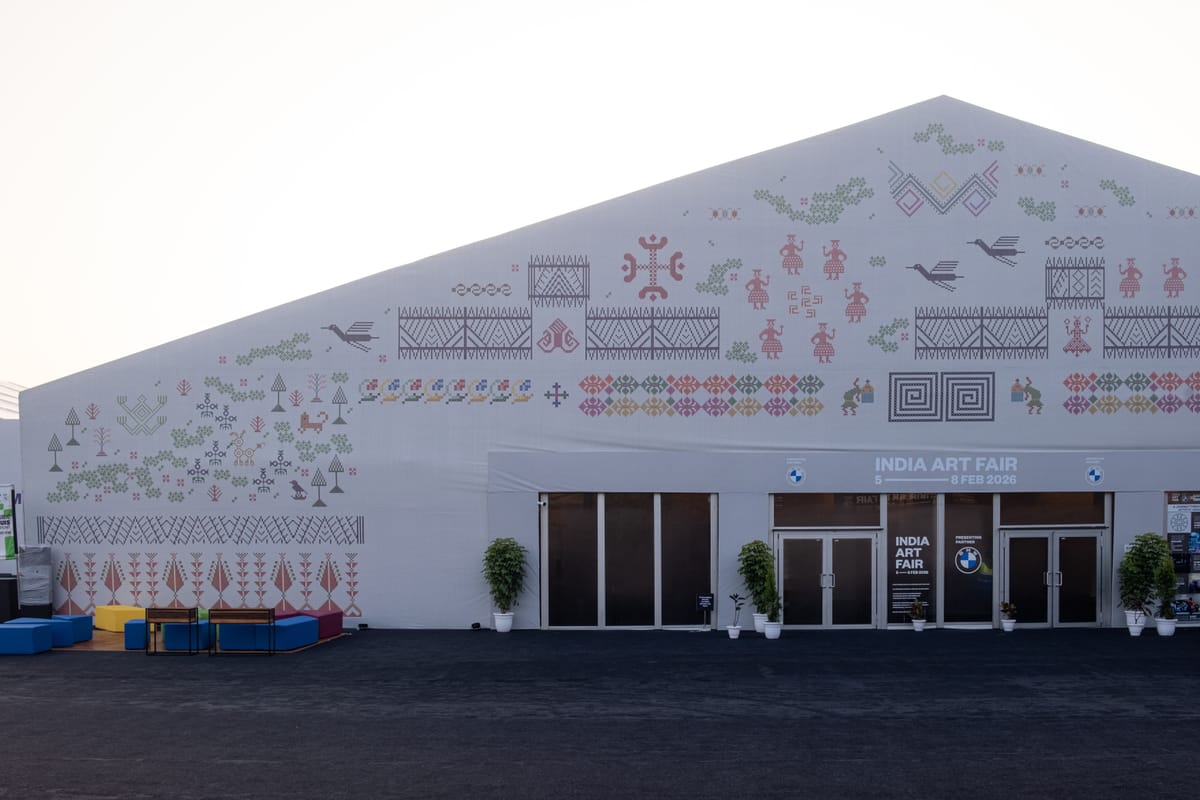
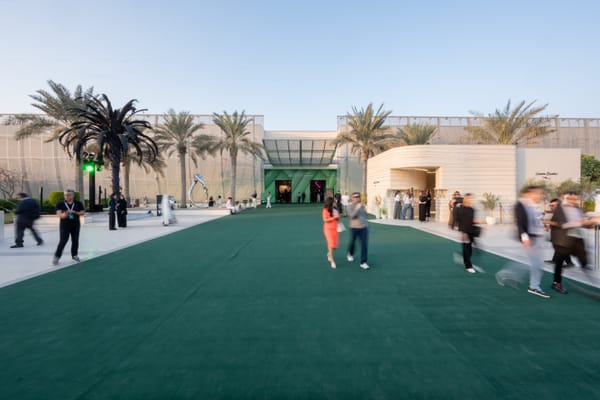
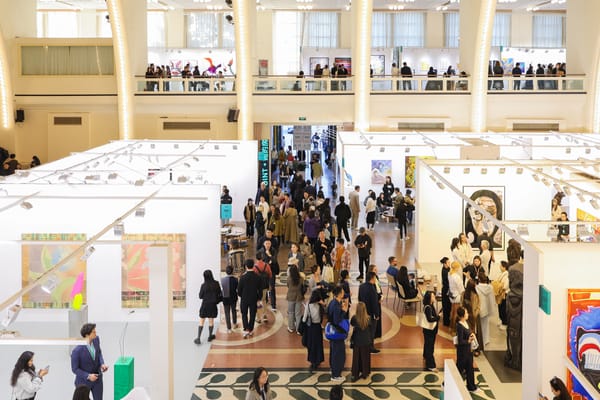
On February 5, India Art Fair (IAF) opened its 17th edition in New Delhi with a measured confidence that reflected the event’s growing institutional maturity and international standing. With a record 135 exhibitors, IAF marked its largest iteration to date. Visitor flow remained steady on opening day, with relaxed entries and movement across the tents gaining further momentum by midday. Established galleries drew their long-standing clientele early on, while a notable contingent of VIP collectors arriving from Art Basel Qatar highlighted an increasingly interconnected global art calendar. Two Indian galleries, Chemould Prescott Road and Nature Morte, participated in both fairs this year. Fair director Jaya Asokan noted: “International attention on South Asian art has reached an inflection point, and [IAF] meets that moment.”
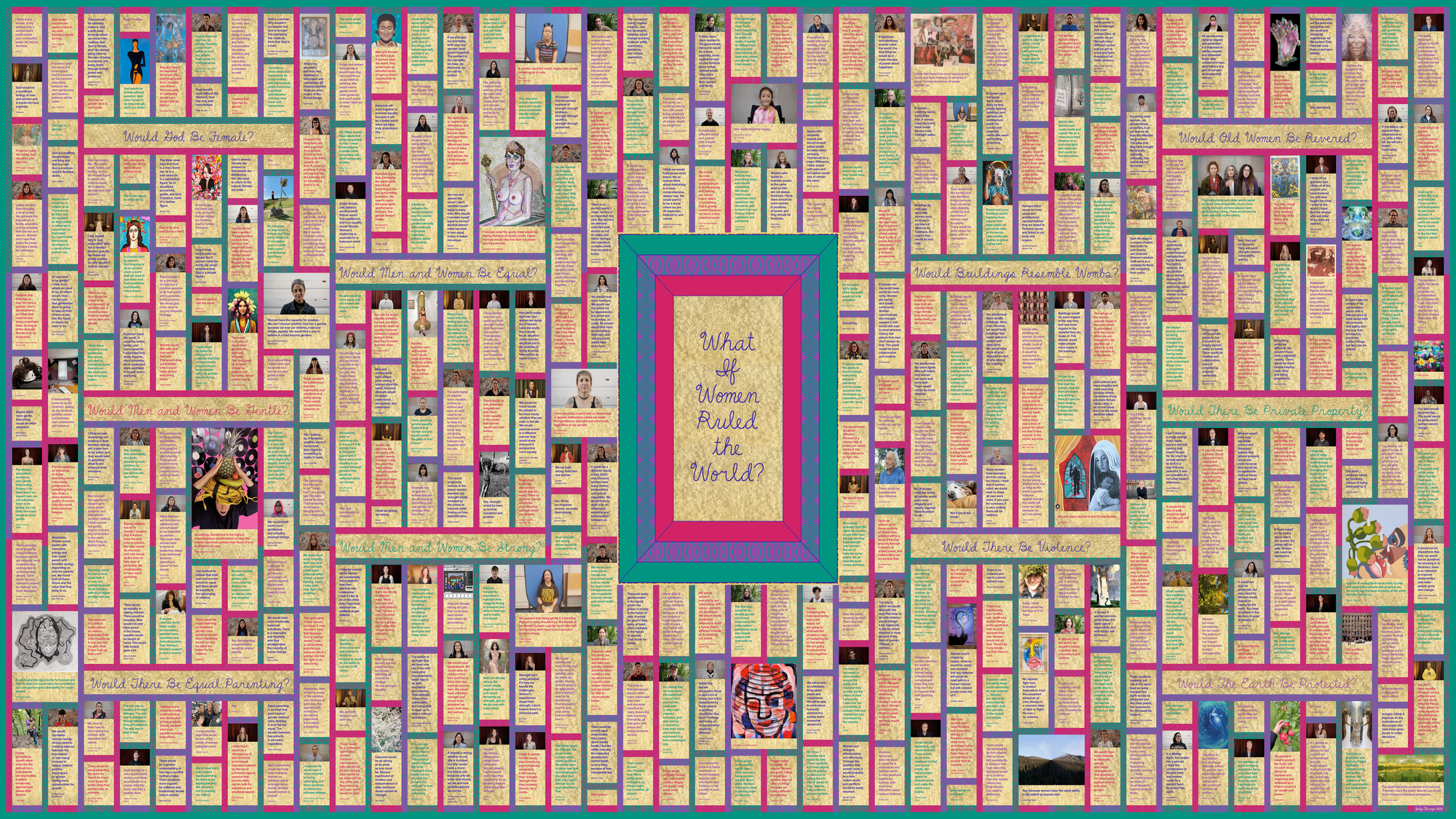
Just outside the main exhibition tents, visitors encountered Judy Chicago’s What if Women Ruled the World? (2022– ), presented through DMINTI, a platform cofounded by five leaders from the technology, marketing, and art sectors, including gallerist Dominique Lévy. The work, reimagined as a collaborative art project featuring embroidered, banner-style textiles that address questions of gender inequality and patriarchy, was positioned at the entrance, framing the fair’s broader engagement with global feminist discourse and large-scale public art.
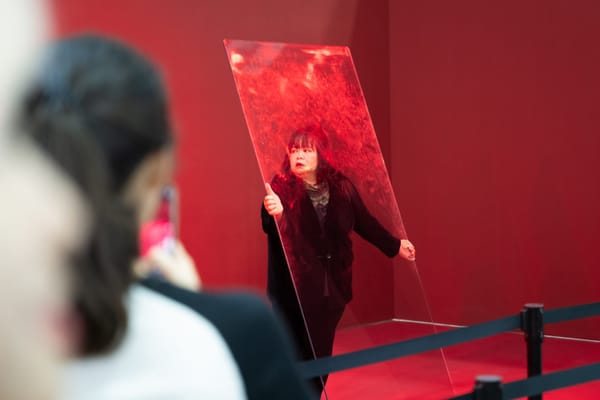
Nature Morte drew significant attention with its presentation of Marina Abramović, which marked the Serbian conceptual artist’s first showing with the gallery. The booth spotlighted several of her photographs, including her iconic self-portrait Energy Hat (Reading) (2001/23), in which Abramović dons a long, red cone-shaped hat while reading a book. Alongside works by artists from the gallery’s established program (such as Jitish Kallat and Asim Waqif), the booth displayed a small wooden sculpture by Ai Weiwei, who is currently exhibiting at Nature Morte’s Dhan Mill space. Ai attended the fair on opening day. Speaking with ArtAsiaPacific, he stated: “This exhibition helped me expand my horizons and encouraged me to look toward a geographically close country with the largest population, the deepest history, and a society that is currently developing at great speed.”
The fair’s FOCUS section continued to serve as a curatorial platform offering deeper insights into individual practices and gallery programs, and allowing audiences to contextualize artists beyond market-driven presentations. Shailesh B.R. was featured by New Delhi’s Vadehra Art Gallery, following his well-regarded solo exhibition in late 2025, “The Sky in the Palm.” Here, visitors engaged closely with the artist’s biography and practice, including his transition from priesthood to life as an artist. Bharti Kher was also prominently featured at Nature Morte’s booth in this section, where her new tableaux of vibrant geometric abstractions marked her return to painting after two decades of working primarily in sculpture.
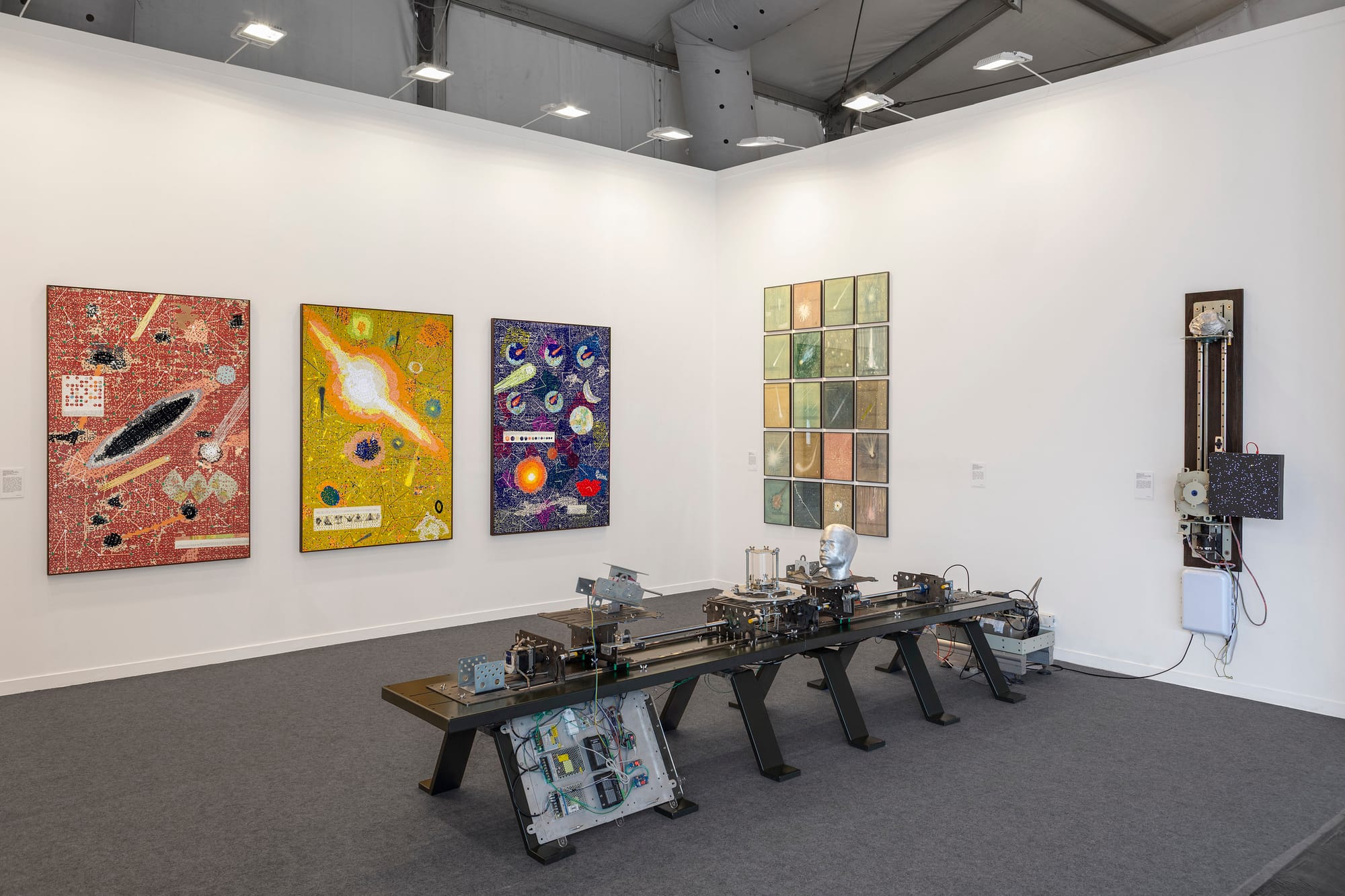
First-time participants brought forth equally compelling displays, with Saatchi Yates (London), Rajiv Menon Contemporary (Los Angeles), Subcontinent (Mumbai), and Art and Charlie (Mumbai) standing out for both curatorial clarity and early sales. At Saatchi Yates, photographic stills from Marina Abramović’s Red Period and Blue Period (both 1998) drew sustained attention and institutional acquisitions. Art and Charlie showed works by Cape Town-based artist Sujay Sanan, whose practice is informed by Indian miniature painting and Buddhist thangka traditions. The booth, curated by Mihir Thakkar, juxtaposed Sanan’s watercolor- and oil-pencil-on-paper works with Yogesh Barve’s Proposal for public space monuments (2026), a mixed-media installation constructed from a flexible LED matrix, electronic components, wires, and metal. Meanwhile, each wall in Subcontinent’s booth offered focused displays on pioneering and contemporary artists. One wall paid tribute to Arpita Singh, Nilima Sheikh, Nalini Malani, and Madhvi Parekh, all of whom had collaborated on a series of exhibitions called “Through the Looking Glass” in the 1980s. The other two walls included works by Jyoti Bhatt, Haku Shah, and contemporary artist Hemali Vadalia.
Rajiv Menon Contemporary’s inaugural participation in IAF was closely watched. Founded in 2023, the gallery champions artists from emerging regions and diasporic contexts, particularly within South Asia. Menon has previously curated a group exhibition at Jaipur’s City Palace, titled “Non-Residency,” and was the first gallerist to collaborate with the Jaipur Centre for Art, which opened in late 2024. The gallery reported a near-total sell-through, with all but one work sold and five acquisitions made by institutional collections before the evening hours on day one. The booth’s placement between Nature Morte and Jhaveri Contemporary was also notable, as it marked the only debut gallery to be positioned among the well-known galleries in the first half of the right hall tent.
Art and Charlie founder Ayesha Parikh reported strong early sales, including the gallery’s highest-priced work, Rajiv (2025) by Sujay Sanan, which sold shortly after the fair opened. “The sheer breadth of collectors, both private and institutional, has already been staggering to see,” Parikh told ArtAsiaPacific. Works in the booth were priced at USD 10,000 and under.
Among returning exhibitors, Vadehra Art Gallery reported that approximately 90 percent of its booth—featuring works by Atul Dodiya, Manjit Bawa, and Sudhir Patwardhan—sold by the end of the first day, with prices ranging from USD 2,500 to USD 300,000. Acquisitions were made by the Kiran Nadar Museum of Art in New Delhi and other institutional collections.
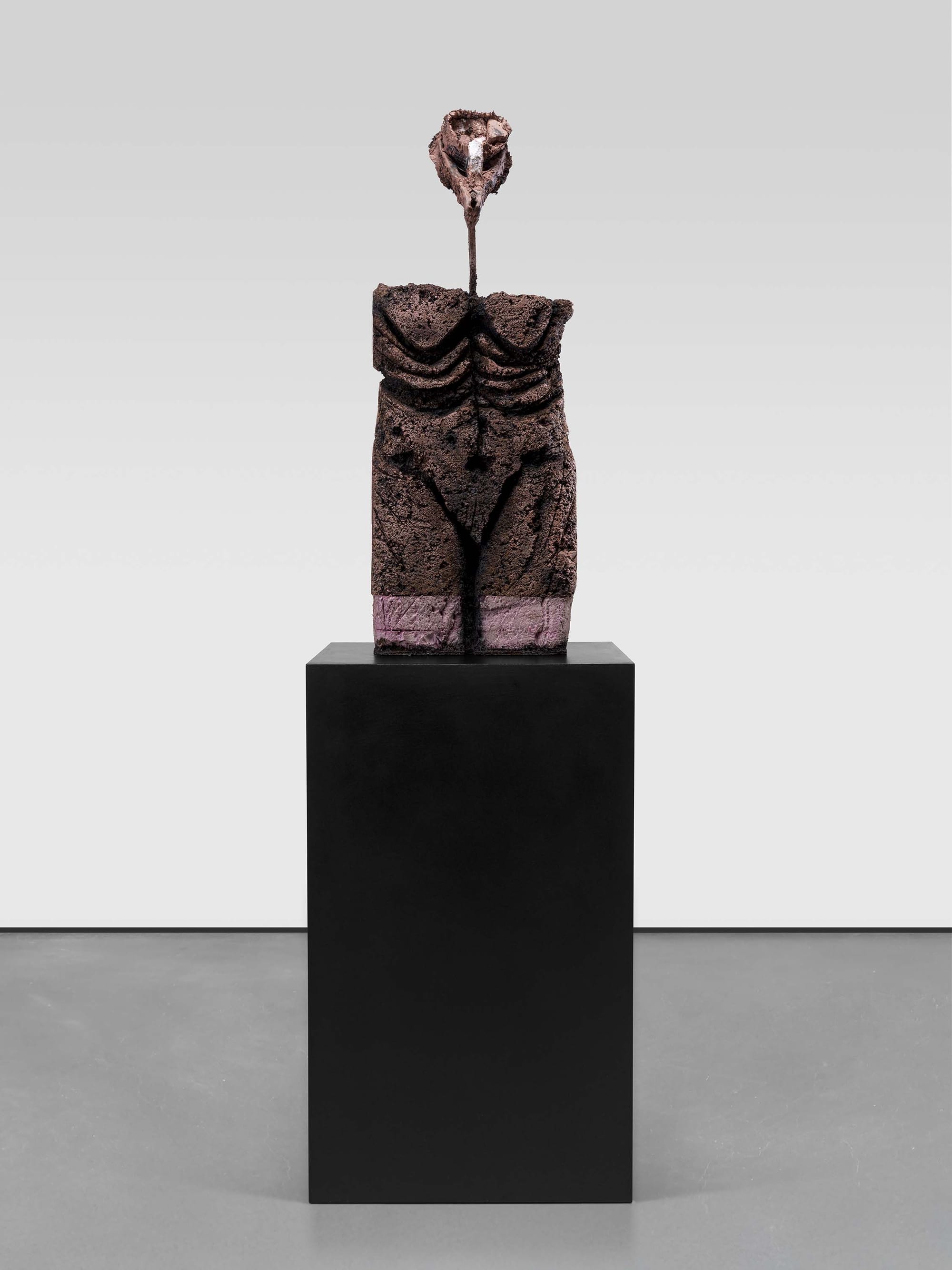
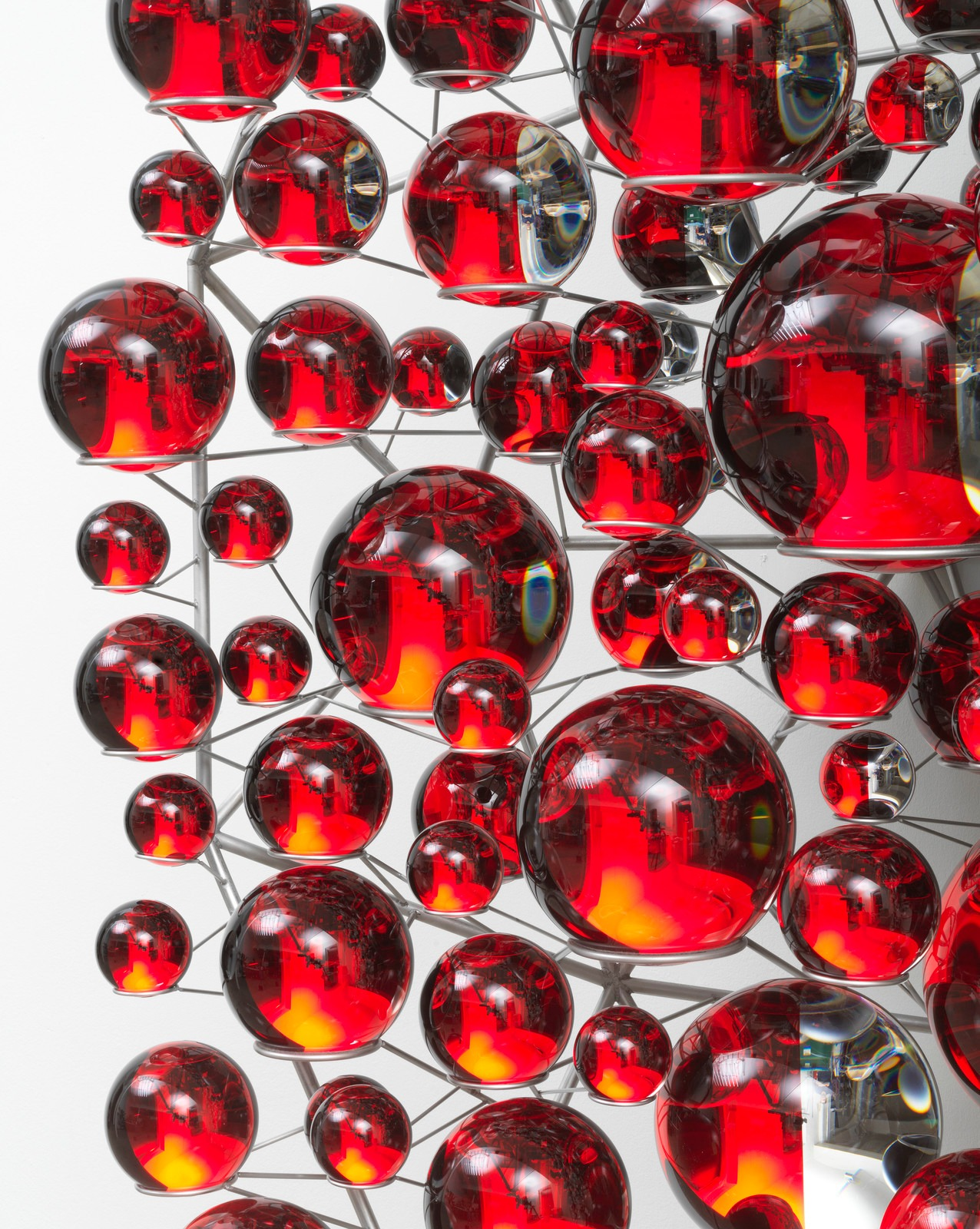
HUMA BHABHA, Bird of Passage, 2025, cork, clay, wire, styrofoam, iron, acrylic, MDF, and oil, dimensions variable. Copyright the artist. Courtesy the artist and David Zwirner (left); and detail of OLAFUR ELIASSON’s The collective consequences of focus on focus, 2022, mixed-media installation, dimensions variable. Photo by Jens Ziehe. Courtesy the artist and neugerriemschneider, Berlin (right).
Just beside Vadehra’s booth, David Zwirner returned with two sculptures by Huma Bhabha—both of which sold—along with a painting by Suzan Frecon and a photograph by Wolfgang Tillmans on VIP days. Yayoi Kusama’s PUMPKIN (L) (2015) served as a focal point, attracting onlookers to the booth throughout the day. Among other significant presentations by international galleries, Berlin’s neugerriemschneider presented Olafur Eliasson’s The collective consequences of focus on focus (2022), a striking sculpture comprising more than 200 glass orbs, along with projects by Ai Weiwei, Andreas Eriksson, and Shilpa Gupta.
As IAF coincided with the ongoing Kochi-Muziris Biennale, the latter’s presence was felt on the fairgrounds, particularly at Mumbai-based Jhaveri Contemporary. The gallery highlighted new works by Birender Yadav, whose installation, Only the Earth Knows Their Labour (2025) is currently on display at Aspinwall House in Kochi. This overlap of artists partaking in the fair as well as the biennale pointed to a shared audience and ecosystem.
Overall attendance at IAF remained consistent, and exhibitors broadly reported positive outcomes. While some galleries noted new collector engagement, many emphasized the strength of the event’s returning base. “We are seeing a lot of familiar faces in Delhi. It’s always lovely to be back year after year,” shared Hena Kapadia, founder of TARQ. Taken together, this year’s edition suggested a fair no longer defined by emergence alone, but by continuity, confidence, and institutional trust, positioning IAF as a durable node within the global art circuit rather than a peripheral destination.
Shreya Ajmani is a writer and art professional focusing on art from Asia and its diasporas.