Issue
Editor’s Letter: Objectified Relations
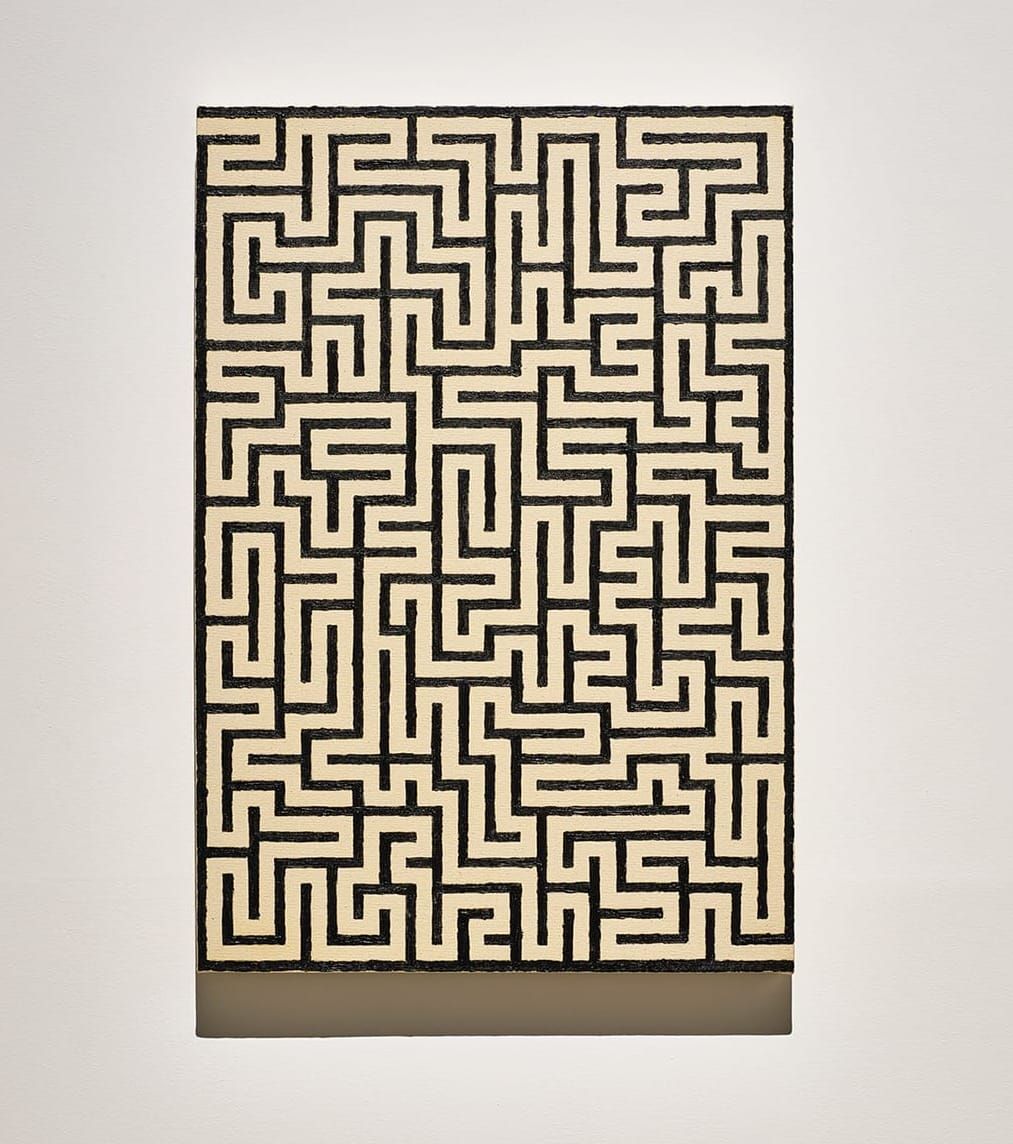
We often think of objects as lacking agency. Yet, the power they can have over humans is understood when we reference works of art—our attachments to them, what they represent, and the values we confer on them. With the rise of artificial intelligence and technology that animates ordinary objects like never before, our relationship to things has begun to change.
The cover Feature of this issue is an interview with Kim Beom, an artist who imagines the consciousness or agency that objects might possess through projects dating back several decades. A playful postmodernist of the 1990s art scene in Korea, Kim explores philosophical questions about our perceptions and how these can be manipulated to humorous or tragic ends. Over the decades, his works have taken on new resonances with viewers for his offbeat humor and informal aesthetics. Reflecting on his practice after mounting the retrospective “How to become a rock” at the Leeum Museum of Art in Seoul, Kim explained: “Objects have multiple functions nowadays, and there are more occasions when humans talk to objects. Certain objects might gain consciousness—we might even face a day when we have to explain to objects: ‘You are nothing but tools for human beings.’”
Our second Feature is an interview with Lebanese artist Simone Fattal, whose long career as an artist has involved experimenting with diverse media, from painting to sculpture and photography. In conjunction with her work as an editor and publisher, Fattal’s experiences have led her to understand the long history of culture that has survived through, and because of, our relationship to objects. In her interview with Ruba Al-Sweel about her exhibition at Ocean Space in Venice, Fattal reflects on creating works for a deconsecrated church, the connections between the Arab cultures of the Mediterranean and the world, and the sharing of knowledge through the printed word.
For Inside Burger Collection, writer Jennifer Piejko examines the paintings and sculptures of Ida Ekblad, a Norwegian artist inspired by the dérives (urban wanderings) of the Situationists and graffiti artists. Ekblad embarks on journeys through the city, gathering materials from scrapyards for bricolage-esque sculptures that echo her collage-based paintings.
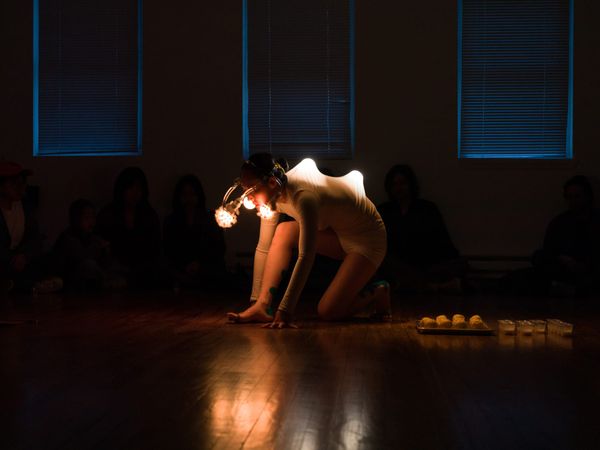
Rounding off the Features section with four Up Close articles, ArtAsiaPacific’s editors recount their experiences with an architectural intervention by Hong Kong artist Mark Chung; a hybrid dance-performance-film work by Elysa Wendi and Lee Wai-Shing; the latest M+ Facade commission from Indonesian collective Tromarama; and Yeondoo Jung’s newly commissioned video installation for the MMCA Hyundai Motor Series about the lives and legacy of the Korean-Mexican diaspora.
In Profiles, curator Tiffany Leung dives into the practice of Beijing-born, New York-based artist Cici Wu, whose works explore the emotional resonances of personal and cultural migration through time and across media, from ink-painting to experimental film. While in Seoul in September, deputy editor HG Masters participated in a newspaper-reading performance orchestrated by veteran avant-garde artist Sung Neung Kyung, all part of his still-evolving practice incorporating the materials of everyday life. In Essays, AAP Paris desk editor Béatrice Grenier examines Yu Hong’s painting Ship of Fools (2021), uncovering its metaphors for intergenerational struggles and connecting it to the artist’s long history of painting young adults in China.
Elsewhere in the issue, for One on One, contemporary thangka painter Tsherin Sherpa recounts the classical training he received from his father, Urgen Dorje Sherpa. In The Point, Pio Abad revisits his projects exploring the stolen wealth of the Marcos family as the political dynasty resumes power in the Philippines.
In Dispatch, curator Shih-yu Hsu looks at the exhibitions happening in Taipei in November, from the 13th Taipei Biennial to many others long postponed by the pandemic. In our Art Fair Report, we look at the early September fairs in Seoul and Sydney, while the Auction Report digs into the disappointment felt in early October at a pair of Hong Kong sales.
Our Reviews span the major solo exhibition in New York for Tuan Andrew Nguyen at the New Museum to exhibitions from Auckland to Tokyo, Hong Kong, Yogyakarta, and Vancouver. Finally, for Where I Work, Duong Manh Hung visited the Hanoi studio of painter Ha Manh Thang, nestled between two adjacent temples, where the serenity of the environs prevails over chaos in his abstract paintings. Reflecting on the potential of objects to transport us, Ha described one of his paintings as “a portal through which I can time-travel at ease inside my head.” As with many of the artists in this issue, Ha sees artworks as having an innate ability to help us understand and transcend ourselves, a sign of their agency over us and our entangled relationships.