Ideas
The House of the Heart: Trevor Yeung, Vessel Poetics, and Failure as Transformation
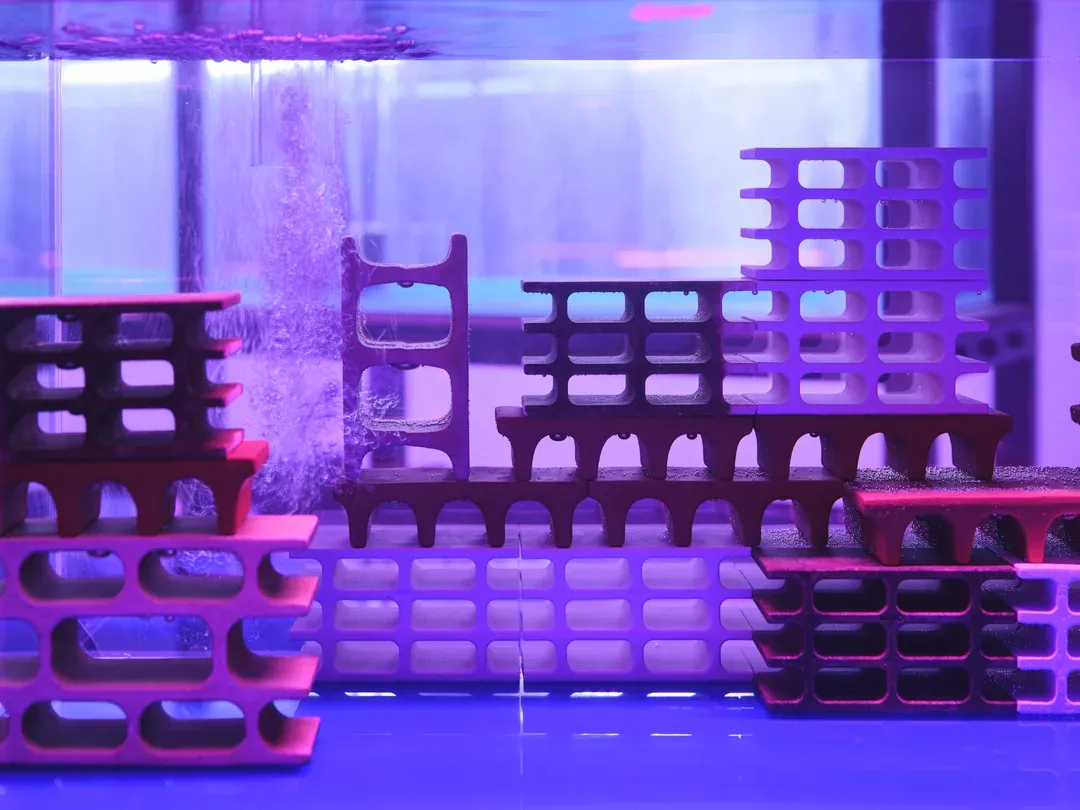
What kind of house is the heart? In Trevor Yeung’s practice, it looks suspiciously like a fish tank: a domestic ecosystem calibrated to keep something fragile alive. For over a decade, Yeung has returned consistently to aquariums, fountains, and glass boxes as surrogates for emotional life, positing how we tend to these vessels as analogous to how we treat one another.
When I say “heart,” I do not mean the literal, muscular organ. I mean that fictional yet commanding center in which we store the private rhapsodies, revelations, and ephemera of our days; the heart that urges us to dispatch risky messages, to sprint toward someone about to leave, to finally call out a debilitating pattern we have tolerated for too long. This second heart has no actual real estate in our bodies, yet when it calls, it reverberates everywhere at once. “The heart is . . . the first and last unimpeachable witness to what can’t help but matter, for good and for ill, in every life,” Peter Schjeldahl wrote. In order to be alive, we have to know the heart not only for its physiological functions but also its recalcitrant ways—as well as how it soldiers on—despite despair, disappointment, and disillusionment. Ursula K. Le Guin directs us toward this kind of thinking, stating, “we’ve all heard all about all the sticks and spears and swords, the things to bash and poke and hit with . . . but we have not heard about the thing to put things in, the container for the thing contained. That is a new story.”
The aquarium is an apt analogy because its very premise is romantic, fantastical, and a little violent. It slices a wedge from the ocean and displaces it in the living room—a compression of scale and complexity not unlike a schoolroom globe. Its delusion is also its sincerity: the aquarium insists that humble glass can host a fragment of something as unwieldy as marine life; the heart, too, insists that a finite, fallible body can shelter a sliver of something as ungovernable as love. “So much held in a heart in a lifetime,” wrote Brian Doyle in his essay Joyas Voladoras (2012). “We are utterly open with no one in the end. . . . We open windows to each but we live alone in the house of the heart.”
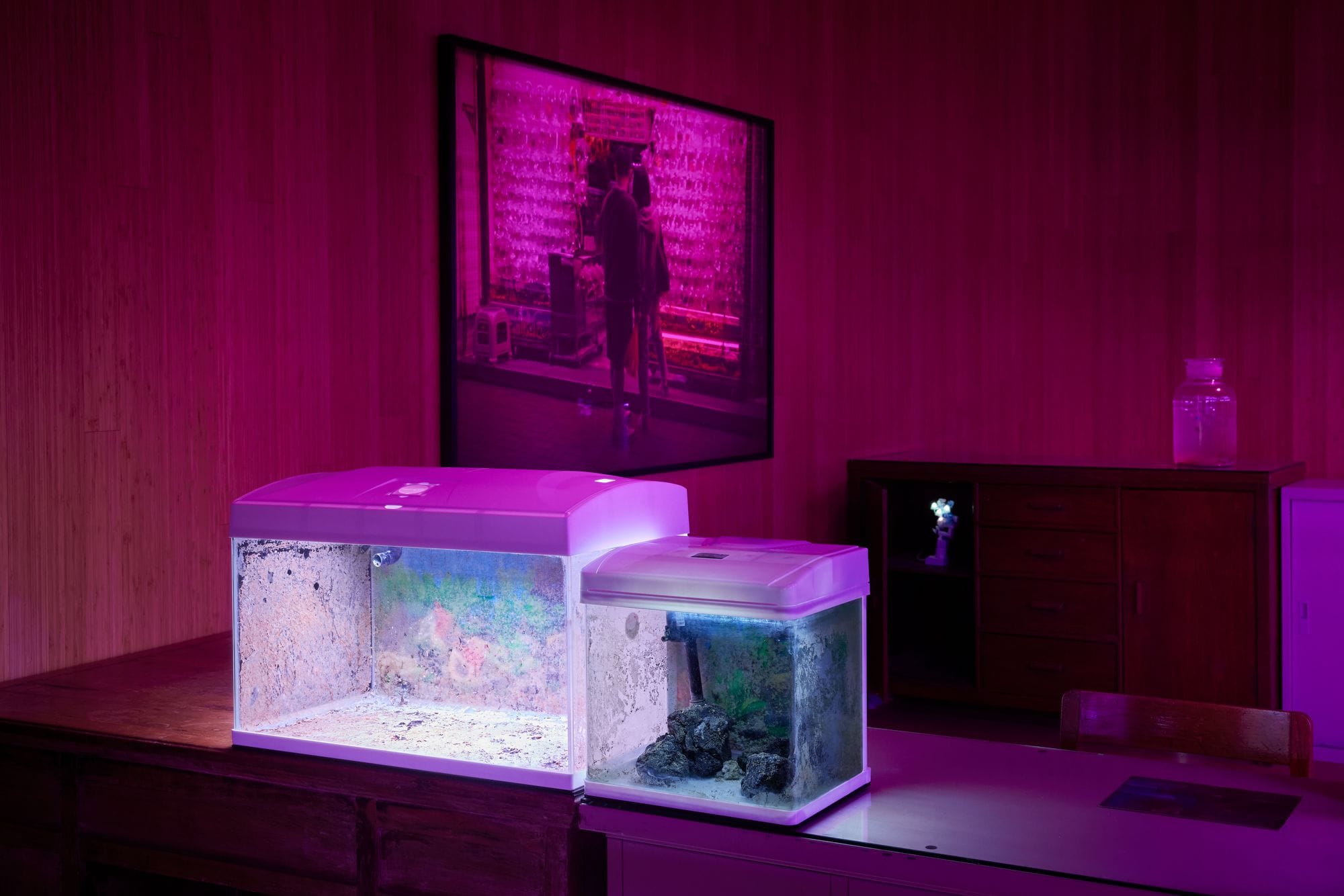
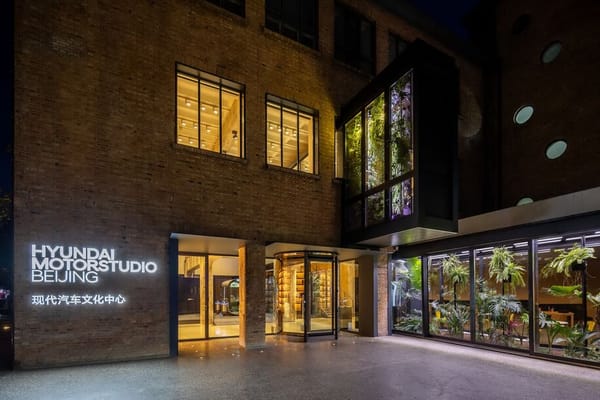
But can aquariums still be called “aquariums” when they no longer work? At the 2024 Venice Biennale, Yeung’s empty tanks were vibrant and lucent, furnished with plants that undulated under fluorescent light. Last year, M+’s restaging of the Venice presentation, “Courtyard of Detachments,” was akin to a photographic negative: the containers were drained of water and their fronts were removed. In installations featuring multistoried racks of weathered, desiccated aquariums, we might feel as though we are studying a library of heartbreak, an archive of small implosions. Once sucked clean of water, the aquariums’ accoutrements of care—sponge filters, spawning brushes, ceramic platforms—gain an uncanny charge. Why are they still here? What are they waiting for?
Comparisons to artists like Paul Thek and Tetsumi Kudo may clarify part of Yeung’s method. Thek’s Technological Reliquaries (1964–67) encase beeswax body parts in Plexiglas; Kudo’s cages teem with lurid assemblages of dismembered phalluses, pills, wax flowers, and electric equipment. Both deploy corporeal horror and psychedelic saturation, but Yeung, by contrast, works with restraint. His tanks are serial, cool, even ascetic. What we attend to is the disquiet of what remains after the protagonist has exited the stage.
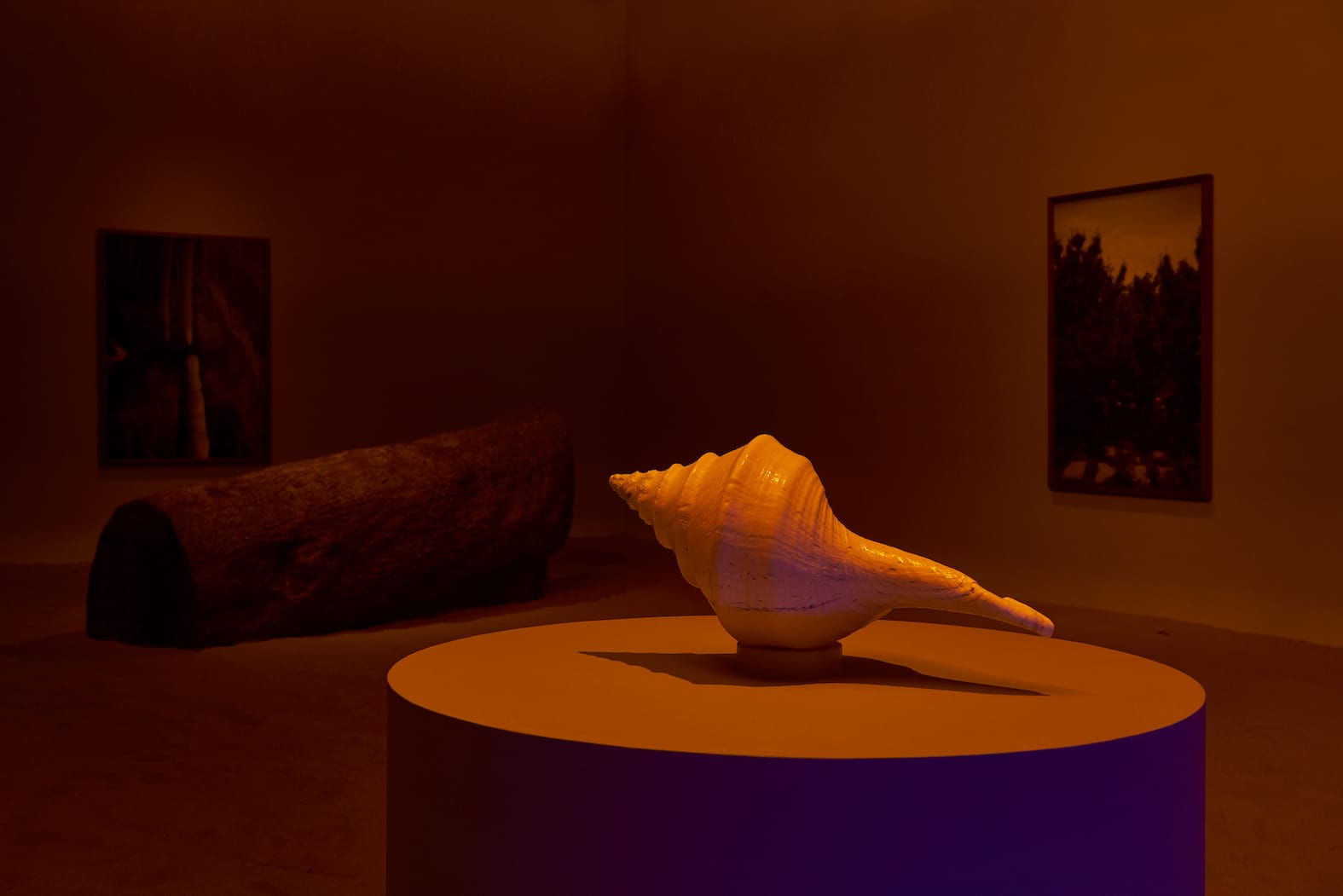
Some of Yeung’s most affecting gestures utilize forms of entropy to amplify the residual. In earlier presentations at Gasworks, Para Site, and Aranya Art Center, titled “Soft ground” (2023), “Soft breath” (2024), and “Soft conch” (2024–25) respectively, the artist recreated, through 3D scanning, a trunk from Hampstead Heath’s “fuck tree”—a site in London known for gay cruising since the 19th century. The trunk is cast in soap, which not only infuses the space with musk but also entails that the sculpture will melt and deform, bearing an affective correspondence to the poignant evanescence of queer eros. What moved me most was not the largesse of his arboreal replica, but the fugitivity of the soap secretions—tiny, pus-like blotches visible only if one bent low enough to the floor. By utilizing volatile material, Yeung renders his art as unstable objects that vary incrementally with every viewing, tracing parallel trajectories of disintegration and persistence. In Yeung’s site of loss, there is still the suggestion of change, and hence, life.
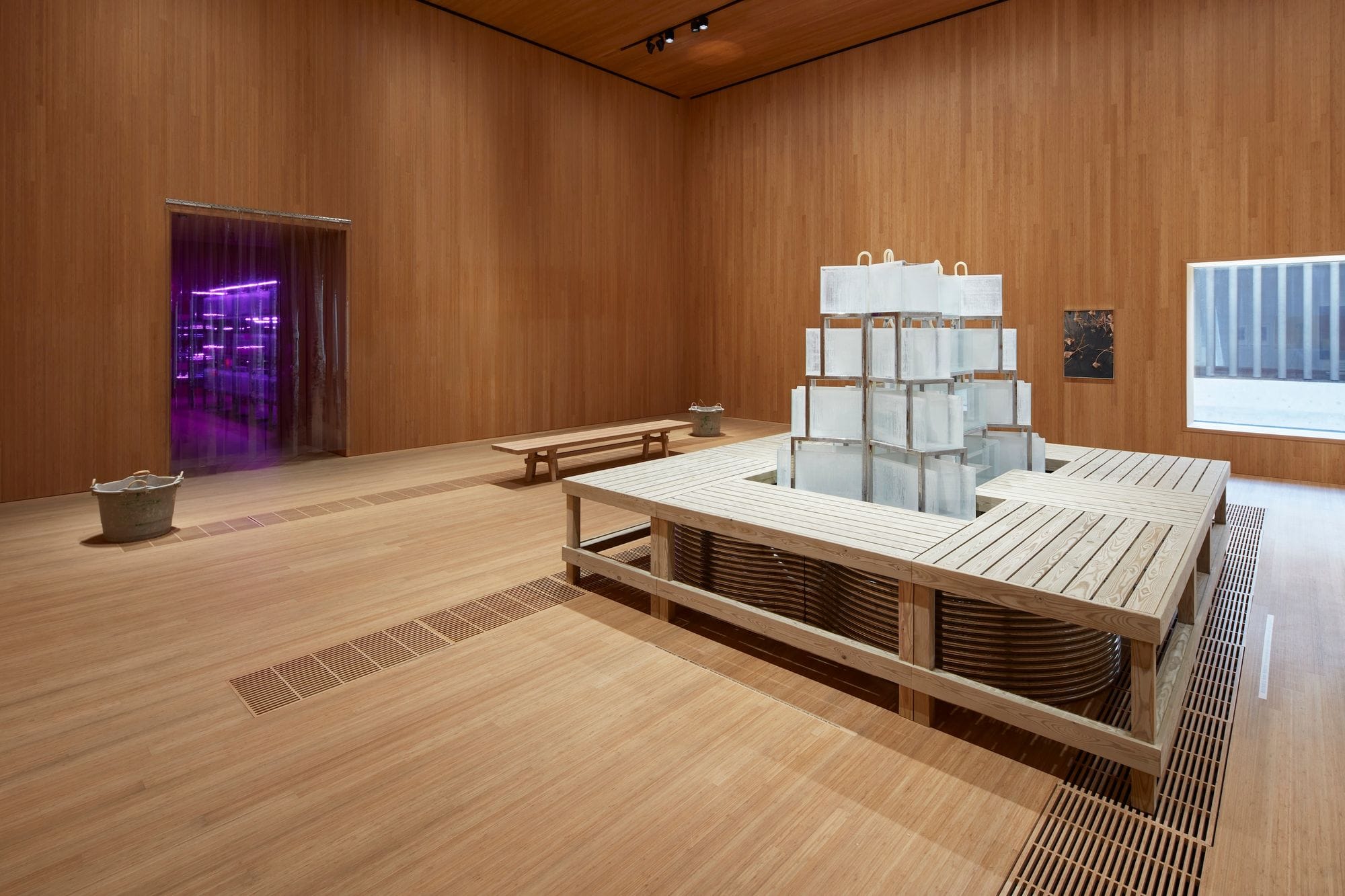
A similar shift takes place when Yeung’s fountains run dry. Fountains are not only the most public-facing of all vessels, but also the most optimistic: their endlessly looping flow proposes an ever-emergent, non-teleological geometry of desire. At M+, however, Yeung’s Pond of Never Enough (Under Construction) (2025) was parched, mute, and boarded up. Its glass panels are clouded by streaks of hard water stains, echoing paint drips or trails of bodily discharges like tears and cum. At first glance, Pond seemingly signals an emotional paucity or void. But as Chris Kraus observed in I Love Dick (1997), “desire isn’t lack, it’s surplus energy– a claustrophobia inside your skin.” A gutted fountain does not represent the absence of feeling, but the failure of that feeling to become legible: excess trapped just beneath the point of articulation. What we are looking at in Pond could also be the precursor to catharsis, rather than solely an inert relic.
Yeung’s work is not just about broken systems; it is about the possibility of redefinition and renewal even under duress. When an aquarium no longer holds water, when a fountain no longer gushes—must they be retired, or can they acquire new names, uses, and readings? Disrepair allows us to rethink what else a thing can be. Jack Halberstam wrote in The Queer Art of Failure (2011), “The queer art of failure turns on the impossible, the improbable, the unlikely, and the unremarkable. It quietly loses, and in losing it imagines other goals for life, for love, for art, and for being.” Within failure, there is an opportunity for transformation. If prescribed identity and purpose are no longer suitable or sustainable, how do we seek other, deeper, truer definitions for ourselves?
I think of another artist devoted to the glass box: Joseph Cornell. A reclusive figure who harbored a meek, anxious disposition, Cornell lived alone in a small house in Queens, once occupied by his widowed mother and his disabled brother, until his death. “A deeply romantic man, he was cripplingly physically reserved,” Olivia Laing wrote. “He longed to touch, but looking and fantasizing were safer and had their own satisfactions.” Cornell channeled his energies into crafting delicate, glass-fronted boxes of bricolages—each encasing its own vivid yet elusive microcosm of found objects. But Laing reflected, “[b]eing the object of a fantasy is claustrophobic, airless, frightening . . . Plenty of people admired Cornell’s boxes but no one wanted to live inside them.” Looking at Yeung’s now disclosed vessels, with the afterimage of Cornell’s isolation in mind, I hear this urgent benediction: We must risk the heart. We must find the gumption to open it, uncoil it, invite whatever might bruise or scar. For if we keep it shut, we might never know what it can grow into. And what a waste it would be, to rob ourselves of potential.
In Virginia Woolf’s To the Lighthouse (1927), the character Lily Briscoe wonders, “It was a miserable machine, an inefficient machine . . . the human apparatus for painting or for feeling; it always broke down at the critical moment.” Yeung displays machines that are similarly “miserable” and “inefficient” without giving away any narrative that might account for failure. The heart falters alongside its triumphs: it envies as much as it admires, inflicts selfishness and aggrandizement just as much as it activates kindness and generosity. In order to truly begin to understand the heart, we must be willing to see both sides of the coin—the Courtyard of Attachment and the Courtyard of Detachment—at once. Whether opened or closed, flourishing or fatigued, the heart remains irrevocably, indubitably ours.
Ethan Luk is a writer currently based in New York.